
Swiss companies aim to make Tesla’s Cybertruck road-legal in Europe
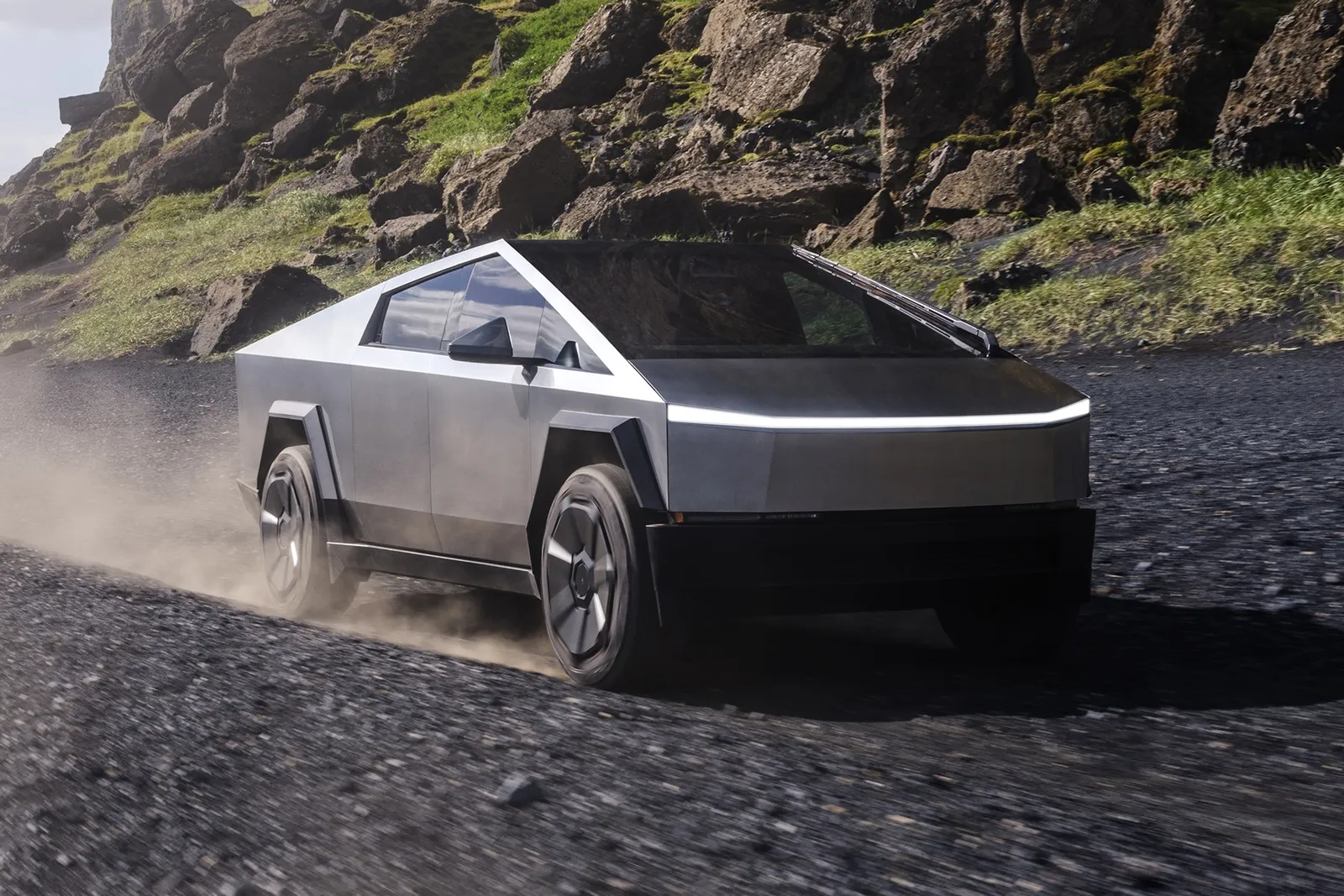
Werk.lab and Revoltaris are working to get the Tesla Cybertruck approved for Swiss certification. To achieve this, the electric pickup had to undergo technical revisions in several areas.
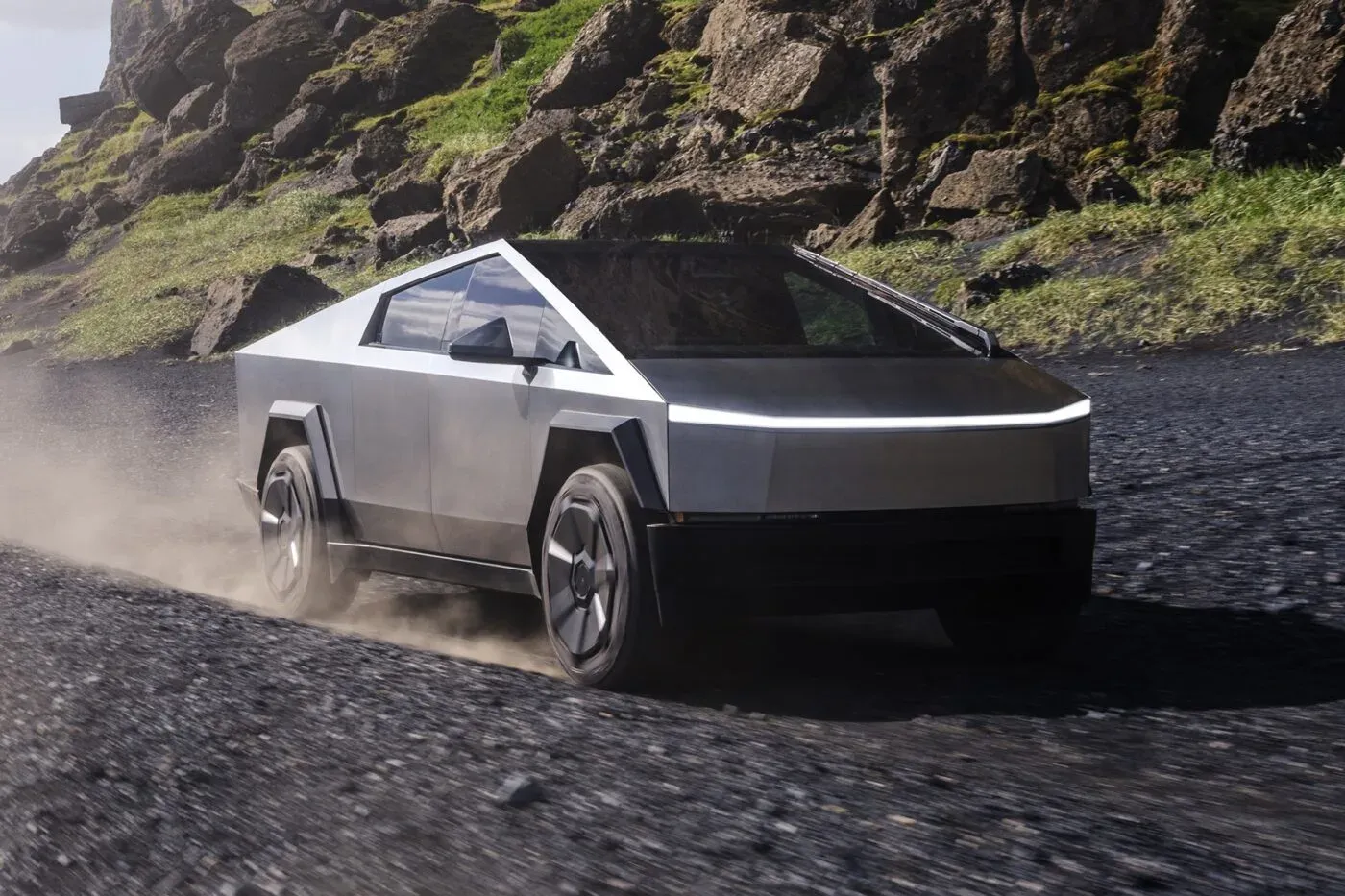
For approval, the Cybertruck is to receive a new carbon front, for example.
Image: Tesla
When a car doesn’t comply with the rules, you can either change the rules – or change the car. In the case of the Tesla Cybertruck, Swiss engineering firm werk.lab and Tesla specialist Revoltaris have opted for the latter, which may well be the more labour-intensive choice.
Currently, Tesla itself does not officially sell the Cybertruck in Europe. However, Swiss engineering company werk.lab and Tesla specialist Revoltaris are working to secure type approval for the vehicle and subsequently offer it as independent importers. According to those involved, the project is now at an advanced stage. Reports from _auto motor und sport_ suggest a market launch is targeted for 2027.
An All-Wheel Drive Cybertruck and a Cyberbeast were brought over from the US to Switzerland for this purpose. Since then, the focus has shifted from acceleration figures to pedestrian protection, braking distances, lighting, and the radii of bodywork edges. One of the tests involved the braking system: the approximately 3.5-tonne Cybertruck had to come to a complete stop from 100 km/h. According to the project team, the vehicle passed the test with just 0.3 seconds of reserve. Had the result been worse, the braking system would have had to be adjusted or replaced.
Far more extensive modifications were required for pedestrian protection. The massive stainless-steel front of the production vehicle proved too rigid for the relevant impact tests, according to werk.lab. The developers therefore designed a new carbon front and also modified the underlying structure. Visually, it is intended to differ as little as possible from the original.
Additionally, foam was installed behind the bumper to reduce the impact load in the event of a knee collision. Ironically, the very part of the Cybertruck that defines its aggressive appearance had to be softened to meet approval requirements.
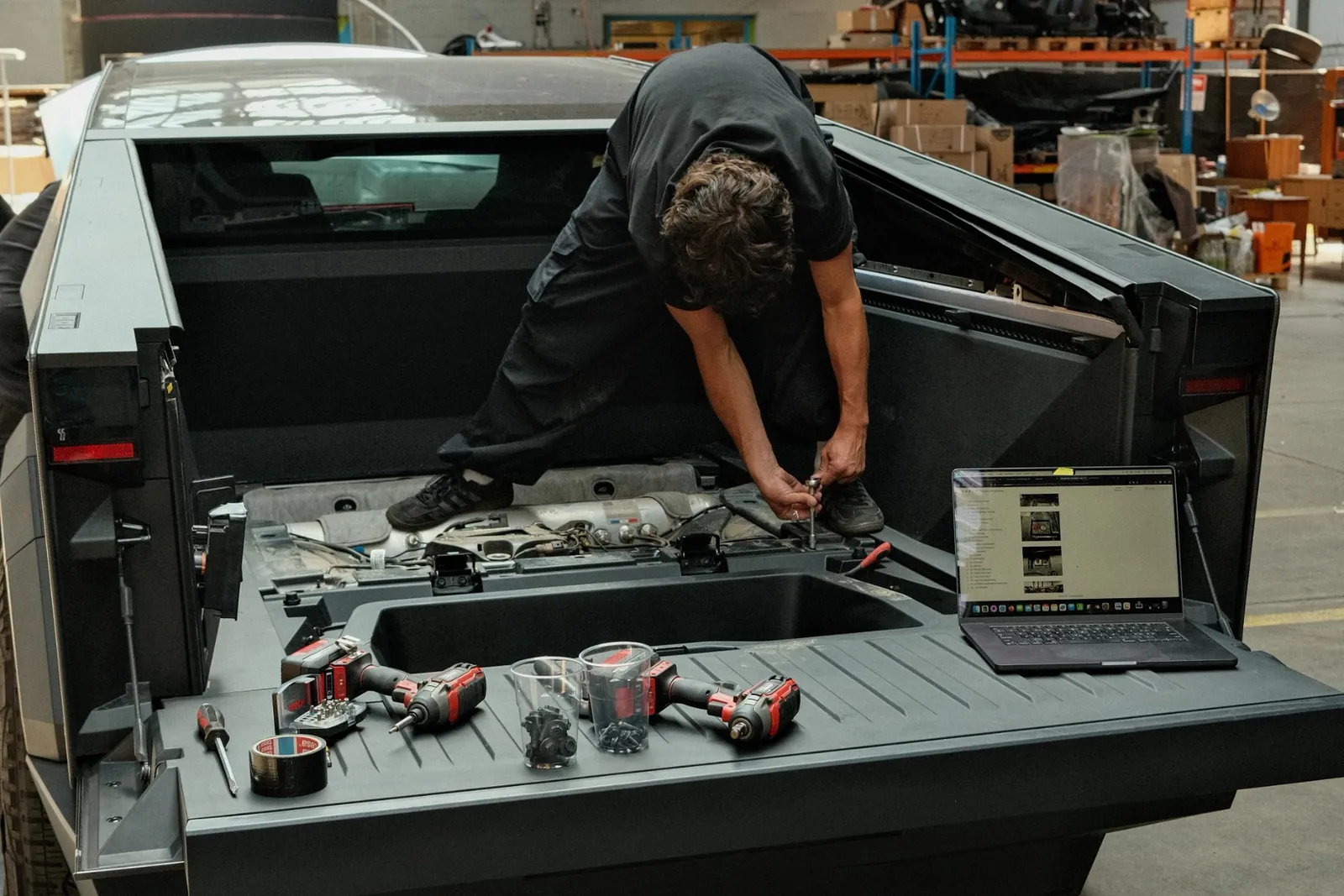
The vehicle’s characteristically sharp body edges also posed problems. According to the project partners, relevant external edges must have a radius of at least 2.5 millimetres. The Cybertruck in its US specification does not meet this requirement. For the approval project, a custom carbon edge protector was therefore developed and fitted around the vehicle. The lighting system also required upgrades: the US model lacks the side direction indicators required for approval, so additional turn signals were installed.
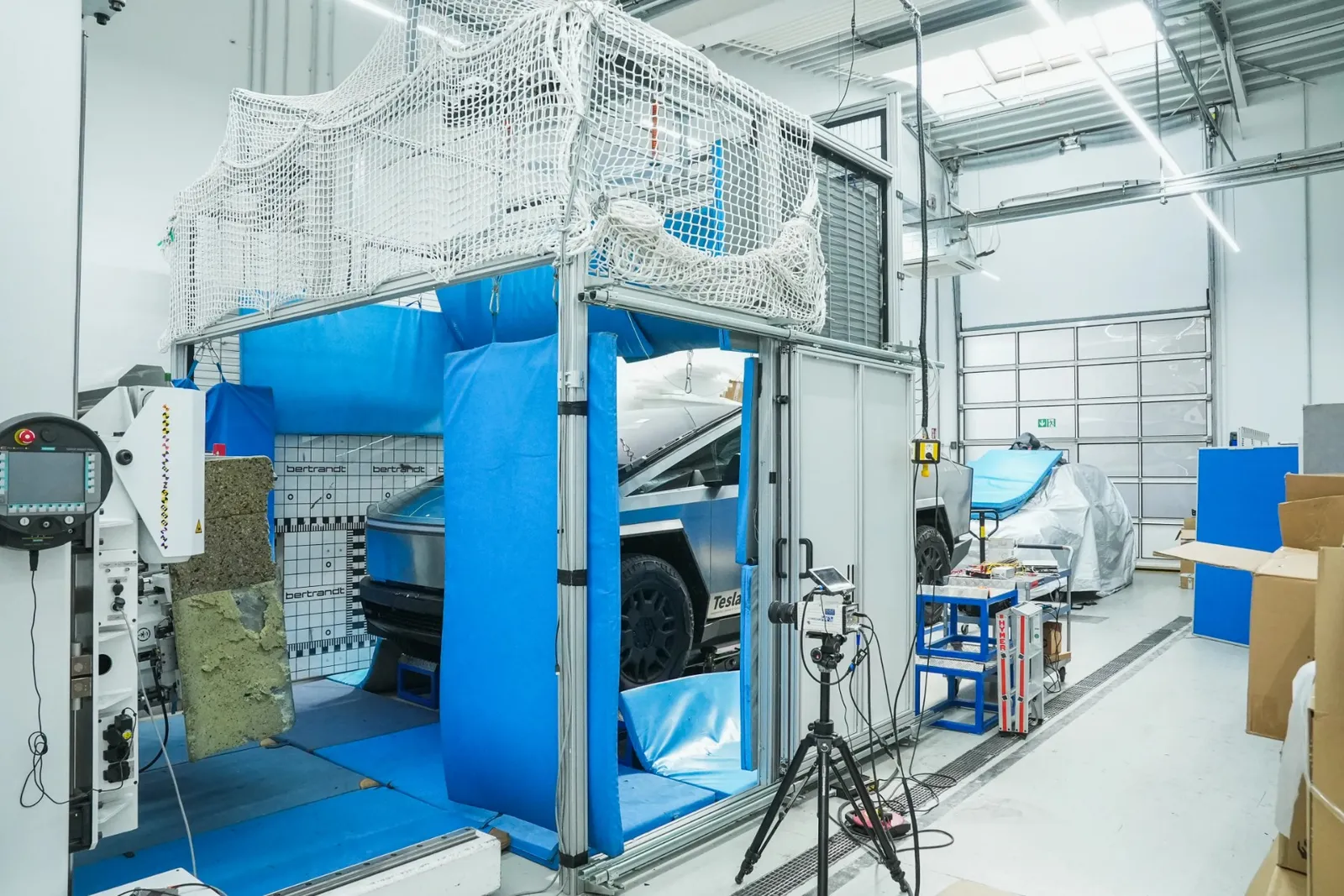
This may sound like a manageable list. However, behind it lies a series of individual test procedures: for the various tests, Revoltaris had to find testing bodies that had never previously evaluated a Cybertruck.
Swiss approval does not guarantee EU-wide certification
The modifications do not yet confirm that the Cybertruck will soon be available as standard at European Tesla dealerships. Tesla itself is not involved in the project and has not yet announced an official European version.
Moreover, Swiss approval does not automatically grant EU-wide type approval. While many Swiss vehicle regulations align with European and international standards, other markets may still require national individual or special approvals.
Nevertheless, Revoltaris plans to start offering Cybertrucks from 2027. The lineup will include the All-Wheel Drive model with around 600 hp and the Cyberbeast with around 845 hp. The importer quotes a price of around 155,000 Swiss francs (approx. €168,900 euros) for a low-mileage used Cybertruck All-Wheel Drive, while the Cyberbeast is expected to cost around 189,000 francs (~€205,970 euros). So, the detour via Switzerland is not exactly a bargain. Prospective buyers will also have to accept functional compromises: the integrated Tesla navigation system is currently inactive in the imported vehicles, which also means the automatic battery pre-conditioning before a fast-charging stop is unavailable.
For charging, adapters for CCS and Type 2 will be used. There is also no Tesla factory warranty. Instead, Revoltaris plans to organise its own warranty and service offerings and establish a network for bodywork repairs. Some spare parts will still need to be sourced from the US.
Interested parties can already reserve a spot. A non-binding reservation costs 175 francs (~€190 euros), while a payment of 2,000 francs (~€2,180 euros) secures one of the first delivery slots, according to the provider. Both payments are non-refundable – even if the project ultimately fails.
In the third quarter of 2026, Tesla’s total revenue stagnated while profits declined significantly. However, Tesla has not established a direct connection between this and the lack of a European version of the Cybertruck. For now, the European Cybertruck remains a highly complex experiment – but at least one with softer knees, rounded edges, and a test report that is likely longer than some user manuals.