
Svolt began producing semi-solid 100 kWh batteries with a 6C charging rate.
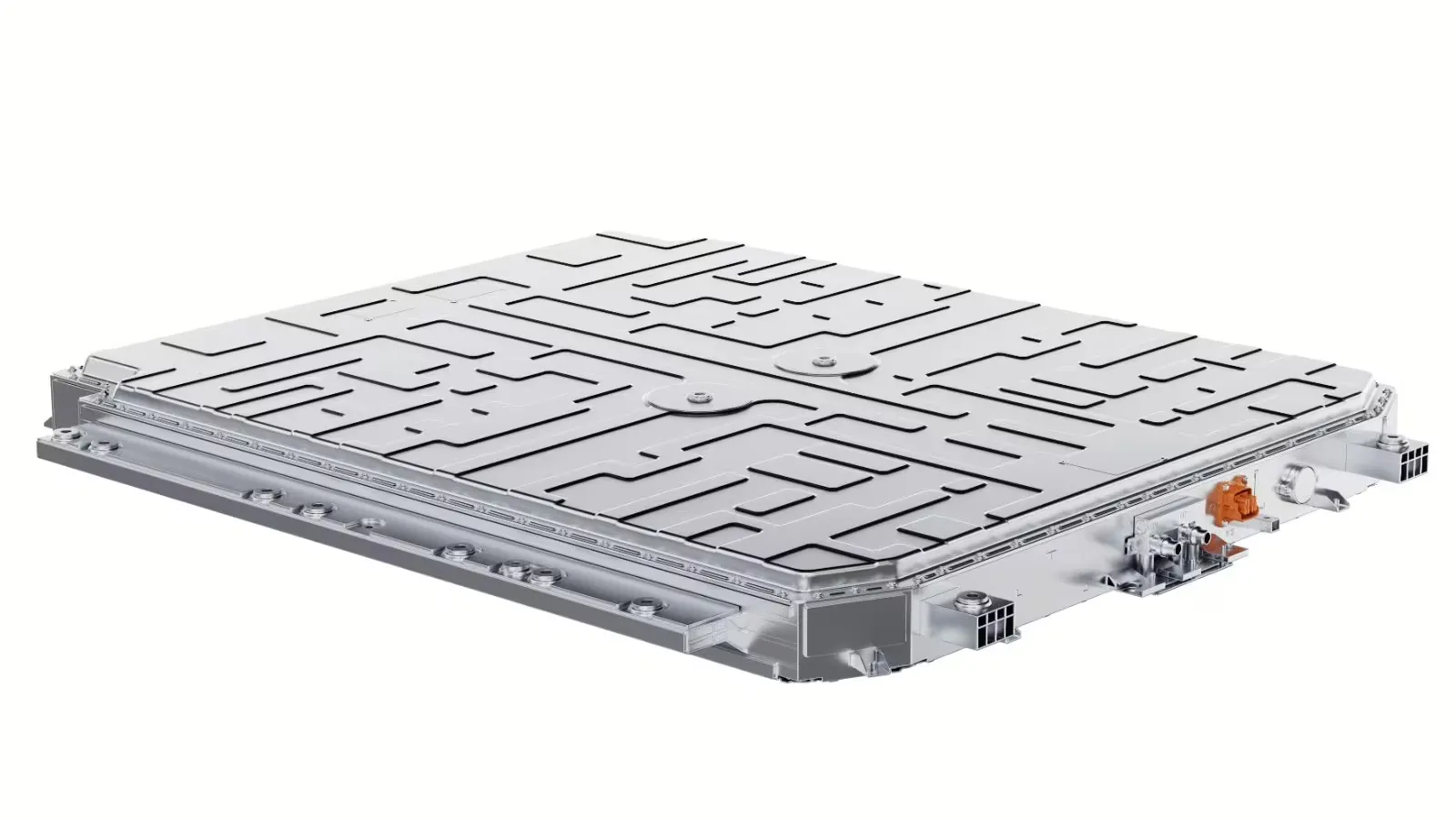
Svolt Energy announced on Weibo that the first batch of mass-produced Dragon Armor packs with a capacity of 100 kWh has been produced at its facility in Changzhou, Jiangsu province. It is a semi-solid battery, or hybrid solid-liquid battery, with a 6C charging rate at 900 V. President Yang Hongxin mentioned orders from several customers, but the brand names have not been disclosed yet.
500 km in 12 minutes. According to Svolt
The manufacturer claims that the pack adds 500 km of range in 12 minutes. At a 6C rate and 100 kWh capacity, it theoretically delivers around 600 kW of peak power. The pack is cooled by liquid from both the top and bottom. The cells are produced using a separator transfer technology, which the company says improves the safety of the chemistry itself.
The bottom is protected by six layers of armor. Svolt claims the impact resistance is three times higher than required by China’s national standards. The cycle life is supposed to exceed 3,000 cycles, resulting in a theoretical range of over 1 million kilometers.
All of this is based on the manufacturer’s data. Svolt has not provided details on the test conditions for achieving 500 kilometers of range in 12 minutes or the methodology used to measure range. It also hasn’t disclosed the size of the first production batch or its customers. Until a specific vehicle is launched, these figures are just claims, not real-world results.
Semi-solid as a goal, not a stopgap
Yang Hongxin believes that semi-solid batteries are not just a step before fully solid cells. He considers them “the mainstream technology in the long term,” especially for ternary chemistry (NCM). The strategy remains unchanged: first semi-solid, then fully solid.
In May, Svolta announced that it would begin mass production of 100-kWh semi-solid-state cells in September, at a cost comparable to traditional lithium-ion cells with liquid electrolytes. The announcement was made on October 26, so there was a slight delay. The company did not disclose the price of the package. At that time, it also stated that fully solid-state cells were still far from mass production.
A Chinese standard draft for solid-state batteries, released for consultation in December 2025, allows the term “semi-solid-state battery” to be used for “hybrid solid-liquid” cells. In other words, what the market calls semi-solid-state is officially classified as a solid-liquid hybrid category.
Rivals and Svolta’s Scale
Chinese companies are simultaneously developing their own technologies:
BYD plans to launch its first model with a proprietary solid-state battery in 2027, initially as a demonstration vehicle. The 2 GWh pilot plant in Pingshan, Shenzhen, began operations in February 2026. Construction of a 20 GWh plant in Bishan, Chongqing, is set to start in the third quarter of 2026.
Dongfeng has announced a launch in October for its own solid-liquid hybrid battery with a density of 350 Wh/kg. Mass production and vehicle integration are scheduled to begin in the fourth quarter of 2026.
FAW Hongqi completed a prototype with a fully solid battery pack in January. Mass production is expected to start by the end of 2027.
Svolt, formerly a GWM battery division, has operated as an independent company since February 2018. According to SNE Research, in the first eight months of 2026 its global installed capacity for traction batteries reached 22.0 GWh, a 39.3% increase year over year. This puts it in ninth place globally and accounts for 2.6% of the market. In China, Svolt was tenth in September with a share of 1.97%, and fourth in the ternary battery segment at 6.31% (data from CABIA).
Svolt will only be able to demonstrate that its battery pack works in actual vehicles once it reveals its customers. For now, there is a lack of evidence, and with a theoretical charging capacity of 600 kW, the most interesting aspect will be how long the vehicle can maintain this capacity at a real charging station.
LovEV Newsletter
Want more content like this?
Sign up — we’ll send you a weekly summary once the newsletter starts.