
The Suzuki Vitara electric version is pleasantly surprising, but the price ruins everything.
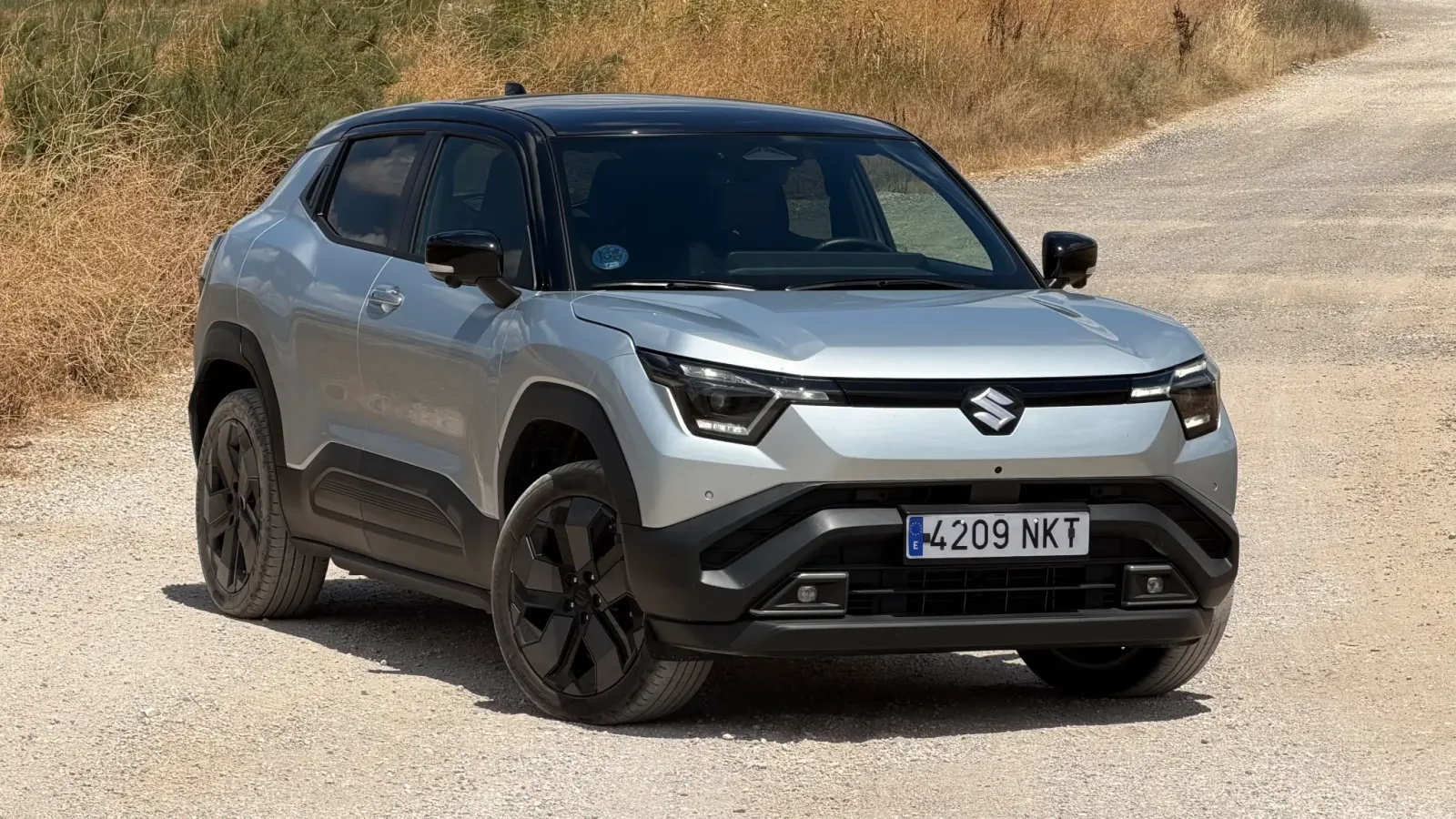
The Suzuki Vitara stands out for its comfort and all-wheel drive, but it has weaknesses that put it at a disadvantage compared to competitors.
Suzuki and VITARA S3 4WD
6.5/10
The Suzuki Vitara has strong advantages and a rare feature in its class, but these aren’t enough to justify its price.
Pros
Sliding rear seats
Comfort on roads
Acoustic insulation
Overall build quality
Cons
Trunk capacity
Fuel consumption
Infotainment system
Price
Suzuki entered the electric mobility market late with the e Vitara, but this Japanese SUV has a feature that sets it apart from many of its competitors: it is available with all-wheel drive. It was in this configuration, the most powerful and also the most expensive, that I drove it for several days across domestic roads.
Equipped with two electric motors—one per axle—135 kW (184 hp) of power, and a 61 kWh battery, the e Vitara AllGrip promises to combine the versatility of a B-segment SUV with the off-road capabilities we’re used to seeing in Suzuki’s models.
There are aspects that truly impressed me positively. But others still remind me that Suzuki has a tough task ahead.
A very different Vitara
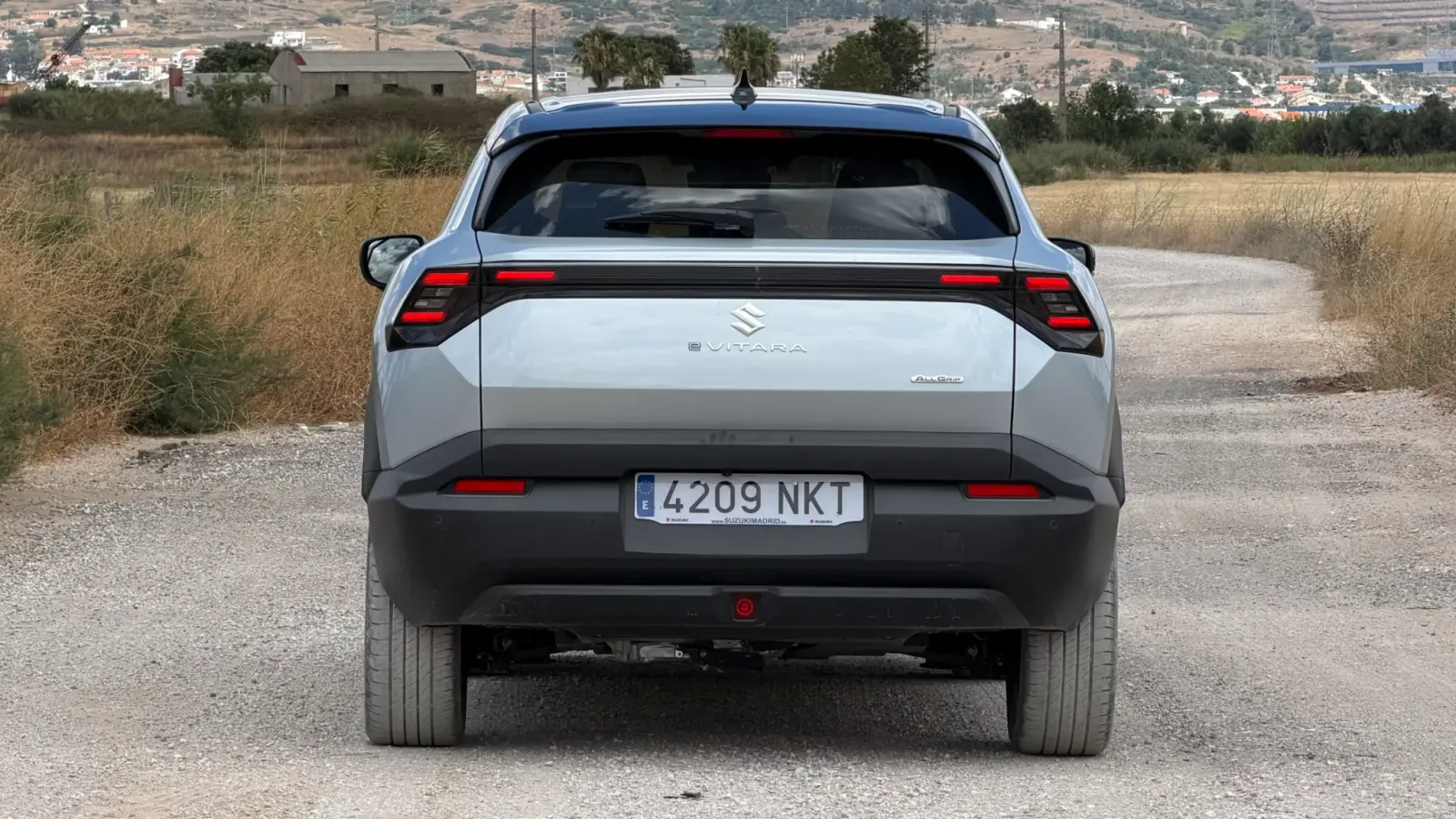
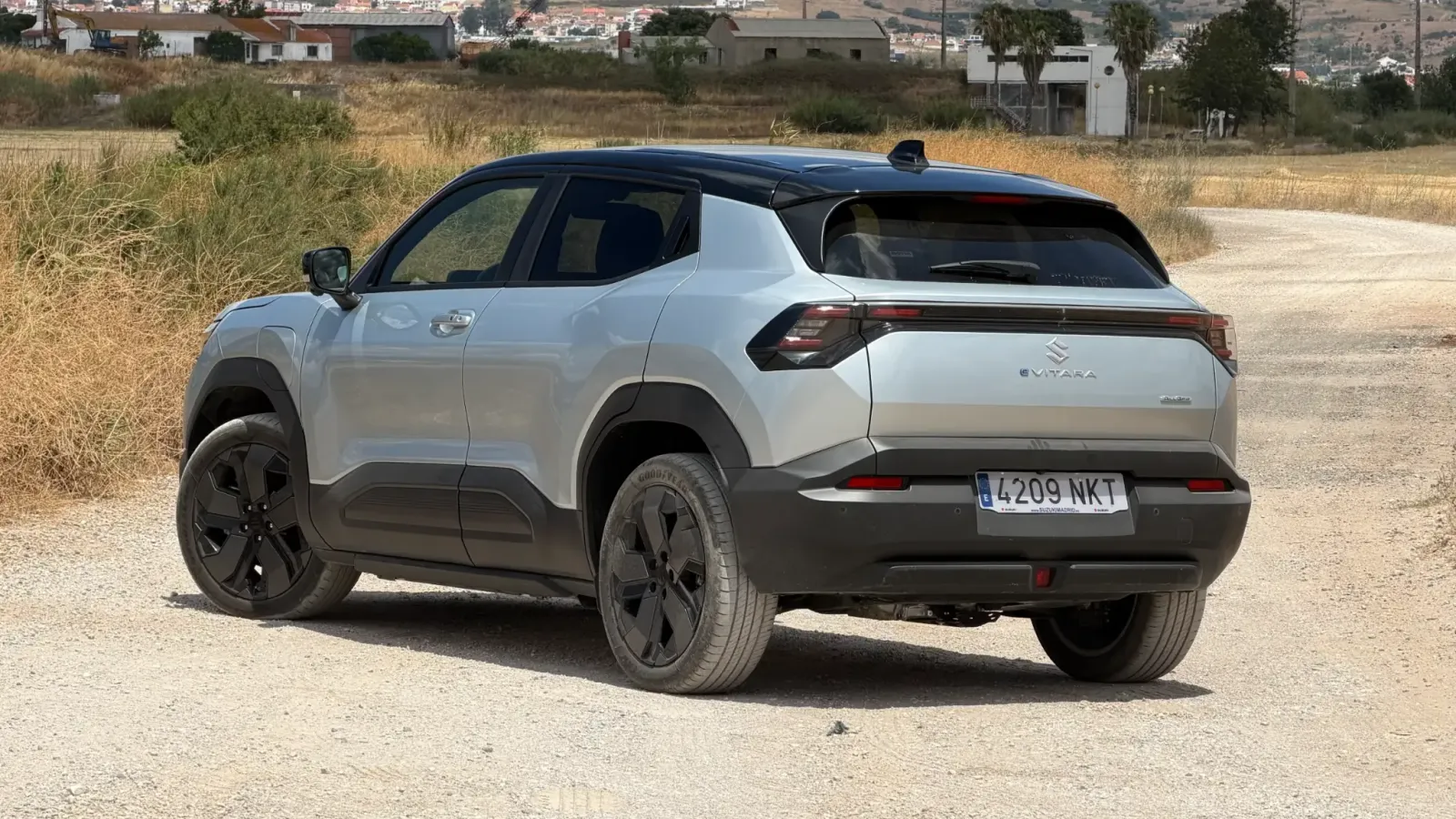
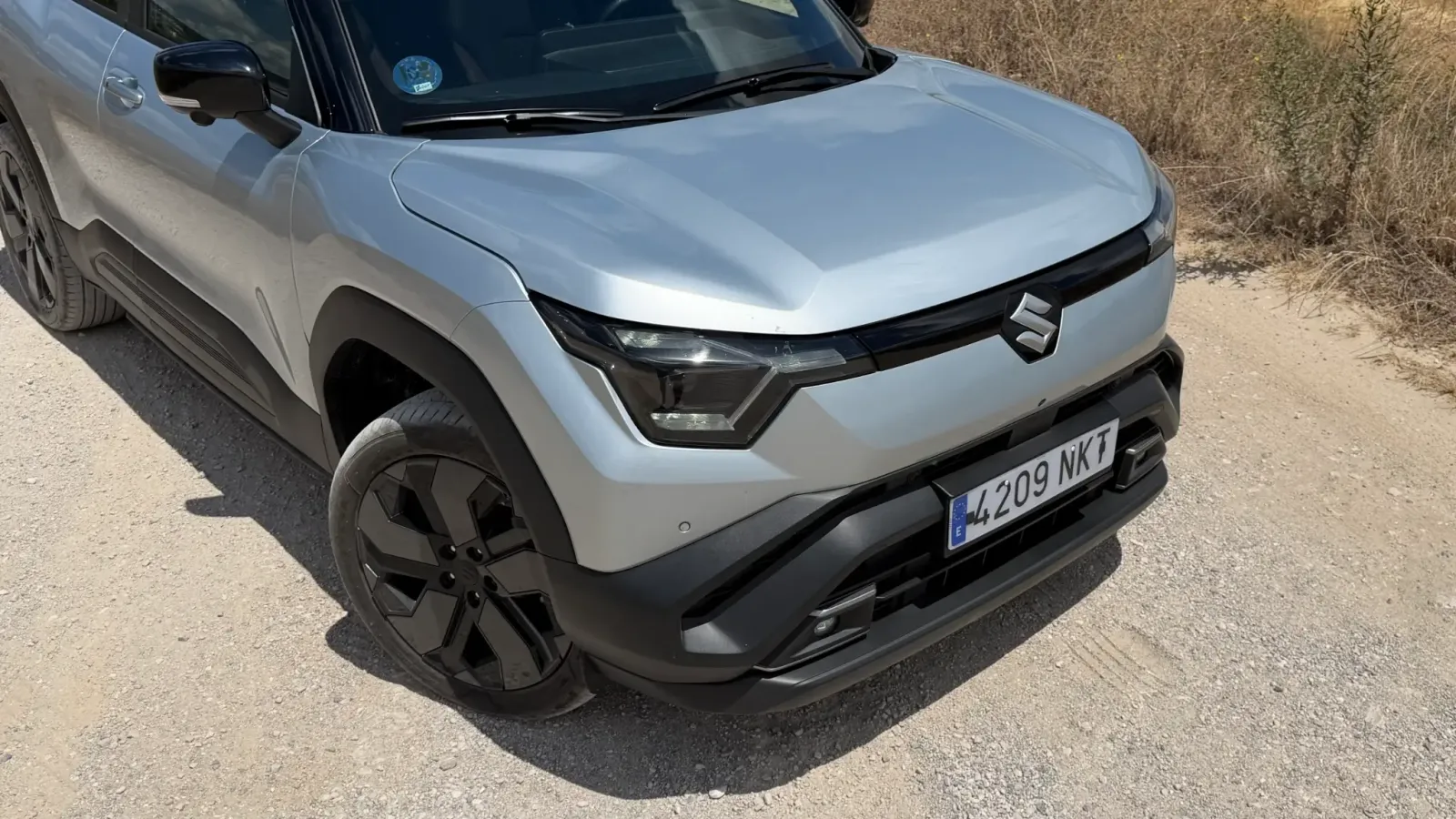
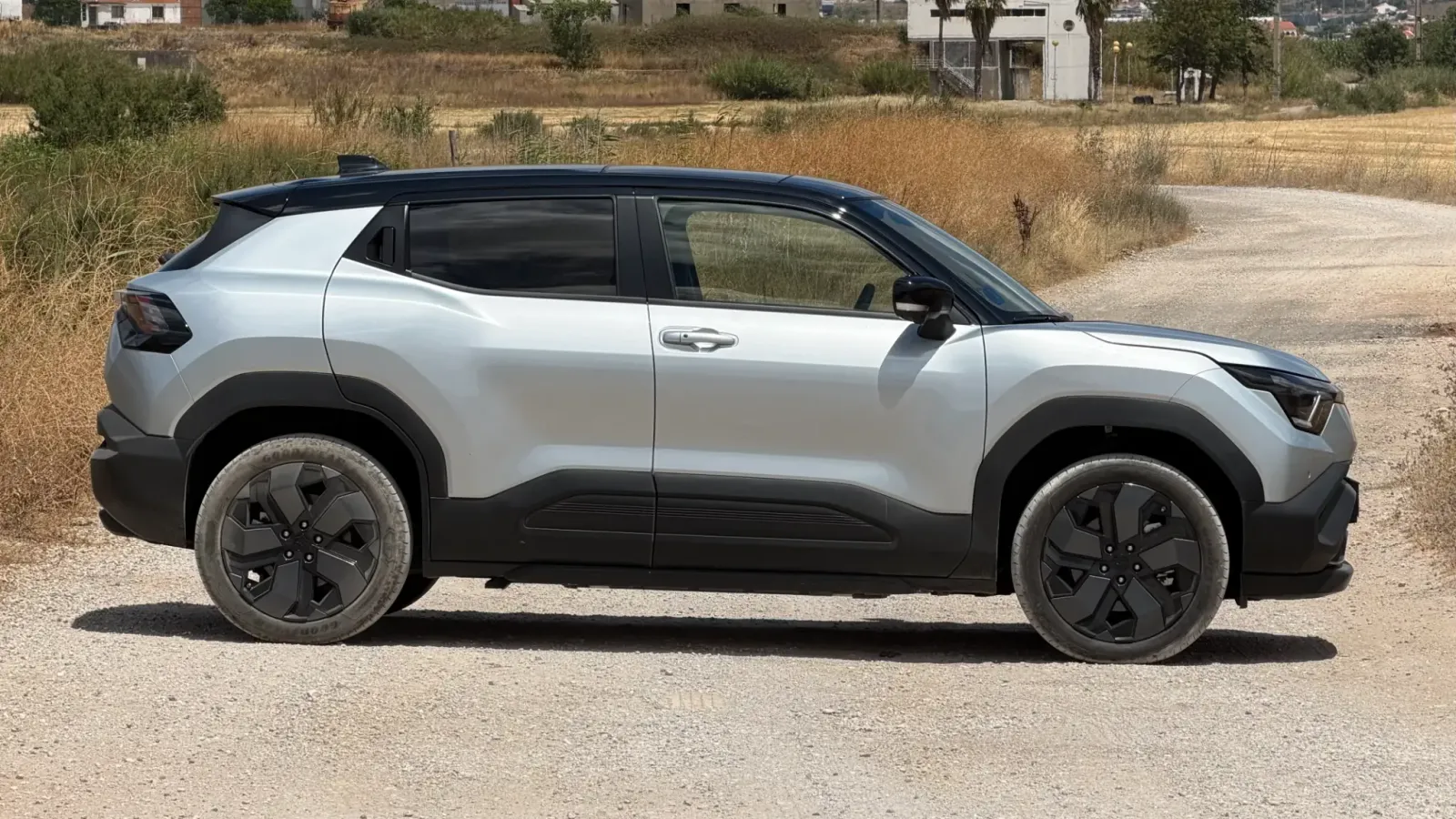
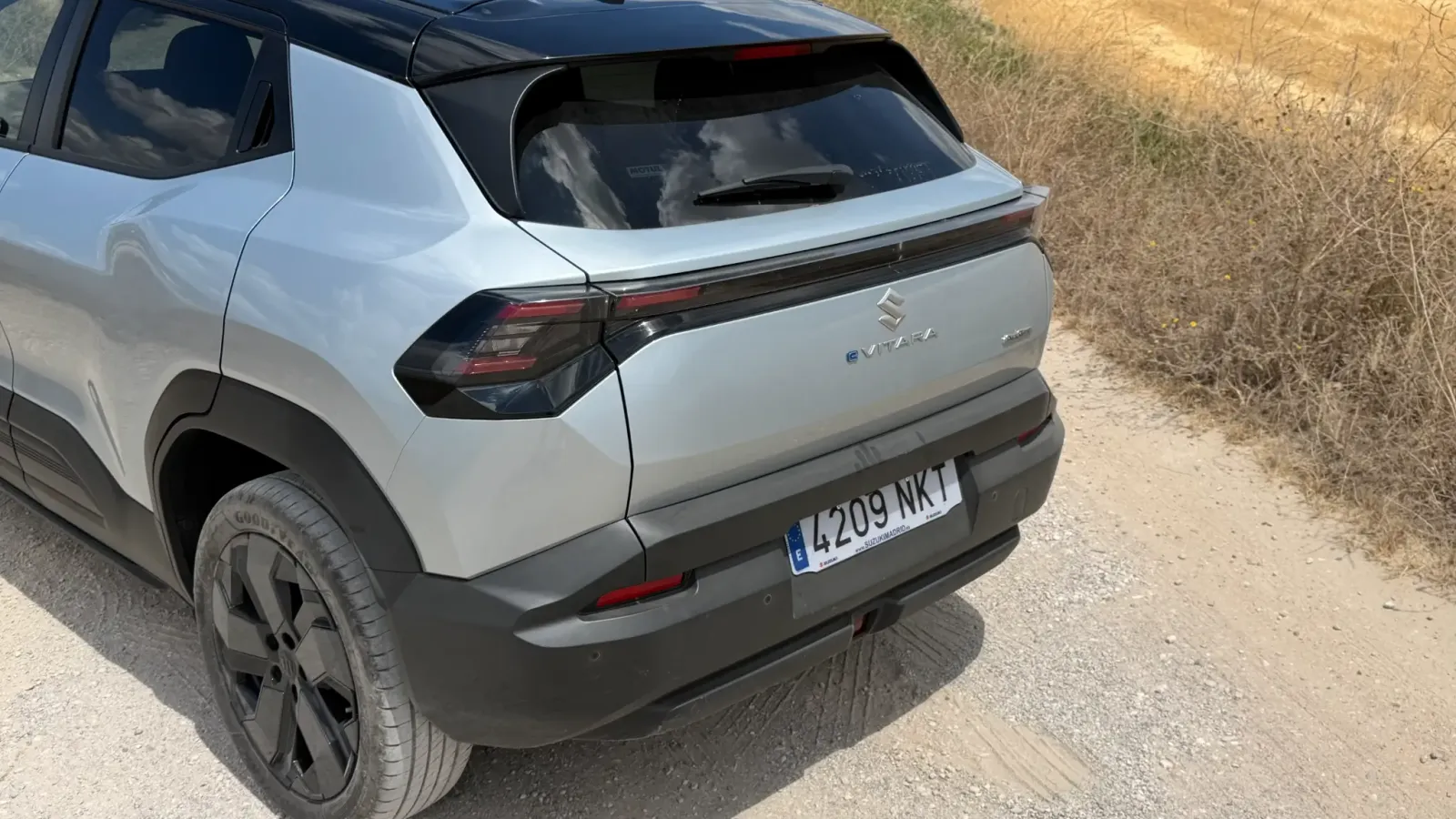
Although it shares the same name as the conventional fuel-powered Vitara, little else connects the two. The electric Vitara introduces a new design language for Suzuki, characterized by geometric shapes, prominent wheel arches, and a lighting signature the brand calls the “3-point matrix,” which appears on both the front and rear.
It isn’t the most eye-catching or distinctive SUV in its class. But for those who prefer a discreet vehicle, it offers a significantly more modern and less conservative option compared to other Suzuki models. Personally, I like seeing the brand take more risks in terms of aesthetics.
3 images
The test model, equipped with the S3 trim level, featured 19″ wheels, an aesthetic element that clearly helps enhance its robust appearance.
Technology is the Achilles' heel
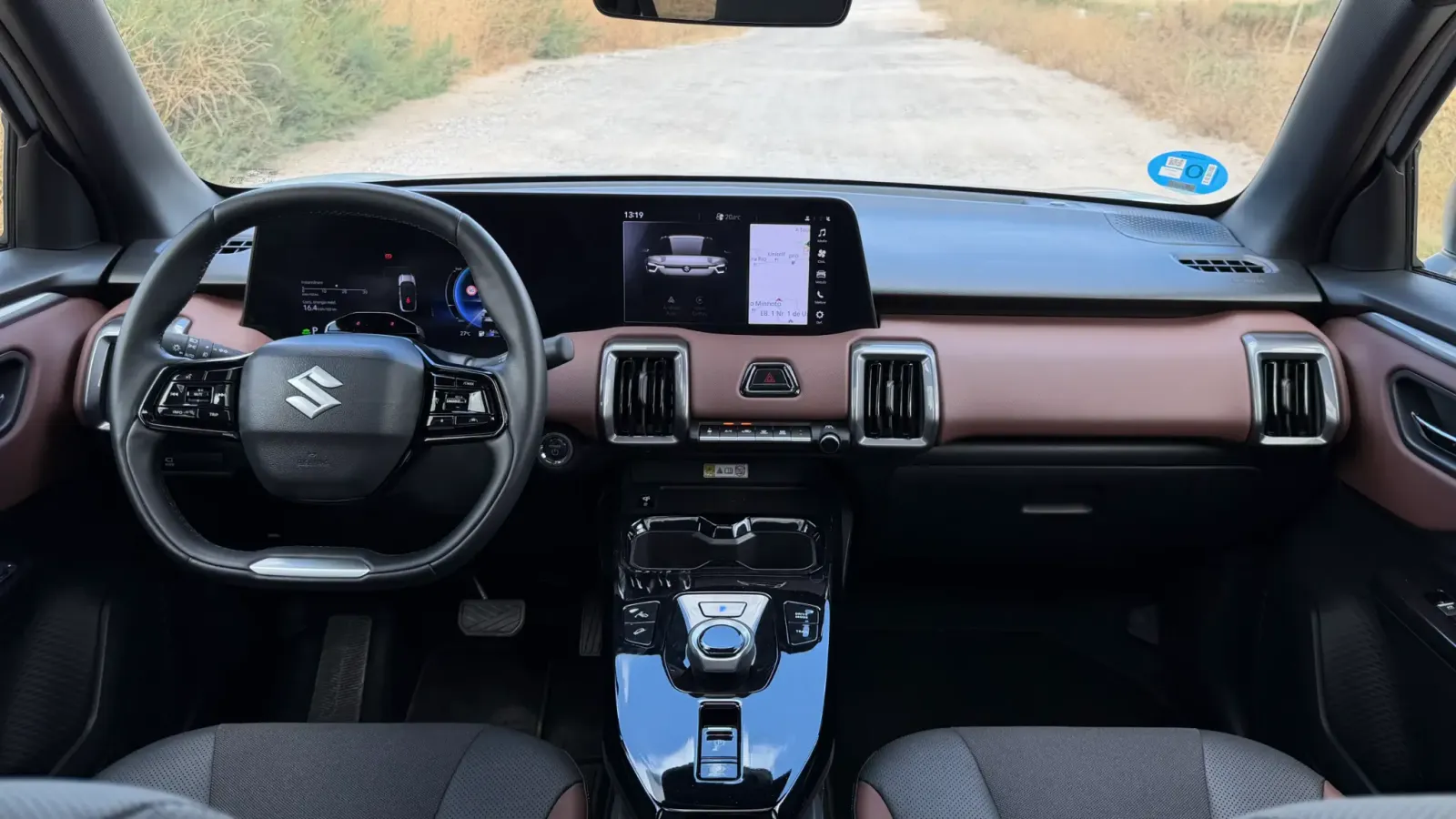
The interior represents an evolutionary leap compared to what Suzuki has accustomed us to, but it is also one of the areas where the Vitara loses ground most significantly to its competitors.
In front of the driver are two 10″ screens, one for instrumentation and another for the infotainment system. The former, although not featuring the most modern graphics, performs its function without major issues and presents information clearly.
I cannot say the same for the central screen. Its graphics appear outdated, and its response to commands is slow. I had already gotten the chance to try this system during its international launch event, and after several days behind the wheel, my impression remained unchanged: it is neither intuitive nor smooth to use.
3 images
Finding the driving assistance systems requires navigating through too many menus. Changing other vehicle settings isn’t particularly intuitive either. Even adjusting the braking regeneration level demands exploring various settings, when levers behind the steering wheel, as in other electric vehicles, would solve this problem more practically, easily, and above all safely, since they wouldn’t force us to divert our attention from the road to do it.
Versatility is an advantage
In terms of material quality, this is a B-segment vehicle. That means the quality of the materials isn’t impressive. On the other hand, the construction quality is excellent. Even on roads in poor condition or with significant irregularities, I didn’t hear any distracting noises.
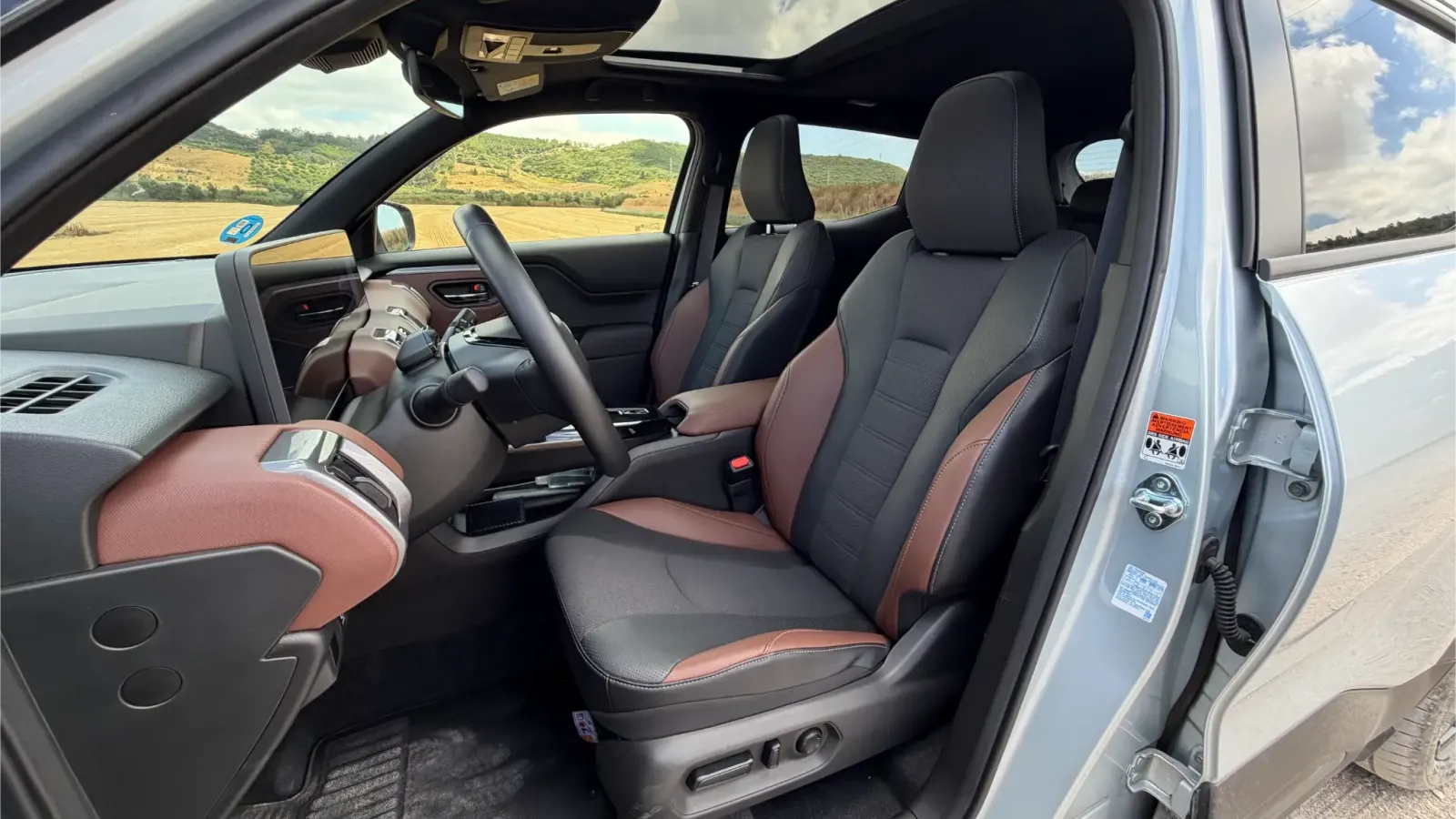
In the most equipped version (S3), the driver’s seat has electric adjustment, and the upholstery combines fabric with brown synthetic leather. But the most interesting feature is located at the back. The rear seats can slide longitudinally, allowing you to choose between more space for passengers or a larger trunk. It’s a simple yet useful solution that few vehicles in this segment offer.
3 images
The problem is that this versatility fails to mask the limited capacity of the trunk. With the seats in the rearmost position to maximize space for passengers, the rear compartment holds around 238 liters. When the seats are moved forward, this increases to 310 liters.
For everyday commuting, that’s more than enough. However, for a family trip, 310 liters falls short of what’s desired. Even the conventional fuel-powered Vitara, which is shorter and narrower, offers 52 liters (362 l) more storage space. Compared to competitors like the KIA EV2, Citroën ë-C3 Aircross, or Skoda Epiq, it offers 52, 160, and 165 liters less, respectively.
Comfort is its strength
If there is one area where the e Vitara surprised me once again, it’s its road rolling comfort. Despite weighing over 1800 kg and featuring 19-inch wheels, this AllGrip version rolls with such smoothness that it deserves special mention.
The suspension handles irregularities well, and the sound insulation also earns a positive rating. The e Vitara doesn’t aim to stand out through sporty handling, but it offers a compelling balance for those who spend a lot of time behind the wheel and value a relaxed driving experience.
4 images
The AllGrip version adds a second electric motor to the rear axle, providing all-wheel drive and a combined power output of 135 kW (184 hp) along with 307 Nm of torque. The 61 kWh battery is the largest in the range, but this configuration does not offer the greatest range: 395 km, 31 km less than the front-wheel drive version equipped with the same battery.
The additional weight and operation of the second motor affect efficiency, as confirmed by my measured fuel consumption: 16.7 kWh/100 km. Although this is better than competitors’ figures, it’s not “disastrous” and aligns with the values announced by the brand.
ADVERTISING
Electric cars up to 20,000 euros
There are already nearly 900 electric cars on the used market priced at up to 20,000 euros.
In contrast, all-wheel drive offers advantages for those who aren’t confined to asphalt. The Vitara isn’t a “pure” off-roader like many we see from Suzuki, but it features specific driving modes for off-road use that adjust traction control to distribute power to the wheels with the best grip.
It also comes equipped with a downhill control system that acts on the brakes to help maintain a safe speed on steep slopes. This is an additional feature offered by few vehicles in this segment and can be valuable for those who frequently drive on dirt roads or surfaces with reduced traction.
Price is the biggest obstacle
We finally arrive at the main obstacle for the Suzuki and Vitara: price. The range starts at 32,701 euros for the version with a 49 kW battery, and at 37,275 euros for the variant with a larger 61 kW battery.
However, the version I was able to drive, which has the highest level of equipment, a larger capacity battery, and all-wheel drive, costs 43,171 euros. In my opinion, this is an excessively high price for a vehicle in this segment, even considering the standard equipment and the advantage of all-wheel drive.
In this segment, there are competitors offering more range and a larger trunk capacity at lower prices. For example, the Citroën ë-C3 Aircross, equipped with the highest specification level and 400 km of range, starts at 33,290 euros. It lacks all-wheel drive, true, but it’s still about 10,000 euros cheaper.
In summary, the Suzuki Vitara doesn’t stand out in terms of multimedia performance, trunk capacity, or efficiency, but it excels at what matters most: it’s comfortable, quiet, and reliable. Unfortunately, in this segment, price still plays a major role, and in that regard, the Vitara needs to be more competitive.
Verdict
Suzuki e VITARA S3 4WD
6.5/10
The Suzuki Vitara AllGrip stands out for its comfort, sound insulation, and solid construction. The sliding rear seats add versatility, and all-wheel drive is a rare advantage in this segment. However, its fuel consumption, limited trunk space, slow infotainment system, and above all, high price make it difficult to recommend without reservations.
Pros
Sliding rear seats
Road comfort
Sound insulation
Overall construction quality
Cons
Trunk capacity
Fuel consumption
Infotainment system
Price
Technical specifications
Base version: 37,275€
Euro NCAP rating:
4/5
43,171€
Price of the tested unit
Architecture: Two electric motors
Placement: One per axle, in a transverse position
Battery capacity: 61 kWh
Power:
Front engine: 128 kW (174 hp)
Rear engine: 48 kW (65 hp)
Total combined power: 135 kW (184 hp)
Torque:
Front engine: 193 Nm
Rear engine: 114 Nm
Maximum combined torque: 307 Nm
Drive type: All-wheel drive
Transmission: Single-speed
Length: 4275 mm
Width: 1800 mm
Height: 1635 mm
Wheelbase: 2700 mm
Trunk capacity: 238-1052 liters
Wheels/Tires: FR: 225/50 R19; TR: 225/50 R19
Weight: 1860 kg
Average fuel consumption: 16.6 kWh/100 km
Top speed: 150 km/h
Maximum acceleration: >7.4s
Features:
Electrically adjustable driver’s seat
Heated front seats
Sliding and reclining rear seats
360º camera
SNOW / TRAIL mode control
Adaptive Cruise Control
10.1″ central screen
Wireless Apple CarPlay and Android Auto connectivity
10.25″ instrument panel
Heated exterior mirrors with electric adjustment and folding
Driving mode selector
Front and rear parking sensors
Infinity sound system
Tinted rear windows