
Suzuki remains quite cautious about electric vehicles in its projections.
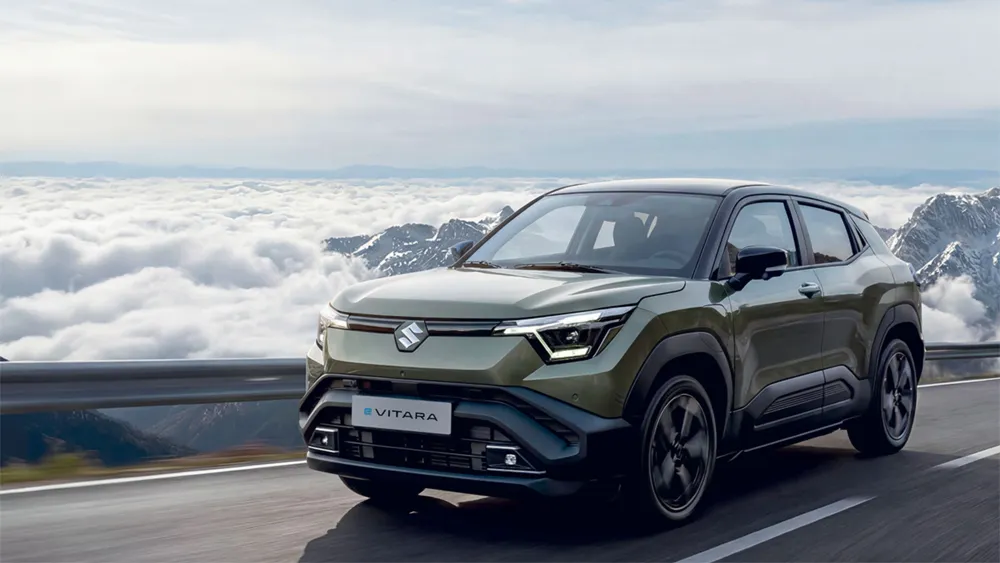
Suzuki currently offers only the compact SUV e Vitara as an electric vehicle in France. The Japanese manufacturer has just announced its technological strategy for the next ten years. The plans remain modest, with a particular focus on kei-car models.
In France, electric vehicles rely solely on the e Vitara
According to Suzuki’s official French website, the price of the compact electric SUV (4.28 x 1.80 meters) e Vitara, available for several months now, is currently 28,500 euros including tax, after a discount of 4,000 euros compared to the listed price.
The entry-level model in the Avantage trim for this purpose comes equipped with an LFP (lithium iron phosphate) battery with a raw energy capacity of 49 kWh. With this setup, the WLTP mixed cycle range is 344 km. The battery powers an engine that delivers 106 kW (144 hp) of power to the front wheels and 193 Nm of torque.
With a raw battery capacity of 61 kWh, drivers can choose between a rear-wheel drive configuration or all-wheel drive. This affects the official range, which is 428 km for rear-wheel drive and 412 km for all-wheel drive. The rear-wheel drive version has a power output of 128 kW (174 hp) with the same 193 Nm of torque, while the higher-end version offers 135 kW (184 hp) and 307 Nm of torque.
For charging, the e Vitara is equipped with an 11 kW AC charger, with its DC regenerative capacity reaching up to 90 kW. These figures are not exceptional and even lag behind those of competitors, but a favorable pricing structure can make a difference.
Differentiated Offerings
In its 32-page document outlining its technological strategy for the next decade, Suzuki states it will not “implement a uniform system” in order to “provide mobility solutions tailored to the realities and infrastructure of each region.”
The Japanese manufacturer justifies this position with “the efficiency of electricity production, the share of renewable energy, the state of charging infrastructure, risks of natural disasters, and energy supply stability,” which can vary “significantly from country to country and region to region.”
Electric vehicles would thus be more common “in regions that can fully utilize renewable energy and charging infrastructure,” as well as in those that have implemented environmental policies and measures to combat air pollution.
When electric vehicles are tailored for a specific region, Suzuki strives to provide optimal batteries for local applications, sourcing them from Japan, India, or Europe based on the most suitable supplier. Using these components, the manufacturer develops in-house systems that include the lithium battery pack, thermal management, and charge/discharge control.
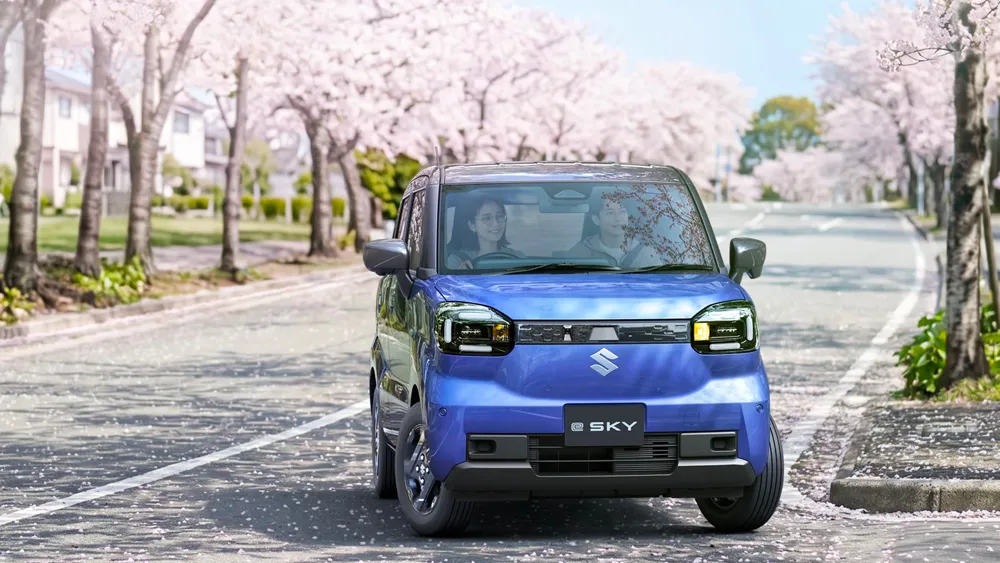
Kei-cars e Sky
In Japan, kei-cars are very compact vehicles that must meet specific criteria. Typically, they do not exceed 3.40 meters in length, 1.48 meters in width, and 2.00 meters in height. Four people should be able to fit inside. In this market, Suzuki emerges as a pioneer and historical leader, with over 450,000 units sold last year. Primarily designed for frequent use in areas with varying levels of population density, these micro-cities cars benefit greatly from being electric.
In this category, Suzuki developed the e Sky. Weighing 1,030 kilograms, this small electric car has an energy consumption of 9.7 kWh per 100 kilometers, with a range of 310 km according to the Japanese cycle, which is much more optimistic than our WLTP standard. Initially, the project planned for only 230 km of range. But the manufacturer wanted to do better, believing that typical users of conventional gasoline vehicles might not be satisfied with that range.
The best range was achieved by making adjustments to different parts of the vehicle. This included reducing tire rolling resistance, revising suspension characteristics, optimizing transmission ratios, and decreasing the number of LEDs to lower energy consumption. All of this was done without significantly altering the aesthetic design of these cars. “Each improvement is minor, but collective cross-departmental collaboration among design, production, quality control, procurement, and other teams has made it possible to accumulate them,” the manufacturer continues to say proudly.
e Every
For Japan, Suzuki also offers its e Every. Developed in collaboration with Daihatsu and Toyota, it is equipped with a 36.6 kWh LFP battery, providing a WLTP range of 257 km. The vehicle is available as a two-seater mini-van or as a four-seater model that meets kei-car standards.
The e Every is powered by a compact eAxle unit that integrates the electric motor, inverter, and transmission all in one. As part of its strategy for the next decade, the manufacturer plans to develop such systems for use in both electric and hybrid models.
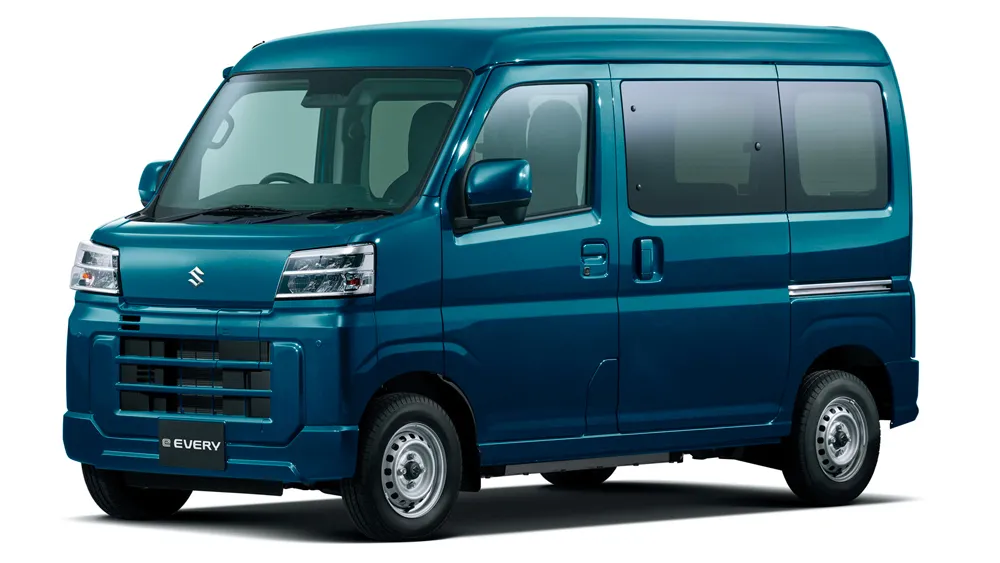
Small does not mean without technology. In addition to the 7-inch digital display for instrumentation, the e Every features adaptive lighting with LED projectors and active safety systems. Optionally, a digital interior mirror can be added to improve rear visibility when transporting bulky loads or driving at night.
