
Supertest MG 4 Urban 54 kWh: Measured energy consumption and range, with several records broken!
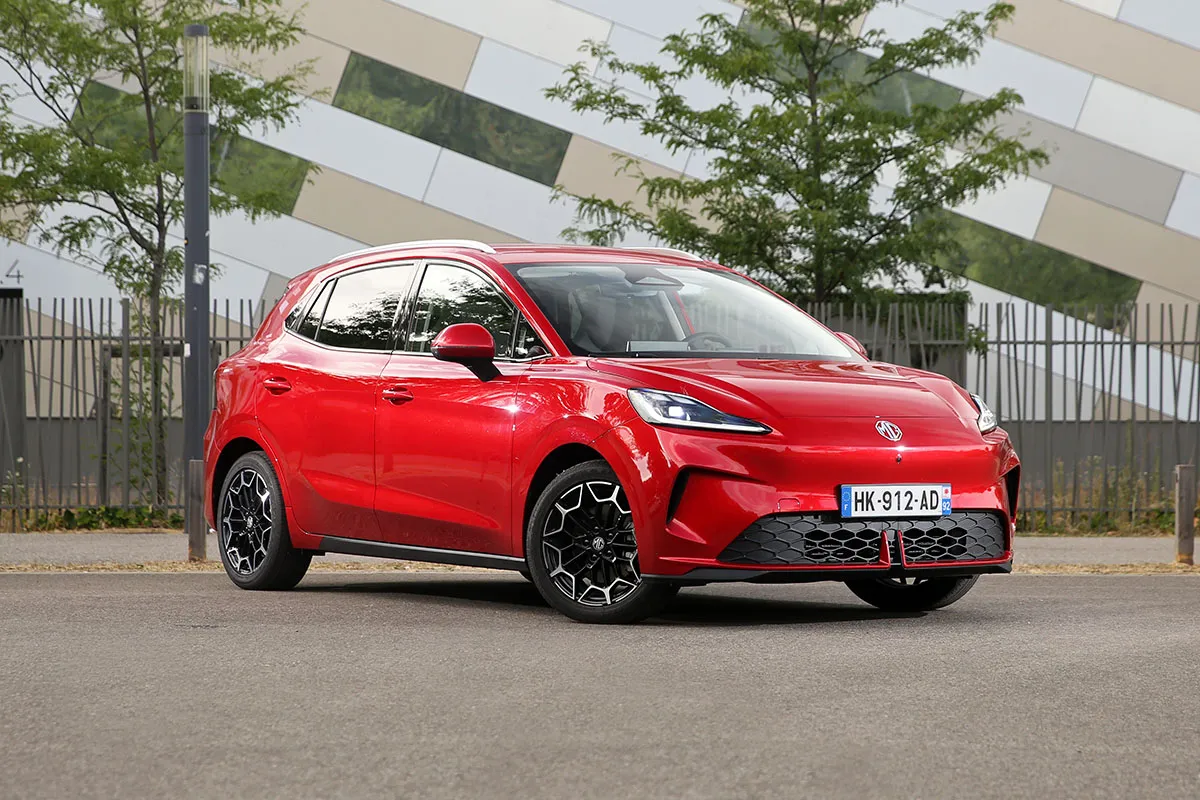
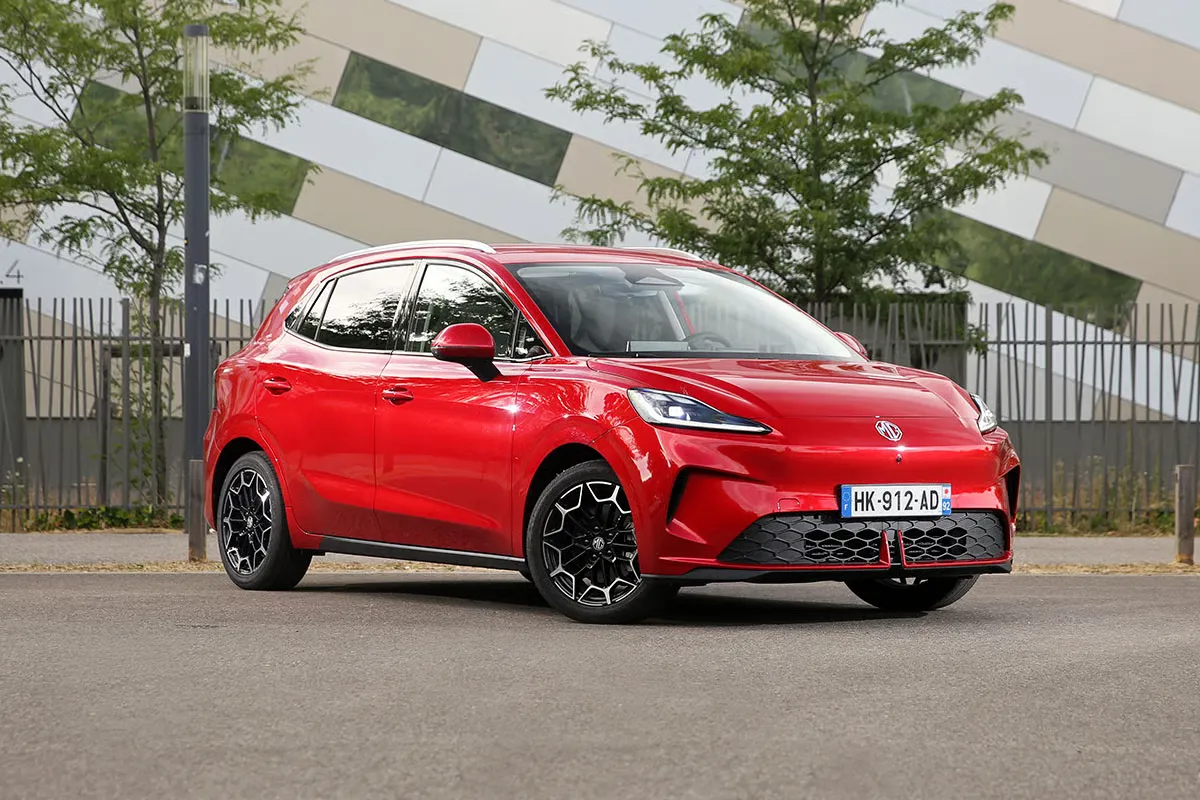
The MG 4 Urban surprised us with its low consumption during the initial tests. We took it to our facilities to verify this thoroughly.
"You’ll see, the car can have more range than WLTP suggests." That’s what the brand’s press relations officials said as they handed us the keys to the MG 4 Urban during our first test drive. Fair enough, as we recorded a fuel consumption of 12.0 kWh/100 km at the time. Were the route and conditions favorable? Definitely. During the next test at the eTrophées organized by the Auto et Moto Media Association, this compact vehicle was one of the most fuel-efficient, as well as one of those closest to the WLTP standard. To get a definitive answer, all that was left was to subject the car to a Supertest. And the results are amazing!
Also read
MG 4 Urban test drive: a (large) electric compact car at the price of a (small) city car
Introduction to the MG 4 Urban
Unlike the standard MG 4, which is based on the MSP platform, the MG 4 Urban uses the E3 technical platform, featuring a completely different configuration. Here, the electric motor is mounted at the front, which allows more space in the trunk and also reduces internal cables by 20% by placing it closer to the power electronics.
At the front is a permanent magnet synchronous electric motor capable of delivering up to 118 kW (160 hp) and 250 Nm of torque in this 54 kWh version. As its name suggests, it comes equipped with a battery with a raw capacity of 54 kWh. Being of the LFP type, it has a usable capacity of 52.6 kWh according to our measurements.
The MG 4 Urban is currently the most economical model in the manufacturer’s lineup: this 54 kWh version promises 416 km of WLTP range, with an approved consumption of 15.3 kWh/100 km. The Premium version tested here achieves 405 km of range with 15.5 kWh/100 km, which translates to 13.0 kWh/100 km after accounting for charging losses. Let’s see how it performs in real-world conditions.
Additional specifications for MG 4 Urban 54 kWh
Peak power: 160 hp – 118 kW
Net power (field P.2): 75 hp – 55 kW (-53 %)
Rated power (field P.6): 4 hp
Operating weight (field G.1): 1,520 kg
Power-to-weight ratio (PVOM): 10.1 kg/hp
WLTP range: 405 km
WLTP consumption: 15.5 kWh/100 km (13.0 kWh/100 km net)
AC charging: 11 kW
DC charging: 87 kW – 30 minutes (10-80 %)
Tires: Maxxis Waltz MS1 – 205/50 R17 – A, B, 69 dB
All our fuel consumption measurements for the MG 4 Urban
Combined range: 390 km (13.4 kWh/100 km)
Average而言, cars show a 17% difference in combined range between the WLTP standard and the value calculated using our real-world testing circuit. This difference can be greater or smaller at times. More rarely, there are surprising exceptions that prompt us to repeat measurements several times to ensure their accuracy. This was the case with the Nissan Ariya, for example, or more recently with the Hyundai Ioniq 5, which had a difference of only 3.5%! The MG 4 Urban clearly falls into this category, with its actual efficiency levels not far from the certification standard.
At the end of our mixed cycle test, this 4.40-meter-long compact vehicle set a new fuel consumption record at 13.4 kWh/100 km. This translates to a theoretical total range of nearly 390 km, representing a 3.3% difference from the WLTP range. Thanks to its remarkable efficiency, which allows it to surpass the Renault Twingo E-Tech’s record of 13.6 kWh/100 km, the Urban manages to offer a longer range than the MG 4 64 kWh LFP model (370 km). This result is partly attributed to the efficiency of its onboard systems (under 200 W at rest, compared to nearly twice that in most cars) and a very energy-efficient heat pump at 14 °C (under 400 W).
Road
Highway
City
Total
Average round-trip consumption (kWh/100 km)
13.2
16.2
10.8
13.4
Theoretical total range (km)
398
324
486
392
Mixed range – 14 °C outside.
Long-distance driving on highway: 260 km (20.4 kWh/100 km)
On our typical 500 km route from Lyon to Paris via the A6 highway, the MG 4 Urban achieved a final fuel consumption of 21.1 kWh/100 km, resulting in a theoretical total range of 260 km, or 180 km at 80–10% charge. The discrepancy from official figures is also among the best in this category. The MG 4 Urban confirms the brand’s intended positioning, offering a range comparable to that of the Peugeot e-208. It also competes with compact models such as the Peugeot e-308 (260 km) or the Volkswagen ID.3 (270 km). The new MG 4 64 kWh LFP version does not allow for significantly greater range (270 km).
Also read
MG 4 2026 test: Can this restyled electric compact make a strong comeback in its segment?
Instantaneous fuel consumption at high speeds
The MG 4 Urban has a Cx value of 0.263, which translates to an SCx of around 0.64 m² according to our estimates. Its aerodynamics are average but inferior to those of some competitors in the same class. This is confirmed by our tests on aerodynamic and rolling resistance at strictly fixed speeds with the air conditioning turned off. In these tests, the MG 4 Urban showed fuel consumption of 17.3 kWh/100 km at 110 km/h and 21.5 kWh/100 km at 130 km/h.
90 km/h
110 km/h
130 km/h
Average consumption (kWh/100 km)
13.3
17.3
21.5
Instantaneous consumption
Eco-driving mode: 620 km (8.5 kWh/100 km)
The MG 4 Urban does come equipped with an Eco mode, but it doesn’t seem to affect the drivetrain or throttle mapping. Additionally, the air conditioning system lacks an Eco programming option. Despite its very basic settings, the car is still capable of achieving impressive efficiency levels. On our typical test route, it consumed 8.5 kWh per 100 km, a figure shared with the Tesla Model Y Propulsion. This remarkable fuel efficiency was easily maintained on other roads and under different conditions, with a minimum of 7.7 kWh per 100 km recorded on the Parisian ring road!
All our performance measurements for the MG 4 Urban
Acceleration and deceleration
The MG 4 Urban has 118 kW (160 hp) and 250 Nm of torque, with a weight of 1,520 kg. Despite its LFP battery technology and larger size, it is as light as a Jeep Avenger and only 65 kg heavier than a Peugeot e-208 GT. Its weight-to-power ratio is similar to that of city cars, just like its linear power delivery, which is comparable to that of the Lionne.
In the best case (there is a difference of 0.1 seconds between modes, nothing more), the MG 4 Urban can achieve 0-100 km/h in 8.5 seconds, which is one second better than the official figure. Once again, MG seems to be reporting conservative numbers. The 400 m time is 16.4 seconds, also matching the performance of other city electric cars. Notably, it takes 14.3 seconds to reach 0-130 km/h. In terms of acceleration, it takes 6.5 seconds to go from 80 to 120 km/h.
Mode
0-100 km/h
80-120 km/h
400 m
Normal/Eco
8.7 s
6.1 s
16.5 s
Sport
8.5 s
6.1 s
16.4 s
Performance in stop-start mode at 80% load
Braking and energy recovery
During emergency braking from 130 km/h, the car needs 64.5 m to come to a stop. This is slightly more than the average of our measurements, likely due to the tires’ low rolling resistance coefficient.
Like all MG models, this compact vehicle features three levels of regenerative braking, an adaptive mode, and a One-Pedal mode. In the lightest mode, the car can travel nearly 859 m from 80 km/h. This distance decreases to 244 m in the Strong mode and further to 174 m in the One-Pedal mode.
Mode
90-0 km/h
80-0 km/h
60-0 km/h
Low
858.8 m
688.8 m
478.1 m
Fort
244.2 m
193.2 m
111.7 m
One-Pedal
174.0 m
134.0 m
73.9 m
Regenerative braking when releasing the pedal
Slightly less noisy by one decibel according to our sound meter compared to the MG 4 2026, the MG 4 Urban isn’t unbearably noisy on the highway. The noise level is equivalent to that of a city car, but comfort isn’t really affected in daily driving or on long trips. In fact, it performs well like a larger vehicle during long journeys. While the maximum power of 88 kW at fast charging stations is noteworthy, just as with fuel consumption and range, the MG 4 Urban has shown us that we shouldn’t rely too much on its technical specifications—in a good way. We’ll discuss this next week.