
Supertest Lucid Air Sapphire: Measured fuel consumption and range of this 1,251 hp powerhouse
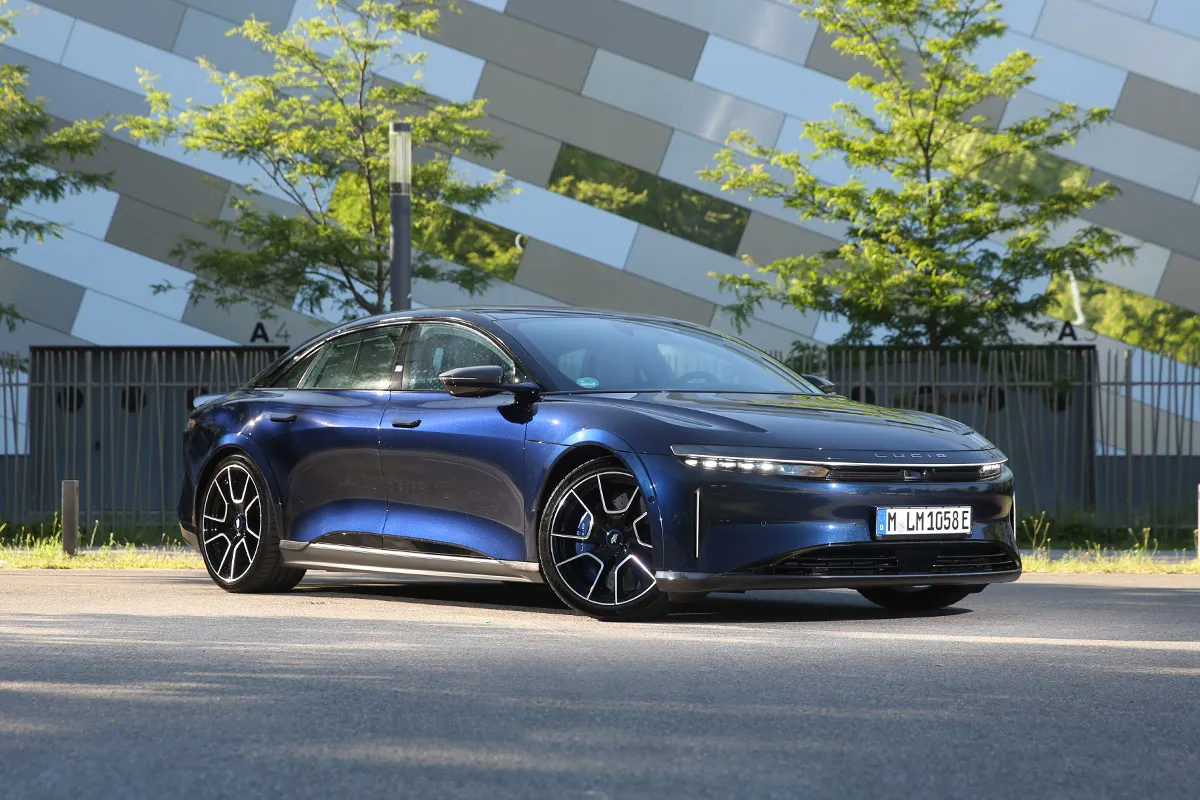
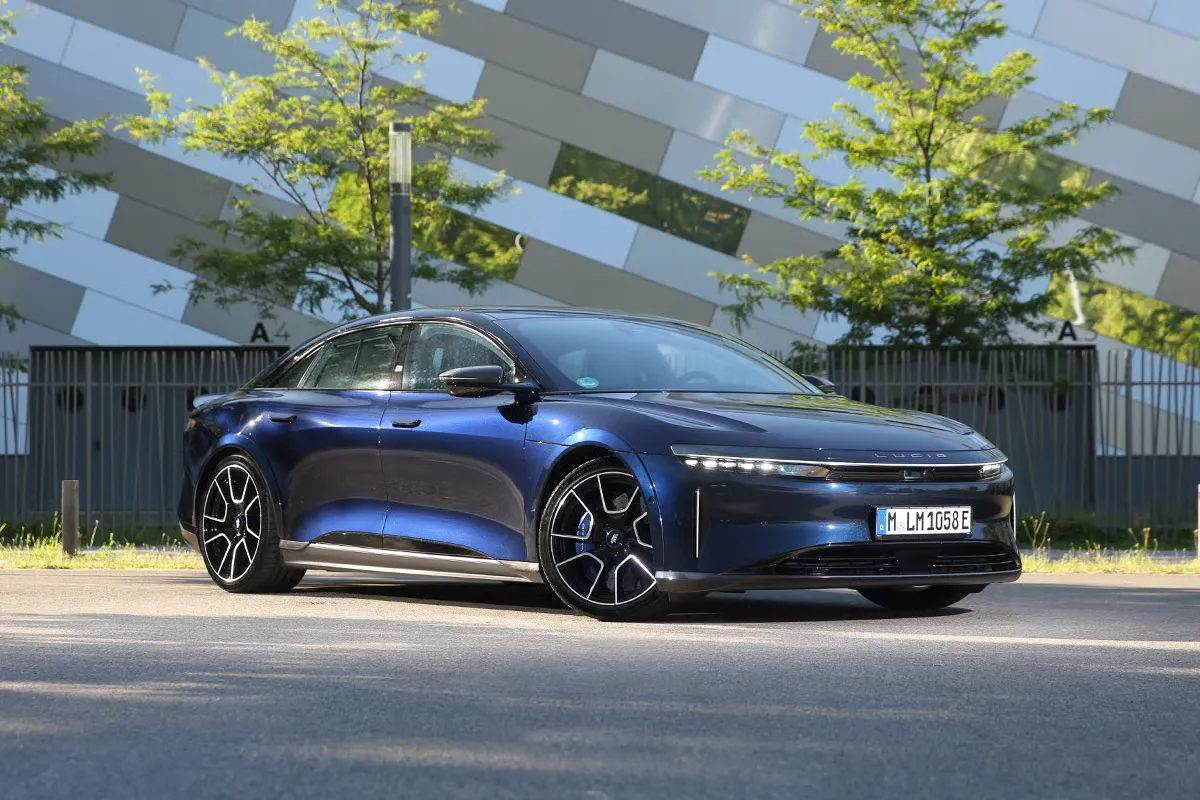
Before arriving in France, Lucid provided us with an Air Sapphire so we could thoroughly test its performance. We couldn’t resist taking it to our fuel consumption testing facilities.
Let’s be direct: yes, all the practical considerations discussed in a Supertest are pushed to the back burner when signing up for an electric missile priced at 252,900 €. After all, the very rare enthusiasts willing to spend such a sum on this car know exactly what they’re doing and certainly don’t need our reports to make a decision. But a Supertest isn’t just about providing actual fuel consumption figures—it’s also our “laboratory” for studying electric drive systems. The temptation to find out more was too strong. We decided to put this sports sedan through a Supertest to assess the impact of extra power on its versatility as a road car.
Also read
Lucid Air Sapphire Test: We measured every performance aspect of this 1,251 hp electric vehicle!
Introduction to the Lucid Air Sapphire
The Lucid Air Sapphire is the high-end, sporty version of this American luxury sedan. While the more conventional models already offer impressive power levels, this version pushes all performance metrics even further. Equipped with three synchronous permanent magnet electric motors, two of which are located at the rear as part of the Mégawatt Drive, the sedan can deliver a maximum output of 920 kW (1,251 hp) along with 1,940 Nm of torque.
This traction battery is powered by a Samsung-SDI battery with a capacity of 118 kWh, of which slightly over 112 kWh is available across the full charge range according to our measurements. Still divided into 22 modules and connected using the 220s30p configuration, they enable the system to operate at a nominal voltage of 810 V.
Unlike internal combustion engines, an increase in maximum power does not directly lead to higher fuel consumption. It is the various technical choices made to achieve and deliver that power to the wheels that cause this, along with a significant rise in aerodynamic and rolling resistance. The Sapphire is no exception, boasting a WLTP range of 694 km with a fuel consumption including charging losses of 19.1 kWh/100 km. For comparison, the most fuel-efficient version of the Lucid Air, the Pure, has a consumption of only 11.8 kWh/100 km. The Grand Touring model equipped with 21-inch wheels has a consumption around 16.0 kWh/100 km. Let’s see how it performs in real conditions.
Additional specifications for the Lucid Air Sapphire
Peak power: 1,251 hp – 920 kW
Net power (column P.2): nc
Power output (field P.6): nc
In-service weight (field G.1): 2,495 kg
Weight-to-power ratio (PVOM): 2.1 kg/hp
WLTP range: 694 km
WLTP fuel consumption: 19.1 kWh/100 km (17.0 kWh/100 km net)
AC charging: 20 kW
DC charging: 315 kW – 29 min. (10-80 %)
Tires: Michelin Pilot Sport 4S – 265/35 R20 (front) / 295/30 R21 (rear) – C, C, 73 dB (front) / B, D, 75 dB (rear)
All our fuel consumption measurements for the Lucid Air Sapphire
Combined range: 550 km (20.3 kWh/100 km)
Weighing 159 kg more than a Lucid Air Grand Touring and equipped with sports tires, the Lucid Air Sapphire is not a model known for its efficiency. On our 100 km mixed route, the car achieved an overall fuel consumption of 20.3 kWh/100 km, resulting in a theoretical total range of 580 km. This represents a difference of 60 km compared to a Grand Touring with 21-inch wheels and narrower Pirelli P Zero PZ4 Élec tires. However, accounting for the effective usable capacity, the actual mixed range is 550 km. Still, the Sapphire has the same consumption level as the Alpine A390 GT, which also features three electric motors.
Highway
Motorway
City
Total
Average round-trip consumption (kWh/100 km)
20.5
23.0
17.3
20.3
Theoretical total range (km)
546
487
647
551
Mixed range – 14 °C outside.
Long-distance driving on highway: 450 km (24.9 kWh/100 km)
For the first time in Supertest, we did not take our typical 500 km route exclusively on highways between Lyon and Paris. Instead, we collected numerous readings on French highways, as well as during our trips from Frankfurt on the way there and to Munich on the return. On highways, we recorded a fuel consumption of 24.9 kWh/100 km, which translates to a theoretical total range of 475 km, or 450 km using the full battery capacity. This range level is identical to that of a DS Numéro 8 or a BMW iX3 50xDrive. Finally, on a 930 km journey between Lyon and Munich, during which we conducted all our performance measurements and made extensive use of speed-unlimited highway sections, the meter showed a final fuel consumption of 28.4 kWh/100 km. This is high in absolute terms, but the figure is quite interesting given the circumstances.
Considering the adopted driving rhythm, it’s barely more than the fuel consumption of the Alpine A390 GT at a constant speed of… 130 km/h (27.8 kWh/100 km).Also read
Supertest – Lucid Air Grand Touring: all fuel consumption and range figures from our test
Instantaneous fuel consumption at high speeds
The Lucid Air is one of the most aerodynamic cars in current production. The best version boasts a Cx value of 0.197, which raises the SCx — the true indicator of aerodynamic performance — to nearly 0.46 m² according to our estimates. But for its specific needs due to its power and top speed, the Sapphire features numerous aerodynamic additions, including wing extensions and a large carbon fiber ducktail spoiler. Still per our calculations, these elements bring the Cx to around 0.23, resulting in an SCx of just under 0.54 m².
With increased rolling resistance and the three machines running continuously, fuel consumption rises dramatically on the highway. We observed a consumption rate of 25.8 kWh/100 km at a constant speed of 130 km/h. For reference, we conducted the measurements on a short section of highway in both directions, with the air conditioning turned off to isolate rolling resistance effects.
90 km/h
110 km/h
130 km/h
Average consumption (kWh/100 km)
17.8
21.2
25.8
Instantaneous consumption values
Eco-driving: 890 km (13.3 kWh/100 km)
The Lucid Air Sapphire does not have an Eco mode. The softest setting, called Smooth, still allows nearly 570 kW, or 780 horsepower, to be delivered. This level of power is not utilized during our typical driving test. At the end of this test, with pressure to perform and by pushing harder, we managed to achieve a consumption rate of 13.3 kWh/100 km. Despite being 3.7 kWh/100 km higher than the Grand Touring model on the same route, this figure is not insignificant and is comparable to what an SUV like the Audi Q6 e-tron quattro can achieve. A Lotus Emeya S finished its test with a consumption of 17.5 kWh/100 km...
All our performance measurements for the Lucid Air Sapphire
Accelerations and decelerations
As you might expect, this chapter is the most important one regarding this Lucid Air Sapphire, and we have already detailed its impressive performance levels in a dedicated article. But just to recap, the sedan features several driving modes that adjust the damping settings, torque distribution between the electric motors, battery thermal management, or overall power output. In the most relaxed modes, the car can deliver nearly 780 horsepower, resulting in a 0-100 km/h time of 3.18 seconds and a 400 m sprint time of 10.75 seconds.
The Sapphire mode delivers nearly 1,136 horsepower, achieving 0-100 km/h in 2.89 seconds and a 400 m time of 9.90 seconds. Better times can be achieved with the Dragstrip mode, which allows for 0-100 km/h in 2.47 seconds and a 400 m time of 9.5 seconds. The 80-120 km/h acceleration takes just a little over one second, while 0-330 km/h (with a top speed of 333 km/h) requires only 21.41 seconds!
We would like to clarify that we were unable to achieve the times announced by the manufacturer. On one hand, the American brand reports acceleration times using the One Foot Rollout method, which allows for a reduction of nearly 0.2 seconds. On the other hand, the brand does not mention that the best acceleration is only possible with the car-specific Pirelli P Zero Trofeo RS LM1 tires, which are available as an option for $8,250. According to our American colleagues at Motortrend, these two very specific factors reduce the acceleration time by 0.5 seconds, which would theoretically allow for a 0-100 km/h time of 2.0 seconds and a 400 m drag time of just under 9.0 seconds, subject to strict conditions.
Modes
Smooth/Swift mode
Sapphire mode
Dragstrip mode
Vmax in Dragstrip mode
0-100 km/h
3.18
2.89
2.47
2.60
0-130 km/h
4.43
3.77
3.37
3.48
0-150 km/h
5.44
4.49
4.11
4.21
0-200 km/h
8.80
6.84
6.46
6.60
0-250 km/h
–
–
–
10.07
0-300 km/h
–
–
–
15.43
0-330 km/h
–
–
–
21.41
80-120 km/h
1.46
1.08
1.06
1.07
90-130 km/h
1.60
1.15
1.12
1.14
100-200 km/h
5.62
3.95
3.89
4.00
200-300 km/h
–
–
–
8.83
100-300 km/h
–
–
–
12.83
400 m D.A.
10.75 @ 222.4 km/h
9.90 @ 241.7 km/h
9.50 @ 245.3 km/h
9.66 @ 243.5 km/h
0-60 mph times (in seconds)
Unsurprisingly, the Lucid Air Sapphire is the fastest car to be tested by our team, thus breaking all records. Paradoxically, it is also the slowest!
To achieve this level of performance, battery preconditioning is necessary. Whether it’s in cold conditions or after a fast charge, one must wait approximately 30 minutes on average before getting the green light. Additionally, note that another full cycle is required after accelerating to maximum speed, or a shorter cycle after three accelerations to 250 km/h. For those who are more curious, a full acceleration to maximum speed (including preconditioning and the acceleration itself) results in a total energy consumption of nearly 10 kWh! According to our calculations, accelerating to 330 km/h in Drag mode costs around 7.6 € at an energy cost of 0.60 €/kWh.
Braking and energy recovery
The Lucid Air Sapphire is equipped with a braking system developed by Akebono. The system features 380 mm discs at the front and 375 mm discs at the rear, each controlled by six-piston and four-piston calipers respectively. The dimensions are identical to those of the Grand Touring model we tested. As a result, the braking distance from 130 km/h was similar, at 63 meters compared to 64 meters. Since our tests were conducted under normal driving conditions, the carbon-ceramic discs might not have performed at their best.
Mode
90-0 km/h
80-0 km/h
60-0 km/h
Off
689.1 m
562.7 m
328.2 m
Standard
149.5 m
119.3 m
68.5 m
High
114.6 m
91.4 m
52.7 m
Regenerative braking when releasing the pedal
Since an update, the brake pedal now controls only the regenerative braking system and does not utilize the conventional braking system at all at the start of a drive. In road mode, it is possible to disable the regenerative braking system, allowing the car to travel 563 meters without braking. In standard mode, the braking power is much greater, with a distance of 119 meters. Finally, high mode is extremely powerful: the car applies the brakes after just 91 meters. No other electric vehicle we have tested has such an efficient regenerative braking system. Additionally, this mode allows one to do without the brake pedal in all everyday situations (except in emergencies)!
Comfort and Interior
The revised suspension also does not compromise comfort on the road. Indeed, passengers experience more jolting on rough roads, but the suspension never becomes harsh. Thus, it retains everything that makes the Lucid Air so special. To date, no other car allows driving at such high speeds while enjoying back massages and listening to its favorite music through high-end sound systems. While it can be particularly sporty, according to our colleague PatPanick’s definition, the Sapphire still maintains its excellent comfort level, befitting the best luxury cars. The level of finish, quality of materials, and thoughtful details are among the finest in class.
The interior atmosphere of the Sapphire is distinctive, featuring uniformly dark upholstery. Otherwise, it is identical to the rest of the series, with features such as the large digital display behind the steering wheel and the retractable control panel. It’s worth noting that recent updates have clearly addressed the car’s main flaw, namely its imperfect digital system. During our test drive, we never encountered any software slowdowns or bugs that required stopping the car to restart it. The only issue we faced was minor audio interruptions when the phone was connected via Mirror Link.
Due to its large battery, the Lucid Air Sapphire lacks the spacious rear footwell found in lower-end models. This means passengers must keep their knees raised. However, the rear seating area offers comfort comparable to that of a higher-end limousine. Additionally, the introduction of the rear Megawatt Drive does not affect the brand’s signature Space Concept design. The trunk, which still opens in its distinctive trunk-like manner, retains its impressive 627 liters of capacity. On top of that, there’s a huge true frunk area of 283 liters, bringing the total cargo capacity to 910 liters. Some larger SUVs cannot match this level of space...
If fuel consumption for the Lucid Air Sapphire rises sharply, its levels remain very attractive considering its technological advancements and its stratospheric performance level. Practical like an SUV, comfortable like a limousine, easy to drive like a GTI, and fast like a supercar, it can do it all. The question remains whether its fast charging system will make long trips a breeze. We’ll discuss this next week.