
Supertest of the BYD Atto 2 DM-i: economical in city driving, much less so on the highway! Here are all the measured fuel consumptions.
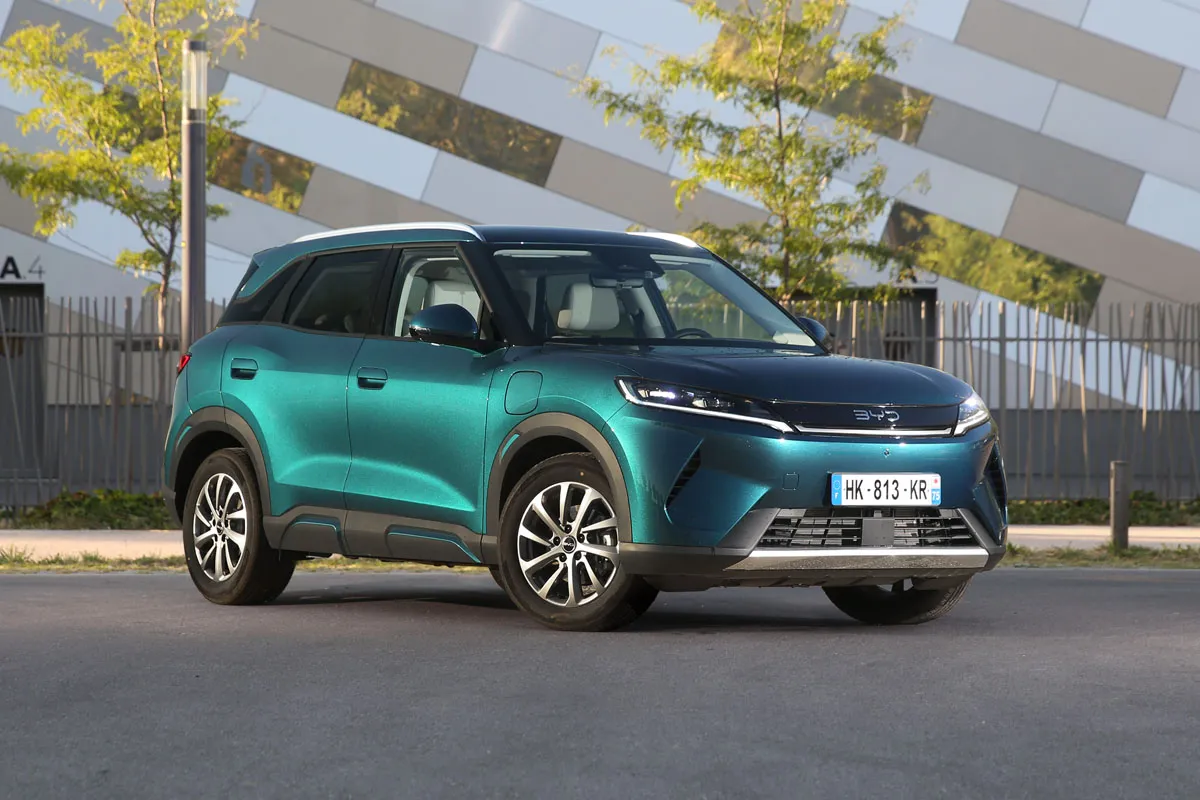
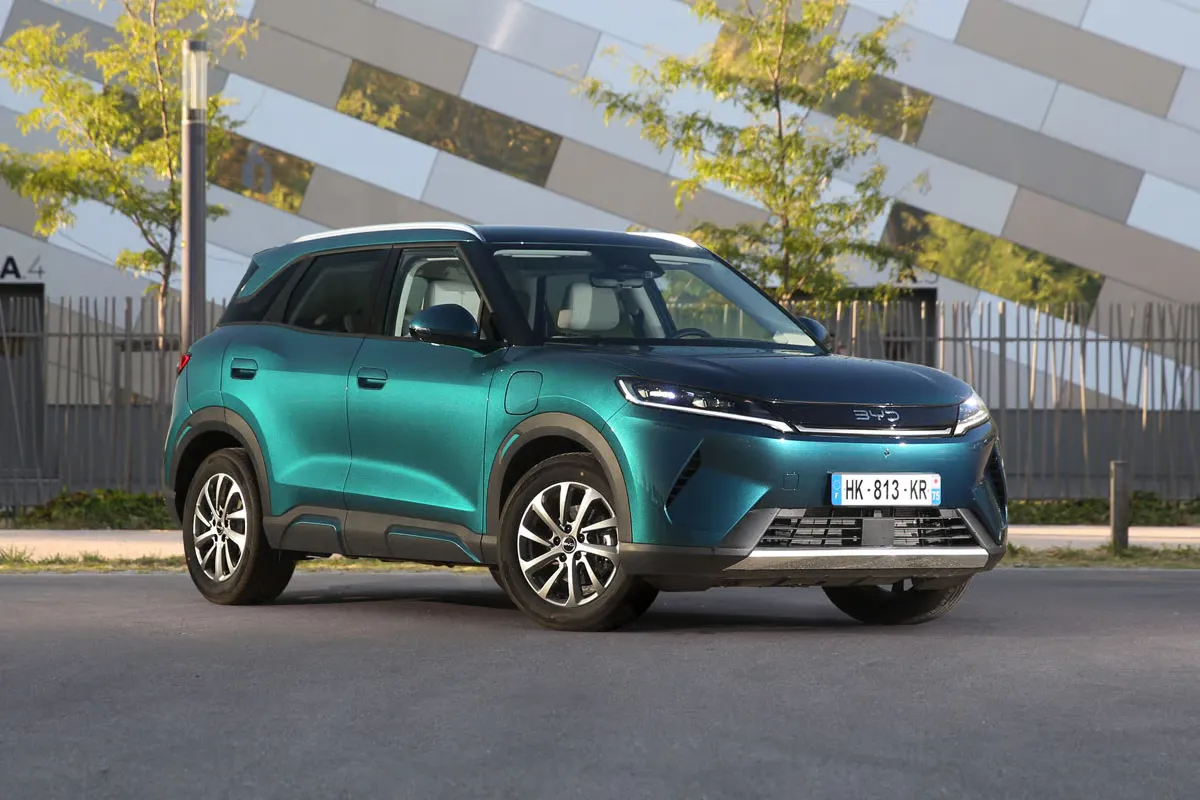
The BYD Atto 2 is now available with a rechargeable hybrid DM-i powertrain. We take a close look at it.
The BYD Atto 2 was introduced to our market with only an electric version. While the car proved convincing, its original all-electric drive system fell short due to extremely limited range, which restricted the urban SUV’s versatility. Now, the Atto 2 has been updated. The electric version gets a more suitable new powertrain, while the SUV also receives a rechargeable hybrid option. This makes it the only model in its segment since the launch of the Renault Captur E-Tech. We examine this new offering in detail.
Also read
BYD Dolphin G DM-i review: a rechargeable super hybrid city car, but why?
Introduction to the BYD Atto 2 Dm-i
The BYD Atto 2 plug-in hybrid adopts the brand’s DM-i technology, known as Super Hybrid. Under the hood is a 1.5 liter atmospheric Atkinson cycle gasoline engine producing 98 horsepower and 122 Nm of torque. The engine features a compression ratio of 15.5:1 and a thermodynamic efficiency of 43%. It is paired with an electric motor in the front producing 145 kW (197 horsepower) and 300 Nm of torque. However, the electric power appears to be theoretical, as the system’s total power varies depending on the battery type installed. In the base Active version equipped with a 7.8 kWh battery, the system’s total power is 122 kW (166 horsepower). In the Boost version tested here, where the LFP battery capacity increases to 18.0 kWh, the power rises to 156 kW (212 horsepower).
The recipe remains unchanged. Aside from the EV locking mode that allows driving without using a drop of gasoline, the electric motor is primarily responsible for turning the wheels. When the load isn’t sufficient, the internal combustion engine can take over and act as a generator in hybrid-series configuration. At high speeds, starting at 70-80 km/h, the engine block can drive the wheels directly, while recharging or not the battery depending on the situation. Its operation, heavily inspired by Honda’s i-MMD/e:HEV system, may seem complex but is entirely transparent to the driver.
In terms of figures, the high-end Boost version of this model can achieve a WLTP electric range of 90 km, with a combined fuel consumption of 1.8 l/100 km (41 g/km of CO2), based on the administration’s efficiency factor. Let’s take a look at its real-world fuel consumption.
A brief overview of the BYD Atto 2 DM-i
Mechanical power: 98 hp (internal combustion) + 197 hp (electric)
Total power: 212 hp – 156 kW
Net power: 98 hp – 72 kW
Fiscal power (P.6): 5 hp
Empty weight: 1,610 kg
Weight-to-power ratio (PVOM): 8.1 kg/hp
WLTP figures: 1.8 l/100 km – 41 g/km of CO2 – 90 km range
AC charging: 6.6 kW – 3 hours (15-100%)
Tires: Honkook iOn GT SUV – 215/60 R17 – A, A, 69 dB
All our fuel consumption measurements for the BYD Atto 2 DM-i
HEV mode with full battery: 0.8 l/100 km
The BYD Atto 2 has a button to select between EV and HEV modes. In HEV mode, when the battery is full, the system tries to minimize consumption by relying primarily on electric traction. When power demand exceeds 40/50 kW according to our observations, the internal combustion engine steps in to assist. However, this rarely happens in most daily situations, unless driving on the highway at 130 km/h. Evidence of this is our mixed route test, where we measured fuel consumption of 0.8 liters per 100 kilometers with just over 9.0 kWh per 100 kilometers. Under these conditions, the battery would be depleted after nearly 115 kilometers of driving.
Road
Highway
City
Total
Consumption (l/100 km)
0.9
1.5
0.1
0.8
Consumption (kWh/100 km)
7.2
12.1
8.5
9.2
Consumption – Hybrid mode – Battery fully charged at start
Also read
How does BYD’s rechargeable hybrid work?
HEV mode with empty battery: 5.2 l/100 km
When the gauge shows 25% remaining charge, the EV mode is no longer available and the car operates on its energy reserve. This is referred to as a zero-battery configuration, although it’s not entirely the case here—the reserve still allows driving using the electric motor. However, once the power demand exceeds 30/35 kW, the combustion engine starts up. It’s possible to reach speeds over 50 km/h with moderate right-foot pressure, but not much higher. If these situations occur frequently, the system can drop to 22/23% charge before attempting to recharge the battery using the gasoline engine. In short, after completing this drive in this configuration, we measured an average fuel consumption of 5.2 liters per 100 kilometers, which is 0.1 liter per 100 kilometers higher than the WLTP value. This is consistent with most of our measurements for hybrid cars.
Road
Highway
City
Total
Consumption (L/100 km)
6.0
5.7
4.0
5.2
Consumptions – Hybrid mode – Battery empty at start
EV mode: 84 km range
The BYD Atto 2 features a 100% electric mode. This mode is available when the battery is between 100% and 25% charged, offering approximately 13.5 kWh of usable capacity per our calculations. It can reach speeds of 140 km/h, sufficient to meet all driving needs. Thanks to its technical configuration similar to that of the electric version (no gearbox, etc.), energy consumption remains low. This allows the SUV to achieve an overall range of 85 km on our test route, with a consumption rate of 15.9 kWh/100 km. This figure is also very close to the WLTP standard. The BYD Atto 2 manages to offer a greater range than a Toyota Prius PHEV! It should be noted that we measured an instantaneous consumption of 20.5 kWh/100 km at 110 km/h and 26.2 kWh/100 km between 130 km/h and higher speeds. In the worst-case scenario, the electric range is around fifty kilometers. However, it’s important to clarify that this does not reflect typical usage with a rechargeable hybrid vehicle.
Route
Highway
City
Total
Average round-trip consumption (kWh/100 km)
14.5
20.0
13.0
15.9
Total range (km)
90
65
105
85
Consumption – EV mode – Battery fully charged at start
Long-distance consumption: 7.8 l/100 km (HEV battery empty)
For long trips, drivers have several options. They can start with a fully charged battery, activate the SAVE mode, or travel with the battery at a low level. The first option is completely unnecessary. If the highway conditions allow, the system will prioritize electric drive. As a result, the available charge can be depleted within about fifty kilometers.
It is therefore better to drive in the last two modes. But be careful to set the gauge at the minimum level, even with the SAVE function disabled: otherwise, the system will try to recharge the battery to the set charge level. As a result, fuel consumption soars to 10.4 liters per 100 kilometers, allowing the car to gain 10% of charge every 50 kilometers at 130 km/h. Specifically, the system recharges the battery at a power of 6 to 7 kW, consuming nearly 2.2 liters per hour—equivalent to paying almost 0.72 € per kWh!
In short, the most suitable mode is the empty battery hybrid mode or SAVE at the current charge level. In this case, the SUV behaves like any other hybrid vehicle, with highway fuel consumption of 7.8 liters per 100 kilometers.
Also read
BYD Atto 2 DM-i Test: What’s the value of the cheapest rechargeable hybrid?
Elsewhere?
The fuel consumption recorded during a Supertest can differ from everyday use. To give context to the BYD Atto 2 DM-i’s fuel consumption, here are various readings. On a route of over 450 km across the country (A77 then N7), we recorded a final fuel consumption of 7.1 l/100 km with nearly 3.0 kWh/100 km of electricity usage.
Based on the full tank levels for our Supertest and its various measurements, we recorded a total fuel consumption of 3.4 liters per 100 kilometers. After a one-week test covering 1,480 kilometers, the final fuel consumption at the pump was 5.7 liters per 100 kilometers, with an energy consumption of 6.3 kWh per 100 kilometers upon returning with a full tank. Finally, the odometer since the car left the factory showed 4.9 liters per 100 kilometers and 5.1 kWh per 100 kilometers over a total distance of 3,096 kilometers, of which 1,301 kilometers were covered in EV mode.
All our performance measurements for the BYD Atto 2 DM-i
Acceleration, braking, and regenerative braking
The technical specs state that the BYD Atto 2 DM-i offers a total of 156 kW (212 hp) and 300 Nm of torque, with 145 kW (197 hp) coming from the electric motor alone. However, as we saw during our first test, this figure represents the theoretical maximum output of the electric motor, not what the system actually delivers. This is evident from the EV mode power delivery curve, which shows that only 100 kW maximum is provided by the battery. As a result, it achieves 0-100 km/h in 10.2 seconds and a 400 m acceleration time of 17.3 seconds. For accelerating from 80-120 km/h, it takes 7.8 seconds.
In hybrid mode, things are quite different. Due to the various operating modes of the DM-i system, the acceleration initially provided by the electric motor is instant. The internal combustion engine then takes over to directly power the electric motor and spin the wheels. The system claims a peak output of 175 kW, which could well match the 156 kW listed in the technical specifications after accounting for losses. Additionally, performance remains very similar whether the battery is full or empty (a difference of only 0.2 seconds). The same holds true when accelerating from a stop, with the fastest time being 5.4 seconds.
Mode
0-100 km/h
80-120 km/h
400 m
80-120 km/h K.D.
HEV battery full
7.1 s
4.5 s
15.2 s
5.4 s
HEV battery empty
7.3 s
4.7 s
15.4 s
5.6 s
EV
10.2 s
7.5 s
17.3 s
7.8 s
Braking performance – Normal driving mode
Like the electric version, the Atto 2 DM-i has two regenerative braking modes: Standard and High. The first mode is almost like coasting and does not provide sufficient deceleration force. The second mode is slightly more powerful, sitting midway between the Standard and High modes of the electric version. In EV mode, it stops 335 meters when the foot is removed from the pedal from 80 km/h.
Fueling and charging
The BYD Atto 2 DM-i has a fuel tank capacity of 45 liters. This takes up 25 liters of space in the trunk under the floor. At the gas station, the difference between the displayed fuel consumption and the actual amount injected into the tank is 0.2 liters per 100 kilometers. It should be noted that this is purely indicative data due to potential inaccuracies, but the difference falls within the average range of our observations for similar vehicles. At an average price in France of 2.118 € per liter of SP95-E10, refueling costs 95.3 €.
In terms of charging, the SUV comes equipped with a 6.6 kW AC charger in the Boost trim (3.3 kW in the Active trim). This power is below the industry standard for this category, which aims for 11 kW AC charging capacity. However, due to the 25% threshold, the actual usable charging time is limited. It takes nearly 2 hours and 20 minutes to charge to 100% (2 hours and 30 minutes starting from 20%). From 25% charge, the chargers delivered an average of 16.7 kWh, indicating significant charging losses of 23.5%. Charging at home costs 3.3 €, while it costs 7.5 € at a public charger at a rate of 0.45 €/kWh.
SP95-E10 gasoline
95.3 €
Home AC charging
3.3 €
Public AC charging
7.5 €
Total charging cost
Operating costs (including meter readings)
In EV mode on mixed routes, the BYD Atto 2 DM-i has a cost of 3.9 €/100 km (home charging) or 8.8 €/100 km (public charging). In HEV mode with an empty battery, the cost is 11.4 €/100 km on mixed routes and 16.9 €/100 km on highways without using the SAVE mode. With a full battery, the cost on mixed routes is 4.4 €/100 km for home charging and 7.2 €/100 km for public charging.
At the end of our week-long test, with full tanks upon returning, the cost was 3.3 €/100 km for electricity (public AC charging using Chargemap) and 11.4 €/100 km for gasoline (purchased at 1.99 €/l), resulting in a total of 14.7 €/100 km.
Type of Route – Mode
Gasoline
with home charging
with external charging
Mixed – EV
–
3.9
8.8
Mixed – Full HEV battery
2.1
2.3 (total 4.4)
5.1 (total 7.2)
Mixed – Empty HEV battery
11.4
–
–
Highway – Empty HEV battery
16.9
–
–
Operating costs (€/100 km)
Supertest BYD Atto 2 DM-i: the results
The BYD Atto 2 DM-i currently has no competitors in its category. It is pleasant to drive despite the much firmer suspension on this rechargeable hybrid version, making it ideal for small families. While the rechargeable powertrain remains questionable at a time when electric car travel is becoming increasingly feasible, the DM-i system boasts an important advantage: once the battery reaches its optimal level, the Atto 2 maintains strong performance and fuel efficiency even on mixed routes. The transition between different driving modes is smooth, and the 5.2 l/100 km fuel consumption we recorded with an empty battery allows it to be used like a conventional hybrid without any concerns. However, carrying an 18 kWh battery only makes sense if it is regularly recharged.
On the other hand, on the highway, its energy consumption is high. This is also due to the Atto 2’s poor aerodynamic performance, which results in high fuel consumption even in its electric version. Additionally, significant losses during charging must be noted. While this isn’t catastrophic with a battery of this size, for a car whose appeal lies in frequent charging, such poor efficiency deserves to be considered in the financial analysis.
The BYD Atto 2 DM-i is designed to reassure customers who doubt the overall versatility of the electric version, especially for long trips. However, this sense of peace becomes less essential as electric cars improve in range and charging speed. And that’s precisely the question posed by the new electric version of the Atto 2: at 29,990 euros in this review’s Boost trim, should one still choose the DM-i for its versatility, or make the switch to electric completely? Stay tuned for a comparison between the two powertrains soon!
