
By supplying its indestructible hybrid engines to other brands, Toyota could earn up to 1,500,000,000€ per year.
30/10/2026 10:00
Updated to
30/10/2026 10:00
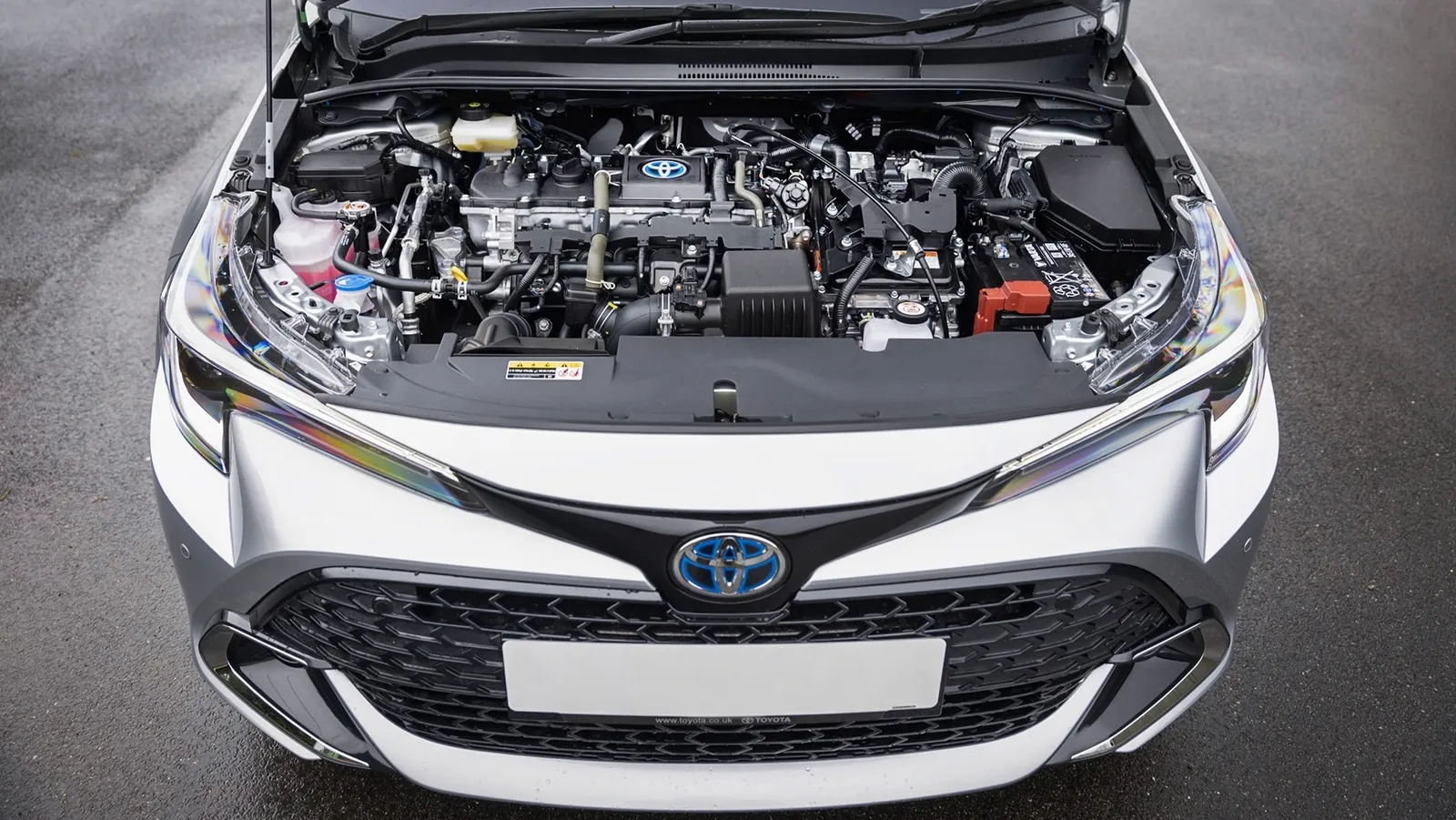
Toyota is not willing to wipe the slate clean by completely eliminating internal combustion engines. In fact, it aims to turn them into a new multi-million dollar revenue stream. The world’s largest automobile manufacturer is developing a strategy to sell its next generation of gasoline engines and hybrid systems to other manufacturers. The goal is to leverage its expertise in electrification to increase production volume, reduce costs, and generate additional income without relying solely on sales of its own vehicles.
The Japanese company estimates that this business could generate approximately 1.5 billion euros starting from 2032. This was explained by Hiroki Nakajima, Toyota’s Technology Director, during a technical presentation held recently in Europe. The first systems could begin to be supplied in 2027, although the company has not yet confirmed which manufacturers will use its new mechanisms.
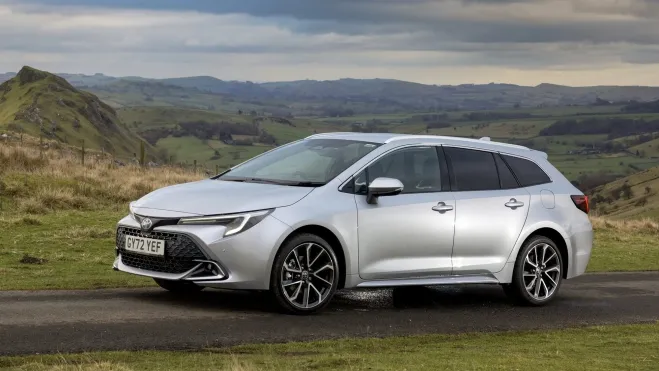
Toyota aims to sell hybrid engines worth 1.5 billion euros per year
The strategy involves gradually increasing the supply of engines and hybrid technologies to other companies. By 2026, Toyota has set a target of orders worth approximately 500 million euros. In the medium term, the goal is to triple this figure and reach 1.5 billion euros annually by 2032.
One of the main reasons is to achieve economies of scale. The more manufacturers use the same engines and electrified components, the larger the production volume will be, making it easier to recover the investments needed to develop these technologies. Toyota can also leverage its position as a supplier to maintain high industrial activity while continuing to expand its range of electric vehicles.
The company already has a substantial network of partners who could benefit from this strategy. Mazda uses Toyota’s hybrid technology in models such as the CX-50 and the European Mazda2 Hybrid, while Subaru incorporates Toyota’s electrical components into its own hybrid systems. Suzuki also maintains technological agreements with Toyota. However, none of these manufacturers have yet been confirmed as customers for the new generation of engines.
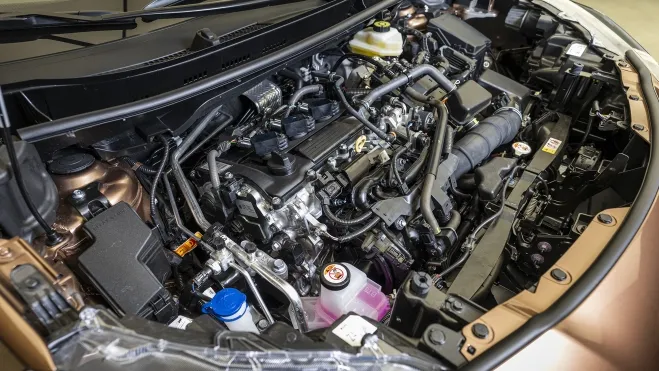
New 1.5 and 2.0 liter engines prepared for future hybrids
The foundation of this offensive will be a family of gasoline engines introduced initially in 2024. It includes a new four-cylinder 1.5-liter engine available in both naturally aspirated and turbocharged configurations, as well as a 2.0-liter turbo engine. All of these have been developed with integration into electrified systems in mind and stand out for their more compact size.
Toyota claims that these engines will be more efficient than their predecessors and can be used in both conventional hybrids and plug-in hybrids. Their smaller size will facilitate installation on platforms from different manufacturers and enable the development of vehicles with lower hoods, improved aerodynamics, and better space utilization.
In addition, Toyota has just introduced a new generation of hybrid technology that combines these engines with electric drives, more compact inverters, and control units. The manufacturer aims to improve fuel efficiency by over 15% through reduced mechanical and electrical losses, better thermal management, and optimized aerodynamics.
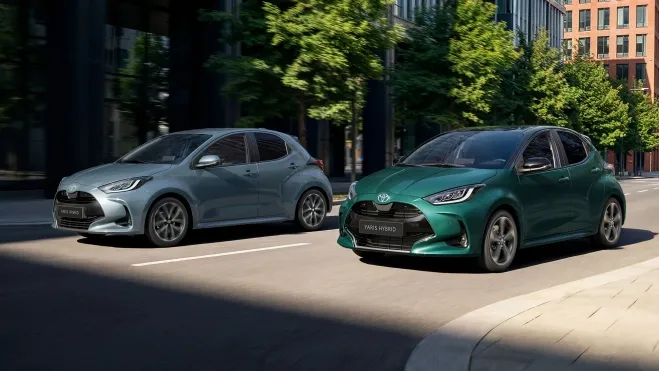
A single platform for electric vehicles, hybrids, and plug-in hybrids
Another innovation will be the multi-pathway architecture, designed to accommodate different propulsion technologies. Toyota aims to enable the same technical foundation to be used in fully electric vehicles, conventional hybrids, and plug-in hybrids, without compromising the core characteristics of each version.
This flexibility will also bring industrial advantages. Manufacturers will be able to adjust production to meet the demands of each market and share more components, avoiding the need to develop entirely separate platforms for each technology. Additionally, the new engines are being designed to operate with renewable and carbon-neutral fuels.
With this strategy, Toyota reinforces its commitment to maintaining multiple propulsion options in the coming years. At the same time, it aims to turn its technological advancements into its own business: not only producing millions of hybrid cars but also supplying the engines and systems that other manufacturers will use.