
Study: Air exposure accelerates ageing in nickel-rich batteries
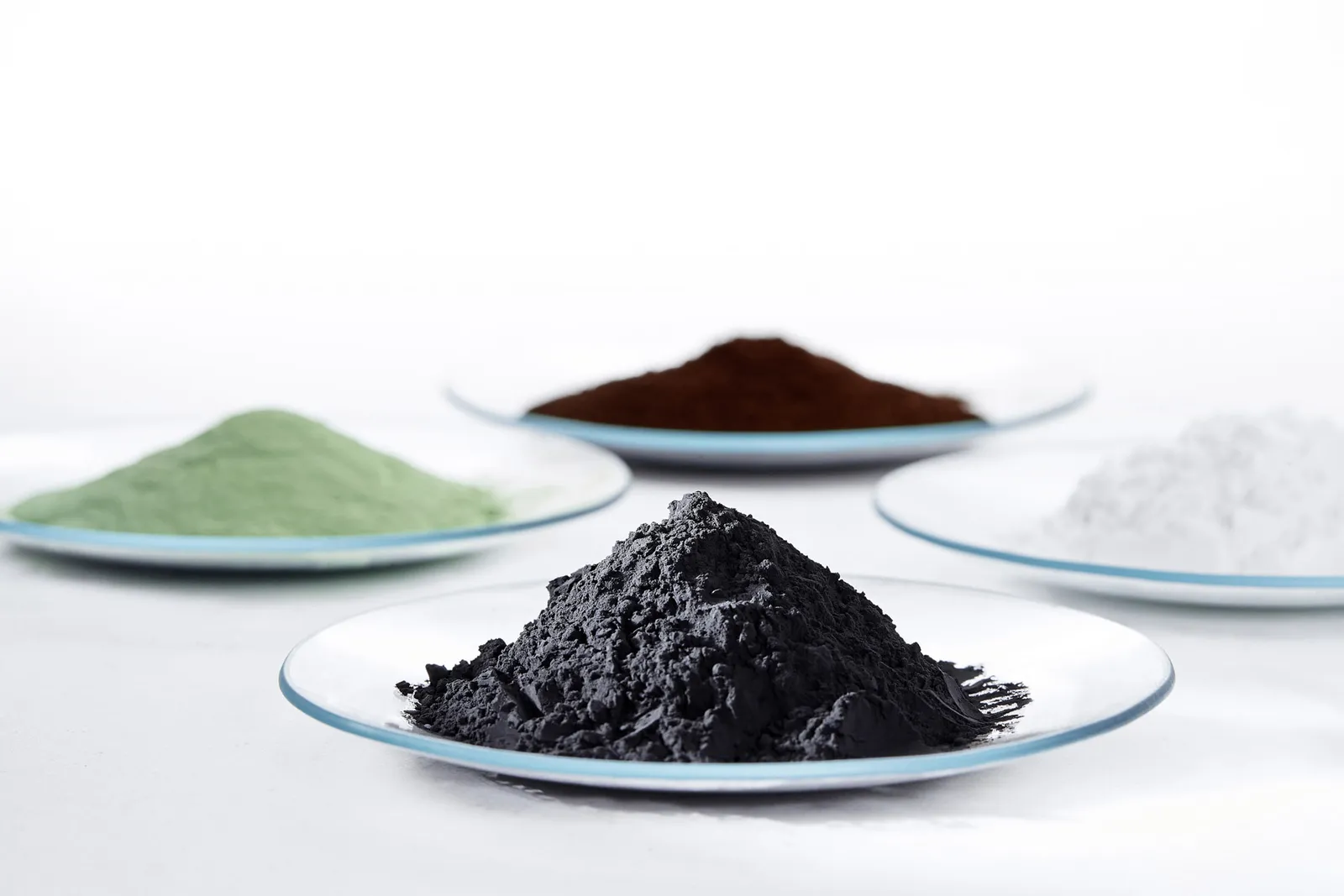
Researchers at Hanyang University in South Korea have identified a previously overlooked ageing mechanism in cobalt-free, nickel-rich cathode materials. Their findings suggest that simply storing precursor materials in air can trigger chemical changes that significantly reduce battery lifespan.
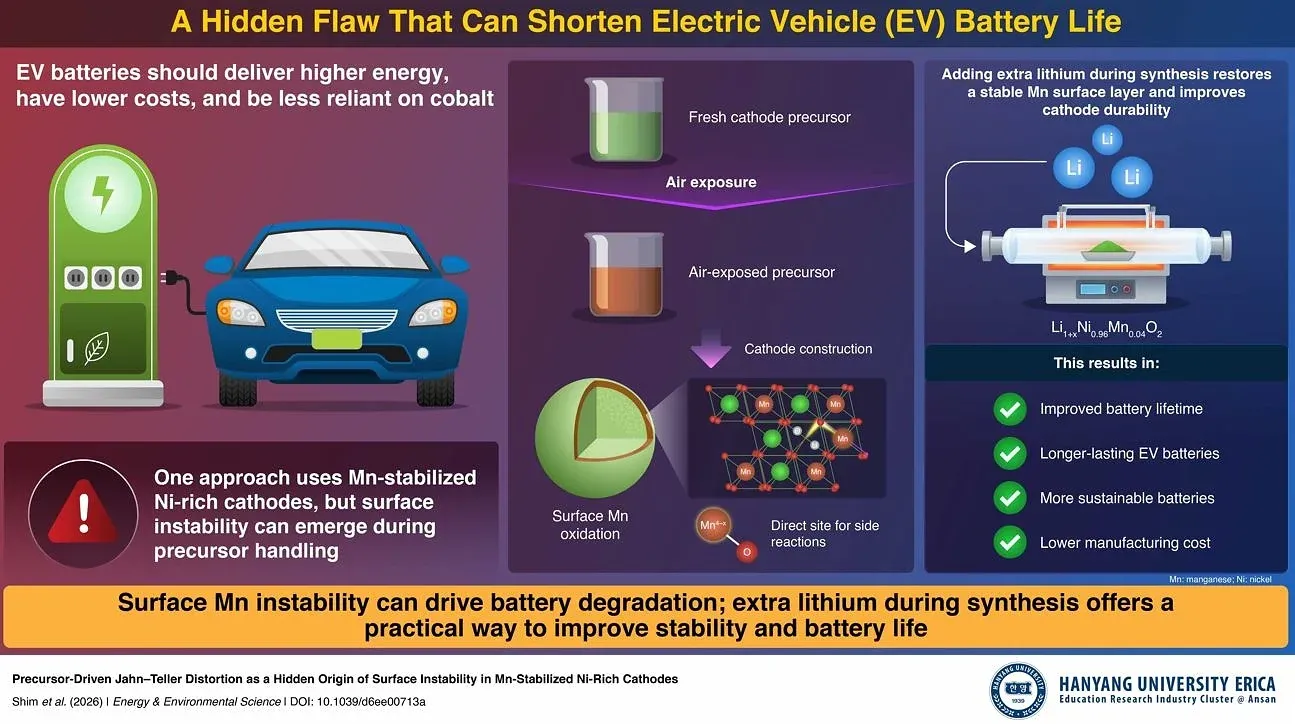
The researchers focused on cobalt-free cathodes with a nickel-rich core and a manganese-rich coating. These materials are considered a promising approach to increasing the range of electric vehicles while reducing dependence on the critical raw material cobalt. However, the team found that simply storing the precursor materials in air can trigger chemical changes that accelerate battery ageing.
According to the study, storing precursor materials in air causes manganese on the particle surface to oxidise. This oxidation creates defective surface regions containing so-called Jahn-Teller-distorted manganese species. These species react particularly strongly with the electrolyte, promote the dissolution of transition metals and trigger harmful reactions at the graphite anode. In the nickel-rich battery systems examined, the researchers found that this effect nearly doubled capacity loss during long-term cycling tests.
“We found that a manganese-rich shell, which is normally introduced to protect high-nickel cathodes, can instead become a catalyst for degradation if the precursor chemistry is not carefully controlled,” explained Prof. Bang, “Even small variations in precursor storage history can substantially affect battery stability.”
As a potential solution, the researchers propose increasing the lithium content during synthesis. According to the study, this approach suppresses the formation of the defective surface phase and restores a stable manganese-oxygen bond. In the tests, cathodes produced using this method retained more than 90% of their capacity, demonstrating significantly improved long-term stability.
The research team believes the findings provide important insights for the development of cobalt-free, high-energy cathodes. They emphasise that simply eliminating cobalt is not sufficient. “Our results show that even minor variations in precursor history can have major consequences for battery performance, making precursor management an important consideration for large-scale manufacturing,” added Prof Bang.
According to the researchers, careful control of material handling and lithium stoichiometry could offer a comparatively simple route to more durable batteries, without requiring costly additional coatings or fundamental changes to production lines.
For clarity, the study does not examine the LFP and NMC batteries used in most electric vehicles today. Instead, it focuses on cobalt-free, high-nickel cathodes with manganese-rich protective layers that are being developed as a potential successor to today’s nickel-rich lithium-ion cells. The findings therefore provide insights for the development of future traction batteries, showing that long-term durability depends not only on cell chemistry but also on careful control of the manufacturing process.