
Study: Electrification increases the workload in fleet management
Fleet management is becoming increasingly complex. A recent Dataforce study reveals which tasks require the most time, what criteria are important when selecting vehicles, and what role software and AI now play.
The daily work in fleet management is increasingly characterized by time pressure and rising complexity. This is the main message of the new “Fleet Management Study 2026: More Complexity, Clear Priorities, New Technologies,” recently released by data and analytics specialist Dataforce. The growing adoption of electric vehicles also plays a significant role in this context.
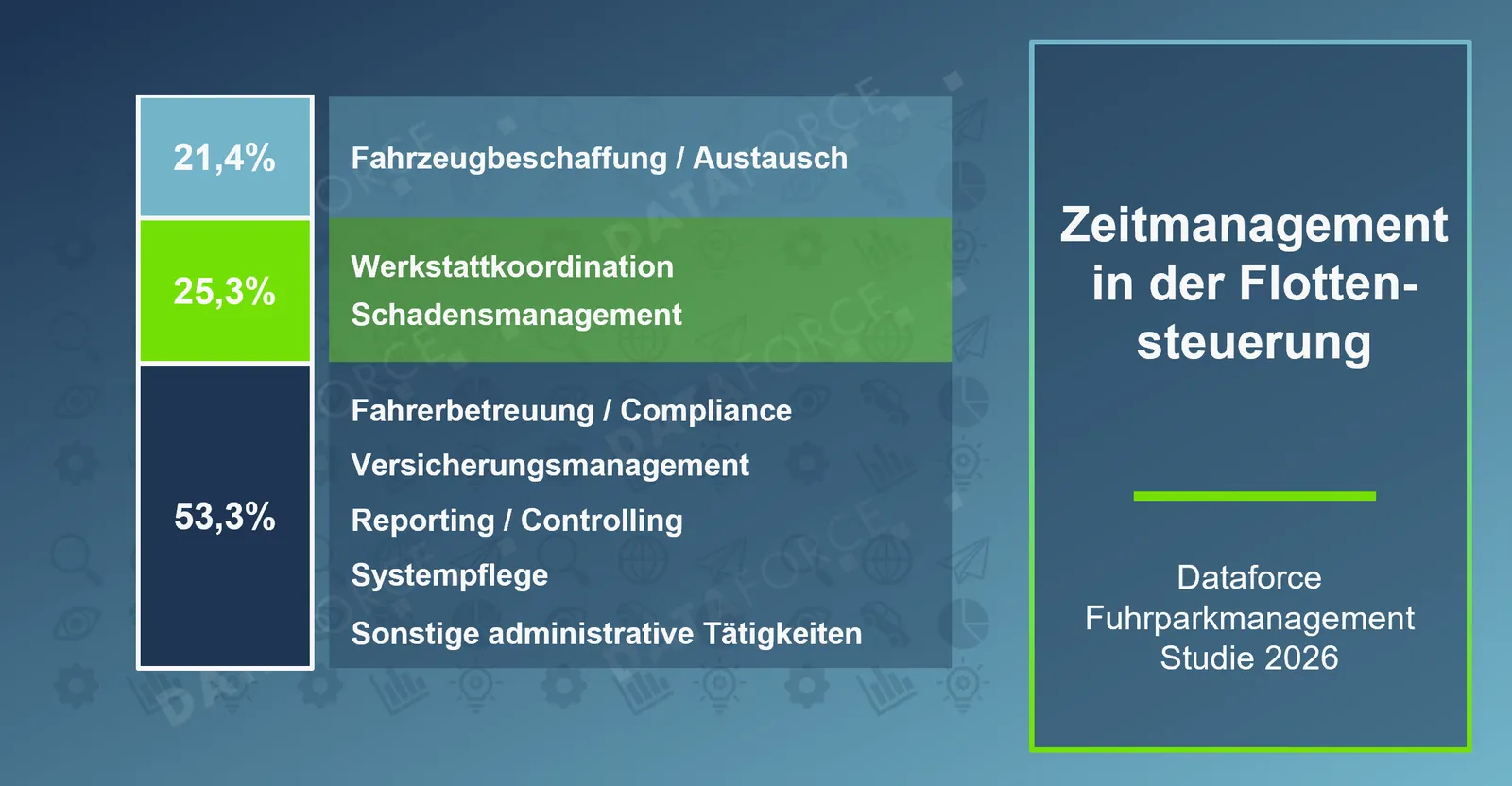
The analysis shows that fleet managers spend the majority of their working time acquiring and replacing vehicles. Maintenance, repairs, and inspections account for about a quarter of their worktime, in addition to driver support, insurance management, accounting, and other administrative tasks. Damage management is considered by fleet managers to be disproportionately time-consuming.
When acquiring electric vehicles, additional factors come into play beyond the traditional selection criteria. In addition to purchase price or leasing rate, factors such as usage profile, range and charging requirements, as well as cost efficiency over the vehicle’s lifespan must be considered, which increases the importance of evaluating the total cost of ownership (TCO).
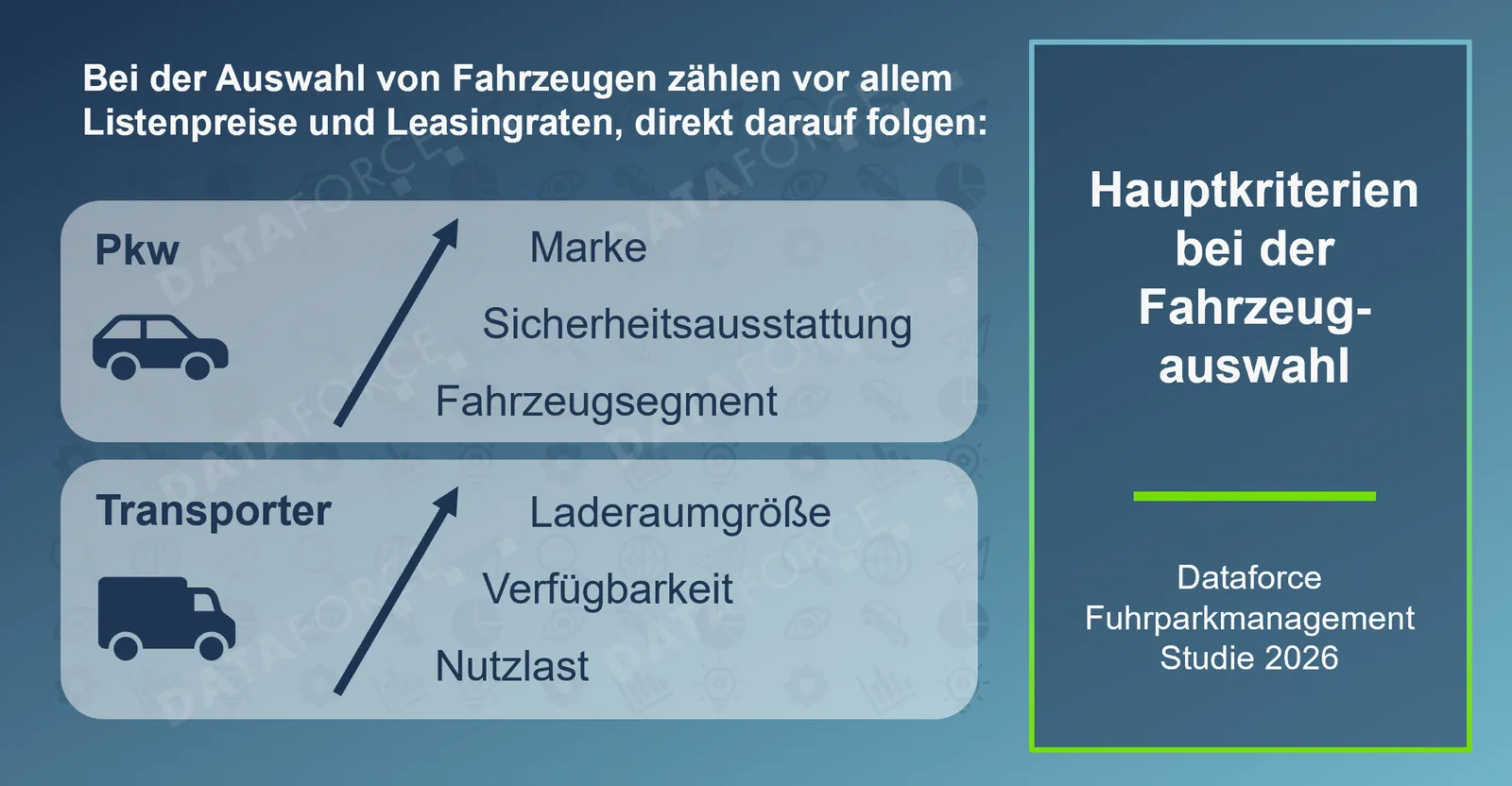
The study explains how costs continue to play a decisive role in vehicle selection as follows: For passenger cars, price and leasing rate come first, followed by factors such as brand, safety features, and vehicle segment. For trucks, economic considerations also dominate, but cargo space, availability, and payload capacity play a more significant role. Therefore, a new commercial vehicle must not only be cost-effective but also suitable for the specific usage requirements.
A previous Dataforce analysis of the German vehicle market illustrates how relevant these considerations are now, given companies’ growing electric vehicle ambitions: In January 2026, new electric vehicle registrations in the relevant fleet market were 18 percent higher than in the previous year’s month. The heavily commercialized truck market showed even more dynamic growth: Electric trucks saw a 56 percent increase, reaching an 11 percent market share, while diesel still accounted for 77 percent of new truck registrations.
In the case of light commercial vehicles, the scale of the upcoming transition becomes particularly evident. While an increasing range of electric options expands companies’ choices, they must still balance range and charging requirements with traditional factors such as payload capacity, cargo space, availability, and cost. Therefore, relying solely on the purchase price is increasingly insufficient for making a decision.
According to Dataforce, used vehicles are also gaining importance, especially in smaller fleets, where a significant price advantage and quick availability are crucial. For trucks, the willingness to buy used vehicles is higher due to their functional nature compared to passenger cars. However, the available research does not indicate whether this trend applies to a similar extent in used electric vehicles.
Digitalization aims to address rising complexity
In addition to vehicle selection, the demands for data collection and reporting are increasing. According to Dataforce, more than two-thirds of fleets with at least 50 vehicles are already subject to ESG reporting requirements, which correspondingly raises the effort needed for data collection, processing, and coordination. Specialized fleet management systems could take over some of this workload, but they are not yet widely adopted. Larger fleets are already using such software, while smaller fleets often operate without a dedicated system. Functions for cost control, maintenance organization, and compliance—such as driver’s license checks or UVV inspections—are particularly in demand. However, Dataforce still sees gaps between the desired scope of functionality and actual implementation in terms of compliance.
As the share of electric vehicles increases, a consistent data foundation is likely to become even more important: To assess the cost-effectiveness of individual vehicles and usage patterns, cost and operational data must be combined. Thus, electrification becomes not only a technical challenge but also a data and process-related task.
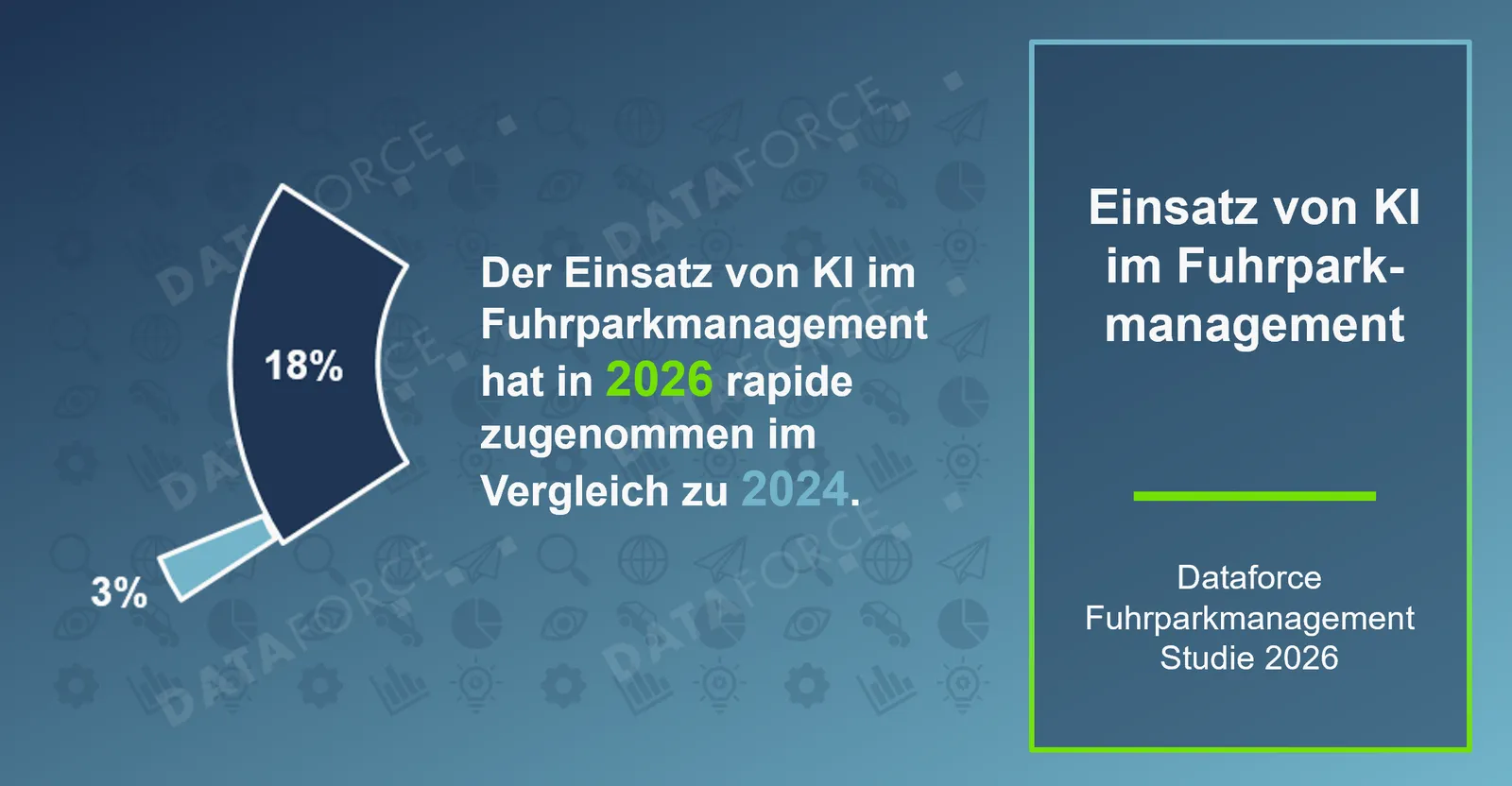
Artificial intelligence is also playing an increasingly important role in this area. Its use in fleet management has risen significantly compared to Dataforce’s survey two years ago, but it is still in its early stages overall. Respondents see particular potential in analytics and reporting, as well as in invoice processing, vehicle configuration, and damage management.
For the 2026 Fleet Management Study, Dataforce analyzed the results of an online survey conducted among at least 300 fleet managers in Germany. Key topics included task allocation, procurement, cost management and TCO, as well as the use of fleet management software and artificial intelligence.
Source: Information via email