
The Wrocław City Police will not penalize hybrid plug-in vehicles at the “EV charging” sign.
On October 2, Dariusz Zatoński plugged in his Lexus NX plug-in to a public charger on św. Wita Street in Wrocław. Moments later, he found a note behind the windshield asking for immediate contact with the city police. It ended with a warning, although initially a fine of 100 zł and 1 demerit point were considered. After intervention by the “Gazeta Wrocławska,” the police changed their guidelines, and the city admitted that the February amendment to the regulations had created a loophole.
Signs corrected, but the sign remains the same
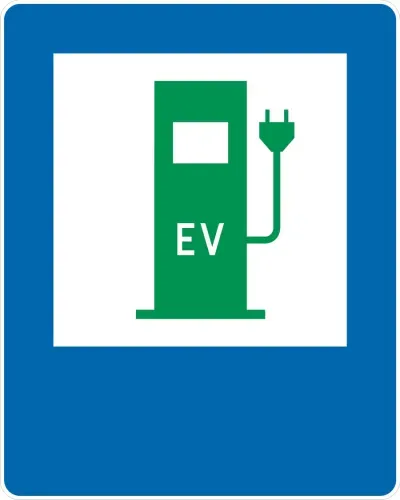
The parking spaces on ul. św. Wita (the connection between ul. Wita Stwosza and Plac Nowy Targ) are marked with sign D-18 “parking” and a white sign reading “EV charging”. According to the regulations on signs, such a sign indicates a spot for electric vehicles, and only during charging. The Electromobility Act defines an electric vehicle narrowly: it is a car powered solely by energy from an externally charged battery, that is, a classic BEV. Plug-in hybrids have a separate definition as hybrid vehicles in that context.
On February 19, 2026, an amendment to the regulation on road signs and signals came into effect. D-23b now denotes “a gas station with a charging point for electric or hybrid vehicles,” while D-23c refers to “a charging point for electric or hybrid vehicles.” The Ministry of Infrastructure stated in its justification that previous regulations prevented plug-in hybrids from officially using such locations. It cited the Public Roads Act, which requires designated spaces for both types of vehicles at publicly accessible stations. However, the regulation regarding the “EV charging” sign was not changed, and there are no D-23b or D-23c signs on Św. Wita Street.
The driver noted that the charger has two sockets suitable for hybrids, which encourages them to charge there. The City Roads and Maintenance Authority told him over the phone that plug-in hybrids can use the EV charging stations, and no signs need to be changed. Meanwhile, a guard warned that as long as the current signs remain, charging a PHEV will be considered an offense, with potentially higher penalties next time.
A textbook example of bureaucratic red tape.
New guidelines and request to the ministry
Piotr Szereda, acting deputy head of Wrocław’s City Police, initially told a newspaper that lawmakers do not permit hybrid vehicles to park under such signs. After reevaluating the situation, he described it as a legislative oversight, adding regarding new instructions for officers: “If a plug-in hybrid vehicle is charging under an ‘EV charging’ sign, we waive enforcement actions. The driver may be mistaken about what they’re doing and is not at fault.” In his view, no warning should even be given in such cases.
The city hall confirmed that the amendment applies to signs D-23b and D-23c, but not to the “EV” and “EV ładowanie” signs. Joanna Urbańska-Jaworska from the city administration said the city, together with the traffic police, will file a request with the Ministry of Infrastructure to standardize the regulations so that parking spaces for both types of vehicles can be marked with as few signs as possible. For now, the signs at ul. św. Wita and similar locations in Wrocław will remain unchanged, and until the regulations are updated, the traffic police are to carry out informational campaigns.
The sign still indicates parking only for charging purposes, so an unconnected vehicle, whether electric or gasoline-powered, remains at risk of a fine.
The EU AFIR regulation treats plug-in hybrids as electric vehicles with an additional internal combustion engine. However, Polish regulations have their own narrower definitions, so the issue can only be resolved through an amendment to the national regulation. The Wrocław guidelines apply only to the local city police.
From the editorial team: At the beginning of September, we reported that the updated NX 450h+ would be Lexus’s first plug-in model to support DC fast charging, with the manufacturer promising a WLTP range of over 100 km. Such hybrids will also be stationed at fast chargers, and the missing term in the regulation applies to each of them, not just one station in Wrocław.
LovEV Newsletter
Want more content like this?
Sign up — we’ll send you a weekly summary once the newsletter starts.