
Strabag is testing a partially electric construction site in Oberhausen
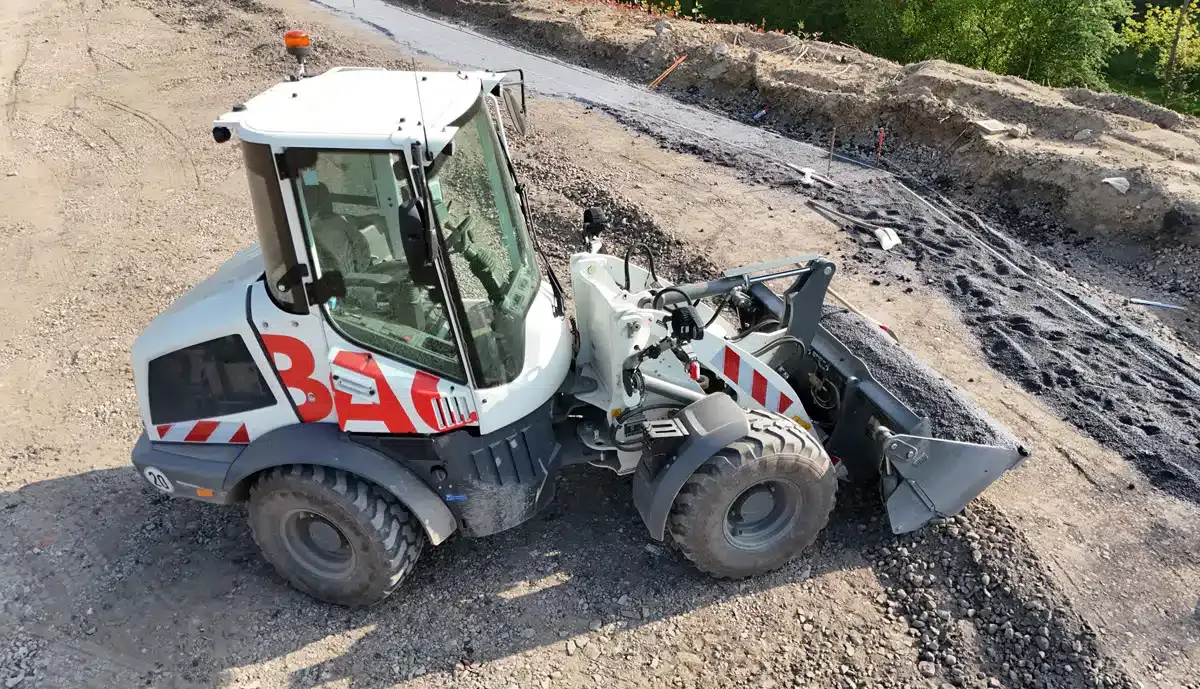
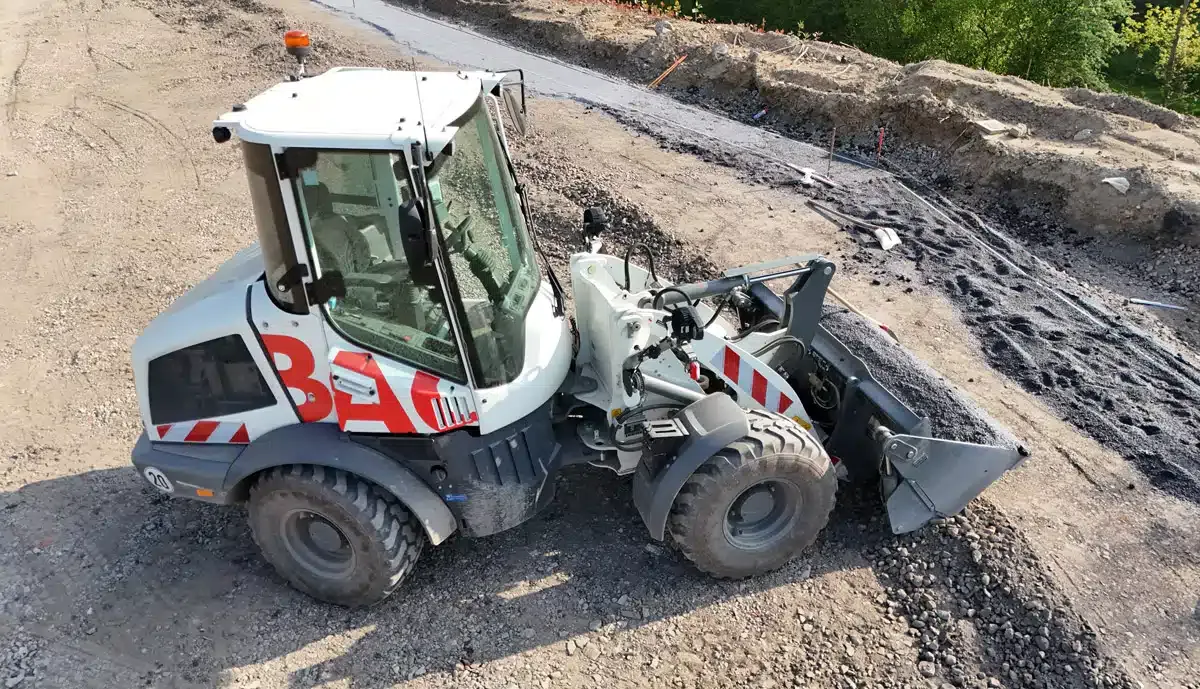
Image: Strabag AG
Strabag AG has completed the renovation of its existing ground preparation plant at the Oberhausen site. Meanwhile, the construction company tested the implementation of a partially electric construction site under real conditions. This was aimed at testing the technical capabilities of electric construction machinery and gaining practical experience for their future use.
Through the renovation, Strabag increased the plant’s allowable input volume from 120,000 tons per year to 350,000 tons per year. On the site covering approximately 17,600 square meters, the project team carried out demolition, earthwork, foundation work, and paving tasks to create new storage capacity. Initially, existing surface preparation areas and retaining wall structures totaling around 20,000 tons were demolished.
The existing surface finishes were processed and then reused as a recycling base for the redesign of the areas. For the new surface drainage system, Strabag installed approximately 128 meters of PVC piping. Additionally, a treatment area about 7,400 square meters in size was created with a two-layer asphalt surface on top of a support and frost protection layer made from recycled materials.
To handle peak loads, Strabag installed a mobile battery storage system with a capacity of 153 kilowatt-hours. This ensured that the machines in use were powered by green electricity. According to the company, practical tests showed that especially heavy electric construction machinery has already reached a performance level comparable to conventional diesel-powered equipment.
Less emissions, lower energy costs
Strabag also points to reduced noise emissions and lower direct pollutant emissions for workers on the construction site. Theoretically, around 18,000 kilograms of CO2 could be saved.
The currently higher costs of equipment are partially offset by lower operating expenses, according to the company. The operational and maintenance costs of electric machines are significantly lower than those of diesel-powered equipment. In Oberhausen, energy costs were reduced by about 90 percent. At the same time, electric construction machinery is not available everywhere and in every size, while the options for a robust charging infrastructure are limited depending on the location.
To ensure as quick a completion as possible for the construction site, Strabag opted for a practical hybrid approach. In addition to electric construction equipment, conventional machines were also used, which, according to the company, ran on the renewable fuel HVO100. The vehicles used for logistics transport likewise utilized this diesel alternative.
"We are not just building a ground preparation facility here — we are breaking down prejudices. With our electric construction site, we demonstrate that electromobility is already practical in the construction industry today. Real-world experience on site convinces more than any theory," said Robert Kucza, sustainability expert from Strabag’s North Rhine-Westphalia division.
Also interesting
About the author
Thomas Langenbucher is an expert in electromobility with professional experience in the automotive industry and finance sector. Since 2011, he has been covering electric vehicles, sustainable technologies, and mobility solutions for ecomento.de. Learn more.
Reader interactions