
Strabag tested an electric construction site in Oberhausen
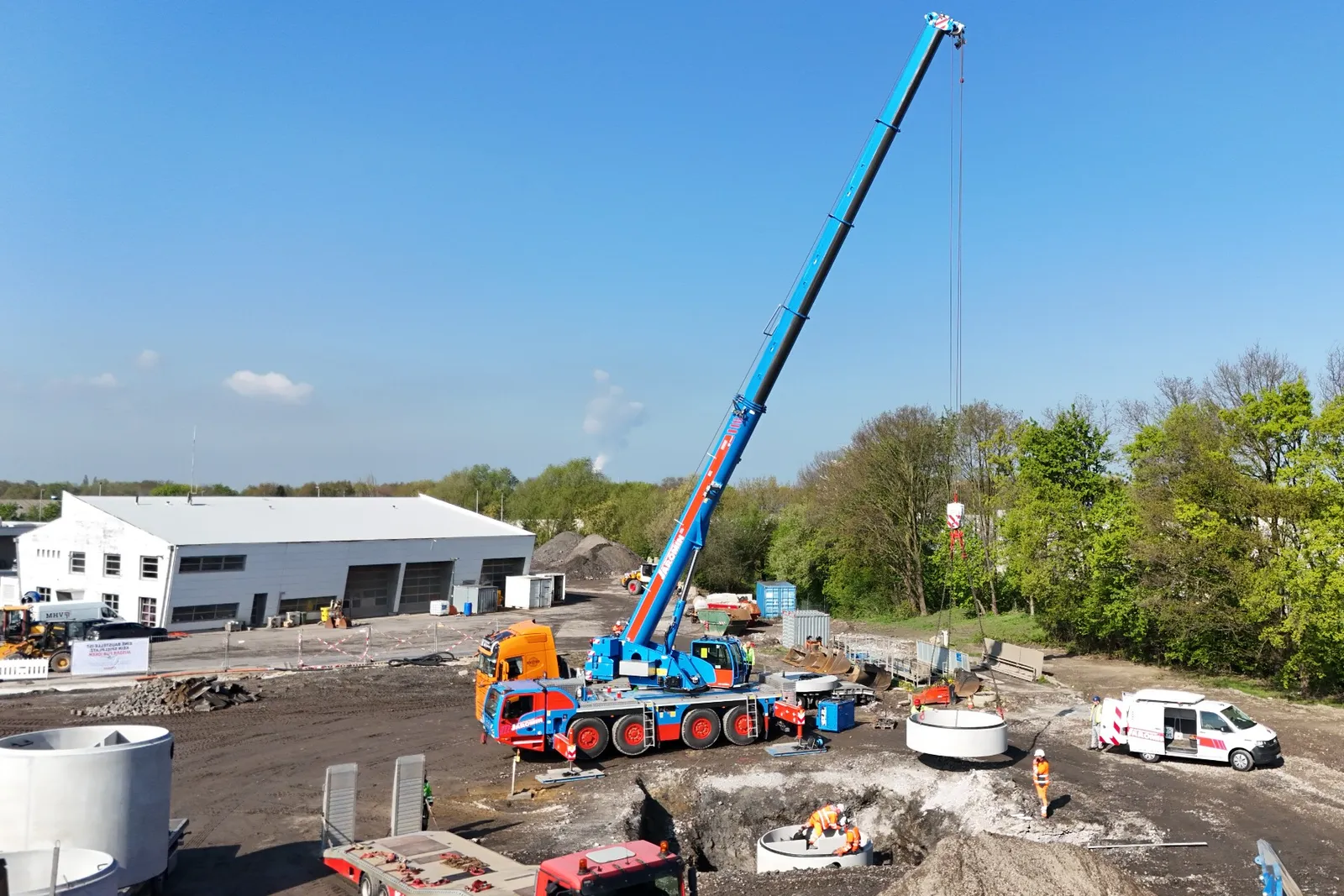
Construction company Strabag implemented a partially electric construction site concept during the renovation of an existing soil treatment plant in Oberhausen and tested it under real conditions. Electric excavators, electric pavers, and a mobile battery storage unit were among the equipment used.
The range of electric construction machinery is continuously expanding, as was evident at last year’s leading trade show Bauma in Munich. However, fully electric operation of construction sites and the associated machinery and equipment remains an exception in Germany for now. According to TU Munich, which is involved in the new research project ForBat@Bau, the lack of significant progress toward locally emission-free and energy-efficient construction sites is primarily due to the coordination issues and workflows among the various stakeholders.
Thus, even for Strabag, one of Europe’s largest construction conglomerates, it remains a unique feature to this day that multiple electric machines are used simultaneously on a construction site. However, the company was able to test at least one partially electric construction site in practice in Oberhausen. The goal was to evaluate the technical performance of electric construction machinery under real-world site conditions and gain valuable practical insights for future use, according to the company.
Specifically, eleven fully electric construction machines were used in the renovation of a ground treatment plant that processes construction debris from building demolitions into materials for road construction. Thanks to the renovation, the plant can now process 350,000 tons per year instead of 120,000 tons.
The eleven electric equipment units used included a 25-ton excavator (Kiesel ZE 225), an electric loader (Liebherr model L 507 E), a truck crane (Liebherr LTC 1050-3.1E), and a road paver (eABG 4820) — all fully electric. For example, the electric truck crane was used to move two precast concrete shafts equipped with integrated lamella clarifiers for cleaning surface water. To ensure power supply for the electric construction machinery and to manage peak loads, a mobile battery storage system with a capacity of 153 kilowatt-hours was employed.
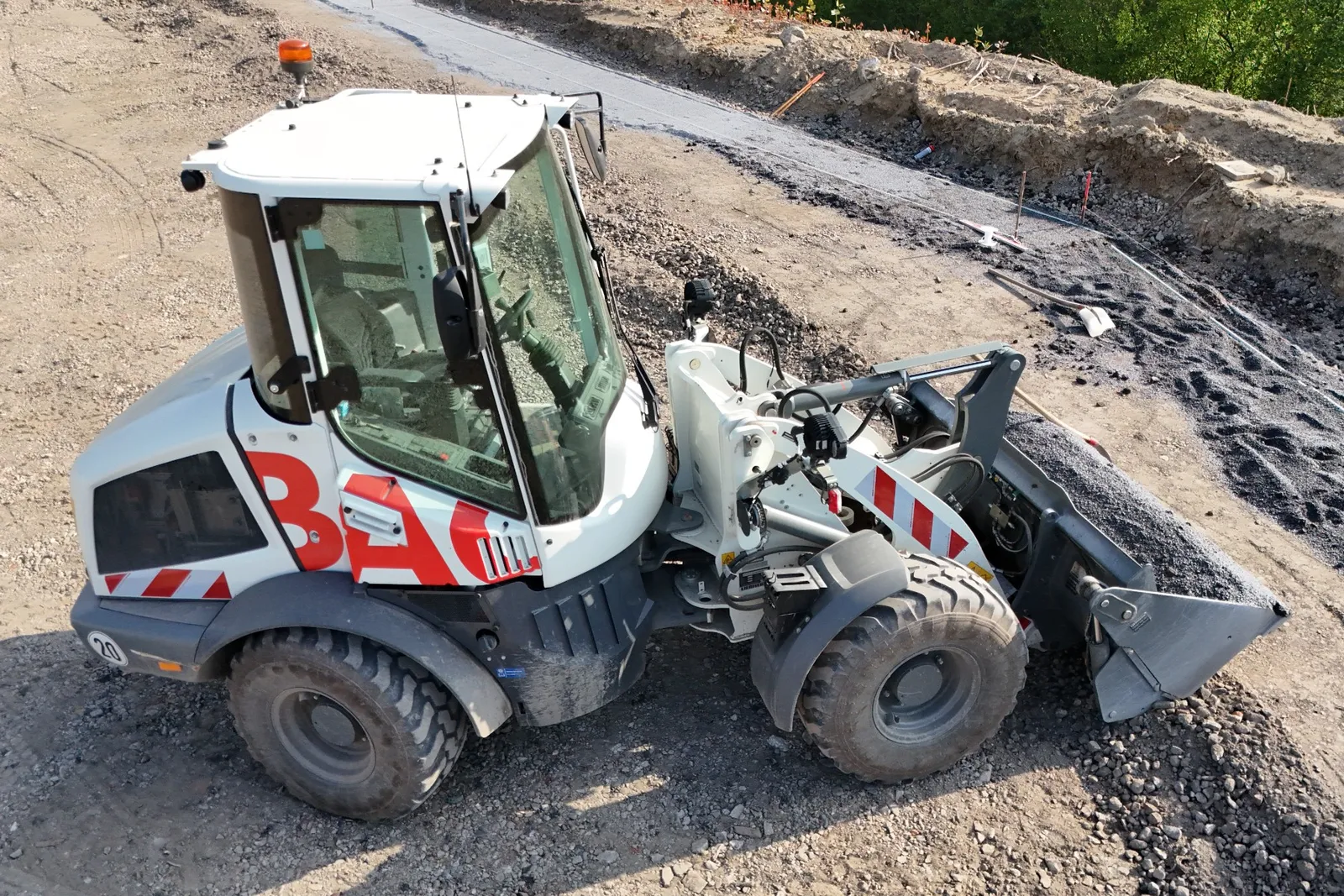
"We are not just building a ground treatment facility here — we are breaking down prejudices. With this electric construction site, we show that electromobility is already practical in the construction industry today. Real experiences on site are more convincing than any theory," says Robert Kucza, sustainability expert at Strabag’s North Rhine-Westphalia division.
According to Strabag, the results of the practical test show that especially heavy electric construction machinery already achieves a performance level comparable to conventional diesel-powered devices today – with less construction noise and no local CO2 emissions. Although the purchase costs are still higher than those for diesel machines, they are partially offset by lower operating costs. As a result, energy costs at the construction site in Oberhausen were reduced by around 90 percent. Maintenance costs are also lower compared to diesel-powered machinery.
According to Strabag, challenges remain to be overcome when implementing this approach on a large scale: fully electric construction machinery is not yet available everywhere and in all sizes. Additionally, the options for establishing a robust charging infrastructure at construction sites are limited depending on the location. Therefore, Strabag opted for a practical hybrid approach at the Oberhausen site, using machines fueled by HVO100 alongside conventional ones. HVO100 was also employed as a diesel substitute for logistics transportation.