
Large, quiet, and practical
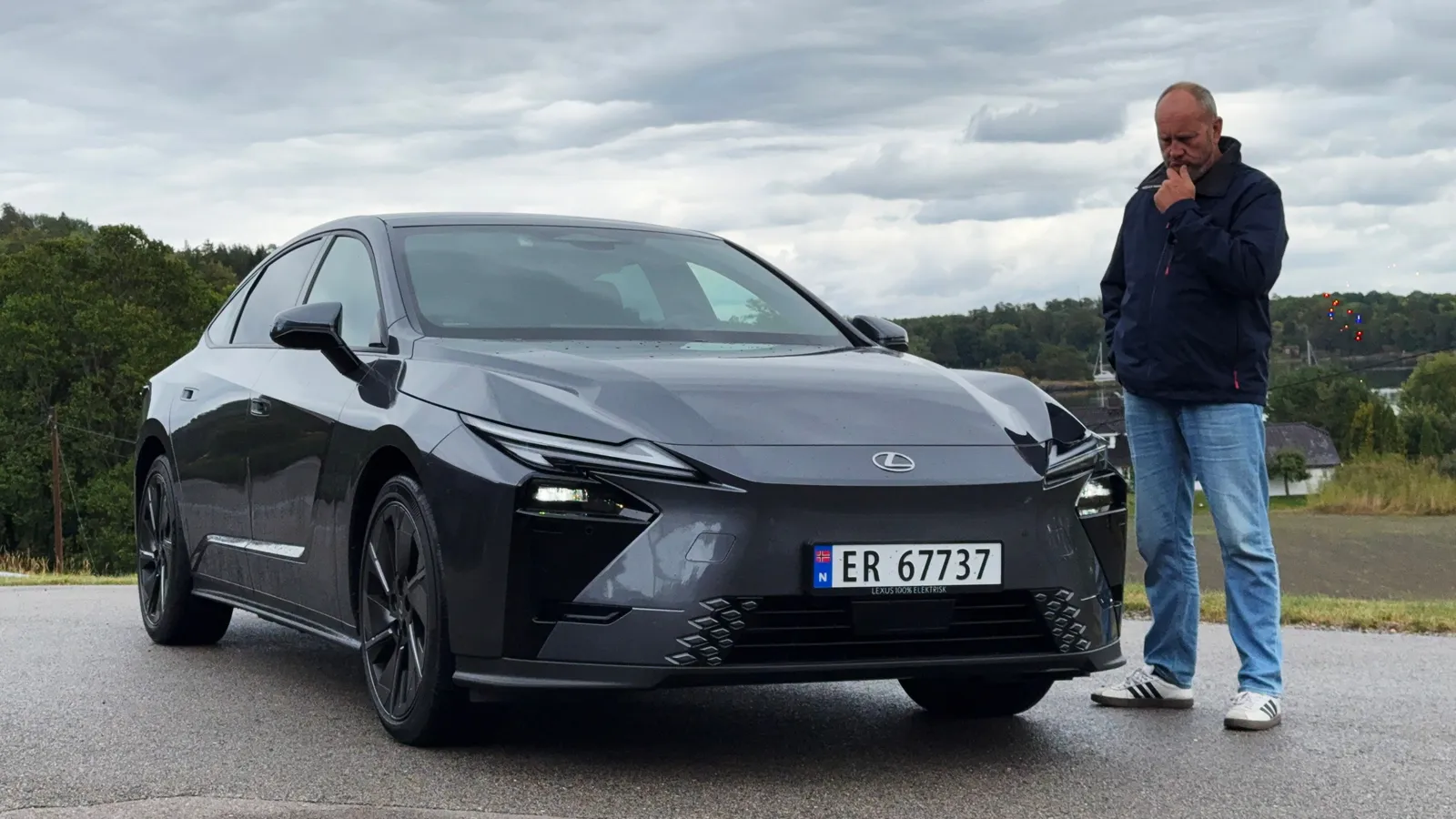
The Lexus ES 500e impresses with comfort, noise level, and rear seat space, but its practical features and user-friendliness significantly detract from it.
11.09.2026 07:01 | Updated 14:16
Lexus holds special significance for a small group of car buyers. It is not an old brand; its first vehicle, the LS 400, was launched in 1989. It was intended to challenge the Mercedes S-Class in every aspect and was indeed much better in many ways.
The ES model also came out that same year. It has never been known as the most exciting car on the market, and the eighth generation doesn’t look particularly impressive visually either.
In contrast, the ES 500e has grown significantly. With a length of 5.15 meters, it has become a fairly large car.
We take a closer look at:
What kind of car is this?
Lexus ES 500e – summary:
Plus
Minus
Seats – lacks a luxurious feel
Interior – decent quality, but poor infotainment
Rear seat – very good space
Trunk – many limitations
Driving experience – a balance of comfort
Range – adequate for commuting
Charging – overperforms but doesn’t impress
Price and competitors
Conclusion
What kind of car is this?
The Lexus ES 500e is a large electric sedan in the premium class. It targets those who prioritize comfort, noise levels, and a sense of quality over sporty features and practical solutions.
This car is suitable for those who want a large, comfortable, and stylish vehicle for four people. However, it has its practical limitations.
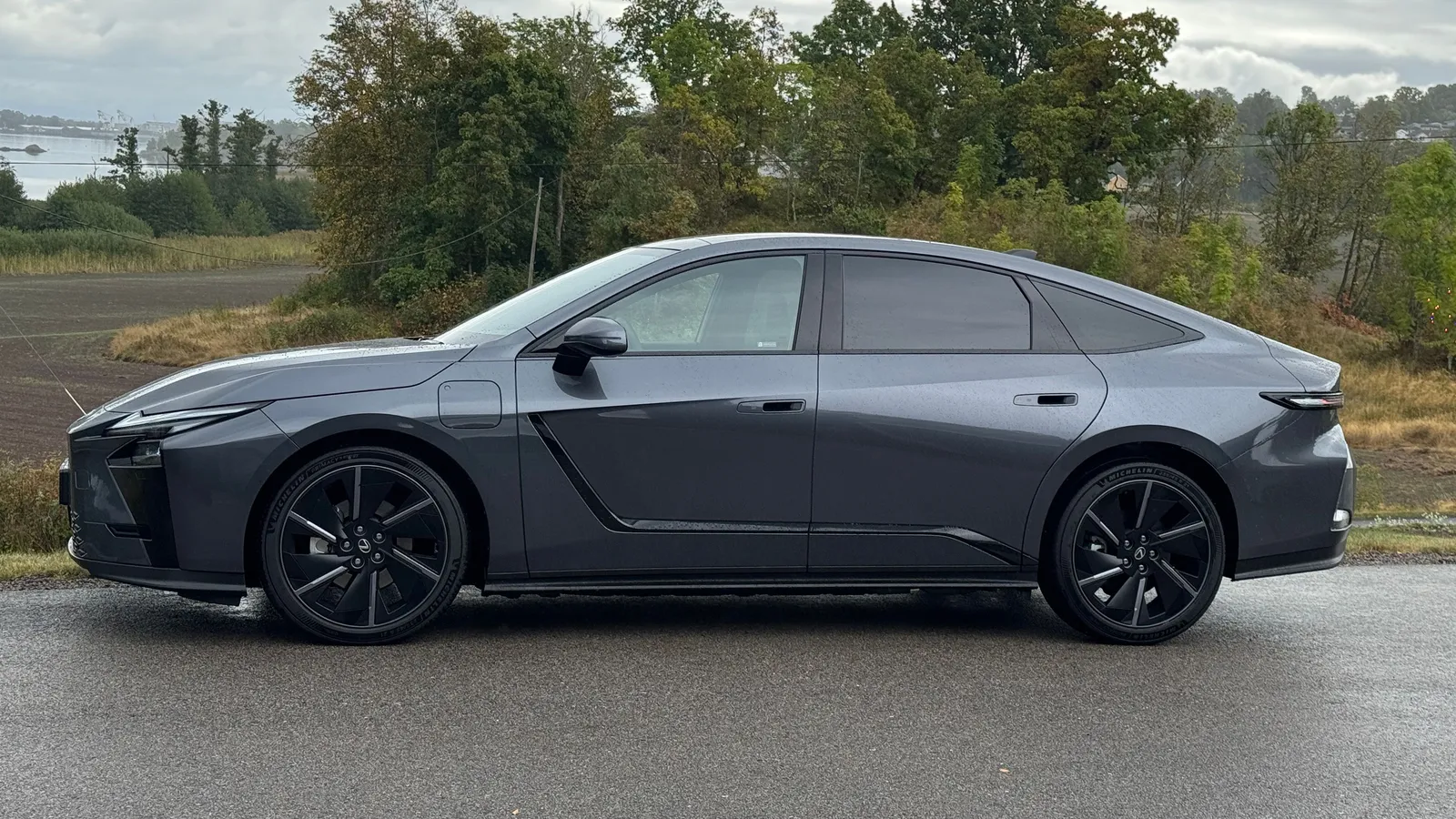
The Lexus ES 500e is 16 cm longer than its predecessor. It is available with front-wheel drive as well as all-wheel drive.
The test vehicle we are driving has the all-wheel drive version with two engines, and it is built on a platform developed for multiple powertrains, so it is not based on a dedicated electric vehicle platform.
This results in some compromises regarding space utilization and battery size.
Lexus ES 500e – summary:
Plus
All-wheel drive
Ride comfort
Spacious rear seat area
Minus
Small battery
Slow fast charging
Limited towing capacity
Seats – lack a luxurious feel
The test vehicle has 10-way electric seat adjustment. Still, they don’t feel particularly luxurious in this trim level.
You don’t get adjustable leg supports, and the lumbar support lacks height adjustment.
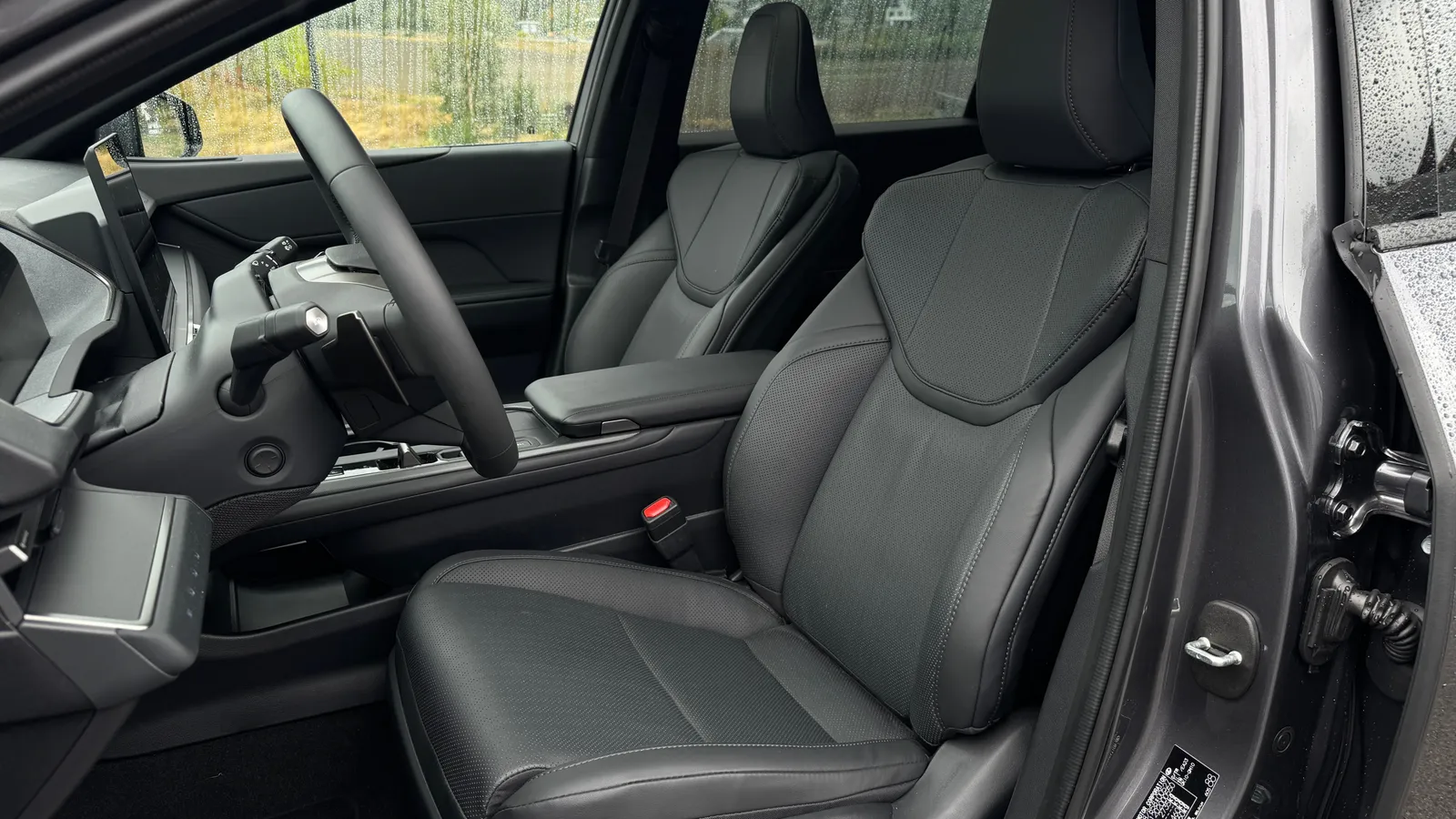
If you choose the four-wheel drive version, you won’t get the top Luxury trim either.
You’ll also miss out on the best leather quality, the light brown bamboo material for the doors, soft-close doors, a head-up display, a 360-degree camera, and the Mark Levinson audio system. (But we should add that the standard speakers also deliver good sound.)
The seating position is fine, and both the seats and steering wheel have plenty of adjustment options. But for a car priced at over 700,000 kroner, I expect much more.
These days, we often find mass-market seats in the 250,000-kroner range. It’s unfortunate that this isn’t the case here.
Interior – decent quality, but poor infotainment
The material quality is consistently good, with smooth surfaces and fine details.
Lexus has chosen an electric door opener that prevents the doors from opening if there is traffic behind.
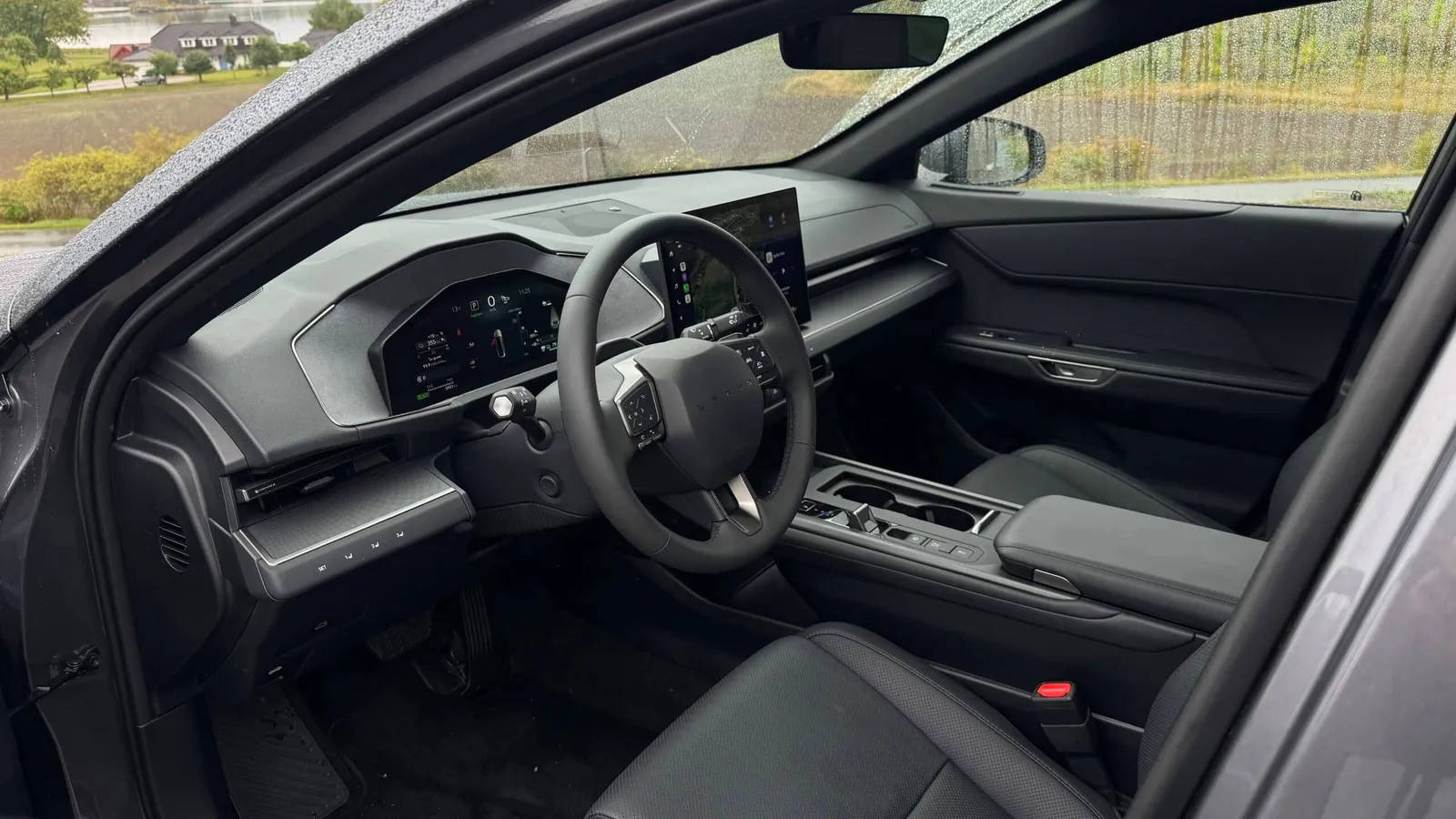
The center console is simple, featuring a wireless charging pad, two cup holders, and a USB-C port. However, the charging pad is so smooth that the phone easily slips off while driving. It’s very annoying.
The instrument panel offers multiple displays, but the infotainment system is unnecessarily difficult to use. Just resetting the usage history is a somewhat complicated process on its own.
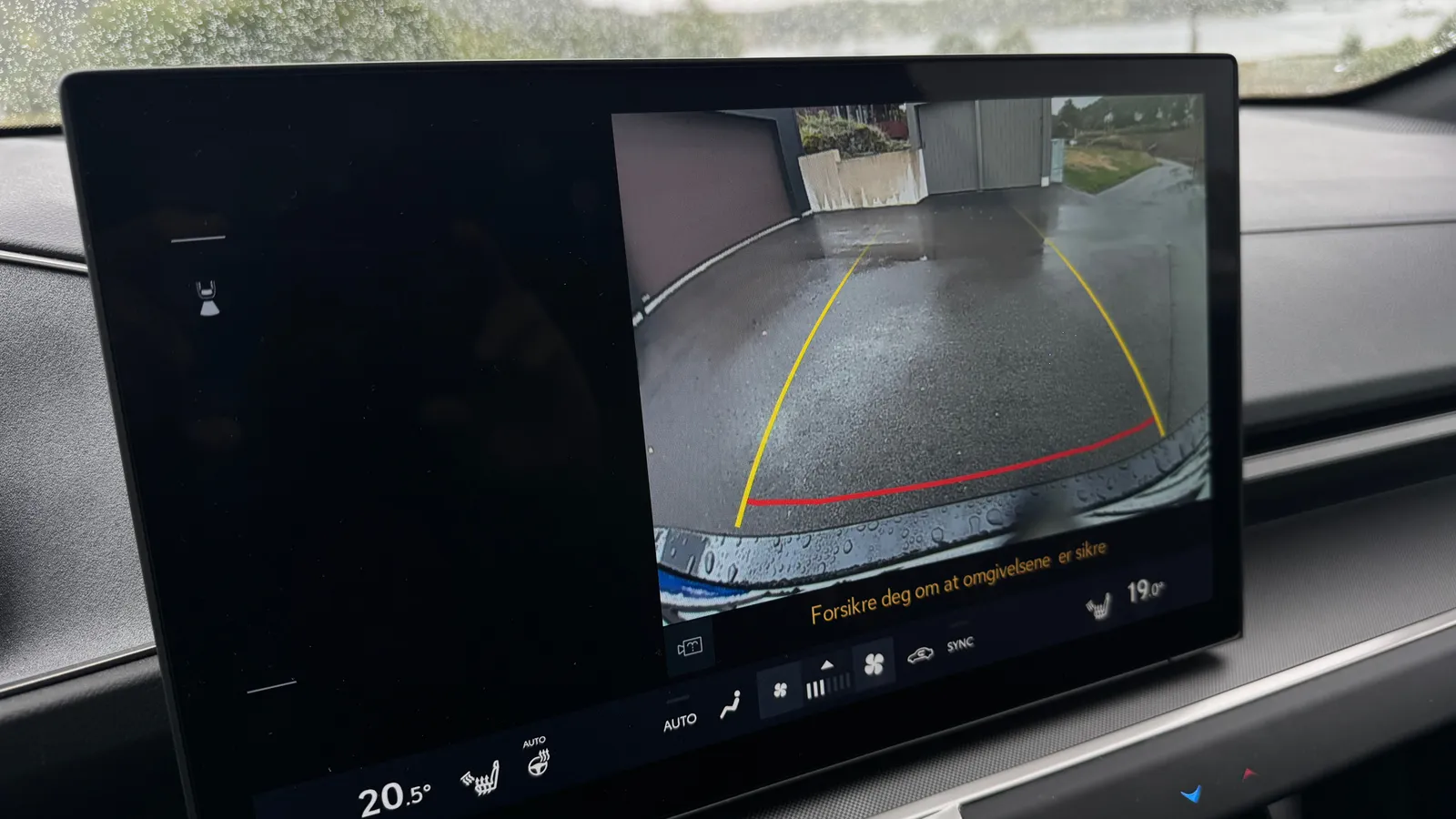
The infotainment system is fast, but the design is quite dull in my opinion, with large gray areas and little sense of premium quality. Fortunately, Apple CarPlay works well and fills the entire screen.
A major annoyance is the overly aggressive driver monitoring system. It alerts quickly if you look away from the road, and the settings cannot be changed while the car is in motion. The same applies to many other settings in the vehicle.
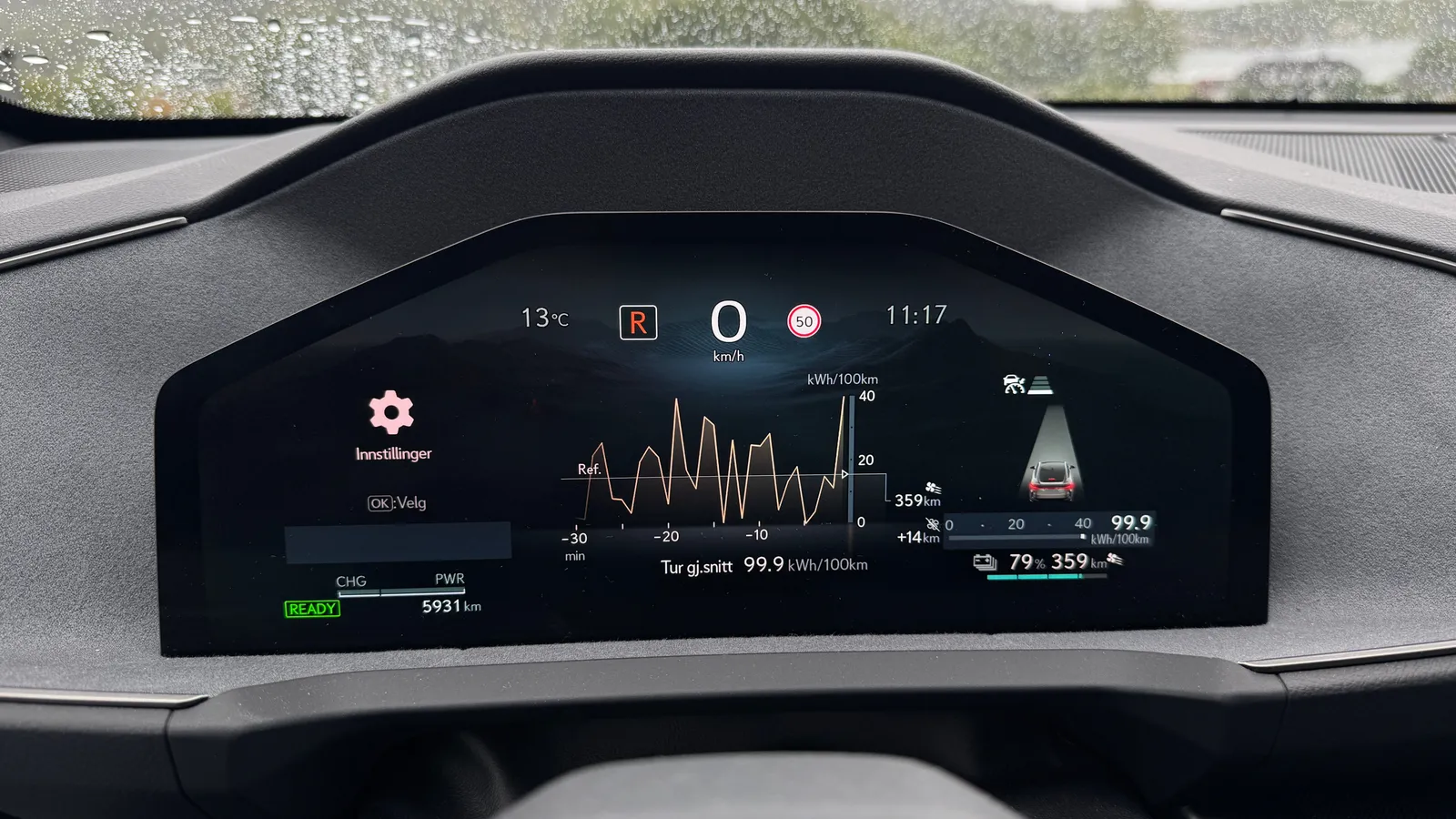
The speed warning can be easily turned off with a dedicated button at the top of the screen.
More and more cars now come equipped with a button that lets you set all your preferences with just one press—quickly. A premium-class car should offer the same feature.
Rear seat – very good space
The rear seat is the car’s next strongest point. I’m 1.89 meters tall and have ample space for both my knees and head.
There’s also decent space for the feet under the seat, though the height could be higher.
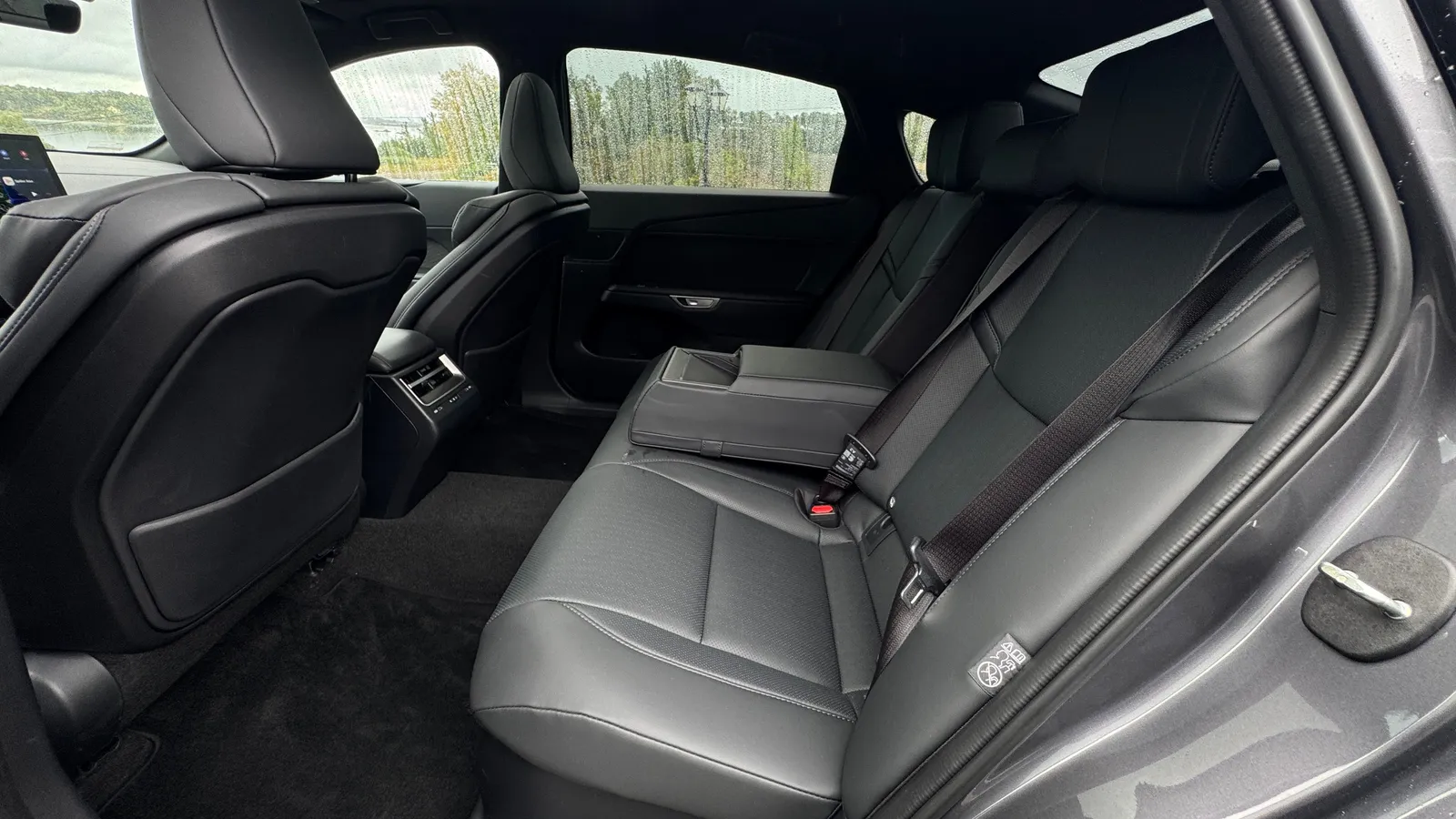
The Executive version isn’t behind in terms of equipment, but all rear passengers have handholds on the ceiling and ventilation vents, with two USB-C ports at the back. It’s only available with a traditional roof hatch, not a panoramic one.
The Luxury version, which is only available with all-wheel drive, has reclining seats and a large screen in the center console where you can control more functions.
The seating area is a bit unsuitable for adults due to the high and wide wheel arches.
This is surprising for an electric vehicle, but it’s because the platform was also developed for gasoline-powered cars.
You’ll find only Isofix anchors in the rear seats, but they come with plenty of space in return.
Trunk Space – Many Limitations
The trunk holds 517 liters. Although it looks like a typical station wagon, the ES is actually a regular sedan with limited trunk access.
The rear door also uses an old-fashioned hinge design that takes up a lot of space in the trunk.
The car lacks a glove box, and the space under the trunk floor is so small that the charging cable can’t fit there. So if you need to bring one, it has to be placed alongside the luggage.
The biggest drawback is that the rear seats can’t be folded down. It actually has the smallest loading hatch on the market, where you might just be able to fit two pairs of skis.
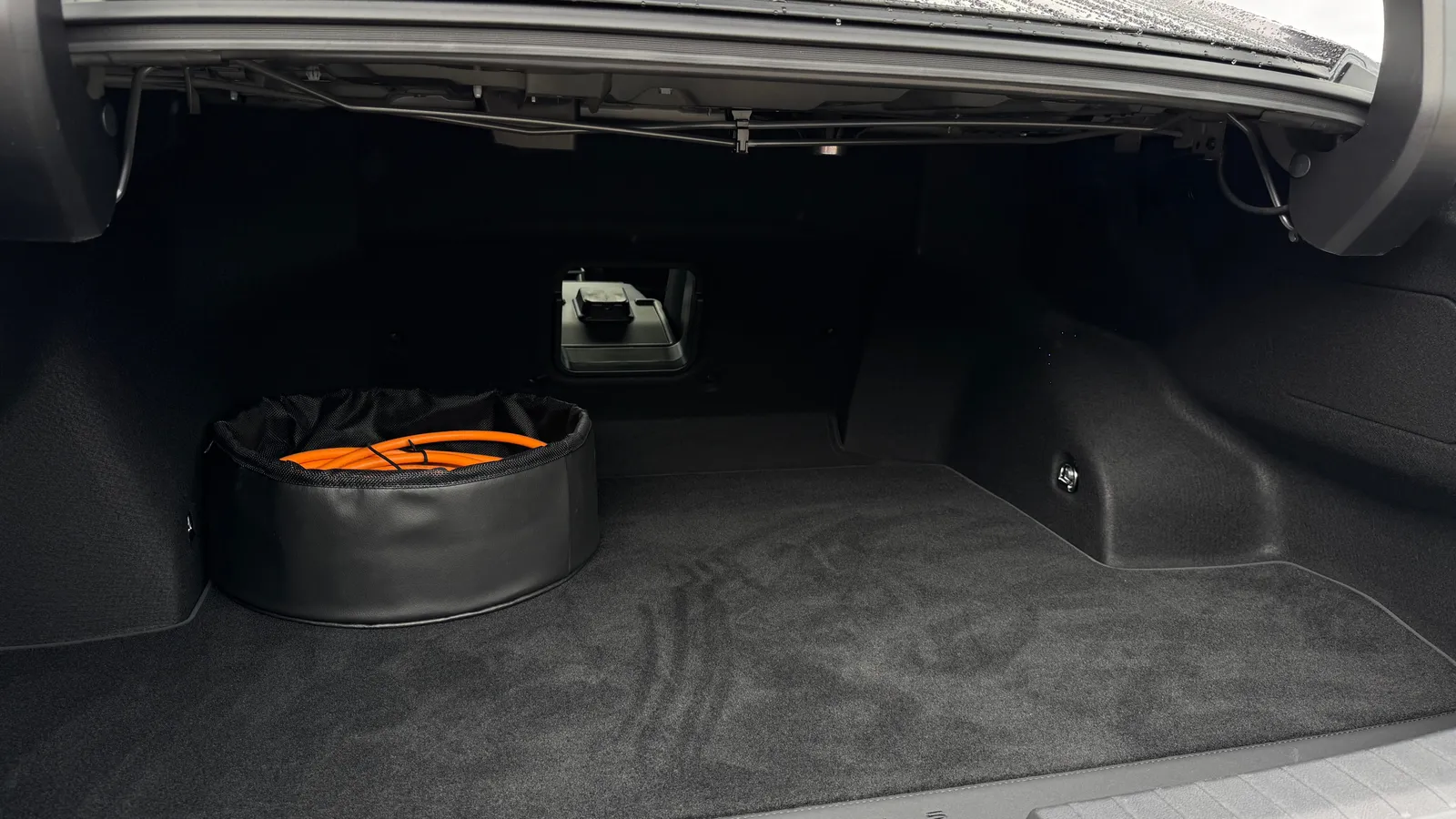
Another issue is that the car doesn’t come with roof racks, nor can it carry anything on the roof — but its payload capacity is officially approved at 431 kilograms.
All of this still means some Northerners will stay away.
Driving Impressions – A Look at Comfort
The car starts with a traditional start button. The test vehicle has all-wheel drive, 343 horsepower, and 435 Nm of torque. The front wheels deliver only 224 horsepower.
Lexus claims a 0-100 km/h time of 5.5 seconds. In our tests, the results ranged from 5.7 to 6.3 seconds.
A bit surprising, as we measured its weight at “only” 2,240 kilograms. The top speed is 180 km/h.
When testing the car, it’s noticeable that it’s front-wheel driven in corners and at low speeds. During sharp acceleration out of turns, there’s slight pull to one side.
Nevertheless, the suspension is very well tuned. It’s a perfect example to follow and far preferable to many of the air suspension systems on the market.
The car is very comfortable on the highway (which most roads are), but on an adventurous trip between Notodden and Rjukan via Tuddal, with partly very uneven surfaces, it shows its true nature.
There it behaves neutrally and stably through the bumps. As long as you drive smoothly, it doesn’t change direction on dips, rises, or curves. And it never loses control. That’s a sign of quality.
I glide through the meadows and autumn colors in quiet harmony, and actually, the faster I go, the better it feels. We measure 63.1 dB at 80 km/h and 65.6 dB at 100 km/h at our fixed measurement points.
A nice addition is a manual, virtual gearshift system with paddles behind the steering wheel. It provides artificial gear shifts and engine sounds for those who want a bit more activity while driving.
The shifting is quick enough to make the gear changes feel natural, but the sound quality is digital, so it doesn’t inspire directly.
Like all such systems that modulate multiple functions simultaneously, resulting in poor performance at the start of each drive cycle, the car is much more efficient when those functions are not used. Typically, the paddles are used to select regeneration in four steps, from full sport mode down to single-pedal driving.
The cruise control has its own buttons on the steering wheel. The lane-keeping assistant can be disabled, but the car offers no autonomous functions beyond standard driver aids.
Range – Efficiency on the Road
Lexus claims a range of 529 kilometers with a fuel consumption of 1.58 kWt per mile. In our fixed test route, we achieved 1.48 kWt/mile. The conditions were between 16 and 21 degrees Celsius with dry roads.
The measured value is better than the stated fuel consumption, but a car that is so compact and low-slung with relatively modest wheel size, weight, and power should likely remain at this level as well.
The car’s infotainment system is unnecessarily complicated. You have to navigate through various screens to get the necessary information, and you must stop the car and delve into 6-7 levels of menus to reset it.
That’s why we can’t measure the exact fuel consumption on the highway, but we estimate it to be around 1.8 to 1.9 kWt/mile at a constant speed of 100 km/h.
Charging – overpowered but not impressive
Today, long range is one of the premium criteria, yet the Lexus uses only a battery with 71 kWt of net capacity. This is unusually low for a premium sedan over five meters long.
The charging speed also doesn’t suggest it’s a premium model. Lexus lists a maximum charging power of 150 kW, achieving 10 to 80 percent charge in about 30 minutes.
Fortunately, the car performs slightly better than expected. We observed 160 kW between 10 and 30 percent charge, and it took 37 minutes to reach 1-90 percent charge, as well as 26 minutes for 10-80 percent charge.
So it’s better than the law requires, but still slow compared to natural competitors. And when we charged it, the battery was perfectly warmed up. It can be warmed through the navigation system, but I didn’t find any manual heating option.
Price and Competitors
This isn’t a cheap car. The all-wheel drive ES 350e Executive starts at 661,000 kroner.
So we’re in the unusual situation where the all-wheel drive ES 350e Luxury is more expensive than the only four-wheel drive option available.
The latter starts at 788,800 kroner, while the four-wheel drive ES 500e Executive starts at 723,300 kroner.
It’s still expensive, but the good news is that there aren’t many additional features you can add, aside from seven exterior colors costing up to 11,900 kroner.
The configurator only lists 19-inch wheels as an option, but since the test car has 21-inch wheels, it’s likely possible to spend a bit more there as well.
This car finds itself in good company with other models that don’t sell very well, as Norwegians generally don’t have luxury car preferences.
The Lexus ES must compete with German cars like the BMW i5 and Audi A6 e-tron. The VW ID.7 is also around five meters in length.
Then there are the Chinese models: Nio ET7, Exlantix ES, Hongqi EH7, Xpeng P7+, and Zeekr 001. All offer more features at lower prices, but some lack the quality standards found in Lexus vehicles.
Conclusion
Lexus should be at the top of the hierarchy within the Toyota lineup. It provides that little extra, and it’s here that one would expect the latest and best solutions to first appear in Lexus models before making their way to Toyota vehicles.
It still feels like a half-hearted attempt to offer something electric in this class. Existing solutions from Toyota’s system are used, resulting in a car that runs well but is generally behind in terms of technology, equipment, and practical features.
Lack of all-weather capability, limited towing capacity, and no roof rack mean many people will likely prefer SUV alternatives.
But if you’re just looking for driving comfort for yourself and your three closest passengers, this car might still be worth considering.
Become a member!
Get the Norwegian Electric Vehicle Association charging card, which gives you access to charging stations in Norway and Europe, expert help with charging, and excellent roadside assistance deals. Join 120,000 other electric vehicle owners!
Read more
The post Big, quiet, and impractical appeared first on Norwegian Electric Vehicle Association.