
Stellantis shows the future of delivery. The electric BOW is designed to deliver packages without a driver
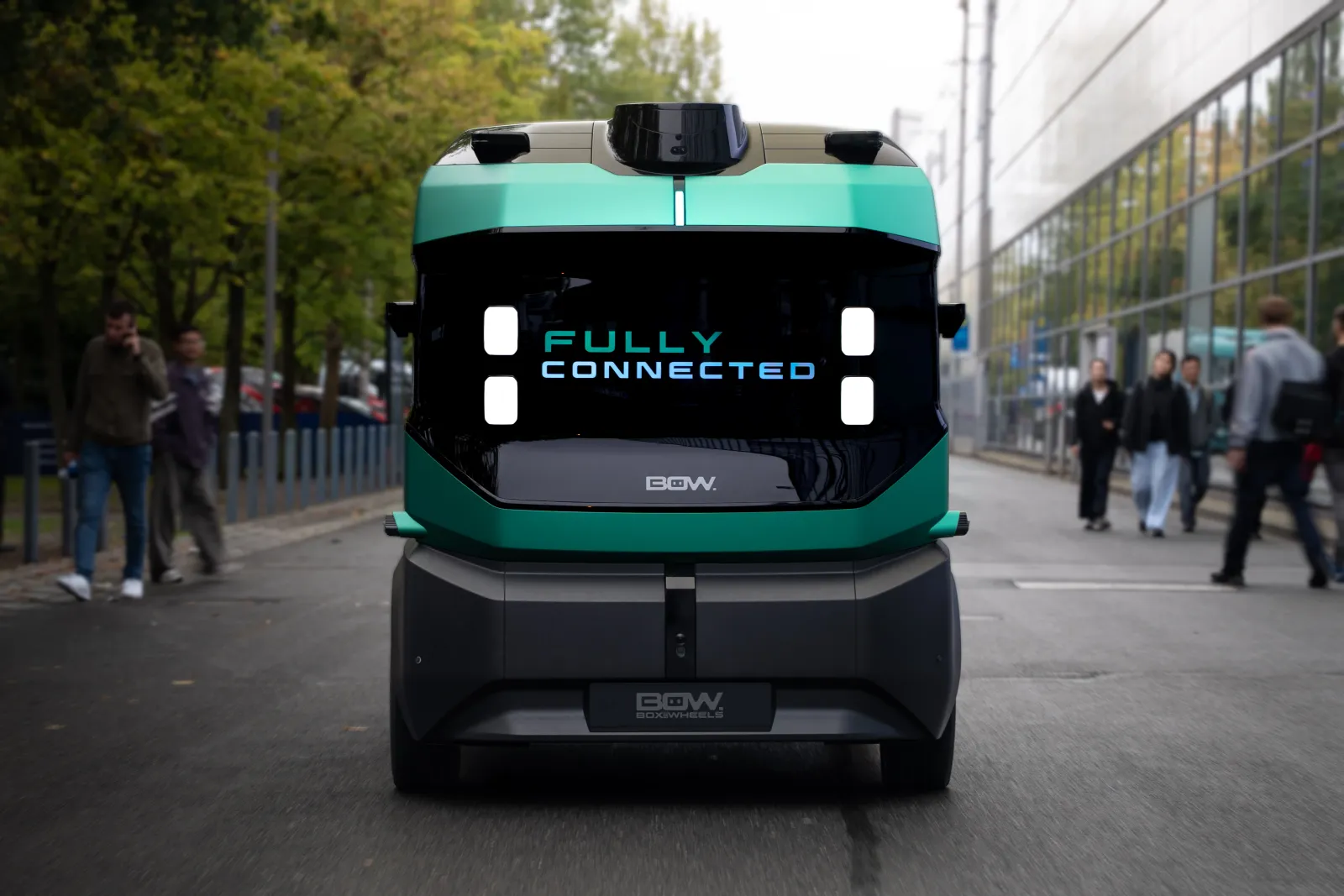
Autonomous delivery systems are increasingly stepping beyond the laboratory and technology demo stages. At the IAA Transportation 2026 exhibition in Hanover, Stellantis Pro One unveiled BOW (Box on Wheels), an electric and autonomous logistics vehicle developed in collaboration with UQI Robotics. However, this is not just another futuristic prototype. The manufacturer claims that BOW is intended to be part of a much larger ecosystem that integrates autonomous driving, electrification, connectivity, and fleet services into one cohesive logistics solution.
In short:
Stellantis Pro One presented BOW (Box on Wheels) in Hanover
It is an electric and autonomous logistics vehicle developed together with UQI Robotics
The vehicle is meant to be part of an ecosystem that combines autonomous driving, electrification, connectivity, and fleet services — according to the manufacturer
Stellantis reports that its Pro One NEXT fleet management system already supports around 800,000 connected commercial vehicles of the brand’s fleet.
Stellantis and the autonomous BOW
Among the new models Pro One is preparing for the IAA Transportation 2026 exhibition in Hanover, the Box on Wheels, or BOW, has undoubtedly generated the most interest. It is an autonomous, fully electric vehicle designed for urban deliveries and last-mile services.
The manufacturer emphasizes that the project isn’t limited to just the vehicle itself, as Pro One BOW is intended to serve as a platform that integrates autonomous logistics, electric propulsion, connectivity, and services to support fleet operators. The goal is to improve efficiency and reduce the environmental impact of delivery transportation.
As stated in the company’s announcement, deliveries are today one of the pillars of economic operations, but cities expect reduced traffic jams, emissions, and noise, while customers want faster services. BOW is meant to address these challenges.
"BOW represents a forward-looking platform that combines autonomous logistics, electrification, connectivity, and services within one integrated ecosystem," emphasizes Stellantis.
The vehicle was developed in collaboration with UQI Robotics, a company specializing in artificial intelligence, robotics, and autonomous systems. While the display model is shown at the manufacturer’s booth, trade show visitors can also see a demonstrator moving on an outdoor test track.
Importantly, Stellantis has not yet revealed the most critical technical specifications of the project. It is unknown what capacity the traction battery has, what its range is, its charging speed, or which sensors are used. But as Electrive notes, BOW should currently be viewed primarily as a research and development platform for testing new logistics models.
Not just cities. The manufacturer sees broader applications
BOW was designed for urban logistics, but Stellantis sees much more potential use cases. Among the locations mentioned are industrial areas, airports, hospitals, as well as areas with limited access or particularly strict emission standards.
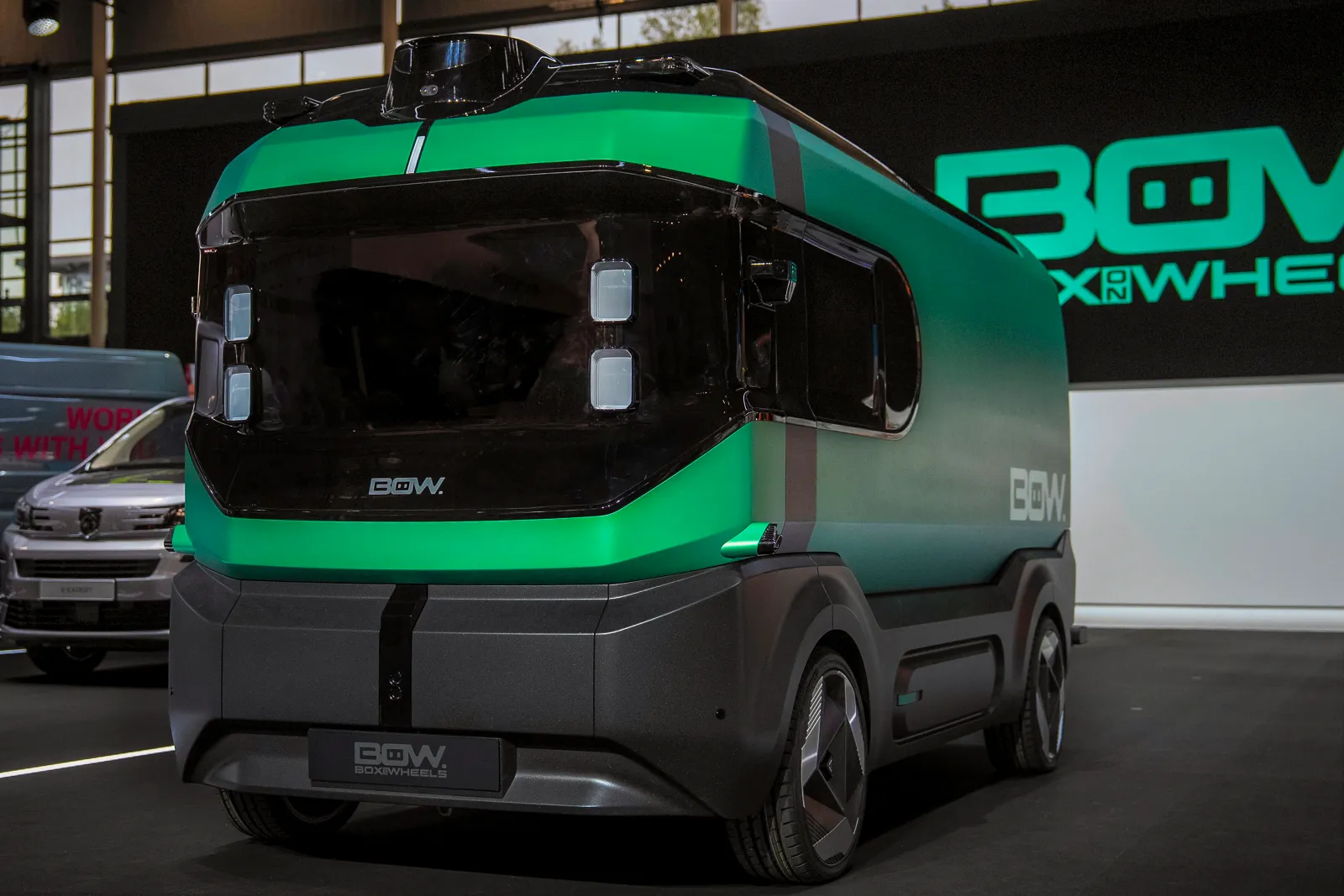
It is precisely such enclosed or partially controlled environments that could turn out to be the first natural areas for implementing autonomous delivery vehicles. Unlike traditional urban streets, they require overcoming a much smaller number of regulatory and safety barriers.
Industry media note that the initial tests and validation efforts will focus on the European market. Only later will the possibility of entering other global markets be considered.
Part of the FaSTLAne 2030 strategy
The BOW project is part of Stellantis’ FaSTLAne 2030 strategy, which aims to develop new technologies and establish partnerships to support the transformation of commercial transportation.
“The innovations showcased in Hanover reflect the concrete actions being taken under our FaSTLAne 2030 roadmap,” said Eric Laforge, global senior vice president of Stellantis Pro One. He added, “Through our partnership with UQI Robotics, we are exploring how autonomous technologies, connectivity, and services can contribute to the future of commercial mobility. While autonomous commercial vehicles in cities are already a reality in China, this partnership allows us to examine how such solutions can be adapted to the needs of other markets and customers. We aim to jointly develop a transformative approach for the light commercial vehicle segment and expand the role of the vehicle from a mere mode of transport to an integrated logistics platform that helps operators improve efficiency, productivity, and sustainability.”
A similar tone was heard in the remarks of Emanuele Cappellano, Stellantis’ operational director for Europe and head of Stellantis Pro One. “We are expanding beyond the vehicle itself by combining technology, connectivity, and services to deliver smarter, more efficient, and more sustainable logistics solutions,” he emphasized during the trade show.
BOW is part of Stellantis Pro One’s broader transformation
The unveiling of the autonomous concept coincided with the presentation of the new Pro One NEXT fleet management system. According to Stellantis, this solution aims to support maintaining maximum vehicle availability through real-time monitoring of fleet operations.
The company states that the system already supports around 800,000 of its brand’s commercial vehicles connected to the network. The first operation centers were launched in the United Kingdom and the United States, with more set to be established in Europe.
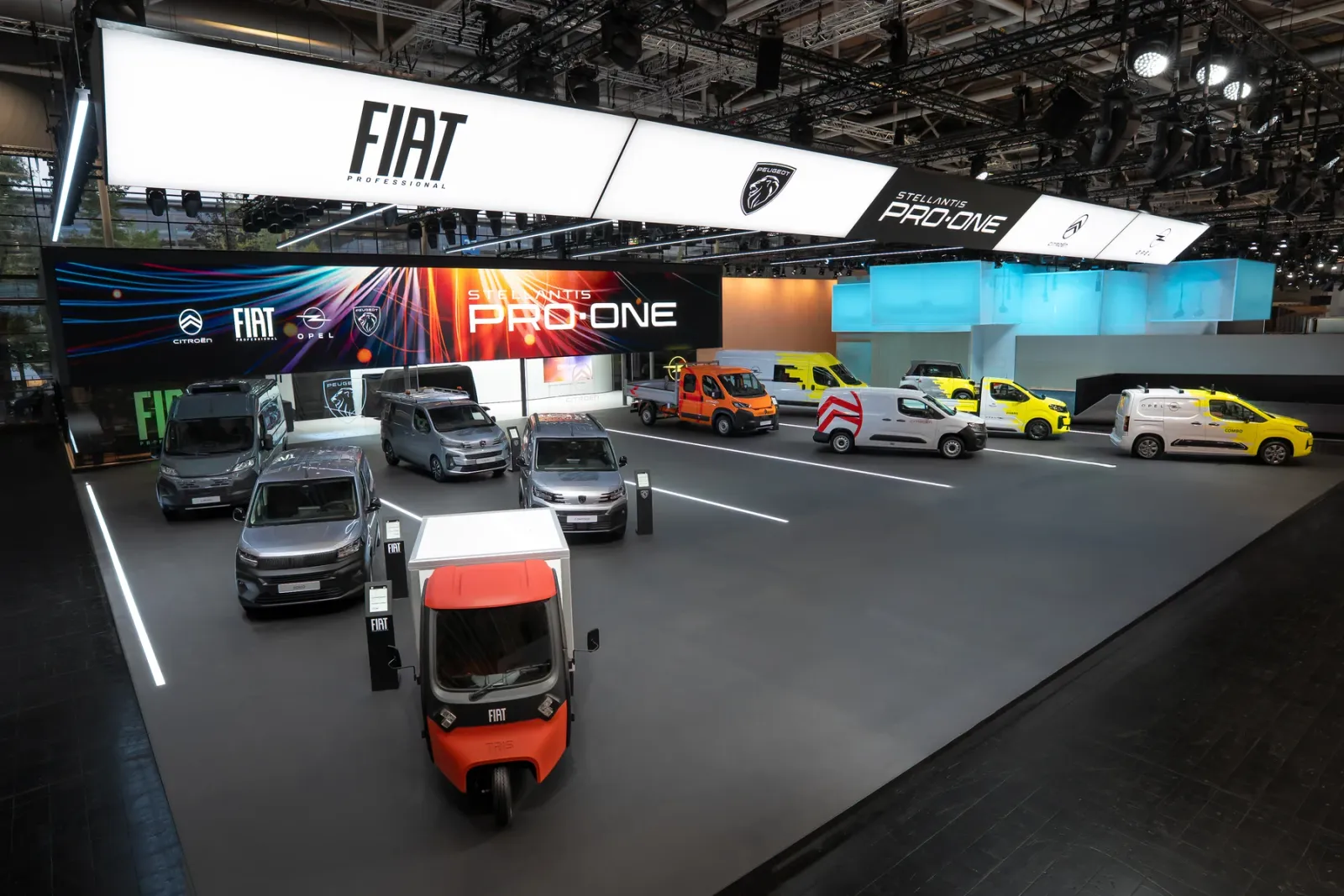
In broader terms, the BOW fits into the strategy of building a complete ecosystem of services for businesses, including data, connectivity, financing, fleet management, telematics solutions, and specialized modifications.
It’s not just Stellantis. The industry is actively testing autonomous delivery systems.
The idea of autonomous delivery vehicles is not new, but it has gained significant momentum in recent years. In China, companies such as JD Logistics, Meituan, and Cainiao are conducting regular tests using small autonomous vehicles for delivering packages and food. It is these Chinese experiences that Stellantis cites, noting that autonomous urban delivery is already in practical use there.
In the United States, companies like Nuro and Gatik have pursued a similar approach. Nuro develops small unmanned vehicles designed solely for transporting goods, while Gatik specializes in autonomous logistics delivery for short and medium distances for retail chains, according to CNBC.
European manufacturers are also seeking new solutions. Renault has presented autonomous delivery robots for urban logistics, while Volkswagen and MAN have been developing projects for autonomous commercial vehicles designed for freight transport and fleet operations for several years.
Against this backdrop, BOW stands out with a different approach. Instead of focusing solely on the vehicle itself, Stellantis talks about a complete logistics ecosystem in which the autonomous transport unit is just one element of a larger system for managing goods flow.
Conclusions
It is difficult to assess at this point whether the concept will move into mass production. The American website Motor1 also dampens expectations, suggesting that fleet operators should view BOW as a project still in its early development stages. Whether Box on Wheels progresses beyond the demonstration phase will depend on the results of European tests.
Oskar Włostowski