
Stellantis unveiled the BOW in Hanover. It’s an unmanned delivery vehicle, but no specifics have been released yet.
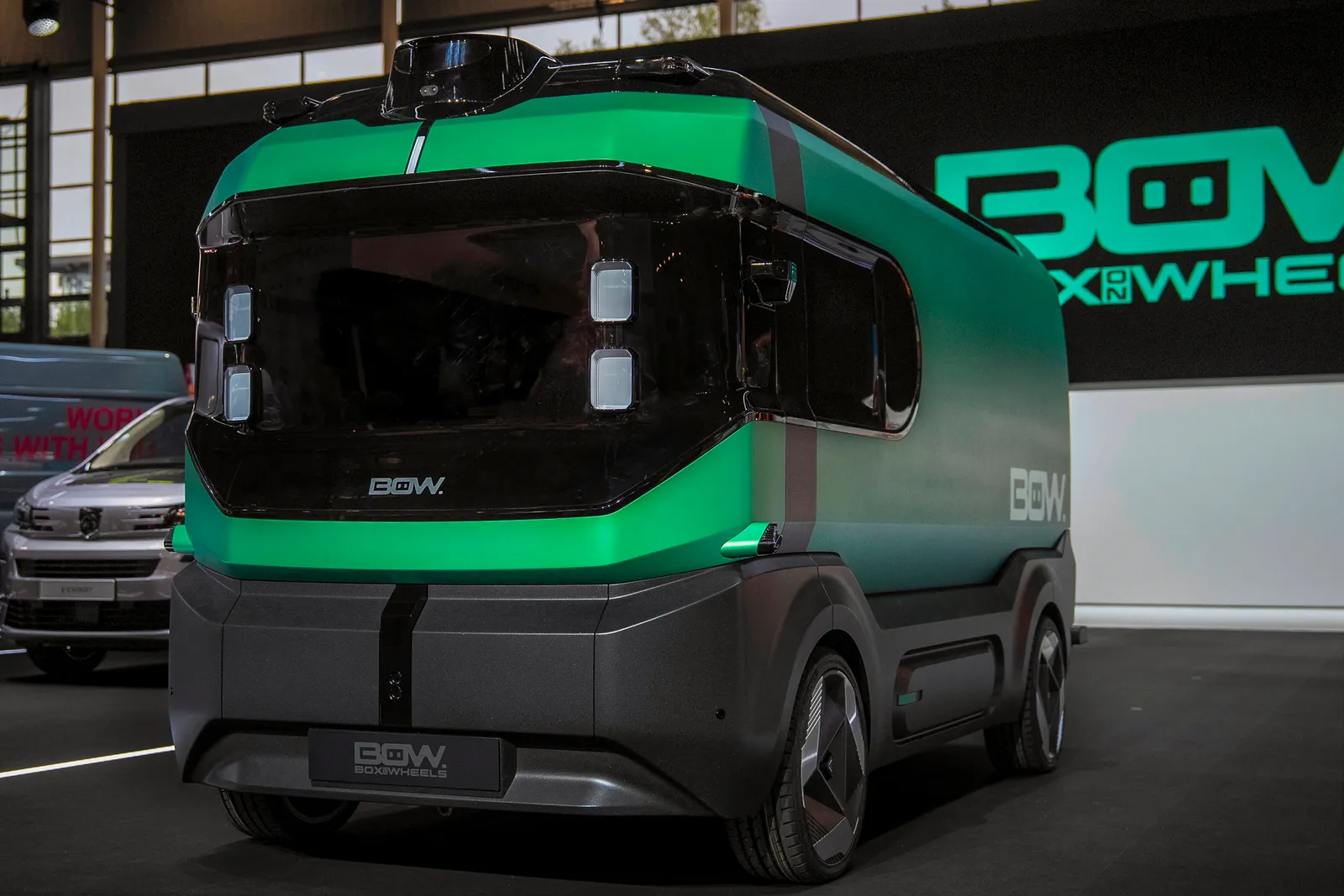
Stellantis Pro One brought the BOW concept to the IAA Transportation 2026 exhibition in Hanover, which stands for Box on Wheels — an electric and autonomous vehicle for last-mile logistics. The company mentions urban deliveries, industrial areas, and airports, but has not yet disclosed the battery capacity, range, or payload. For fleets, it represents more of a development direction than a product ready for order at this stage.
BOW is designed to deliver packages without a driver, but specifications remain unavailable
BOW was developed in collaboration with UQI Robotics, and according to Stellantis, it aims to integrate autonomous driving, electric propulsion, connectivity, and fleet services into one system. The manufacturer uses grandiose language, stating in a press release that “BOW represents a forward-looking platform that combines autonomous logistics, electrification, connectivity, and services within one integrated ecosystem.”
A prototype was displayed at the booth in Hanover, while another demonstrator is running on an outdoor test track. This makes sense, but we’re still talking about a project in its early stages. Stellantis has not revealed the key technical specifications. We know nothing about the battery, range, charging capacity, or sensor suite.
And here’s the catch. Electrive believes the BOW should be viewed primarily as a R&D platform for testing new logistics models. Motor1 has similar cautious views. It’s hard to blame them, as without concrete figures, it’s impossible to determine whether it makes economic sense outside of a trade show demonstration.
Stellantis envisions BOW not only for cities. Industrial areas, airports, hospitals, and regions with limited access or strict emission standards are also potential uses. This actually sounds more realistic than full autonomy on regular streets. In enclosed or partially controlled zones, there are simply fewer regulatory and safety barriers.
The second aspect is more important than the concept itself
The debut of BOW coincided with a showcase of the Pro One NEXT fleet management system. Stellantis states that this solution already supports around 800,000 connected commercial vehicles of the brand’s fleet. The first operation centers were established in the UK and the US, with more set to be created in Europe.
This says a lot about the manufacturer’s plan. The autonomous vehicle itself is just one piece of the puzzle. Another component is data from fleets, real-time monitoring, telematics, financing, and specialized installations. Without such support, the BOW would be nothing more than a curiosity from a trade show.
The project is part of the FaSTLAne 2030 strategy. Eric Laforge from Stellantis Pro One said the solutions showcased in Hanover “reflect specific actions taken under our FaSTLAne 2030 roadmap,” and the partnership with UQI Robotics aims to explore how autonomous technologies and connectivity can be adapted for markets other than China. He also stated outright that autonomous commercial vehicles in cities are already a reality in China. This is an important reference point, as it is there that JD Logistics, Meituan, and Cainiao conduct regular tests. In the U.S., Nuro and Gatik are pursuing a similar approach, while in Europe, Renault, Volkswagen, and MAN also have their own projects.
On paper, Stellantis aims to go beyond just a mobile booth. The question is whether we’ll get a real product after European testing, or just another demonstrator. What do you think—will such vehicles be first adopted in cities or rather in airports and industrial zones?
LovEV Newsletter
Want more content like this?
Sign up—we’ll send you a weekly summary once the newsletter starts.