
Stellantis patents a system that removes the battery from an electric car in case of fire
Manufacturers have been working for years on systems capable of detecting and controlling issues that may arise in electric vehicle batteries. Thermal management, cooling, cell monitoring, and high-voltage disconnection systems are already essential components in efforts to prevent a localized problem from affecting the rest of the vehicle. But Stellantis has now proposed a far more radical solution.
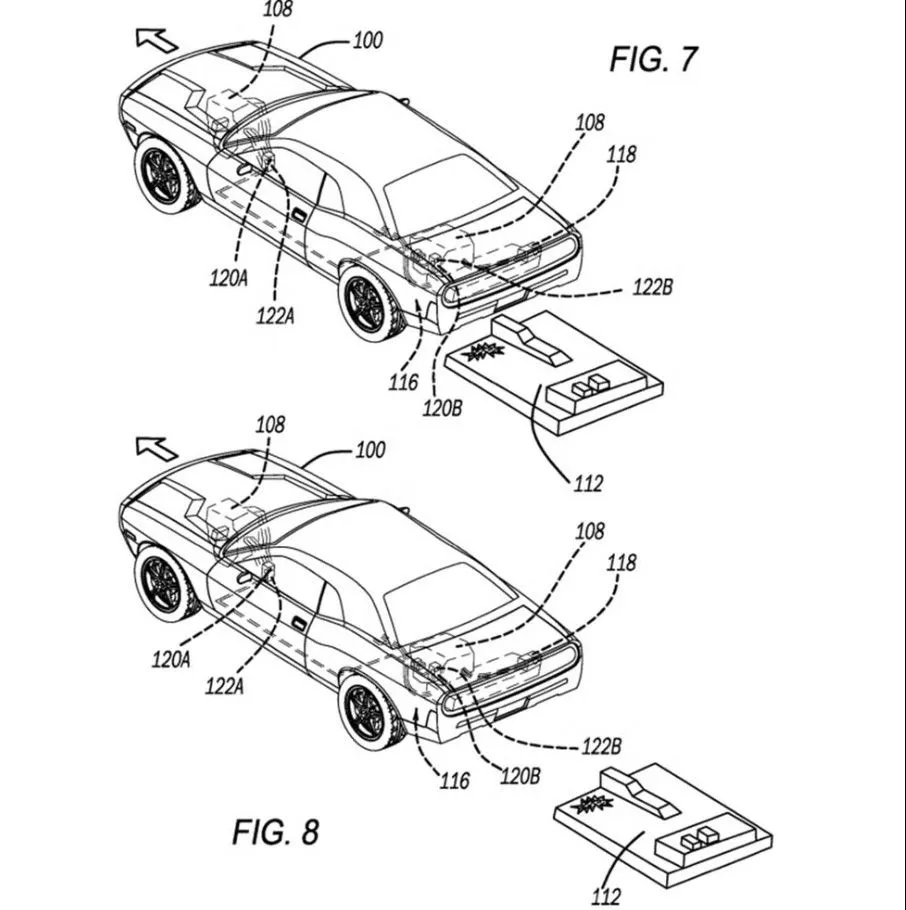
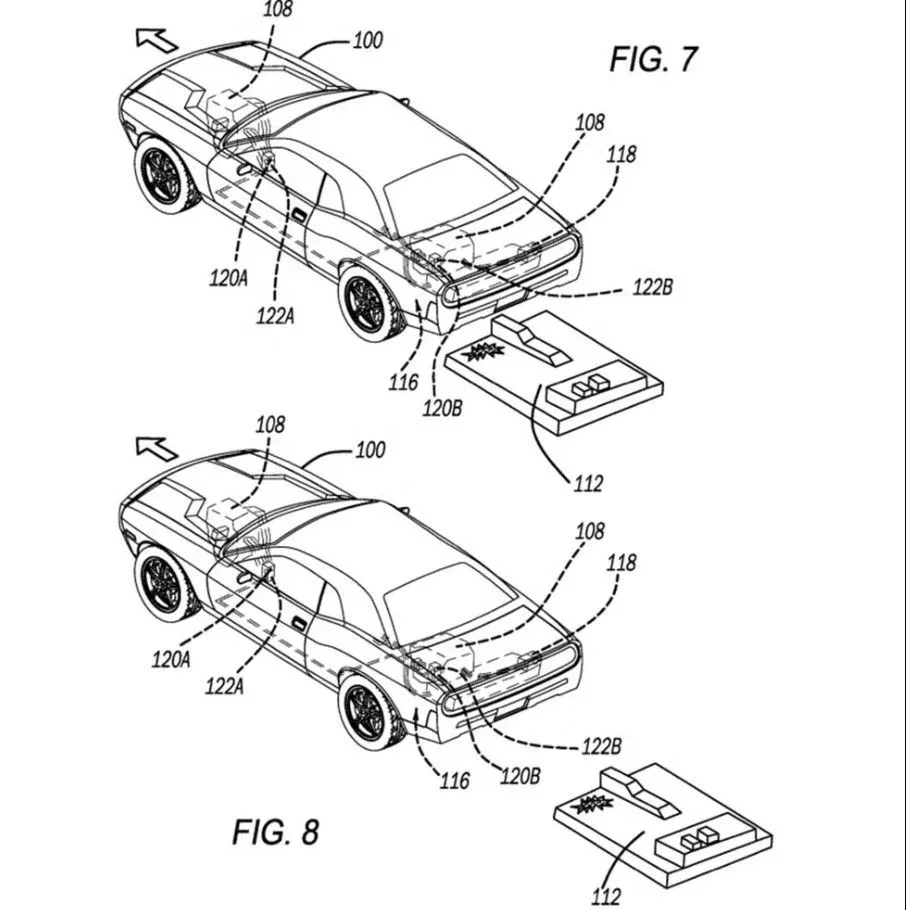
The company has filed a patent in the United States that suggests physically separating the vehicle’s high-voltage pack when a dangerous situation is detected. The idea inevitably reminds one of an ejection system, though in this case it wouldn’t be the occupants who are ejected—it would be the battery that leaves the vehicle so it can move away from it.
The reason behind such a striking proposal is thermal runaway. When a cell in a battery begins to overheat uncontrollably, the process can spread to other cells and eventually affect a much larger portion of the battery pack. Recent studies on entire batteries have demonstrated exactly how this process can spread from one cell to another, rapidly increasing the intensity of the fire and complicating firefighting efforts.
Stellantis’ patent proposes addressing the problem from a very simple perspective: if the battery is the source of danger, separate it from the vehicle. The system would allow for the electrical disconnection of the high-voltage battery pack and then release its anchors to physically separate it from the vehicle.
A system that disconnects the battery and allows the vehicle to be moved away
According to the patent documentation, the driver could activate a quick-release mechanism using various methods, including a lever, a physical button, a control on the screen, or a switch. Once activated, the system would disconnect the high-voltage battery from the rest of the electrical system and then mechanically release it.
To achieve this, Stellantis is considering various options. One involves using a sliding mechanism that allows the battery pack to be released, while another relies on pyrotechnic elements capable of breaking the anchors that hold the battery attached to the vehicle. In this way, the battery pack could fall to the ground while the vehicle remains intact in its position.
And here lies one of the most interesting details of the entire proposal. Disconnecting the main battery would leave the vehicle without its usual power source, but Stellantis suggests using a low-voltage battery to provide the energy needed to move the vehicle for a short period of time.
The goal would not be to continue driving normally, but rather to allow the vehicle to move a sufficient distance away from the battery pack it has just left behind. The patent even covers using the electric motor to perform this emergency maneuver.
This proposal is not entirely new. In 2025, a system with similar features was already presented in China by the China Vehicle Collision Repair Technical and Research Center in collaboration with Joyson Electronics. Back then, it was demonstrated on a Chery iCar 03, and the system used a gas generator to push the battery pack several meters away from the vehicle when it detected a thermal leak.
The difference is significant. While that Chinese solution proposed launching the battery outside the vehicle, Stellantis’s approach seems to favor a more controlled strategy: releasing it first and then using the energy available in the low-voltage system to allow the vehicle to move away.
In theory, this makes sense from a safety perspective. A battery that has experienced a thermal leak can become a very difficult-to-control heat source, so increasing the distance between it and the cabin could reduce certain risks to passengers and facilitate emergency response efforts. Scientific research has also shown that a fire in a full battery can spread rapidly and generate intense heat.
The problem arises when we transfer the idea from the laboratory to a real road. Leaving a damaged high-voltage battery in the middle of a highway can create another hazard. A vehicle driving behind it could crash into it, while a battery that remains extremely hot near other vehicles, buildings, or installations is also far from an ideal situation.
Moreover, we are dealing with a very heavy component. The battery pack of an electric car can weigh well over several hundred kilograms, so any system designed to remove it must ensure that the process does not pose an additional risk to people in the vicinity.
It remains to be determined what happens in situations where the vehicle is parked in a location unsuitable for removing the battery. A road with traffic, a closed parking lot, or an urban area present very different scenarios, requiring clarification on when and how it would be safe to use such a system.
For now, the patent does not mean that Stellantis will install this system in future Dodge, Jeep, Chrysler, or other brands under the group. Manufacturers continuously file patents for technical solutions that may never be brought to market. The existence of the patent itself shows that Stellantis is exploring new ways to address one of the most complex safety challenges related to high-voltage batteries.
And perhaps that is the most interesting aspect of this proposal. Instead of merely trying to contain a battery that has already started experiencing thermal leakage, Stellantis proposes a much more radical strategy: separating the source of the problem from the rest of the car and creating distance between them.
There are still many uncertainties before something like this can become a real solution for a production car, but the idea shows just how much manufacturers are exploring new ways to reduce the consequences of a battery fire.