
Stellantis BOW, the electric and autonomous "box on wheels" aimed at revolutionizing urban delivery
15/09/2026 13:00
Updated to
15/09/2026 13:00
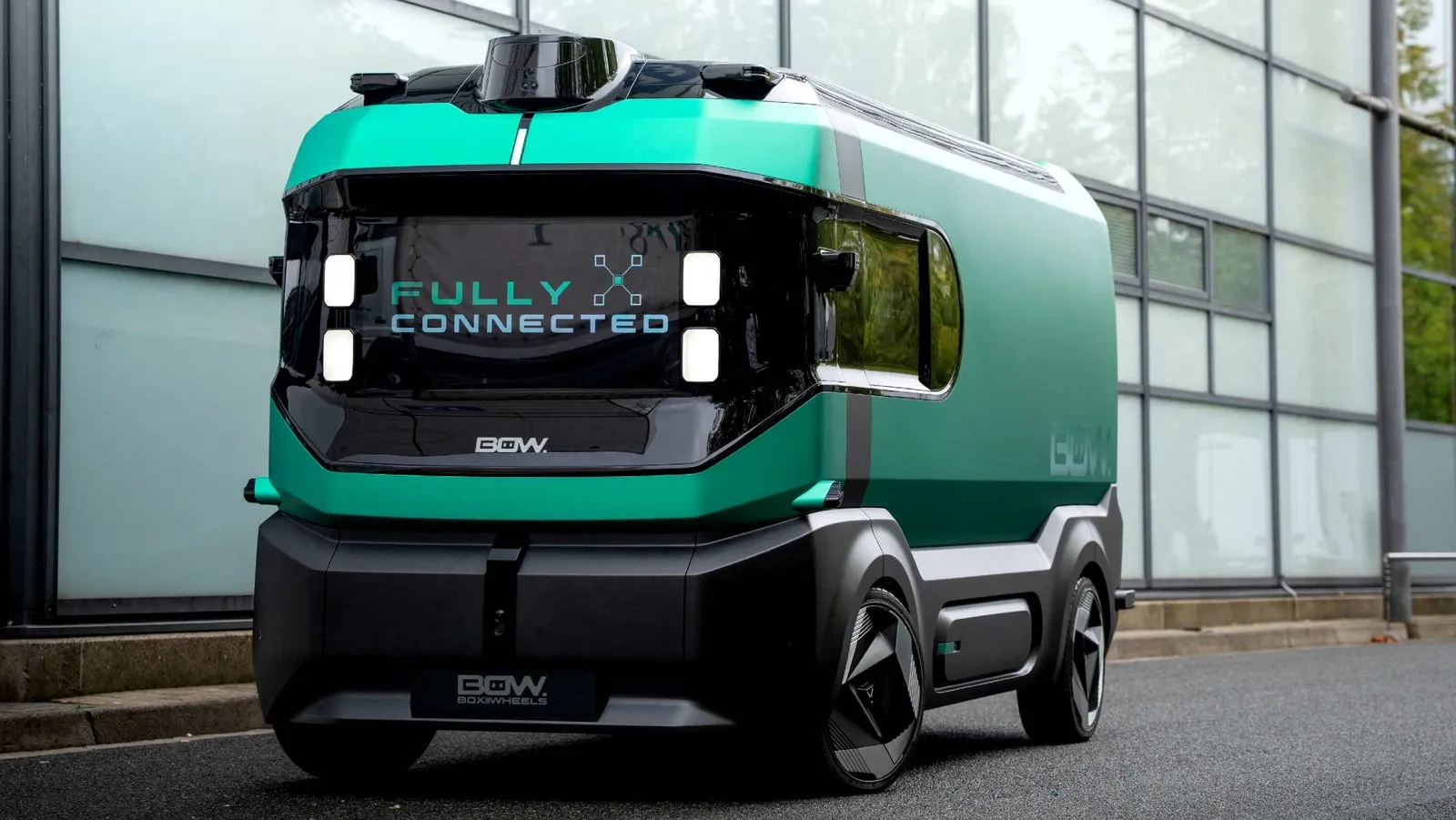
Stellantis Pro One unveiled the BOW (Box on Wheels) at IAA Transportation 2026, a fully electric and autonomous conceptual vehicle developed to explore new ways of carrying out logistics operations, particularly for last-mile delivery. This project was carried out in collaboration with UQI Robotics, a company specializing in artificial intelligence, robotics, and autonomous driving technologies.
The name is meaningful and reflects its design purpose literally: a “box on wheels” designed to transport goods without the need for a driver onboard.
Meeting urban logistics needs
According to the company, the BOW addresses a scenario where delivery operations must meet increasing demands for efficiency, reliability, and cost control. At the same time, the growth of home deliveries and e-commerce places greater pressure on urban logistics networks, which contradicts cities’ goals of reducing congestion, pollutants, and noise.
Stellantis’ prototype aims to address all these issues through a single platform that features electric propulsion, autonomous driving, connectivity, and digital services, to explore how these technologies can be integrated into future professional operations.
Eric Laforge, Global Senior Vice President at Stellantis Pro One, said: “Professional customers are increasingly seeking solutions that go beyond the vehicle itself. Through this partnership with UQI Robotics, we are exploring how technology, connectivity, and services can contribute to the future of commercial mobility. While urban commercial vehicles are already a reality in China, this collaboration allows us to assess how such technologies could be adapted to other markets and customer needs.”
Multiple Applications
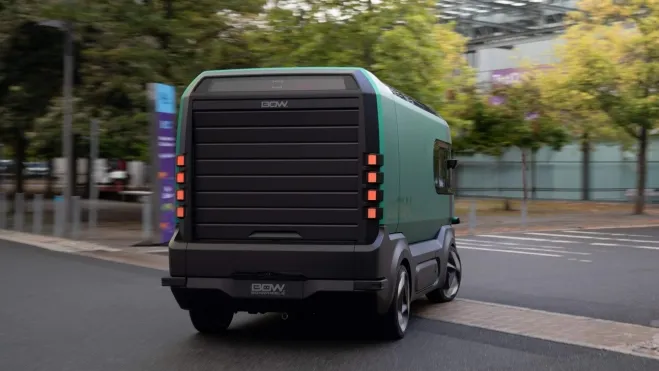
The development of BOW is primarily aimed at urban environments, including those with access restrictions and low-emission zones. Its compact, square design maximizes loading capacity, and its exterior panels can display messages, making it suitable for applications related to goods distribution and logistics within cities, as well as for operations in private or controlled spaces. It is also suitable for use in factories, hospitals, and airports, where routes are more confined and operating conditions can be more predictable than in conventional road traffic.
The proposal also includes connectivity as one of its core elements, since the vehicle is part of an ecosystem where digital information and services integrate with autonomous driving capabilities and electric propulsion. In this way, Stellantis presents the BOW as a tool for exploring new approaches to freight transportation management, rather than as a conventional electric van with an added autonomous driving system.
Li Bei, Chairman and CEO of UQI Robotics, adds: “We are pleased to collaborate with Stellantis Pro One. Together, our goal is to explore the development of a new generation of autonomous logistics vehicles and delivery solutions that meet the needs of customers in Europe and other international markets, and that are designed for large-scale deployment.”
For now, the BOW is a concept designed to evaluate possibilities and has not been announced as a production model for sale.