
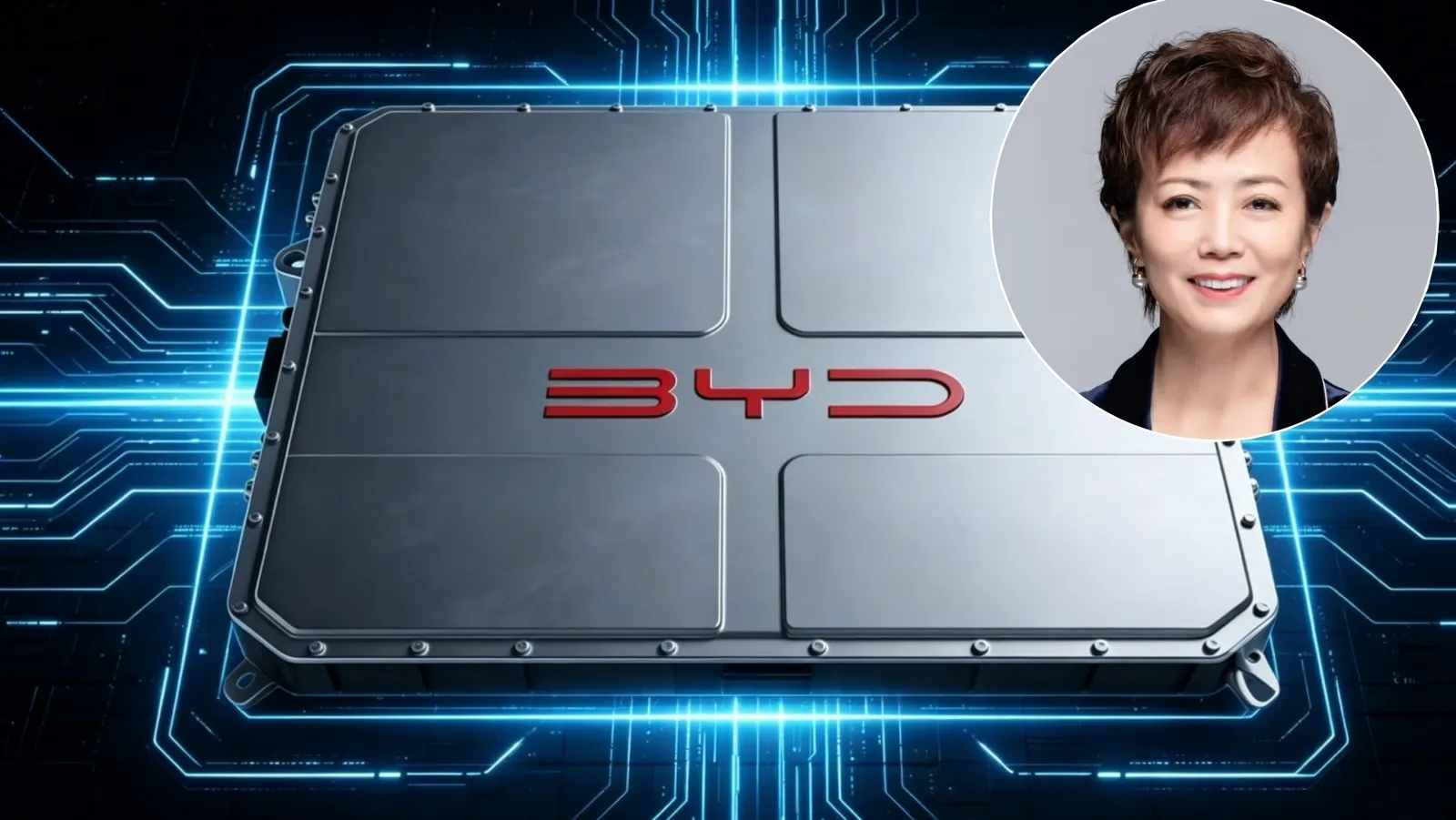
Stella Li, vice president of BYD, announces the launch in 2027 of its first electric car with a solid-state battery
14/09/2026 15:00
Updated to
14/09/2026 15:00
Solid-state batteries have for years been the great promise of electric mobility, a technology that promises to end concerns over range and endless charging times. Now BYD, the world’s largest electric vehicle manufacturer, has finally set a deadline: 2027. This was confirmed by Stella Li, the company’s senior vice president, during an interview. In the past, we had already seen some preliminary data on BYD’s next-generation batteries after they completed 10,000 charging cycles.
Although the announcement is promising, it’s wise to keep expectations in check. BYD’s own message makes it clear that this isn’t about a mass release, but rather a model designed as a technological demonstration to validate the technology before moving on to series production. The brand has yet to reveal either the model’s name, battery capacity, or specific performance details, nor has it provided an official timeline for mass production.
A chemistry that BYD has been developing for a decade
The work behind this battery is not recent. BYD began researching sulfur- and oxide-based solid-state chemistries around 2016, and starting in 2018 focused its efforts on the sulfur route. According to information released by FinDreams Battery, the group’s battery subsidiary, the next products undergoing vehicle validation tests will follow exactly this chemical pathway.
The goal: doubling the energy density of the Blade battery
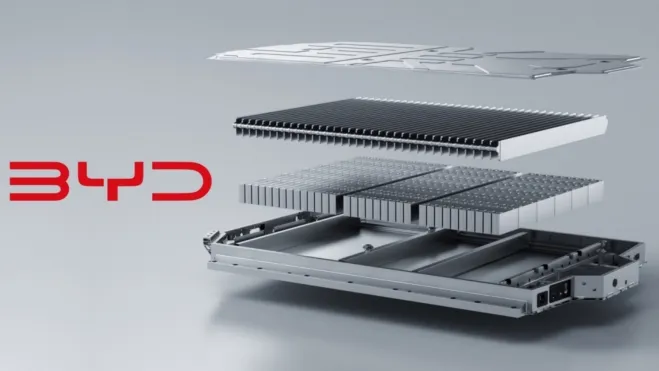
The figure that best captures the ambition of this project is the energy density target set by BYD: 400 Wh/kg per cell, more than double what the current second-generation Blade batteries offer. If this figure is confirmed in production, it would significantly alter the balance between weight and range in their electric vehicles.
In fact, there is already a glimpse of what this could mean in practice. According to tests conducted by China’s Automotive Research and Technology Center, a prototype equipped with this battery achieved a combined range of 1,218 kilometers under the CLTC cycle, setting a new national record for vehicles with solid-state batteries.
Two production lines, two different speeds
In the industrial sector, BYD already has a 2 GWh pilot line in Pingshan, Shenzhen, operational since February 2026 and used to validate cell manufacturing processes and tests on actual vehicles. Its efficiency rate already exceeds 90%, a significant figure because manufacturing issues in new chemistry batteries often arise precisely at this stage.
The next, more ambitious step is a 20 GWh mass production line in Bishan, Chongqing, with construction set to begin in the third quarter of 2026. The first batch demonstration facilities using this line are expected by 2027, coinciding with the arrival of the first vehicle.
Lower volume and focus on high-end models
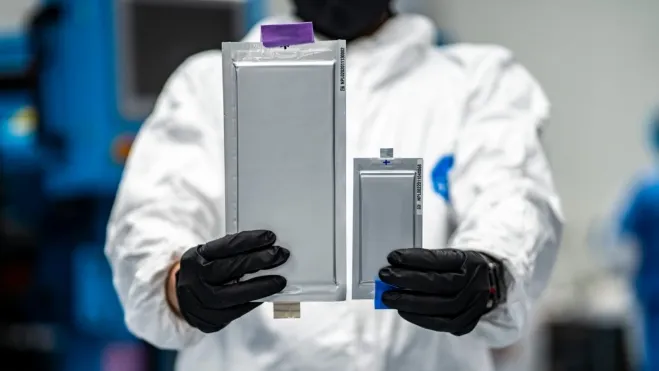
At this pace of development, it seems likely that the rollout of solid-state battery vehicles in 2027 will remain on a small scale. The first applications will probably focus on high-end models, such as those from the Yangwang brand within BYD’s own group, with production volumes likely to stay at just a few thousand units. BYD is not the only Chinese company pursuing this approach. Manufacturers like CATL and GAC have set similar timelines, with small-scale demonstration facilities planned for 2027 to 2028, and broader adoption not expected until after 2030.
Source: Carwow