
Are electric cars more reliable than gasoline cars? A study says the key lies in mileage.
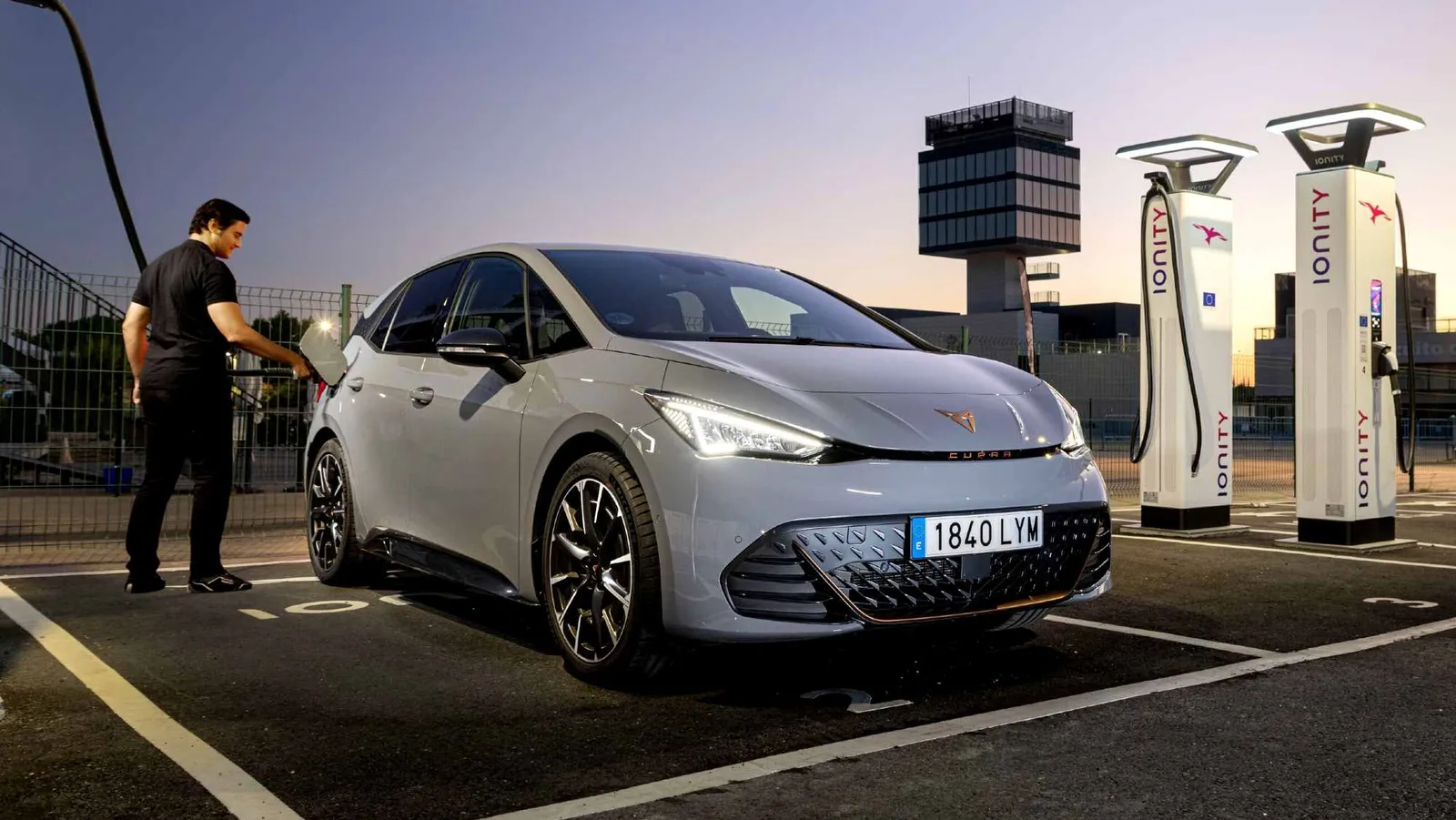
Since electric cars began entering the market, there has been debate about whether they are more or less reliable than gasoline-powered cars. Some studies have pointed in one direction while others have shown the opposite, but the most recent study, commissioned by the British Vehicle Rental and Leasing Association (BVRLA) and conducted by New AutoMotive, highlights a key aspect: the evolution of each type varies as they accumulate mileage.
An analysis of 47.4 million MOT tests shows that, starting at approximately 60,000 miles (around 96,500 kilometers), the failure rate of electric vehicles stabilizes, whereas that of gasoline cars continues to rise.
The turning point
The study compares vehicles based on both their age and total mileage, allowing for a more accurate assessment of the situation. At lower mileage levels, the differences between electric and gasoline cars are minimal: between 20,000 and 40,000 miles (32,000 to 64,000 kilometers), 12% of the electric vehicles analyzed failed the MOT test, compared to 11.7% of gasoline models.
The situation changes around 60,000 kilometers, where while the failure rate for electric vehicles remains at about 16%, the failure rate for gasoline and diesel vehicles continues to rise with mileage. Among cars aged three to eight years that had traveled between 90,000 and 120,000 miles (144,000 to 193,000 kilometers), 16.5% of electric vehicles failed the MOT, compared to 22.1% of gasoline vehicles, so the failure rate for EVs is approximately 25% lower.
As mileage increases, the situation worsens further, because beyond those 120,000 miles (193,000 kilometers), 16% of electric vehicles failed the MOT, while the percentage rose to 23.5% among gasoline vehicles.
Cars that last the longest on the road
The analysis also examines the retention of vehicles on the road, and once again, the results favor battery-powered vehicles. Among cars that were 15 years old, 94.6% of electric vehicles returned for another MOT test within the next 30 months, compared to 88.1% of gasoline vehicles. This means the dropout rate from registration was 5.4% for electric vehicles and 11.9% for gasoline cars, although the reason for this disappearance is not always dismantling.
The report also analyzes the performance of various car components, and the results are not uniform. Electric vehicles had approximately 1.8 times more tire-related defects than gasoline vehicles, but the same is not true for the suspension. As for brakes, it depends on mileage: electric vehicles with high mileage had significantly fewer defects, while older electric vehicles with low mileage showed more defects than combustion engines.
Toby Poston, CEO of BVRLA, says, “Mileage has always been one of the first things people look at when buying a used car, and exceeding 60,000 or 70,000 miles can significantly affect how a vehicle is perceived. This study suggests we need to change our mindset regarding electric vehicles.”
“Many of the electric vehicles now entering the used market were initially used in corporate fleets or leasing programs and already have considerable mileage. What these data show is that mileage alone shouldn’t deter consumers. An electric car with high mileage but good maintenance can be an extremely durable used vehicle,” he concludes.