
Only 27% of the distance traveled by a plug-in hybrid is on electric power: its CO2 emissions are extremely high, and solutions are already being sought.
28/10/2026 13:00
Updated to
28/10/2026 13:00
One of the most striking proposals to change the future of plug-in hybrid cars is to significantly reduce the capacity of their fuel tanks. The environmental organization Transport & Environment (T&E) suggests setting a maximum of 15 liters of gasoline for certain models that wish to qualify for incentives, a measure aimed at increasing the use of the electric system and reducing reliance on internal combustion engines.
This recommendation appears in the report published by T&E on October 15, 2026, which questions the difference between emissions declared by manufacturers and those recorded during normal use. The organization believes that having a rechargeable battery does not guarantee lower fuel consumption on its own, especially when the vehicle’s features allow it to cover much of the distance using gasoline.
15-liter tanks and up to 200 kilometers of electric range
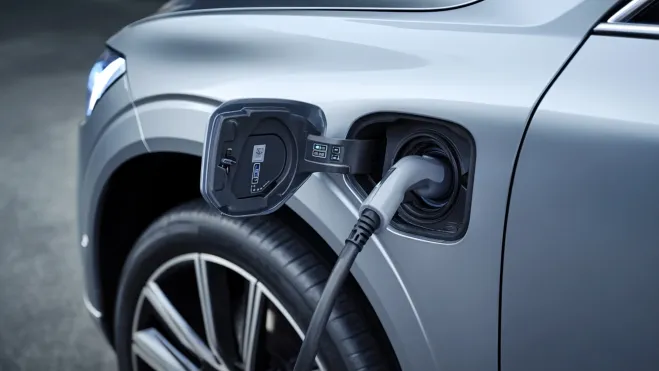
T&E's proposal includes a significant change to the technical specifications of these vehicles. In addition to limiting the fuel tank capacity to 15 liters, it calls for a minimum real-world electric range of 200 kilometers starting in 2030, the inclusion of fast-charging systems with a power output exceeding 100 kW, and electric motors whose power is at least three times that of internal combustion engines. The goal is to promote models that can cover most of their distances without using gasoline.
The difference compared to current plug-in hybrids would be significant. According to estimates from T&E, a 15-liter tank would allow approximately 220 kilometers of driving on gasoline, assuming a fuel consumption of 6.7 l/100 km. In contrast, the roughly 51-liter tanks found in many models enable ranges of around 730 kilometers under homologation conditions, thus offering much greater flexibility for driving without recharging the battery.
Actual data challenges the homologated emissions figures
The organization’s findings are based on its analysis of consumption data collected by the European Environment Agency. Plug-in hybrids registered in 2024 had an average actual emissions of 145 grams of CO₂ per kilometer, compared to 24 grams reported under the WLTP homologation process. This difference is nearly six times the official figures and exceeds those recorded in 2023, when the figures were 138 and 28 g/km respectively.
A significant part of this difference stems from the propulsion system used. According to T&E, only 27% of the total distance is covered in fully electric mode, whereas the calculations used in the first European revision of the efficiency factor assume a 56% percentage. Additionally, the internal combustion engine comes into play for about one-third of the kilometers traveled when using the battery. As a result, the actual reduction in emissions compared to conventional vehicles is around 14%, compared to the 83% suggested by official figures.
This difference also has economic consequences. The organization estimates that the annual energy cost of a plug-in hybrid registered in 2024 is approximately 1,810 euros, about 680 euros more than the 1,130 euros calculated based on approved consumption figures. The study uses fuel prices recorded between March and early October 2026 as a reference, so these figures represent an estimate rather than an exact cost for all owners.
The European Union prepares changes to the homologation of plug-in hybrids
While these technical changes are being considered, European regulations already provide for a review of how emissions for plug-in hybrids are calculated. Regulation (EU) 2023/443 introduced two adjustments to the so-called efficiency factor, which is used to determine the impact of electric driving on official figures. The second phase will come into effect on November 29, 2026, for new type approvals, and will extend to all affected new vehicles one year later.
However, implementing this final adjustment is part of the ongoing debate among member states. Some delegations, including Germany, advocate for maintaining the current parameters, while T&E and the International Council on Clean Transportation (ICCT) believe it is necessary to continue adjusting them based on actual consumption levels. According to T&E, freezing the current system in 2025 and 2026 would result in underestimating the actual emissions of these vehicles by 56%.
For now, limiting deposits to 15 liters is not a requirement approved by the European Union, but rather a recommendation made by T&E to guide future homologation and incentive policies. The regulatory debate currently focuses on maintaining or modifying the planned emission corrections, as part of a broader review of Europe’s CO₂ targets for new cars starting in 2035.