
Just 19.2 kWh of battery and 436.5 km without recharging: this electric motorcycle shatters the world record for range by traveling from the Alps to the Mediterranean.
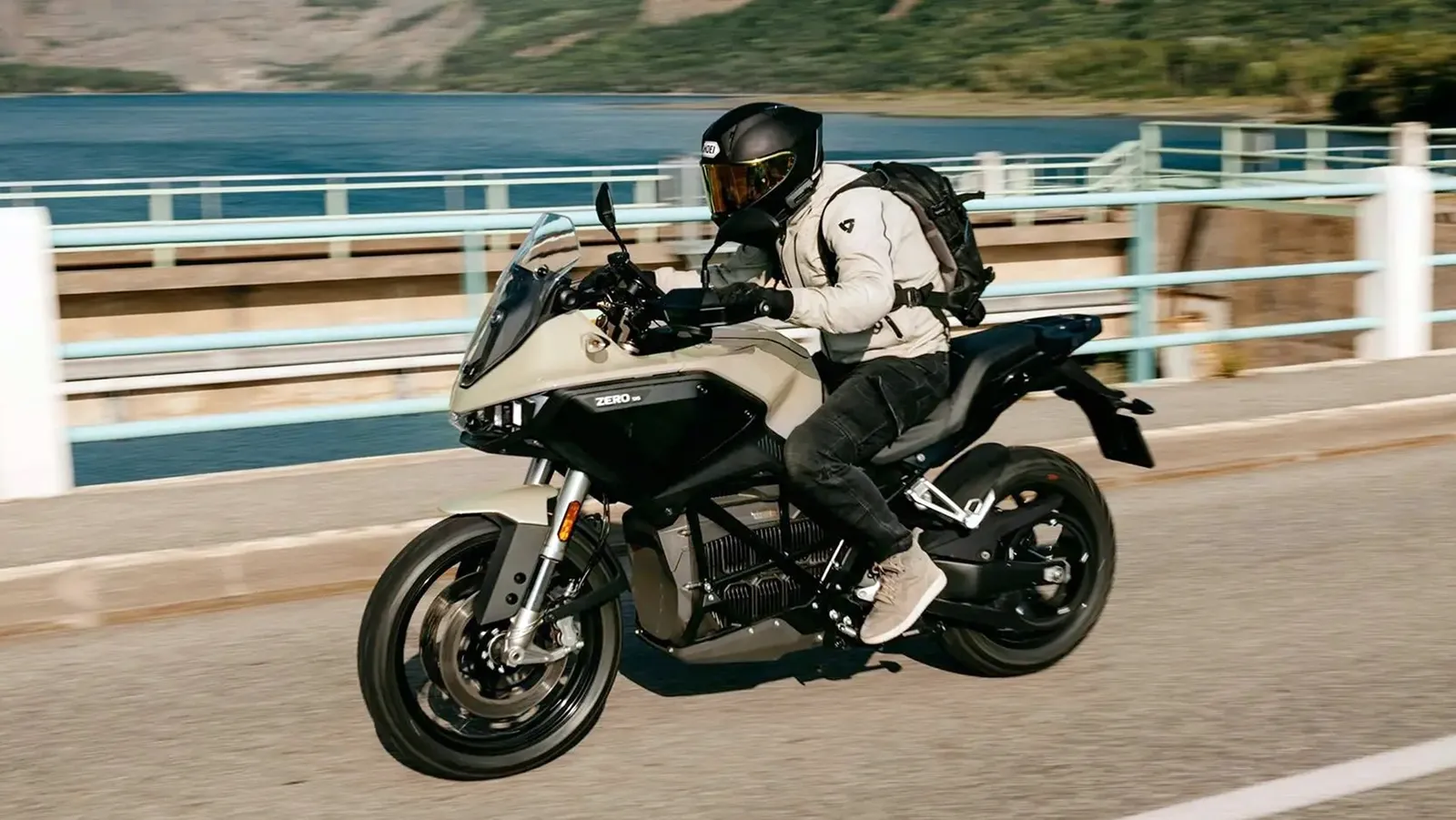
Electric motorcycles have just reached a new milestone in terms of range. Zero Motorcycles, one of the manufacturers specializing in this type of vehicle, has set a new Guinness World Record by traveling 436.5 kilometers on a single battery charge. The star of this achievement was a Zero DS, a production model that covered a long distance on public roads from the French Alps to the Mediterranean coast without needing to stop for recharging.
Compared to the previous record of 310,689 kilometers, this represents a significant improvement. The new mark exceeds that distance by 125.8 kilometers, indicating an increase of over 40%. Additionally, the company aimed to show that there is no need for an experimental prototype to achieve such range, as the motorcycle used retains its original components with only a commercially available battery upgrade installed.
A standard Zero DS covers 436.5 kilometers
The record holder is rider Jelle Verstaen, who completed the route on a Zero DS equipped with the so-called Power Tank. This optional accessory adds 3.6 kWh to the original 15.6 kWh battery, raising the total capacity to 19.2 kWh. Beyond this official upgrade, the motorcycle did not receive any specific modifications, even retaining its standard tires. In fact, this model typically claims an urban range of up to 249 kilometers, which is significantly lower than the distance achieved during the test.
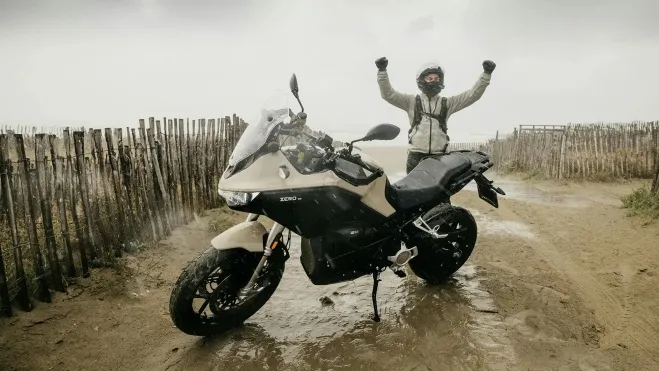
The challenge started in the Alpine region between France and Italy and moved southward, passing through mountain passes, small towns, and secondary roads until it reached the Mediterranean. To optimize fuel consumption, participants maintained a moderate and steady speed, avoided unnecessary acceleration, and utilized downhill sections through regenerative braking. They also decided to complete the route at night, when traffic is lighter and it’s easier to maintain a consistent pace.
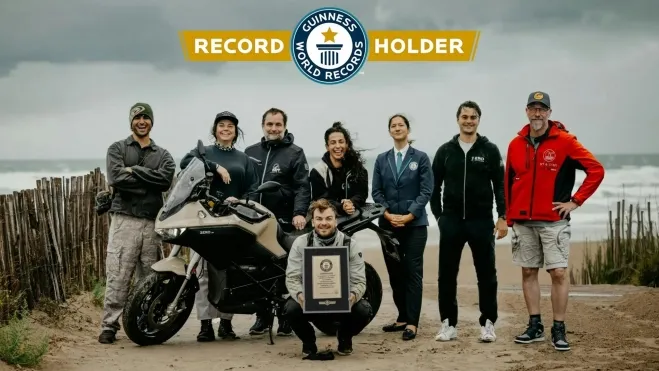
However, the weather conditions significantly complicated the final part of the journey. During the last 100 kilometers, the participants had to deal with a severe storm, featuring heavy rain and gusty crosswinds. Despite this, the Zero DS continued moving forward until its battery was completely drained, at which point the GPS devices recorded a final distance of 436.5 kilometers. This distance was later verified by an official representative from Guinness World Records.
Two other electric motorcycles also surpassed the previous record
The test did not feature only the Zero DS. Two other production motorcycles joined the team and also managed to break the previous world record. A Zero SR/S, ridden by Louis Renaud, covered 350 kilometers and finished with 4% of the battery remaining. Meanwhile, Jenny Brookes, Zero Motorcycles’ international brand manager, completed 384 kilometers on a DSR/X, even managing to ride an additional 15 kilometers after the battery indicator showed 0% charge.
Pierre-Martin Bos, CEO of Zero Motorcycles, emphasized particularly that all three motorcycles were production models. “A record only makes sense if riders can relate to it,” the executive explained, noting that the results demonstrate the capabilities of the technology already available from the company. He also mentioned that one of the participants was a private customer of the brand, further highlighting the practical nature of the test.
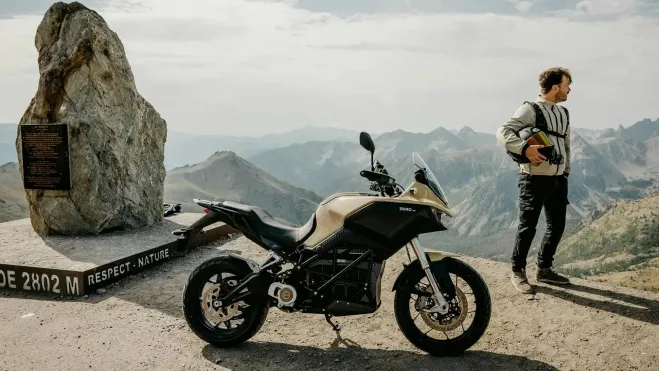
The record was set coinciding with Zero Motorcycles’ twentieth anniversary, as the company was founded in California in 2006. It should be noted, however, that the 436.5 kilometers do not represent an officially certified range nor are they necessarily reproducible under normal conditions. The route was specifically chosen to maximize efficiency, with a moderate driving pace and a path that took advantage of the descents from the Alps. Nevertheless, this result demonstrates how much energy can be extracted from a relatively small battery when combined with an efficient mechanical design and particularly careful driving.