
Solar ambulance Stella Juva brings healthcare on wheels
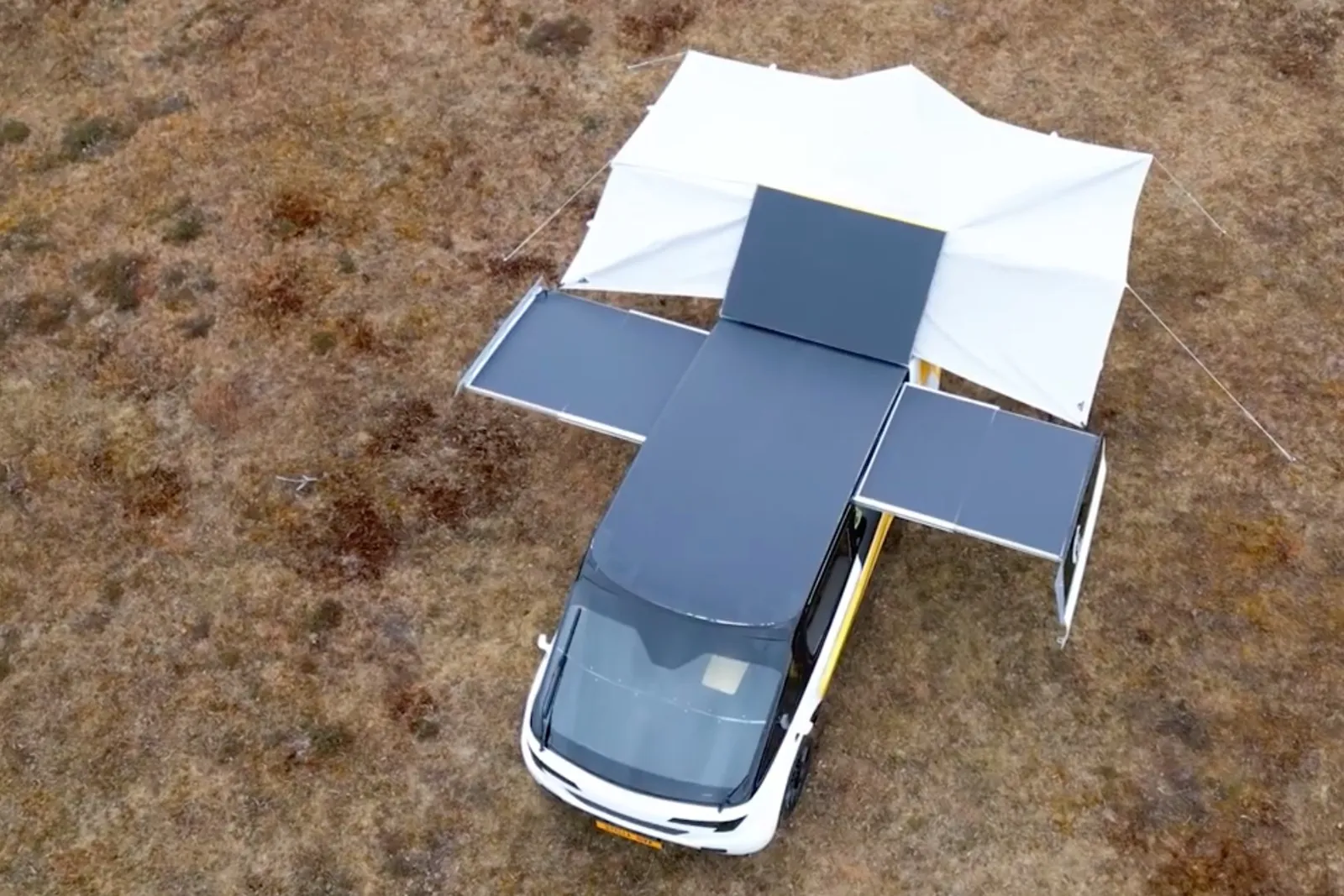
The Solar Team Eindhoven at TU Eindhoven has unveiled Stella Juva, which it describes as the world's first solar-powered ambulance. Developed to provide medical care in remote regions with limited access to electricity and fuel, the vehicle is now set to undergo field testing in Kenya.
Unlike conventional ambulances, Stella Juva is not intended to transport patients to hospital. Instead, it delivers medical care directly at the point of need. Solar panels integrated into the roof supply energy for both the electric drivetrain and onboard medical equipment, including mobile X-ray systems, ultrasound devices and vaccine refrigeration. Under sunny conditions, the vehicle can achieve an all-electric range of up to 715 kilometres on paved roads, allowing it to operate independently of conventional charging infrastructure.
The project is led by the internationally recognised Solar Team Eindhoven, whose students have been developing solar-powered vehicles for more than a decade, including an off-road solar vehicle. Stella Juva was created in close collaboration with organisations including Amref Health Africa to ensure the concept meets real-world operational requirements while applying technological innovation to humanitarian healthcare.
“We were inspired by the United Nations’ Sustainable Development Goals, which strive to make good healthcare accessible to everyone,” explained team manager Mathijs van Gerven. Yarno Basten, partnerships manager of the student team, added: “If twenty-three students can achieve this in a single year, it shows what’s possible when the technological industry and social organisations work together.”
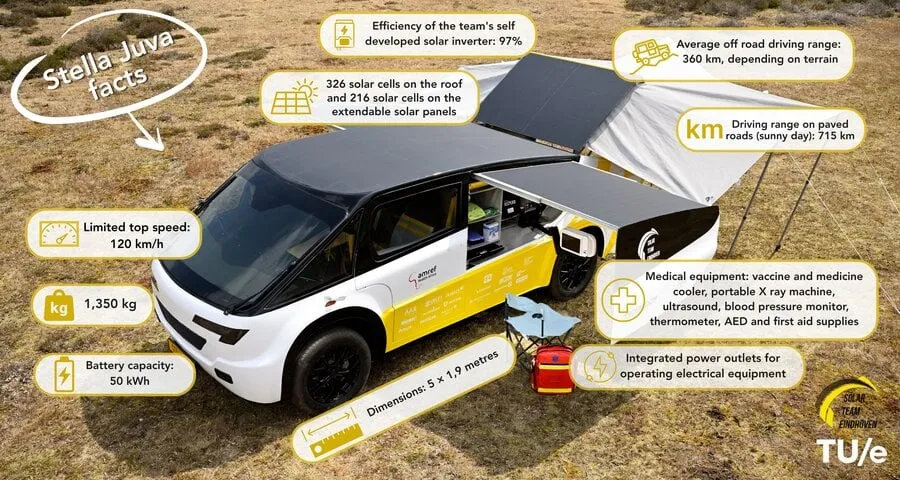
Aid organisations also see strong potential in the project. Femke Maurits, Partnerships Manager at Amref Health Africa in the Netherlands, points to the infrastructure challenges in remote regions: “For millions of people, access to quality healthcare remains out of reach. However, access to medical care should not depend on the availability of electricity or fuel.” She adds that reliable energy is essential for operating medical equipment and refrigerating vaccines.
In August, the team will travel to Kenya to test the solar-powered vehicle under real-world conditions. In two field regions, it will simulate scenarios including tuberculosis treatment and preventive health check-ups. The aim is to assess the vehicle’s suitability for unpaved roads and demonstrate how sustainable mobility can deliver measurable social benefits in remote areas. The Solar Team Eindhoven will also draw on experience gained from testing its solar-powered off-road vehicle in the Sahara in 2023.