
Smart upgrades #1 with 800-volt platform
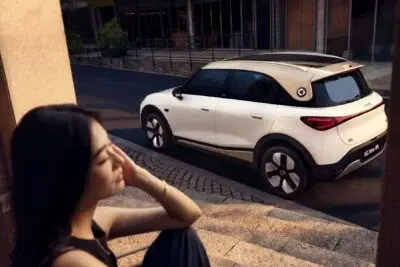
While many Smart fans in Europe are eagerly awaiting the all-electric Fortwo successor, the Smart #2, the Mercedes-Benz and Geely joint venture is also updating its existing model range. The Smart #1 electric SUV is receiving a comprehensive facelift, including an 800-volt architecture and a battery capable of 6C charging.
Smart is repositioning its first all-electric compact SUV in China. From early August, the manufacturer will launch an extensively revised version of the Smart #1 exclusively in its home market. According to Smart, the facelift comprises more than 200 product and equipment updates. The aim is to strengthen the brand’s competitive position in the fiercely contested urban premium electric vehicle segment.
Technologically, the vehicle draws on the expertise of Smart’s joint-venture partners, Mercedes-Benz and Geely. The company has fundamentally redeveloped the model, particularly its electrical architecture and digital systems. According to Smart, the changes mark a key milestone in the brand’s global growth strategy ahead of the sales launch in China.
The electric SUV retains the design language established under Mercedes-Benz’s leadership while introducing visual updates, including new exterior colours such as Blue Gold and White Gold, as well as aerodynamic refinements. Smart has also revised the rear spoiler and fitted new 19-inch lightweight alloy wheels, while leaving the model’s characteristic silhouette unchanged.
The most significant changes are under the skin. Smart is introducing an 800-volt silicon carbide architecture, which it describes as a unique selling point in this vehicle segment. Combined with 6C charging technology, the battery, which has been reduced in capacity from 66 to 61.52 kWh, can be charged from 10 to 80 per cent in around twelve minutes under optimal conditions.
The electric powertrain features a 16-in-1 unit that, according to Geely, achieves a CLTC system efficiency of 93.8 per cent. Media reports indicate that output will increase from 200 kW to between 245 and 250 kW. However, Smart has not specified an exact figure in its press release.
Smart has also overhauled the vehicle’s electronics and software. The updated #1 is based on the new EEA4.0 architecture. Inside, a 4-nanometre processor combined with the Flyme Auto operating system controls the infotainment and vehicle functions. The driver assistance system uses a sensor suite with 31 hardware components, including LiDAR, enabling features such as map-free Navigation on Smart Pilot (NSP) in urban and motorway environments, as well as all-scenario parking.
It remains unclear when Smart will bring the revised #1, originally launched in 2022, to Europe or what changes it will make for the local market. The 31-sensor driver assistance system would currently be unusual in Europe, meaning Smart could scale back some of its functions. By contrast, the 800-volt architecture is likely to appeal to many European customers. A European launch this year appears unlikely, with 2027 the earliest realistic timeframe.
In Europe, Smart is currently focusing on the world premiere of the all-electric Fortwo successor, the Smart #2, at the Paris Motor Show on 12 October. The ultra-compact electric vehicle is set to offer a range of 300 kilometres, fast-charging capability and a tight turning circle. In a recent interview with electrive, Smart developer Timo Weil explained how the company has technically reinvented the icon by taking advantage of the packaging freedoms offered by electric powertrains.
smart.com (in Chinese)