
Smart #2: compact electric car with long range!
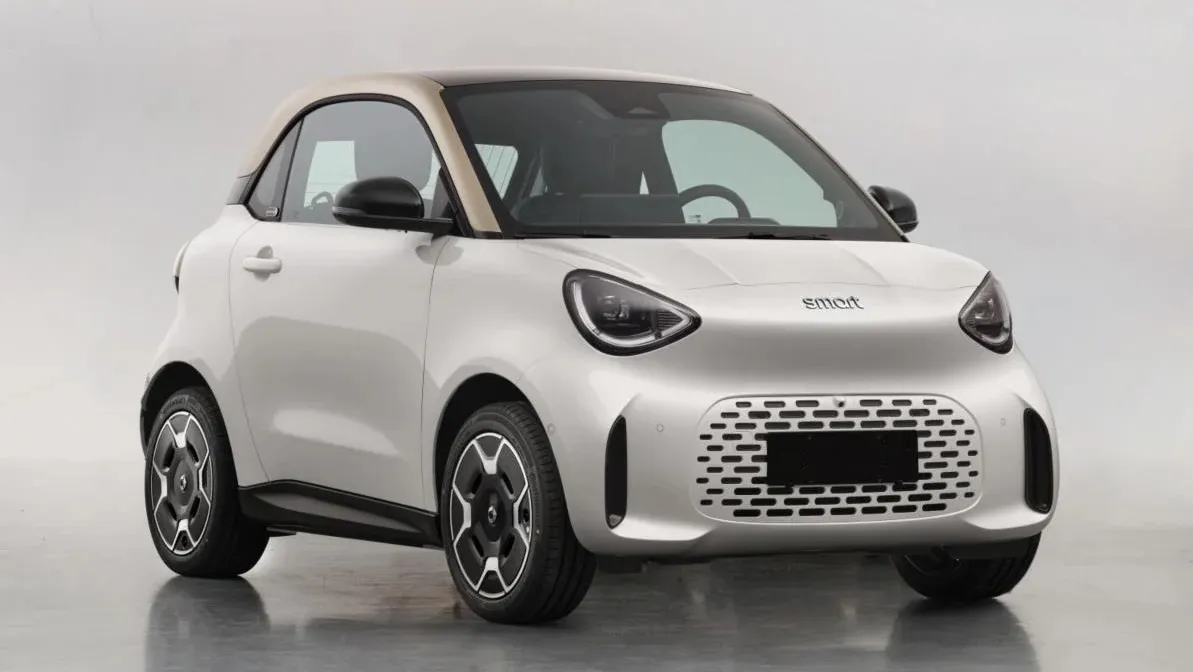
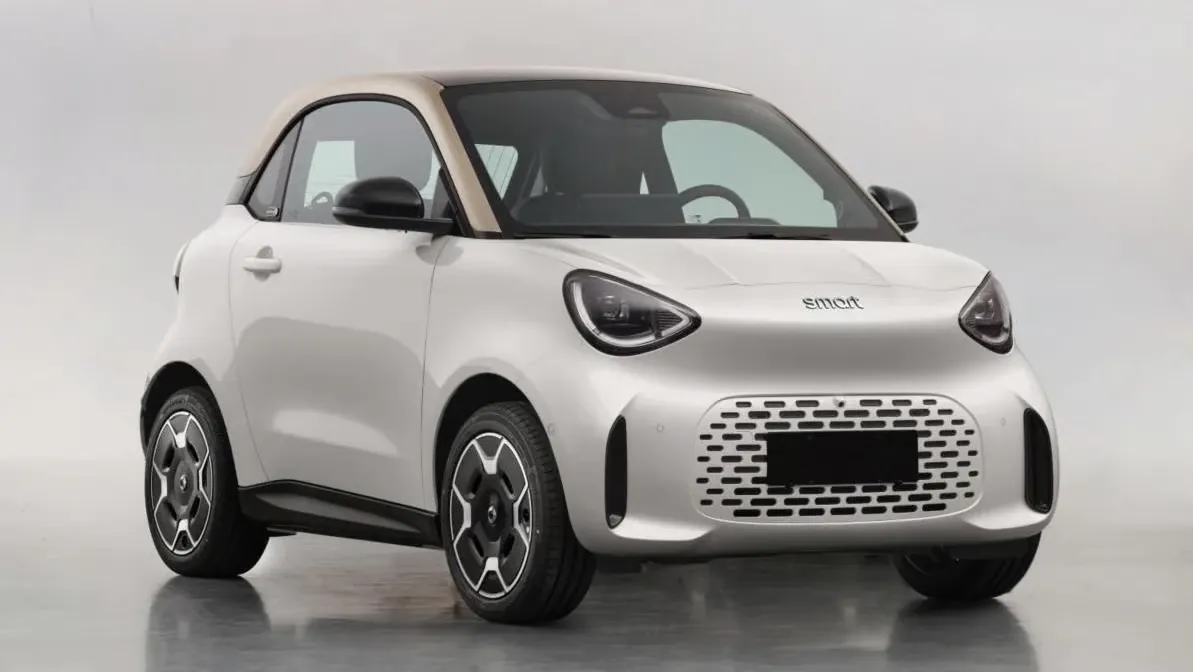
The new small Smart #2, successor to the Fortwo, promises XXL range for its class, with an announced distance of nearly 300 km.
The new Smart #2 will be unveiled at the World Motor Show, but the manufacturer is releasing technical details as teasing, while its exterior design was leaked in China this summer.
Although the car uses a new platform developed in China called ECA, it retains a signature element from the Fortwo: the Tridion safety cell, or the car’s superstructure, though with a major improvement—it is no longer emphasized for aesthetic purposes.
Nearly 80% of this structure is made of high-strength steel. The goal is to achieve “exceptional rigidity,” allowing the vehicle to “withstand a load on the roof of over four tons.” In terms of safety, there are no fewer than 7 airbags onboard.
The engine is located at the rear, in a very compact “11-in-1” unit that integrates the engine, power electronics, and control systems. This frees up space for the battery, and in this regard, Smart has gone all out. While a 3.79-meter-long Twingo has a 27.5 kWh battery (usable capacity), the #2 model will have a 35.8 kWh battery (though this appears to be the gross capacity).
Also read
New Dacia Spring: What does the base version under 12,000 € look like?
But the manufacturer confirms a combined WLTP range of at least 290 km, which is about thirty kilometers more than the Twingo. That’s quite impressive for a two-seater vehicle that is 2.70 meters long! Recall that the previous Fortwo had a range of only 130 km! Additionally, charging will be fast, with the battery reaching 80% in just 20 minutes. One can clearly envision making some longer trips with this Smart.
The city will, however, be its preferred testing ground, with a turning diameter of 6.95 meters. The car will feature an independent five-link rear suspension. The weight distribution will be 50/50. Notably, there will be narrower tires at the front and thus wider ones at the rear—a configuration that Smart says “enhances steering precision and handling in the front axle, while improving traction and stability at the rear of the vehicle.”