
Skoda Epiq: Now also available with 85 kW in the Easy version and configurable as Sportline
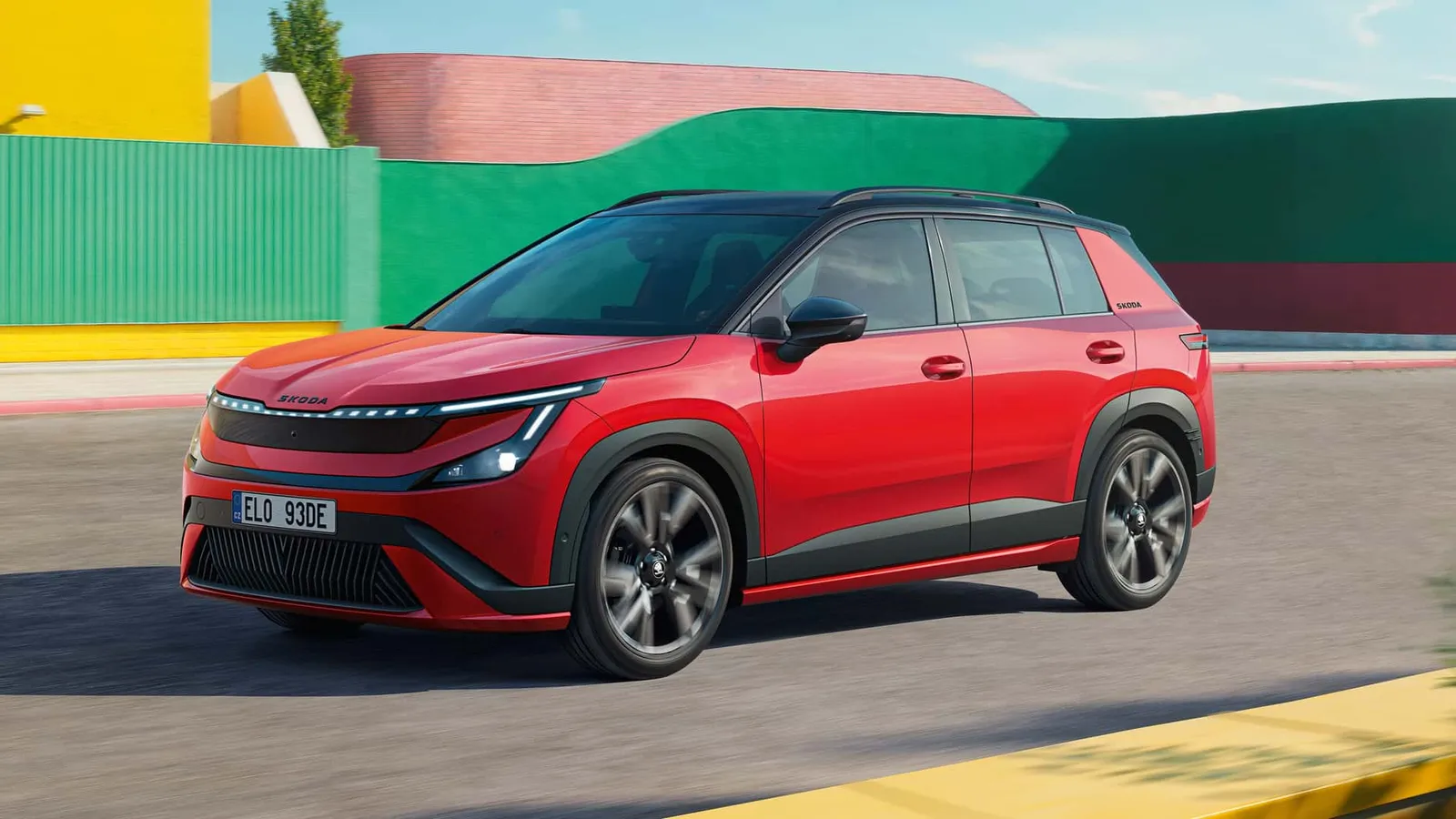
The Skoda Epiq is now also available in the promised base version for 25,900 euros. For this price, you get the Epiq 35 with 85 kW of power and a WLTP range of 325 km in the new Easy trim level. The Sportline version, announced at the Paris Motor Show, is now available as well, replacing the First Edition. This is evident from the configurator.
With these new variants, the Epiq’s model range should now be complete. Previously, in September, the Epiq 40 with 99 kW of power and a smaller battery was launched. We introduce this new version in our updated series overview.
The Epiq is based on VW Group’s Modular Electric Architecture in its shortened version with front-wheel drive. The powertrains offer 85, 99, and 155 kW outputs and are known from the Cupra Raval and VW ID. Polo. However, the 166-kW version available there is not expected in the Skoda lineup — an Epiq RS version is also unlikely, according to the manufacturer.
Image Gallery: Skoda Epiq (2026)
Exterior | Interior | Powertrains/Batteries | Features/Prices
Exterior
With the Epiq, Skoda adds a third electric SUV, positioned below the Elroq and the even larger Enyaq; a seven-seater Skoda Peaq is set to join as a fourth model at the higher end. At 4.17 meters, the Epiq is over 30 centimeters shorter than the Elroq, but its trunk volume is comparable as long as the rear seats remain upright.
Length
Width
Height
Wheelbase
Trunk Space
Skoda Epiq
4,171 mm
1,798 mm
1,581 mm
2,601 mm
475–1,345 liters
25 liters in front trunk
Skoda Elroq
4,488 mm
1,884 mm
1,654 mm
2,770 mm
470–1,580 liters
no front trunk
The trunk volume includes a large underfloor compartment, as we learned during the test drive. Without this compartment, it’s about 100 liters less, so roughly 360 to 1,240 liters. There’s also a small front compartment for charging cables, but it’s only optional.
The Epiq is the first production model to feature all “Modern Solid” elements. As far as we know, the Elroq and the facelifted Enyaq also already have some of these design elements, including the fine lines along the front edge. However, the T-shaped daytime running lights, which we were already familiar with from the Epiq Concept, were still missing on them. This element is used for the first time on the Epiq and the simultaneously introduced Skoda Peaq.

The Skoda Peaq also has T-shaped lights at the front and back
Image by: Skoda
The bulge beneath the C-pillar is noticeable. Rugged black plastic parts protect the bodywork. At the front, the eight rectangular air inlets stand out. They can be closed using active flaps to reduce wind resistance. Although barely visible, the Epiq also features air-curtain slits that direct wind around the wheels.

Image by: Skoda
There is also a T-shaped light signature at the rear. Below that is a robust-looking apron designed to emphasize the SUV character of the vehicle and, of course, protect it from parking bumps. The wheels range in size from 17 to 19 inches. The Epiq comes standard with a gray paint finish, while optional colors include a muted Timiano Green, red, white, black, and silver.
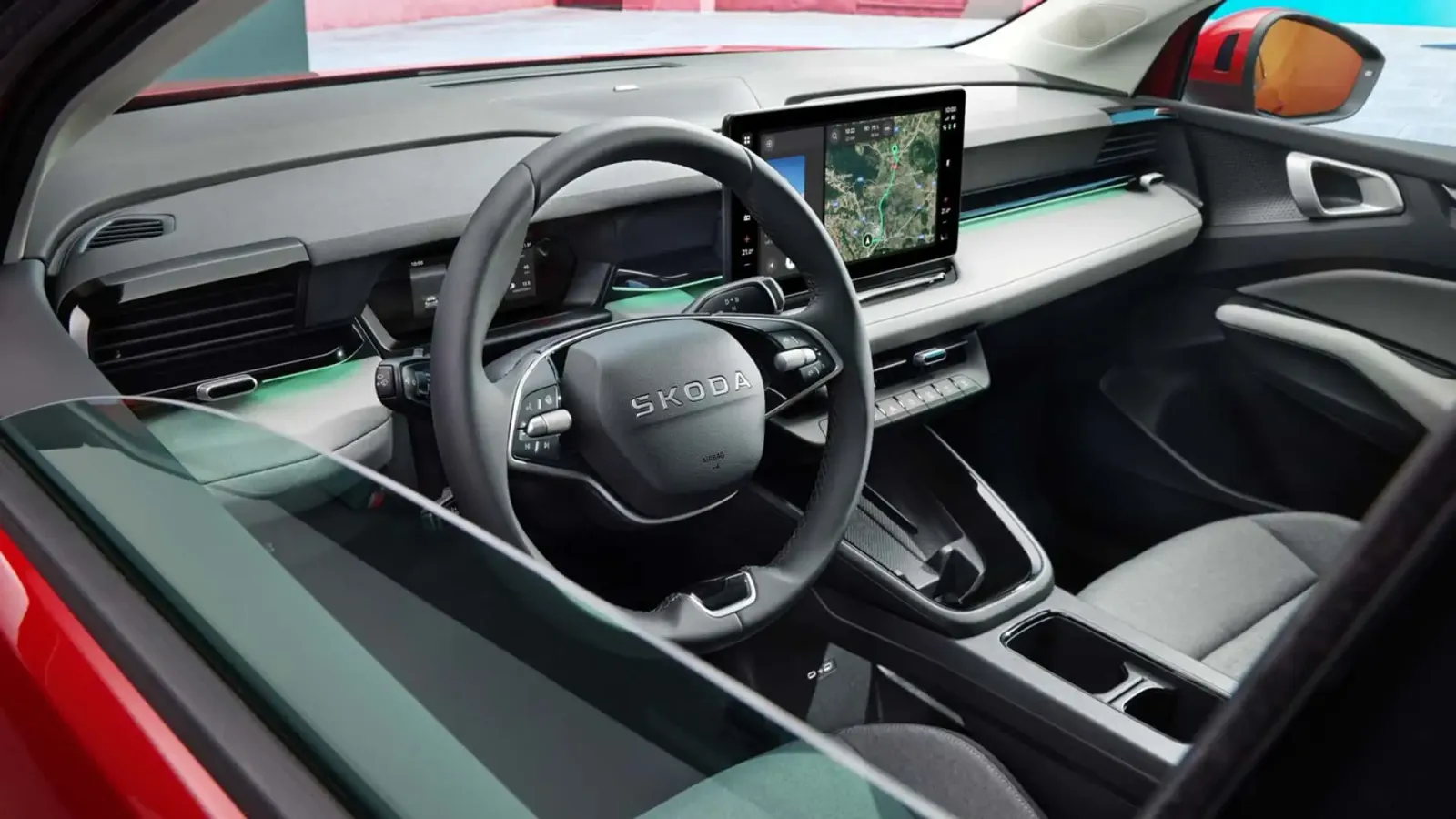
Image by: Skoda
Interior
Unlike its platform-based competitors, the Skoda Epiq features only a small 5.3-inch instrument display, which is housed in a traditional dashboard. It is paired with the same standalone 12.9-inch touchscreen (although Skoda rounds this figure up to 13 inches). Below that is a small keypad.
There are two control knobs on the steering wheel. According to the images, there is a start button. The driving modes P, N, R, D, and B are activated via a lever on the right side of the steering wheel. The center console is two-tiered: above it are the usual cup holders and the tray for wireless phone charging, while below are storage compartments and USB-C ports.
Skoda offers three interior designs: Studio is the entry-level version, Loft is available in gray or mint green, and Suite features brown seats. The Loft and Suite variants also come with ambient lighting.
Among the "Simply Clever" features that are standard on a Skoda are a charging cable bag that attaches to hooks in the trunk, the familiar umbrella holder in the door, a parking ticket holder on the left A-pillar, and an ice scraper.
Powertrains and Batteries
The Epiq is the first Skoda vehicle based on the MEB+ platform. It features front-wheel drive with two versions of the new APP290 electric motor. The base version is available with 85 or 99 kW of power; both deliver 264 Nm of torque. The higher-end version with 290 Nm of torque is only offered with 155 kW of power. The three engine options are named Epiq 35, Epiq 40, and Epiq 55. An RS version, such as one with 166 kW like the ID. Polo GTI, is not planned at the moment, according to our sources. The inverters use silicon carbide chips, just like in the electric Polo.
Skoda Epiq 35
Skoda Epiq 40
Skoda Epiq 55
Drive Type
FWD 85 kW, 264 Nm
FWD 99 kW, 264 Nm
FWD 155 kW, 290 Nm
0–100 km/h / Top Speed
11.0 seconds / 160 km/h
9.8 seconds / 160 km/h
7.1 seconds / 160 km/h
WLTP Fuel Consumption
13.7 kWh/100 km
13.9–14.5 kWh/100 km
13.9–14.1 kWh/100 km
Net/Brutto battery capacity
37.0 / 38.5 kWh LFP
37.0 / 38.5 kWh LFP
51.7 / 55.0 kWh NMC
WLTP range
325 km
323–327 km
431–441 km
Max. towing capacity
750 kg
750 kg
1,200 kg
EU curb weight
1,614 kg
1,614 kg (petrol)
1,619 kg (petrol)
Regeneration can be enhanced by selecting the B mode, enabling one-pedal driving. In B mode, two different levels of regeneration intensity can be chosen via the touchscreen. The top version, First Edition, also featured levers for adjusting regeneration.
Two batteries are used. The two cheapest variants come equipped with an LFP battery with 37.0 kWh of net capacity. As we learned during the test drive, these use standard cells from VW Group’s Spanish cell factory. The top version is the only one to feature a 51.7-kWh battery with NMC chemistry. Both batteries consist of three stacks of 32 prismatic cells each, totaling 96 cells. These are installed directly in the cell-to-pack system without going through modules.
All three variants can be charged using 11 kW of AC power, while DC charging is possible at up to 50, 90, or 105 kW respectively. The NMC battery is said to be able to charge from 10% to 80% in 24 minutes. This corresponds to a charging speed of 51.7 × 0.7 / 24 min = 1.5 kWh/min, or an average charging power of 1.5 kWh/min × 60 min/h = 90 kW.
The charging time for the Epiq 40 is 23 minutes according to the configurator. This results in 37.0 × 0.7 / 23 minutes = 1.1 kWh/min, or an average of 68 kW. The base version, Epiq 35, has a significantly longer charging time of 33 minutes, yielding only 0.8 kWh/min or 47 kW. This is not due to different batteries but rather to the software, as we learned during the test drive event. In other words, the charging power of the base model is limited by software.
Here are the details from the configurator; for the Epiq 35, we use the information from the German press kit:
Skoda Epiq 35
Skoda Epiq 40
Skoda Epiq 55
AC/DC Charging Power
11 / 50 kW
11 / 90 kW
11 / 105 kW
DC Charging Time
33 min
23 min
24 min
DC Charging Speed
0.8 kWh/min
1.1 kWh/min
1.5 kWh/min
Average DC charging power
47 kW
68 kW
90 kW
The figures differ slightly from the older data from the international press department:
Skoda International’s brochure for the Epiq as a PDF for download
Trims and prices
The starting price for the new Skoda Epiq is now 25,900 euros, with the Easy, Essence, and Sportline trims available. The Easy trim is only available for the 85-kW version, while the Sportline trim is available for the Epiq 40 and Epiq 55 models. The Epiq 55 First Edition, priced at 38,950 euros, has been removed. Here is a summary of the available variants:
Skoda Epiq 35
Skoda Epiq 40
Skoda Epiq 55
Easy
25,900 euros
—
—
Essence
—
27,900 euros
32,100 euros
Selection
—
32,090 euros
35,600 euros
Sportline
—
36,000 Euros
40,200 Euros
Strangely enough, the equipment list for the new basic Easy version is identical to that of the Essence: we couldn’t find any differences in the list of features. Both versions come equipped with 17-inch steel wheels, LED lighting, high-beam assist, light and rain sensors, electrically adjustable and heated exterior mirrors, a single-zone automatic climate control, a Bluetooth hands-free system, and a floor mat in the trunk. Additionally, adaptive cruise control (ACC), blind spot warning (Side Assist), lane keeping assist, and rear parking sensors are standard features.
The Epiq Selection also includes 18-inch black alloy wheels, tinted windows, parking sensors in the front as well, a rearview camera, keyless vehicle access, preparation for two-way charging, seat and steering wheel heating, a drive mode selector, a two-zone automatic climate control, and inductive phone charging.
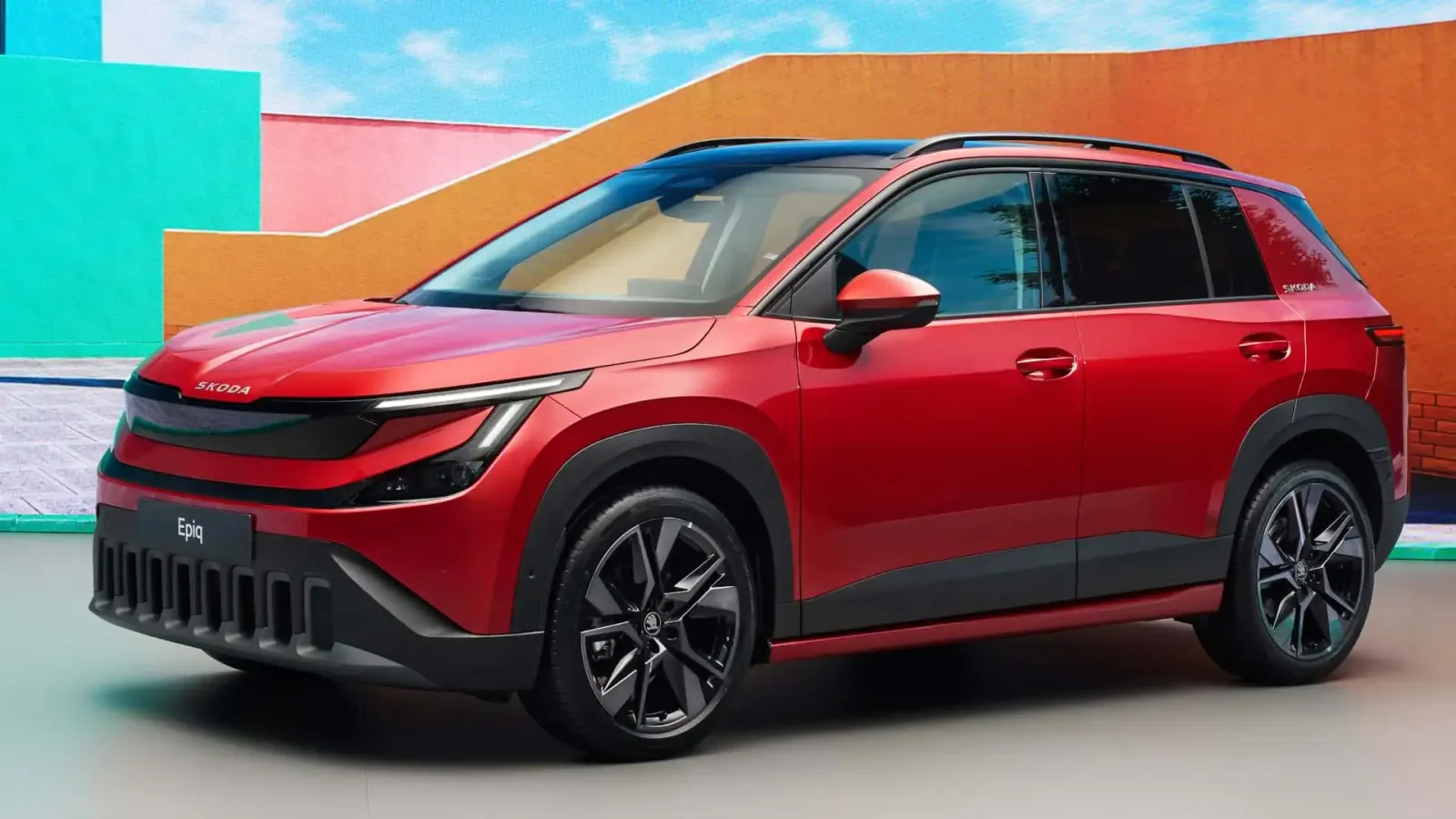
Skoda Epiq (likely Selection)
Images by: Skoda
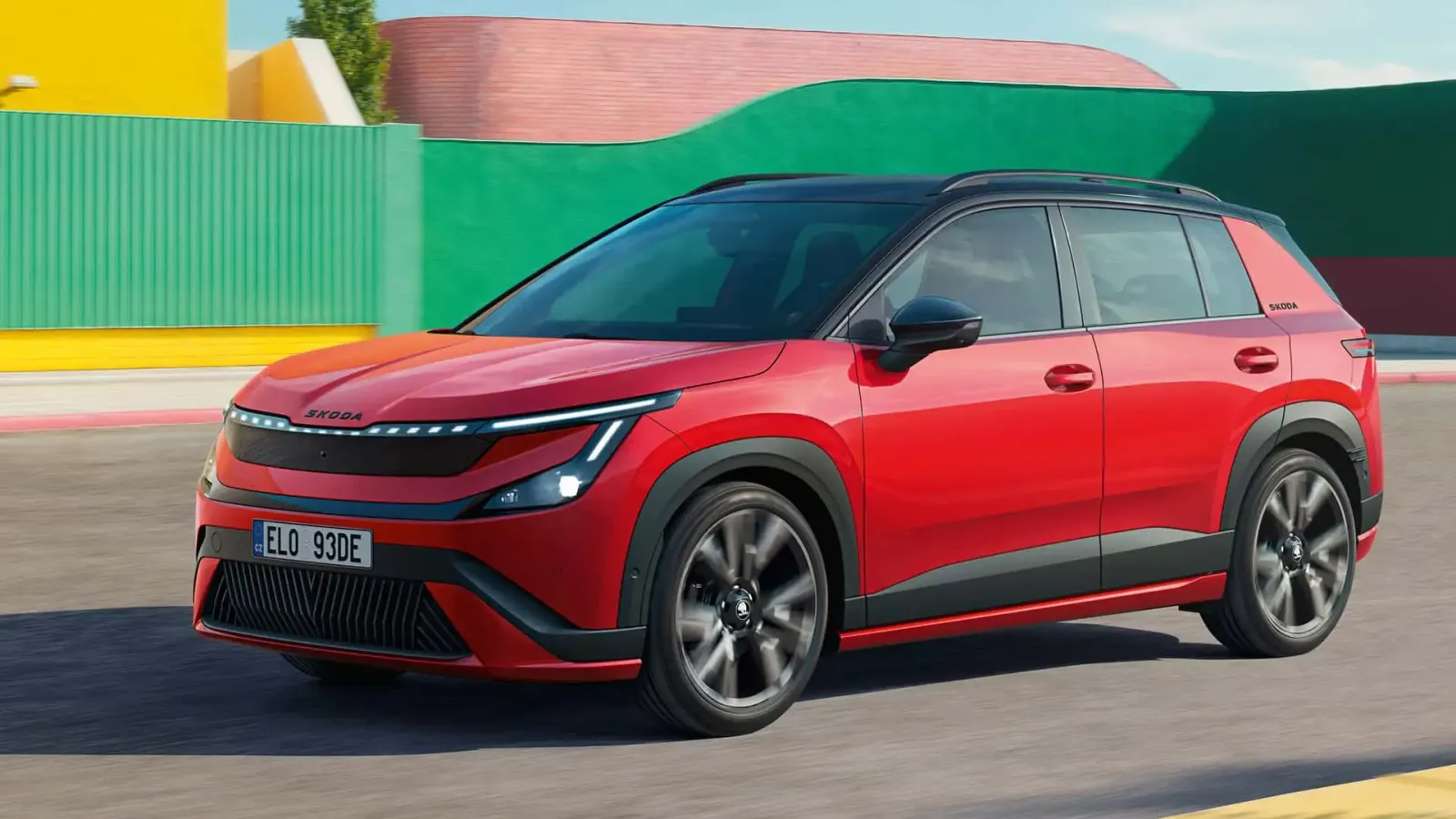
Skoda Epiq Sportline
Images by: Skoda
The new Epiq Sportline features black 19-inch wheels, different bumpers, Matrix LED headlights, electrically folding exterior mirrors with memory function and lowerable passenger side mirror, electric seat adjustment with memory function for the driver’s seat, Android Auto and Apple CarPlay, a navigation system, keyless access system Kessy and Digital Key, an interior with microfiber and synthetic leather, sport-comfort seats in the front, stainless steel pedals, and Travel Assist.
Image Gallery: Skoda Epiq First Edition (2026)
6
Source: Skoda
The top version, First Edition, with 155 kW of power was available for 38,950 euros. It featured orange accents, large 20-inch wheels, matrix LED headlights, and regenerative suspension. The paint color is standard in Marble Gray, while Timiano Green, Aluminium Silver Metallic, and Platinum White Metallic are available as options, all paired with a black roof. Upon request, the Epiq First Edition is also available entirely in black.
Options include a heat pump, and starting with the Selection package, electrically adjustable front seats are available. There are also various packages available. For example, the “Ausstattungspaket Premium” costs 890 euros and includes a frunk, a 360-degree view system, a Canton sound system, as well as remote and assisted parking functions.
The Epiq’s suspension uses a standard MacPherson strut at the front, while the rear does not feature a multi-link suspension like that in the Renault 5, but rather a space-saving torsion beam suspension. Unlike the Elroq and Enyaq, which have drum brakes at the rear, the Epiq is equipped with disc brakes all around.
Among the assist systems is the new Travel Assist 3.0. It includes a predictive cruise control (pACC) and an adaptive lane-keeping assistant, both of which operate across the entire speed range. Additionally, the system can now recognize red lights and stop signs and automatically bring the car to a halt.
The top-view panorama system relies on four cameras that cover the entire surroundings of the vehicle. The touchscreen displays the car from a bird’s-eye perspective, aiming to simplify maneuvering in tight spaces. Another innovation is Cross Assist 2.0. This system uses radar sensors located at the corners of the bumpers to make it easier to drive into complex intersections. The car can be equipped with up to nine airbags, including a center airbag between the front seats.
Competitors of the Skoda Epiq include other models based on the same platform, as well as many other small SUVs such as the Renault 4, Kia EV2, Ford Puma Gen-E, and others.
More about the Skoda Epiq:
In summary
The Skoda Epiq is now available for configuration in all three engine options. This reduces the starting price to the promised 25,900 euros. However, the LFP battery used here only provides a WLTP range of about 300 km.
The engines in the Epiq differ neither in hardware nor in performance, as the power is adjusted via software. The same applies to torque, which is reduced from 290 to 264 Nm in the base versions. Skoda also creates different battery variants based on identical hardware. Thus, the Epiq 35 and Epiq 40 have the same battery, but the charging power in the base model is lowered via software. As a result, the Epiq 35 takes ten minutes longer to charge.
Last updated on October 30, 2026: Epiq 35, Easy, and Sportline added.