
The Škoda Epiq 40 costs 122,900 zł in Poland. The small MEB+ version drops to diesel levels.
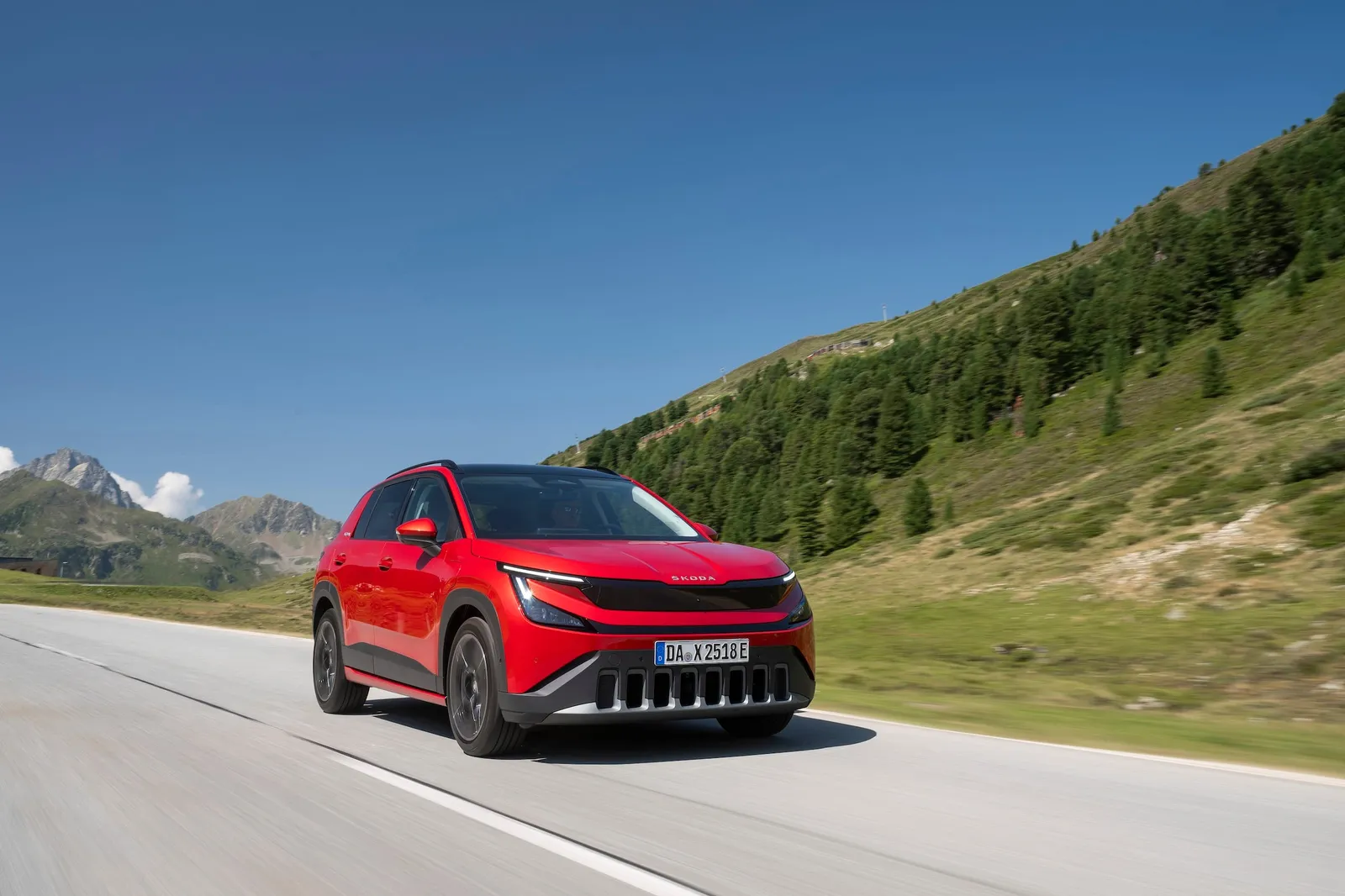
Škoda has revealed the Polish prices for the Epiq 40 model and included an immediate launch discount. The Essence version starts at 122,900 PLN, while the more equipped Selection version begins at 132,900 PLN. For a car based on the MEB+ platform, these prices are at a level where some customers will actually start comparing electric vehicles not with Tesla but with better-equipped gasoline crossovers.
Table of Contents
Show
Hide
The cheapest variant comes with a 37 kWh net battery, 99 kW of power, and DC charging up to 88 kW. On paper, this seems modest, but for a city and suburban B-segment car, it might be sufficient.
Prices, Payments, and Where the Catch Lies
The launch offer reduces the list price by 4,600 PLN. The Epiq 40 Essence costs 122,900 PLN instead of 127,500 PLN, and the Epiq 40 Selection costs 132,900 PLN instead of 137,500 PLN.
Škoda also provides financing options. The Essence is expected to cost 958 PLN net per month on lease and 1,176 PLN gross via loan. For the Selection version, the figures are 1,056 PLN net on lease and 1,295 PLN gross on loan.
However, there’s a catch here. The listed monthly payments apply to financing over 36 months, with a annual mileage limit of 10,000 km and an upfront fee of 12,500 PLN gross. So while the offer seems attractive, it’s not a car that can be obtained for just a few thousand zlotys.
Small battery, decent chemistry, fast charging for its class
The Epiq 40 has a battery of 38.5 kWh gross, which is 37 kWh net, based on LFP chemistry. Its range according to WLTP standards is up to 320 km.
The charging from 10% to 80% should take 23 minutes, with a maximum power output of 88 kW. This isn’t on par with EV3 or larger 800 V models, but for small electric cars, the performance is quite decent. Especially considering it’s a battery that doesn’t require hundreds of kilowatts to quickly reach 80% charge.
The drive is located on the front axle. The engine delivers 99 kW, which is equivalent to 135 horsepower, along with 267 Nm of torque. A 0-100 km/h acceleration time of 9.9 seconds may not seem impressive in numbers, but it should be more than sufficient for city driving and highway use.
Dimensions and equipment. Here, the Epiq might have an edge in practicality.
The vehicle has a length of 4,171 mm, a width of 1,798 mm, and a height of 1,581 mm. Its turning radius is 10.15 meters, so it should handle well in urban areas.
The interior is more interesting. The trunk has a capacity of 475 liters, which is an excellent figure for a car of this size. Additionally, there’s an optional frunk with 25 liters of space, along with over 28 liters of storage in the cabin.
The Essence version comes standard with LED headlights, Climatronic air conditioning, a 13-inch infotainment screen, SmartLink, adaptive cruise control, rear parking sensors, Crossroad Assist, and 7 airbags. The Selection version adds a reverse camera, front sensors, heated seats and steering wheel, tinted windows, Kessy Advanced, and two-way charging. This actually sounds better than a typical marketing description of a “higher-end version.”
Test drives available in Poland, but not necessarily the cheaper version
The importer already has the first units and is starting demonstration drives across Poland. The presentations are scheduled from September 21 to October 3, taking place in places such as Zielona Góra, Wrocław, Katowice, near Warsaw, Kraków, Gdańsk, and Poznań, usually between 11 a.m. and 6 p.m.
However, there’s a small catch. According to market information, the vehicles shown will primarily be highly equipped models with a larger battery of 55 kWh gross and 51.5 kWh net, likely as the Epiq 60 First Edition 55. This version starts at 167,450 zł, so anyone who goes to see the car priced at 122,900 zł might find something significantly more expensive and better equipped in the dealership. Not ideal.
As of now, Epiq seems like one of the more sensible small electric cars for those who want a brand familiar in Poland, good practicality, and a price closer to regular cars rather than premium electric models. The question is whether, at this price point, it will convince you more than the Renault 5, future ID. Cross, or Chinese competitors?
LovEV Newsletter
Want more content like this?
Sign up — we’ll send you a weekly summary once the newsletter starts.