
SK claims that in LFP it has replaced nanotubes in the paste with powder. This is likely the first official confirmation of nanotubes.
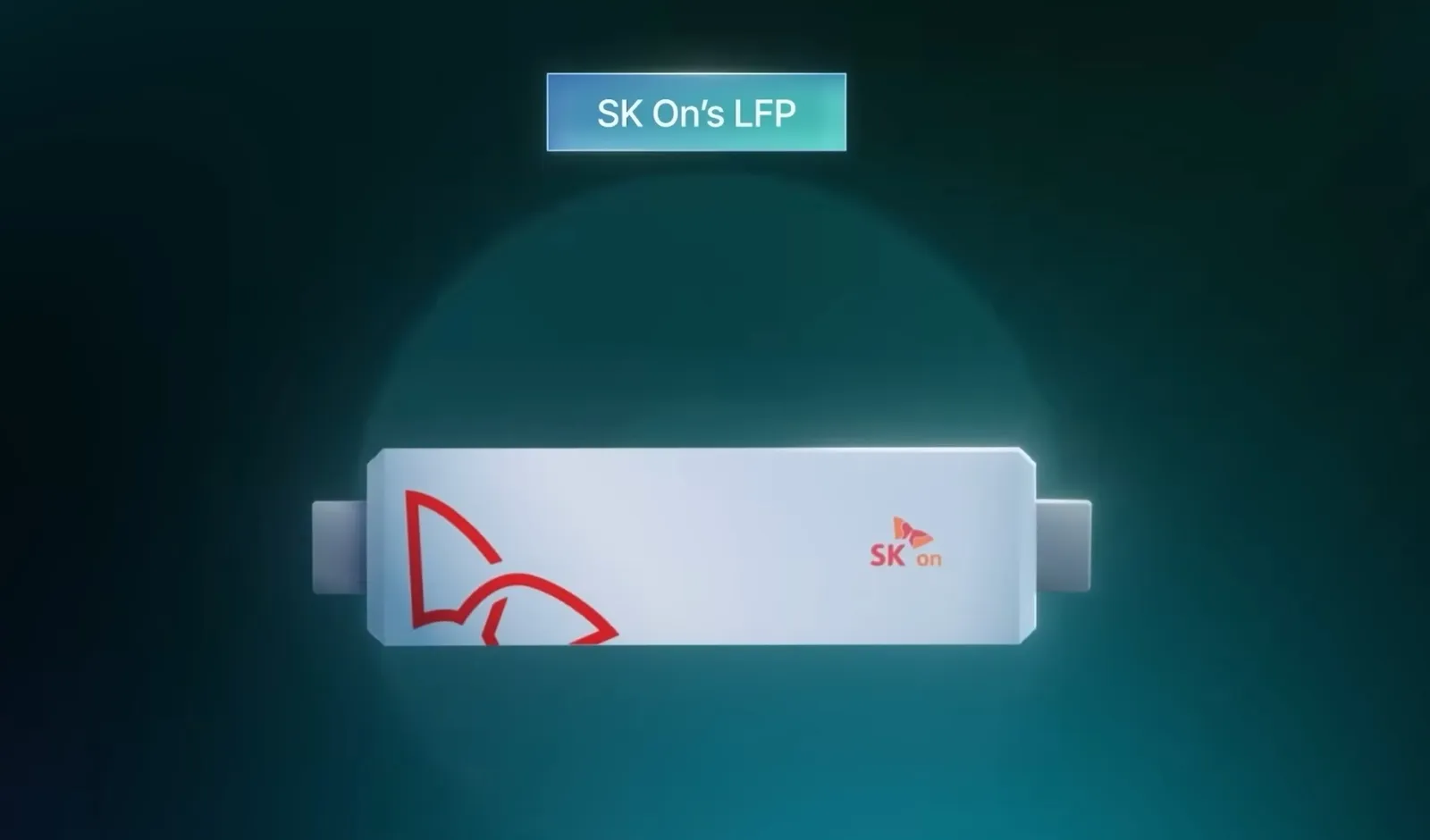
South Korean lithium-ion cell and battery manufacturer SK On claimed to have succeeded in producing LFP cell cathodes in which the nanotubes used in the paste were replaced with powder form nanotubes. This might not sound particularly impressive, but it actually explains a lot about the tremendous advancements we’ve seen in recent years in the LFP cell sector manufactured in China.
A Slightly More Understandable LFP Situation
Table of Contents
A Slightly More Understandable LFP Situation
How Li-ion Cell Charging Works
Nanotubes Officially Confirmed
How Li-ion Cell Charging Works
At the beginning of this decade, lithium-iron-phosphate (LFP) cells had low energy densities and slow charging speeds, with their main advantages over Li-NCM being slightly slower degradation and lower costs. Since 2024, Chinese LFP cells have set records in terms of charging speed, their energy densities have caught up to those of good Li-NCM cells, and their prices have not only not risen but have actually dropped. A statement from SK On, obtained by The Elec, explains a lot about this trend.
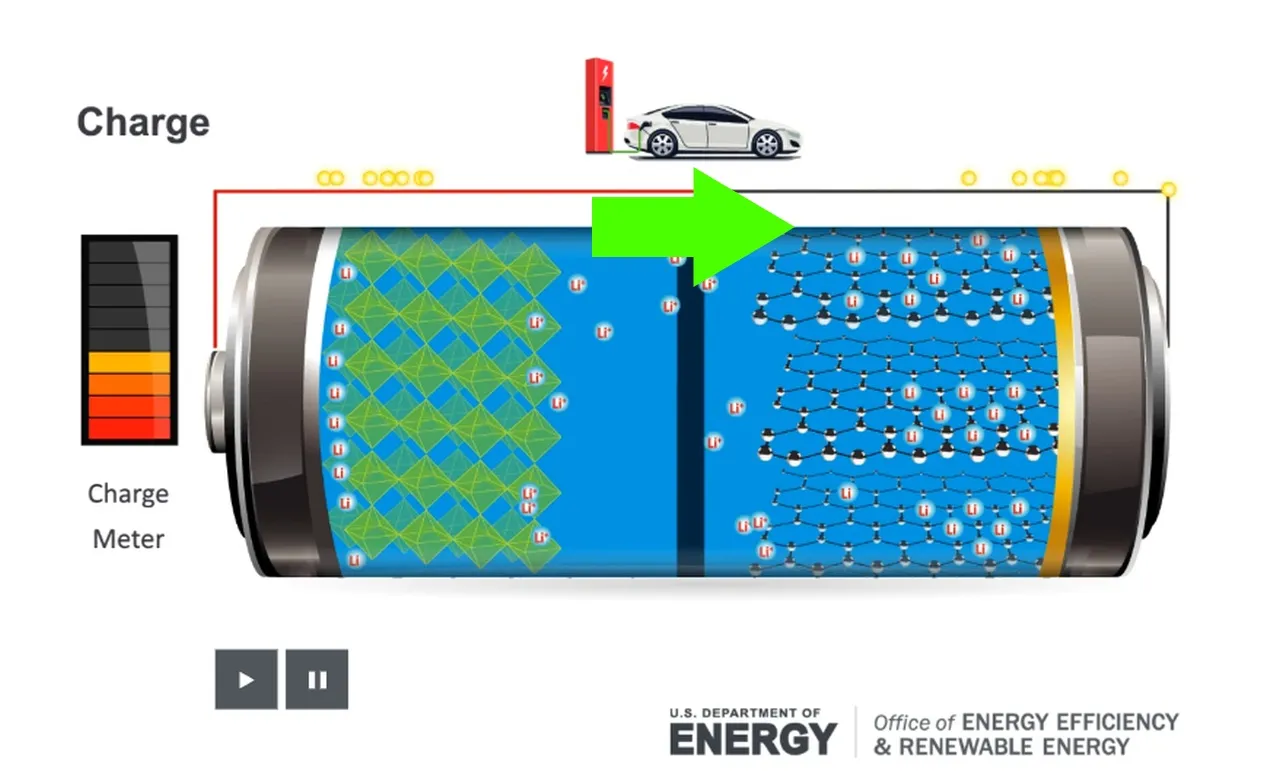
Lithium ion flow during charging. The cathode (on the left) and anode (on the right) are visible (c) US DoE
The charging process of a Li-ion cell involves pumping lithium ions from the cathode to the anode. Anodes are primarily made of graphite, whose structure consists of extensive sheets of carbon atoms with large amounts of space between them. There is no branching. When a lithium ion falls into such a gap, it has enormous spaces on both sides stretching to the horizon [on its scale], where it can become trapped exactly where an electron enters it.
However, these lithium ions must come from somewhere — they must drift from the cathodes. The problem is that cathodes are much more complex crystal structures (in the illustration above: green, on the left). For lithium ions to escape from them, they must meander. It was not clear until now how the Chinese managed to force their cathodes to release ions at such a rapid pace. At least officially, as there were speculations about nanotubes, a richly formed and preliminarily developed SEI layer, or free lithium ions drifting in the electrolyte.
Nanotubes officially confirmed
Here is information from SK On, which likely appropriated the best Chinese cells while developing its own LFP cells: “We use nanotubes in the cathodes.” These, which were previously applied in paste form (using a solvent), are now in powder form. There is no doubt that the Koreans copied their “discovery” from the Chinese, as they are leaders in the world when it comes to LFP cell production. In other words, Chinese LFP cells can charge with such high power levels (meaning the cathodes release lithium ions rapidly) because companies in China have used nanotubes in them. These nanotubes act like highways or tubes through which lithium ions can be released outside the anode without getting stuck in the crystal structure.
SK On was not ready to produce LFP cells until 2023
It is unclear whether nanotubes are also present in the anodes, but another form of carbon—graphene [a far-fetched speculation by Elektrowozu’s editorial team]—may be more important there. Its network surrounding graphite particles allows for increased energy density through silicon doping (Si/C), as it protects the structures from being damaged by lithium ions. SK On does not advertise this feature, but we know that Chinese battery manufacturers have long been doping anodes with silicon, which now accounts for several percent of the electrode material.
As for the discovery by SK On itself: using nanotubes in powder form instead of paste allows for the elimination of the step of heating the electrode to evaporate the solvent. Apparently, the nanotubes can simply be mixed with the cathode material, compressed, and their performance is just as good as that of pastes. This is important because heating is an energy-intensive process, whereas with dry cathodes this step becomes completely unnecessary.
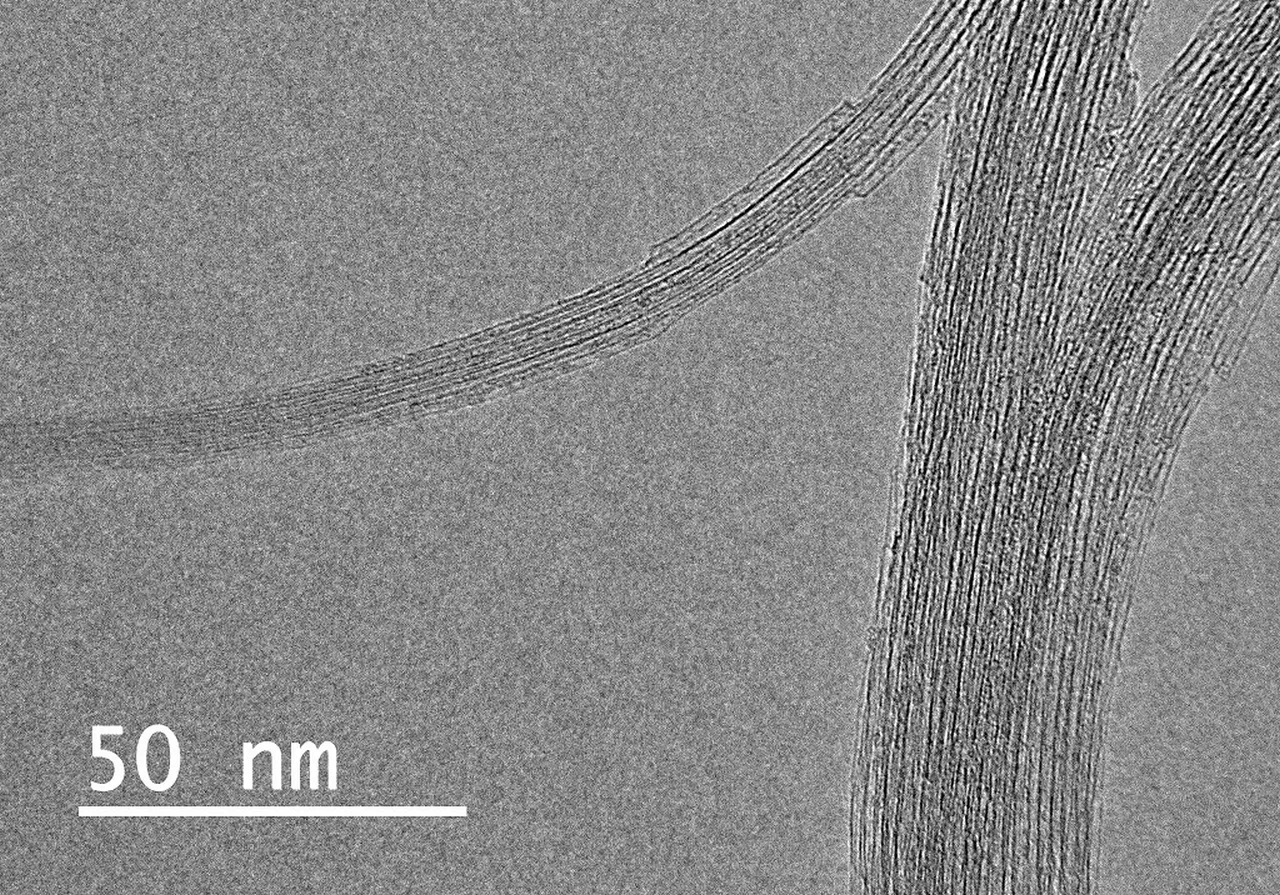
Arranged nanotubes under a microscope (c) Meijo Nano Carbon, via: BusinessWire
Article rating
Reader ratings
[Total: 5 votes Average: 4.8]
Don’t miss new content — CLICK and FOLLOW Elektrowoz.pl on Google News. You might also be interested in the following ads: