
Without a single drop of fuel, this Spanish invention will travel 3,400 kilometers through previously unexplored regions of Antarctica.
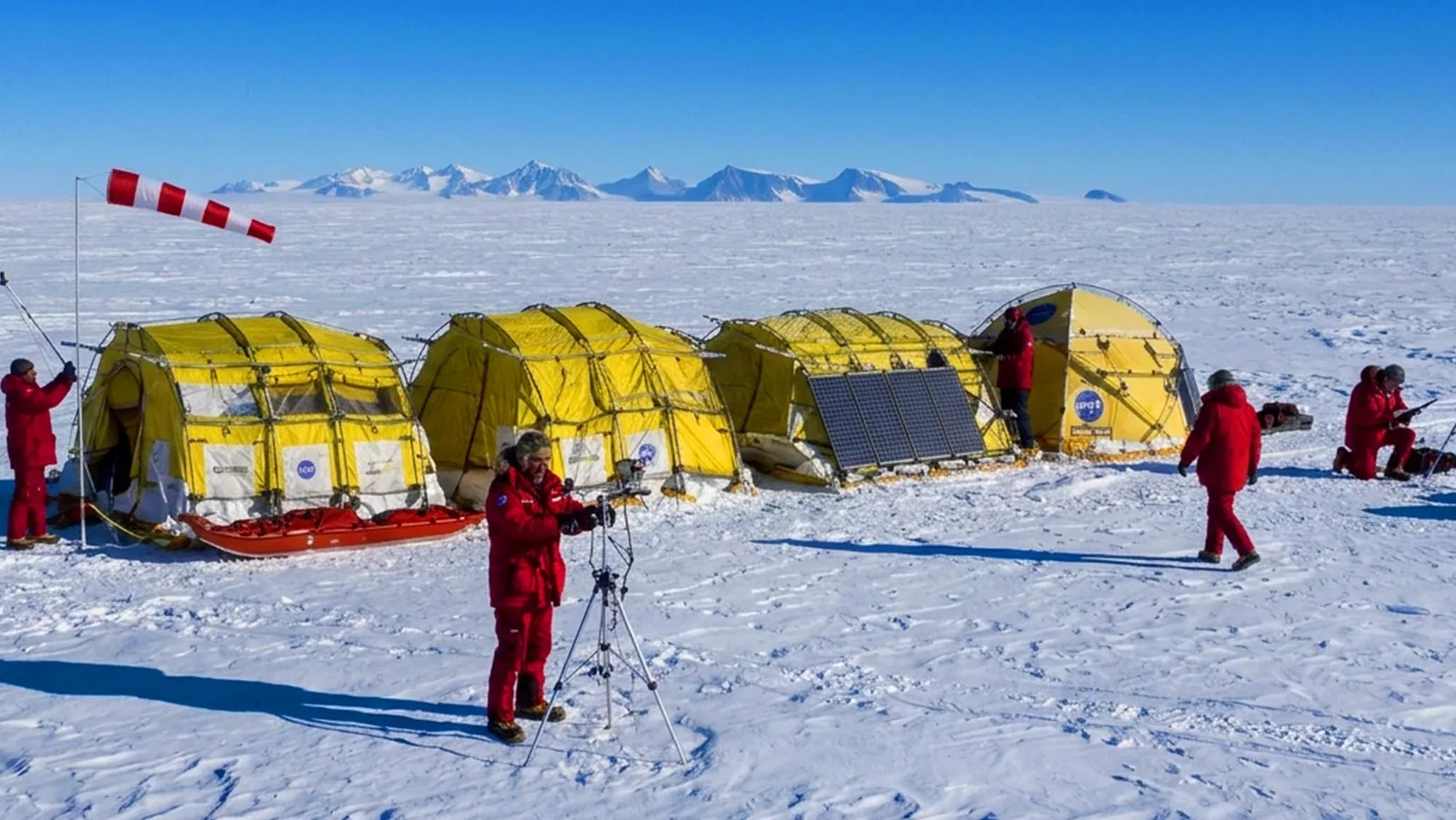
Traversing 3,400 kilometers of Antarctic ice without relying on internal combustion engines to move forward. That is the challenge of the Spanish expedition Trineo de Viento Antártida 2026-2027, an initiative that combines wind energy, photovoltaic technology, and scientific research to reach some of the planet’s most inaccessible regions.
Part of the 40th Spanish Antarctic Research Campaign, this expedition is scheduled to last 80 days and is led by Ramón Larramendi, a polar explorer and creator of the vehicle. The team left Spain on October 18 and is expected to return in early February 2027.
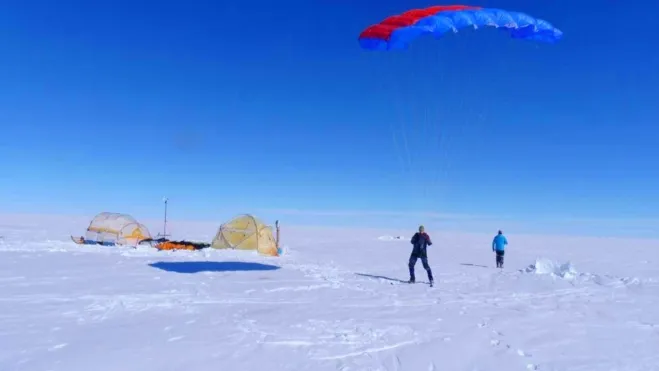
Twenty runners to cover 3,400 kilometers
Its goal goes beyond proving that it is possible to travel across the frozen continent by utilizing wind. The Wind Sledding Vehicle will serve as a mobile laboratory to carry out 16 scientific projects that require collecting data directly in the field.
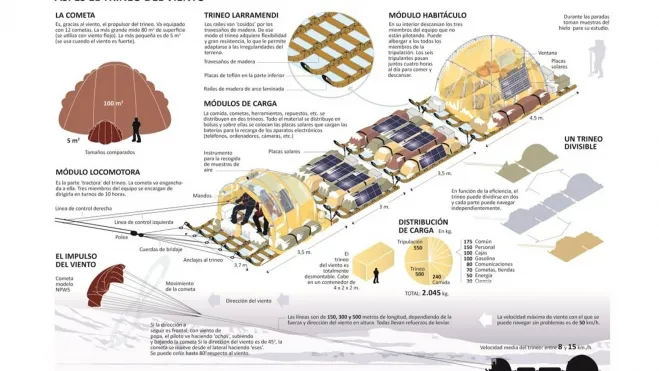
The system designed by Larramendi eliminates the need for a motor for propulsion. Instead, it uses large traction kites that harness Antarctic winds to pull the vehicle along its skis.
The expedition has 20 kites with surfaces ranging from 5 to 150 square meters. The crew selects the most suitable ones based on weather conditions, as wind intensity determines both the vehicle’s speed and the ability to control the system.
Under favorable conditions, the sled can reach speeds of up to 80 km/h, although its expected average speed is around 25 km/h. The priority is not to achieve high speeds but to transport people, supplies, and scientific instruments over long distances with minimal reliance on fuels.
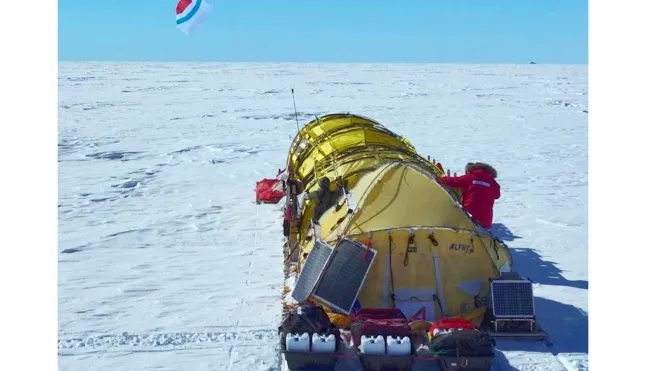
The electricity needed to power the research equipment comes from solar panels. Thus, wind provides the energy for movement, while photovoltaics keep the instruments operational.
It should be noted that the absence of emissions refers to the vehicle’s propulsion system, not necessarily all activities of the expedition members. The system eliminates the fossil fuel required for travel, although the logistics of a polar expedition may still require other energy sources.

A 15-meter mobile laboratory
An expedition aimed at demonstrating how a transportation system powered by renewable energy can expand possibilities for polar research. Its success will depend on both the reliability of the vehicle and weather conditions, as well as the team’s ability to operate for weeks in one of the planet’s most demanding environments.
The Wind Sled consists of four modules and is approximately 15 meters long. Its maximum load capacity is 2,100 kilograms, while the scientific equipment planned for the start of the expedition weighs around 250 kilograms.
The setup includes spaces to accommodate the four team members, control the kites, conduct scientific experiments, and carry the materials needed to complete the journey.
In addition to Larramendi, the team consists of Hilo Moreno, a polar guide and mountaineering technician; Mariusz Potocki, a scientist from the University of Maine in the United States; and Javier Selva, who is responsible for documenting the expedition.
This concept also builds on existing work. Previous versions of the vehicle have already traveled over 28,000 kilometers across ice during expeditions in the Arctic and Antarctica. That prior experience forms the technological foundation for this new campaign.
Sixteen projects to study ice and pollutants
The main contribution of the expedition will be the collection of scientific data in areas far from permanent bases. Field measurements will complement information obtained via satellite and expand knowledge of the Antarctic plateau.
The planned investigations include analyzing the composition of ice, detecting microplastics and persistent chemical compounds, and searching for signs of microbial life in extreme conditions.
Other projects will study processes related to climate change, Earth’s magnetism, and the operation of Europe’s Galileo satellite navigation system. The effects of isolation and extreme cold on the physical and mental health of the four crew members will also be analyzed.
The mission also includes instrumentation and technologies used in research related to Mars exploration. The isolated conditions, logistical challenges, and harsh environment of Antarctica make this region an ideal location to test procedures and equipment for future space missions.
Research organizations such as CSIC, CIEMAT, and INTA, along with six Spanish universities and international institutions including NASA, the University of Maine, and Italy’s National Research Council, are participating in the program.
A route through the continent’s most remote areas
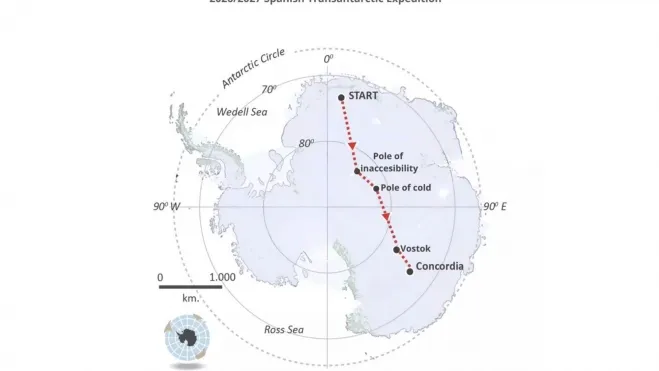
The planned journey begins near the Russian base of Novolazarevskaya, on Queen Maud Land, and ends at the Concordia station located in Dome C, deep within the Antarctic plateau.
During the trek, the team will make five extended stops to take measurements, conduct experiments, and collect samples. The route includes passing through the Pole of Inaccessibility, situated at about 3,700 meters above sea level and considered one of the continent’s most remote locations.
It will also approach the Vostok Station, located in the region known as the Pole of Cold, where some of the lowest temperatures on Earth have been recorded.