
Seven airbags and charging in 20 minutes: the Smart #2 (the new electric Fortwo) arrives in Paris with an unprecedented platform
28/09/2026 17:30
Updated to
28/09/2026 17:30
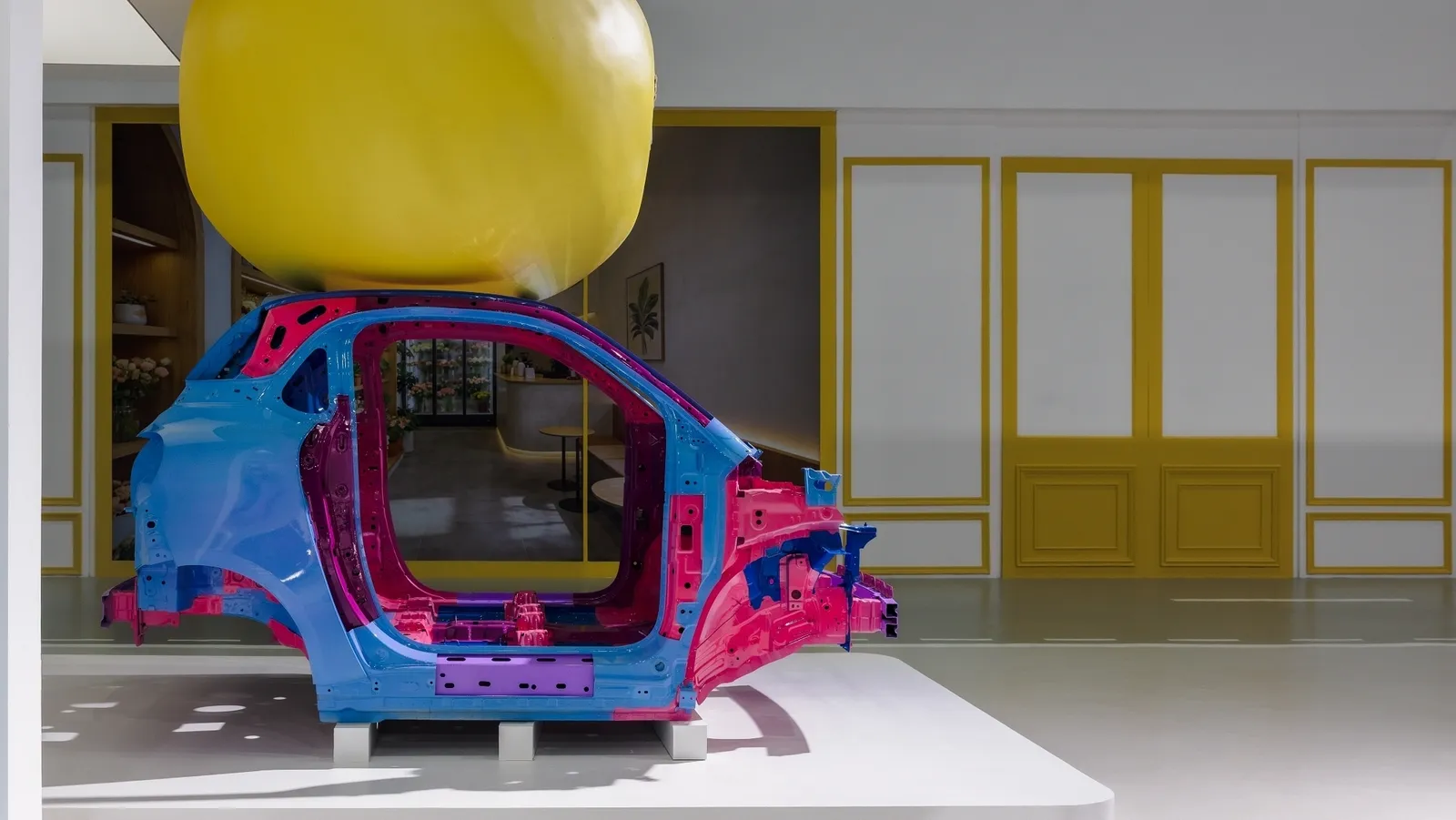
When a car is under three meters long, safety becomes the top priority. Smart has been addressing every concern for years and will do so once again. The new Smart #2, the successor to the legendary electric Fortwo, will come equipped with the Tridion Cell Evo safety cell—a refinement of one of the brand’s most recognizable features, adapted for a new generation. According to the brand, improvements in chassis stiffness and structural strength points aim to give drivers confidence both in urban areas and on the road.
The car, which will be unveiled to the world at the Paris Motor Show on October 12, 2026, is also built on a new platform called ECA (Compact Electrical Architecture), developed specifically for this ultra-compact two-seater vehicle. All figures are preliminary, as the vehicle is currently in the homologation process in the European Union and the numbers may change. Visually, its appearance is becoming less secretive, as Smart has already revealed details about it on multiple occasions.
A steel body with a strength of up to 1,800 MPa
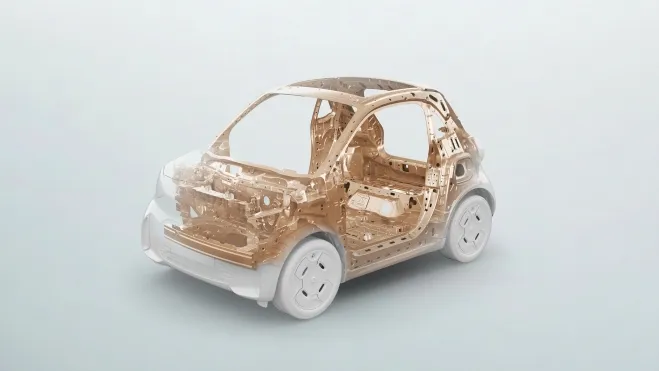
The Tridion Cell Evo is constructed with over 78% high-strength steel, combined with a three-layer steel configuration and materials with a tensile strength of up to 1,800 megapascals. Its torsional stiffness reaches 39,000 Nm per degree, and the structure is capable of withstanding a load on the roof exceeding four tons. These are exceptional figures for an urban car and explain much of the model’s focus on safety.
The protection for occupants is enhanced by seven airbags and a seat belt system that combines pyrotechnic pretensioning in the abdominal area with a locking tab in the event of a collision. These systems improve the retention of the pelvis and lower limbs and reduce forward movement of occupants during a impact. The battery, on the other hand, is protected by a multi-layer structural design.
35.8 kWh battery with 10% to 80% charging in 20 minutes
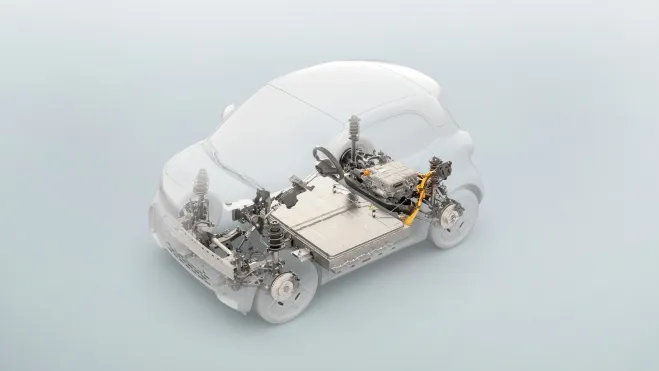
As Chinese registration authorities announced a few days ago, the #2 model’s ECA platform features a 35.8 kWh battery using CATL cells, enabling Smart to aim for a combined range of 290 kilometers under the WLTP cycle. Under optimal conditions, it can be charged from 10% to 80% in less than 20 minutes at a 65 kW DC charging station. To maximize space efficiency, the propulsion system is an “11 in 1” unit that integrates electric drive, power electronics, and control systems into a single module, reducing overall complexity and helping keep the vehicle’s length under three meters.
In the dynamic aspect, the Smart #2 boasts being the only vehicle in its class equipped with a multi-link independent rear suspension. Combined with rear-wheel drive and a 50:50 weight distribution between axles, it aims for agile, stable, and precise handling. Its turning radius around curbs is just 6.95 meters, a figure designed for navigating narrow streets and small parking spaces. The design retains the wheel layout at the extremes, with very short fenders that maximize interior space—a feature that Mercedes-Benz’s global design team has wanted to preserve as a hallmark of the model.
Testing on European roads and highways
According to Tilo Schweers, vice president of R&D at smart Europe, the team’s work has focused on validating the Tridion Cell Evo cell and the ECA platform under real-world conditions, from urban driving to thorough testing on European roads and highways. The goal is to adjust the vehicle’s structure and configuration to meet the continent’s driving standards and conditions before it hits the market. There are still several uncertainties to resolve, such as the price. Smart Spain hopes to make it available at a promotional price of 150 euros per month.