
Siemens and OMV have launched the SICHARGE FLEX charging system in Austria. With a scalable capacity of up to 1.68 MW!
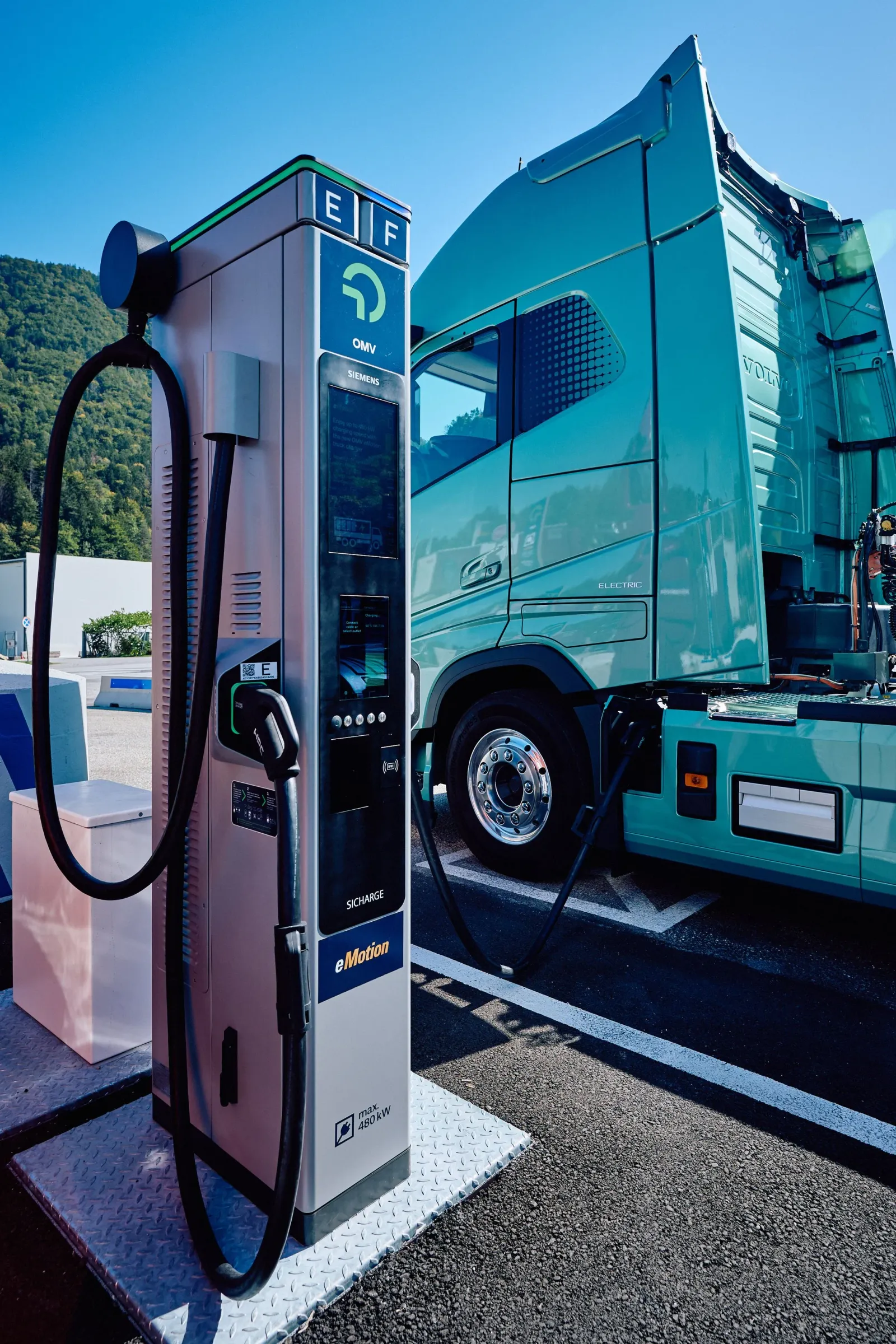
In short:
Siemens and OMV launched the first commercial SICHARGE FLEX charging system
Where? In Austrian Kufstein, along one of the most important transport routes between Germany and Italy
Heavy transportation is the main focus of this project
The station offers four charging points for passenger cars and two for trucks, each with a capacity of 400 kW
The core of the investment is a modular system whose capacity can be scaled from 480 kW to 1.68 MW
A truck equipped with a 620 kWh battery can recharge from 20% to 80% in about 45 minutes
Siemens and megawatts at Brenner
The Brenner Pass has long been one of the most important transportation routes in Europe. Thousands of trucks traveling between Germany, Austria, and Italy pass through it every day. Now, this route is also becoming one of the symbols of energy transition in transportation. How? Well, yesterday Siemens eMobility and OMV officially launched the world’s first commercial SICHARGE FLEX system in Kufstein. The Austrian energy and fuel company is actually the pilot customer for this solution, which was introduced by Siemens in autumn 2025.
The new infrastructure is designed to serve both passenger cars and trucks, but heavy transport is at the core of the project. The location was not chosen by chance. Kufstein lies along one of Europe’s busiest transport corridors, making it an ideal place to test infrastructure for electric long-distance vehicles — according to a Siemens press release.
What’s inside?
The heart of the investment is the modular SICHARGE FLEX system, whose capacity can be scaled from 480 kW to as much as 1.68 MW. According to Siemens, the solution was designed to be adaptable to the growing needs of logistics operators and public charging stations.
Currently, the station offers four charging points for passenger cars and two for trucks, with each point capable of delivering up to 400 kW of power. In the next phase of development, four additional stations for heavy vehicles are planned, using the MCS (Megawatt Charging System) standard and providing power ranging from 600 to 1200 kW.
It is the MCS standard that is now regarded as the key to promoting long-distance electric transportation. Thanks to such charging power, a modern truck equipped with a 620 kWh battery can recharge from 20 to 80 percent in about 45 minutes. In practice, this means that drivers can use their mandatory work breaks to charge the vehicle without needing additional stops.
eHDV with electricity
"Electrifying freight transportation is one of the key pillars of a sustainable transport system," emphasized Markus Mildner, president of Siemens eMobility. He added that “SICHARGE FLEX is a scalable solution that can be precisely tailored to various applications—from logistics hubs to public charging stations for passenger and freight vehicles.”
Peter Vysny, who oversees international operations and electromobility at OMV, emphasized the significance of this investment for infrastructure development. “Electrically powered heavy vehicles require efficient and reliable charging stations located along major transportation routes. Kufstein’s position on the Brenner Pass makes it an ideal site for such a project,” he said.
A key component of the system is also dynamic power management. The available energy can be allocated in real time among connected vehicles, allowing for more efficient use of infrastructure and reducing losses.
OMV announces that Kufstein will not be the only location equipped with the new system. The company has already ordered additional SICHARGE FLEX units for other stations in Austria, with operations scheduled to begin in the coming months.
The cloud-based SIFINITY Control platform will support the management of infrastructure operations, handling monitoring and optimization of network performance.
Europe accelerates construction of infrastructure for electric trucks
The investment in Austria is part of a broader European trend. In recent years, developing infrastructure for heavy transport has become one of the priorities for both the logistics industry and EU regulators.
Recall that according to the EU’s AFIR (Alternative Fuels Infrastructure Regulation), by the end of 2027, charging areas for trucks must be established every 60 kilometers along the core TEN-T network, equipped with chargers capable of at least 350 kW. We have previously reported on Elektromobilni.pl that by 2026 alone, Europe already had over 370 locations meeting the 350 kW requirement for heavy vehicles, offering more than 2400 charging points.
The Milence project, a joint effort by Daimler Truck, TRATON Group, and Volvo Group, is developing particularly rapidly. The company is building a pan-European charging network for heavy road transport and aims to establish infrastructure along the continent’s main logistics corridors.
In mid-2026, the operator reported having over 30 charging hubs in Europe, with additional locations under construction. Meanwhile, a corridor utilizing MCS technology is being developed, aiming to include hundreds of megawatt charging points in various EU countries — writes the Truck Bus World portal.
An example is Sweden, where Milence is conducting demonstrations of megawatt charging in partnership with Volvo Trucks. In the Netherlands, Belgium, Denmark, and Germany, more hubs are being established along key transit routes of the TEN-T network.
Conclusions
Against this backdrop, the Siemens and OMV project stands out primarily for its scalability and commercial deployment of next-generation technology. Kufstein is proof that megawatt charging is no longer just a technological demonstration but has become part of actual transportation infrastructure.
Oskar Włostowski
