
Siemens and OMV: Up to 1.2 MW charging on the Brenner corridor
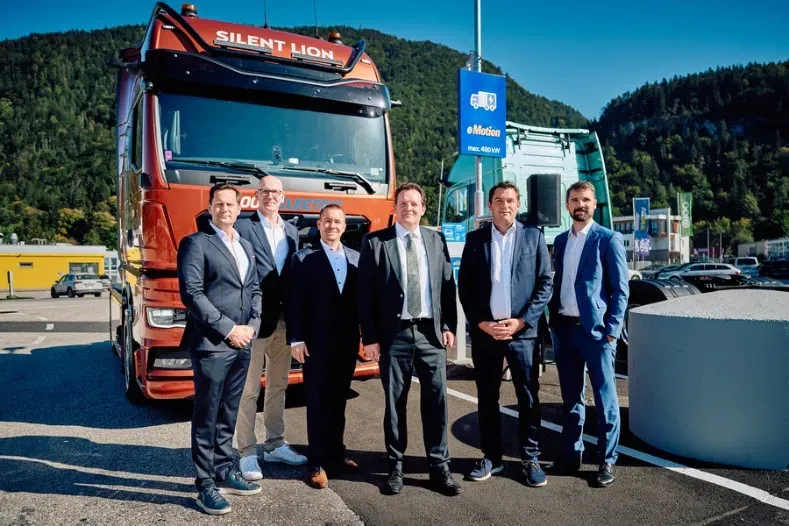
Siemens and OMV are bringing charging capacity to 1.2 MW on the Brennero corridor. In Kufstein, Austria, the first installation of Siemens’ Sicharge Flex charging system is now operational. The new station features six DC charging points, four for cars and two for trucks, with a capacity of up to 400 kW. Additional bays for heavy vehicles are planned in a second phase, with capacities reaching up to 1.2 MW.
Six charging points, two for heavy vehicles
Siemens eMobility and OMV take another step forward in developing charging infrastructure for electric trucks and cars. The initial setup at the Kufstein station includes six DC charging points: four for passenger vehicles and two for trucks, all with a capacity of up to 400 kW. However, it is the second phase of the project that represents the most significant advancement. OMV plans to add four more charging points for heavy vehicles, with capacities ranging from 600 to 1,200 kW, using the Megawatt Charging System (MCS).
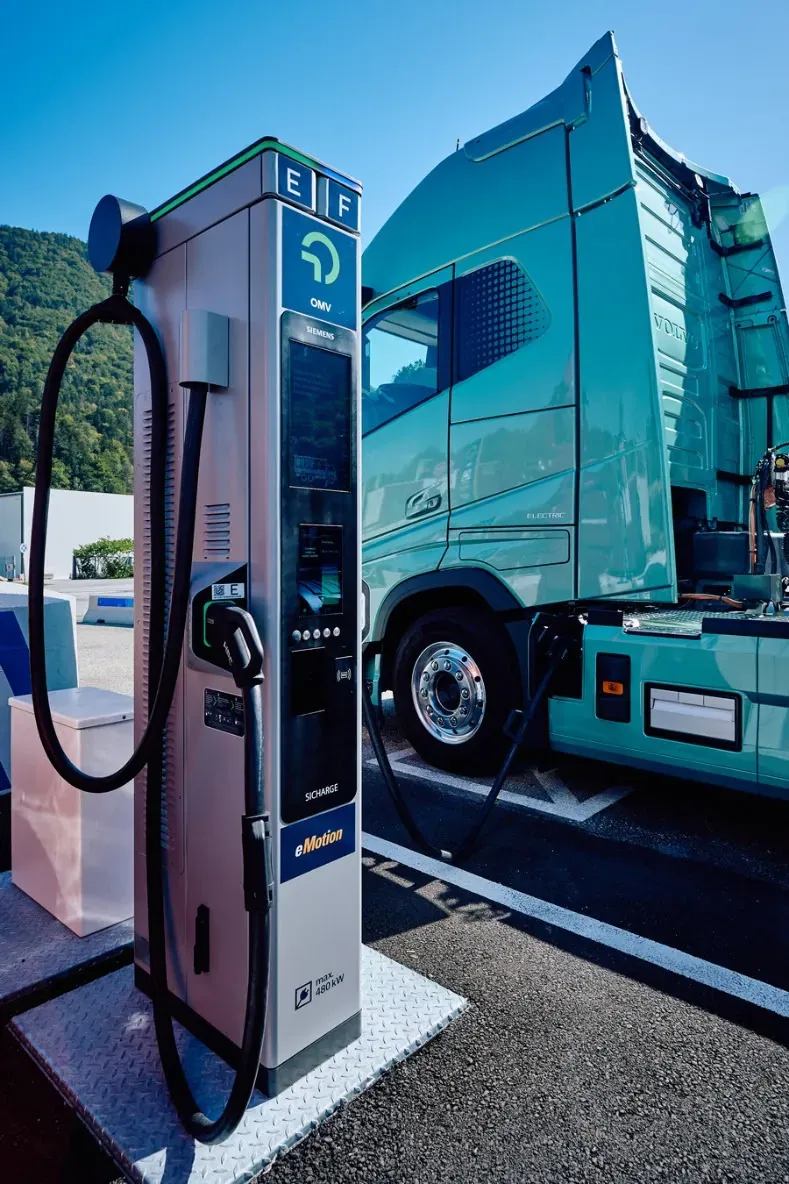
Rapid charging for electric trucks
The Sicharge Flex system is designed to dynamically distribute available power among connected vehicles. In practice, energy is not necessarily delivered identically to all vehicles; the power can be adjusted based on the charging needs of each individual vehicle.
According to projected performance estimates, an electric truck with a 620 kWh battery can go from 20% to 80% charge in about 45 minutes. This figure should be viewed especially in relation to the actual use of heavy vehicles. The ability to charge a significant amount of energy during a scheduled stop becomes one of the essential factors for making electric propulsion compatible with the operational requirements of long-distance transportation.
In addition, the station is not just an energy refueling point: it also has showers, a restaurant, and washing machines—services aimed particularly at truck drivers.
Siemens and OMV together in a strategic corridor
Kufstein’s location adds another important factor. The Brenner Corridor is one of the main routes through which a significant portion of road connections between Central Europe and Italy pass. This is why establishing dedicated truck charging stations holds different significance compared to setting up a regular HPC station for cars.
For heavy vehicles, the issue concerns not only the maximum power of the charging unit but also the availability of appropriate infrastructure along the actual routes they take.
The project shows how traditional gas stations are gradually incorporating infrastructure designed for vehicles with needs very different from those of cars.
Kufstein is just one part of the network that OMV is developing in its European markets. The company, which operates as both a Charge Point Operator and Mobility Service Provider, has already ordered additional Sicharge Sicharge Flex systems for other locations in Austria.
Bonus charging stations: nothing is lost—here’s why / VIDEO
Previous Article
DS E-Tense in the shop for 4 months: no updates and a frightening estimate
Next Article
41% electric vehicles in France—a puzzle for manufacturers
