
Shell will install 60 new 400 kW charging stations. 25 of them are set to go online this year!
In short:
Shell Recharge is accelerating the development of ultra-fast charging in our country
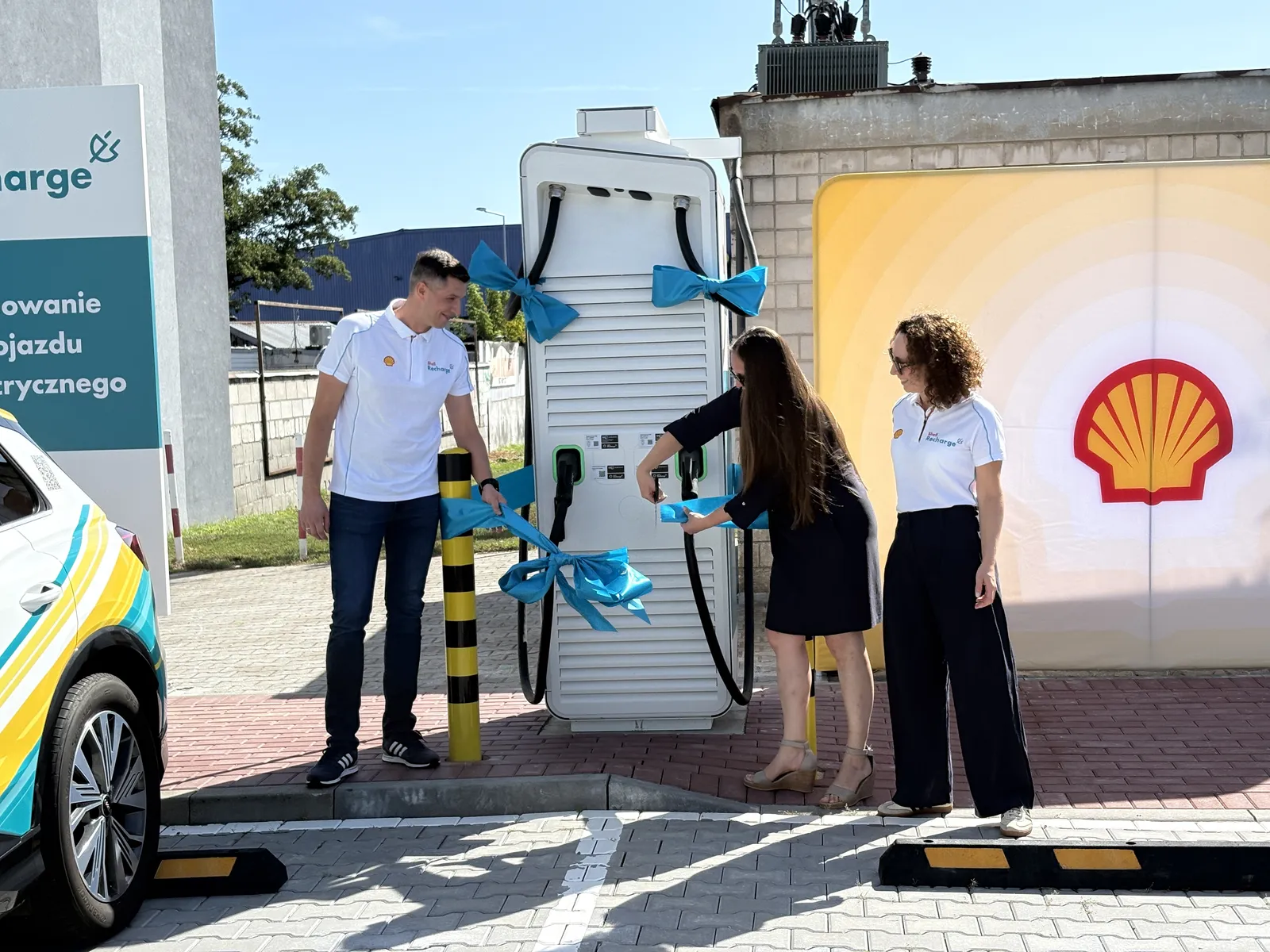
In the suburbs of Warsaw, in Marki, the operator opened Poland’s third charging station on September 8th this year, co-financed by NFOŚiGW
Drivers have access to Alpitronic HYC400 chargers with a capacity of 400 kW
By the end of 2026, 25 locations are planned to be operational, and by the end of 2028, 60 out of a total of 120 charging points
Shell is focusing on DC charging
This is an investment that may be more significant than the number of 120 charging points suggests. The reason is simple: Shell does not intend to expand only existing locations. All facilities will be built in new sites.
60 locations and 120 new Shell charging points on the map of Poland
Under this project, 60 locations will be created, totaling 120 charging points (each location will have one charging station with two charging ports).
Each of these will be a new location in the Shell Recharge network. This means the operator won’t just add more chargers to areas where infrastructure already exists.
The new devices will be installed at Shell gas stations, including those along major routes, in shopping malls, large cities, and on highway exits.
The first three locations are already operational
By the end of 2026, Shell plans to have 25 stations up and running, meaning 50 charging points in total. The entire project is set to be completed by the end of 2028.
Each charger will offer up to 400 kW
Shell has chosen one type of device for the entire project.
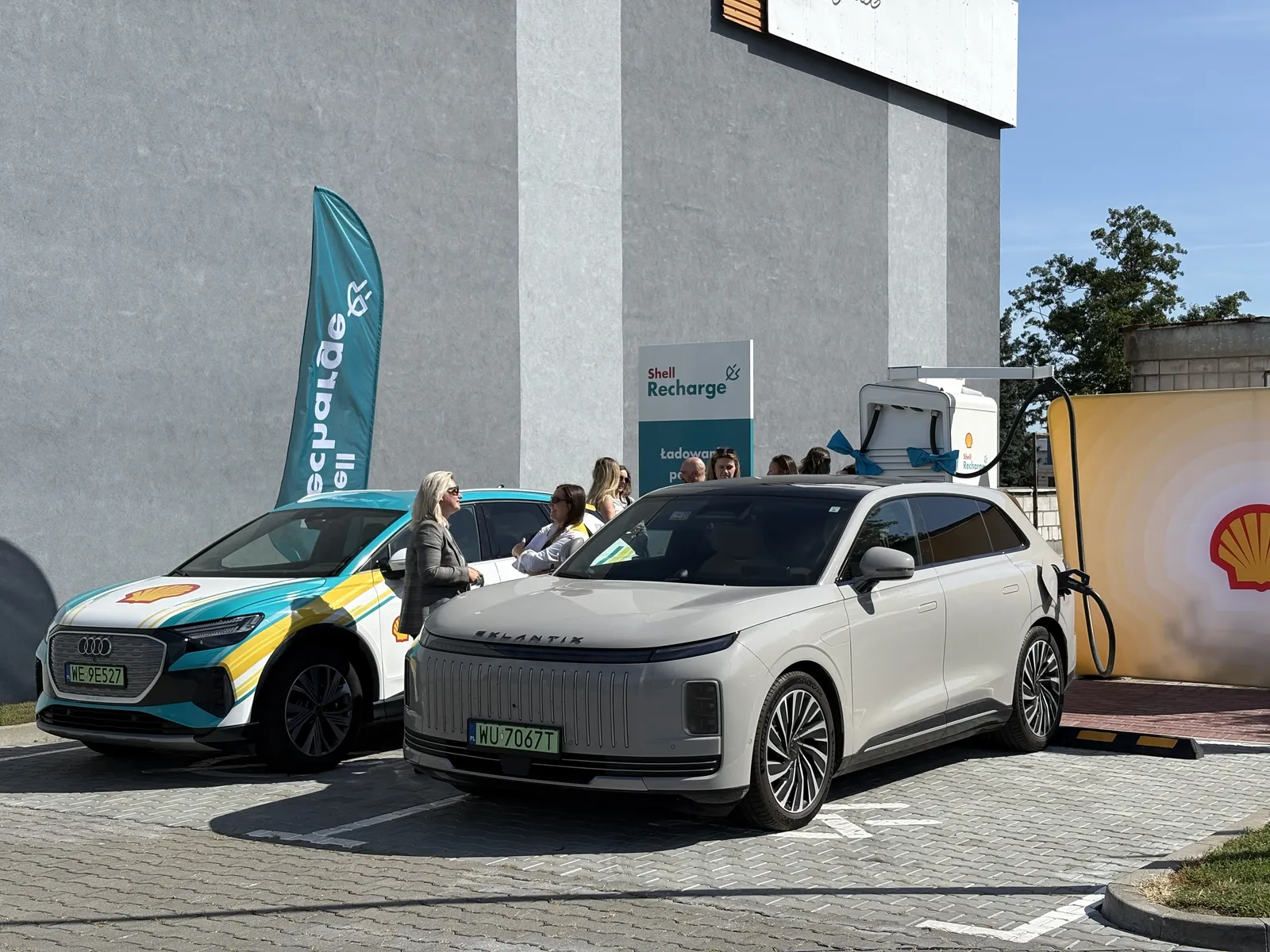
All locations will use Alpitronic HYC400 chargers with a maximum power output of 400 kW.
This is a power level that most electric vehicles on the market still cannot utilize. However, it doesn’t mean it’s excessive.
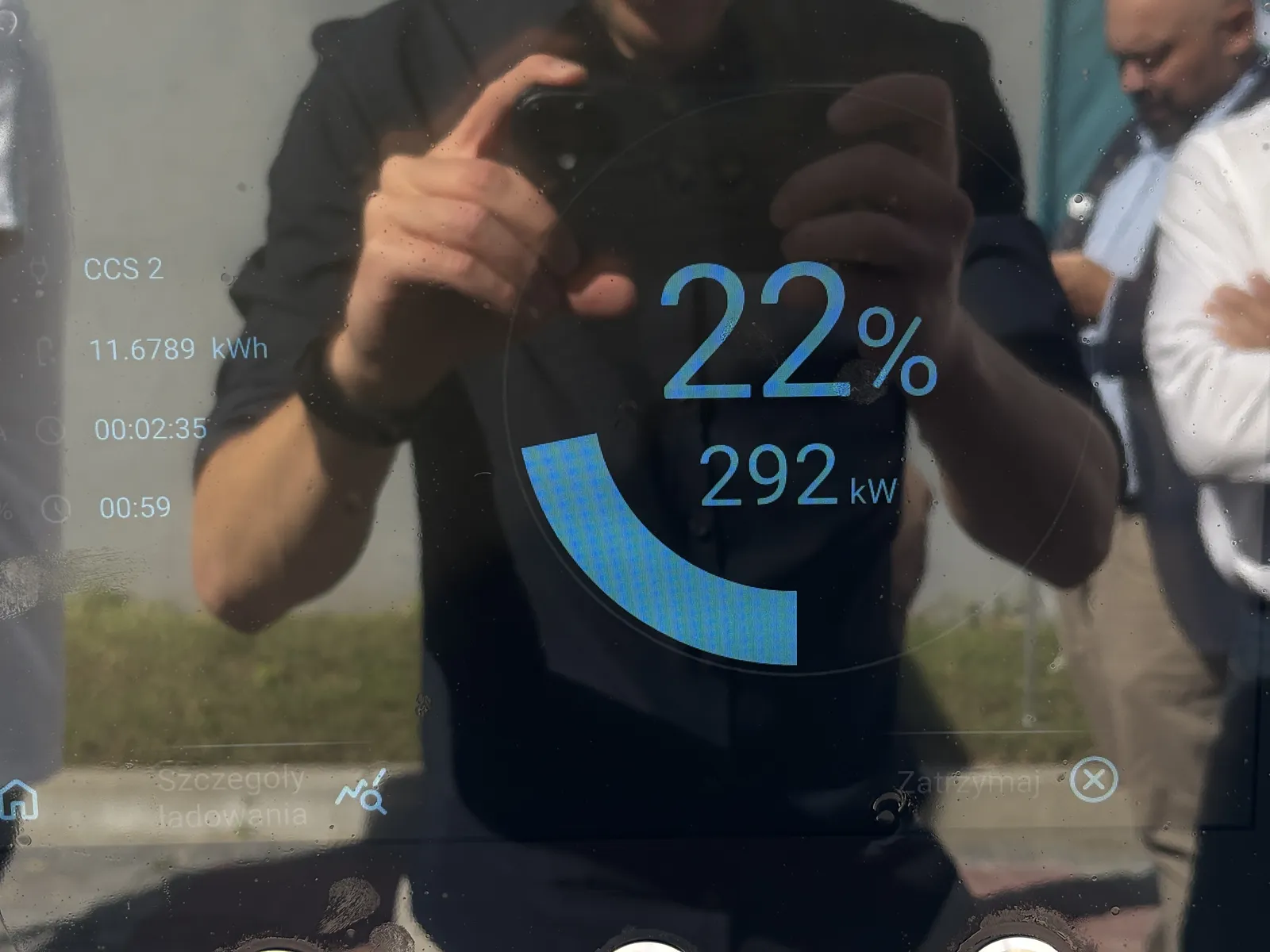
One of the highest charging capacities available on the market is offered by the EXLANTIX ES and ET models, which we tested in our editorial office over a long period. We connected them to a charging station in Marki and effortlessly reached the car’s maximum power output of 290 kW. The EXLANTIX managed to go from 9% to 80% charge in just 18 minutes at a Shell Recharge station, meaning a short break for coffee can add an additional 300 km of range.
Future generations of vehicles increasingly rely on 800 V systems and can handle power outputs of over 250 or even 350 kW. Therefore, a 400 kW infrastructure provides operators with a head start for the future.
It should be remembered that the actual charging power depends on the vehicle, the connection capacity of the station, the battery’s charge level, its temperature, and the charging curve.
What matters most is not 120 stations, but 60 locations
From the perspective of an electric vehicle driver, the significance of this project does not lie solely in the number of charging points. 120 new charging stations will not revolutionize the entire Polish market. What is far more important is that they will be located in 60 new places.
A new HPC station on a route where fast charging was previously unavailable can be more valuable than adding a few more stations to an existing hub.
If a large portion of the new locations are indeed built along major roads and motorway service areas, traveling with an electric vehicle in Poland should become even easier.
Card payment without installing an app
The new stations will be available for both individual and business customers.
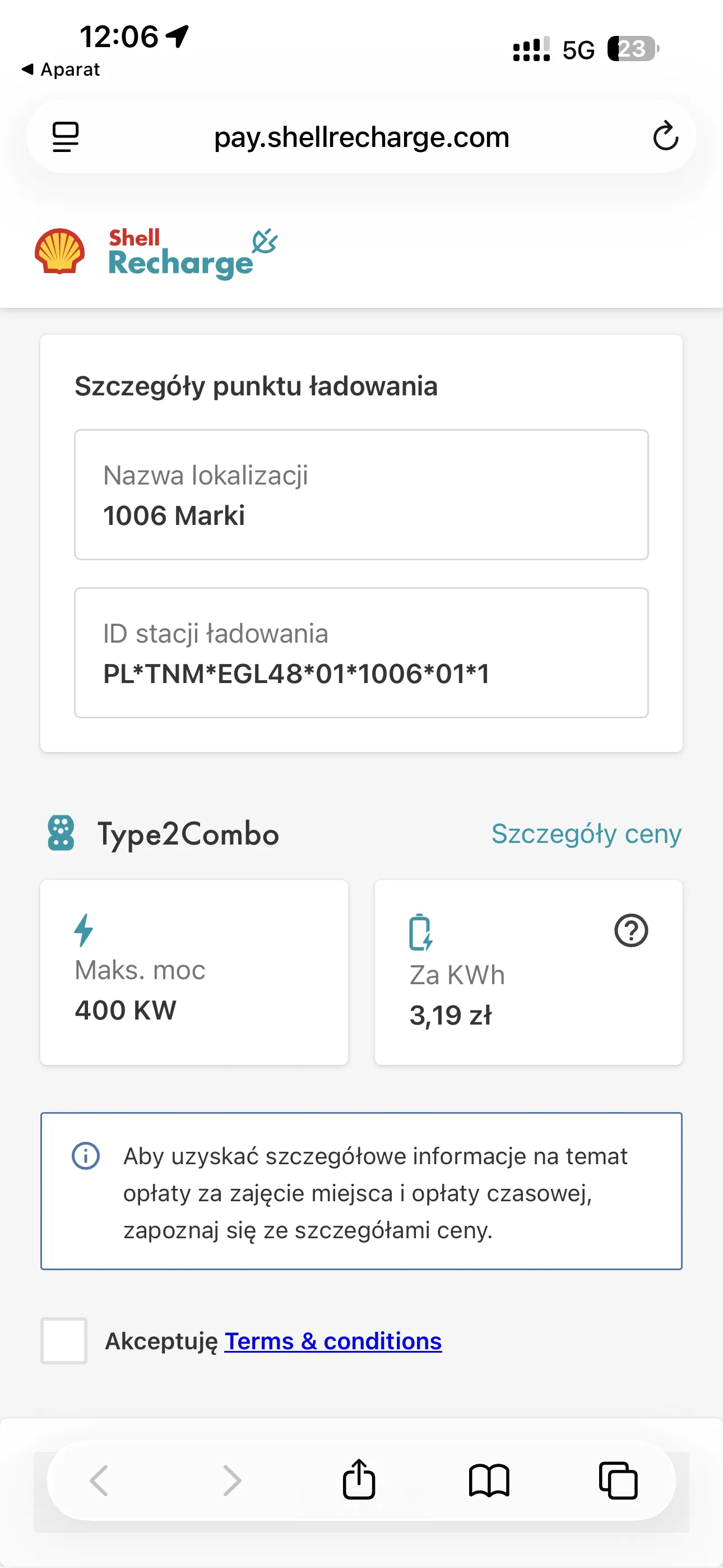
For individual customers (B2C), charging can be initiated through a payment terminal or by scanning a QR code. The current charging cost at stations in Marki is 3.19 PLN/kWh. After the promotional period, the rate may rise to 3.59 PLN/kWh (this is the price for current Shell stations with 360 kW capacity).
Scanning a QR code will also allow invoices to be generated. Shell Card support is available for fleet customers.
Fuel stations becoming increasingly important for electric mobility
Shell’s strategy clearly reflects the changes taking place in the market. Gas stations are no longer just places for filling up with gasoline and diesel. They increasingly serve as energy hubs that also cater to electric vehicles. This makes even more sense when it comes to fast charging.
Drivers spend more time at chargers than at fuel pumps, so access to restrooms, shops, coffee, or dining options is more important than during regular refueling.
Shell can utilize its existing network of stations and their locations along key routes for this purpose.
Łukasz Lewandowski, EV Klub Polska
Photo by Author