
Shell will install 60 new 400 kW stations in Poland. Good for routes, bad for wallets.
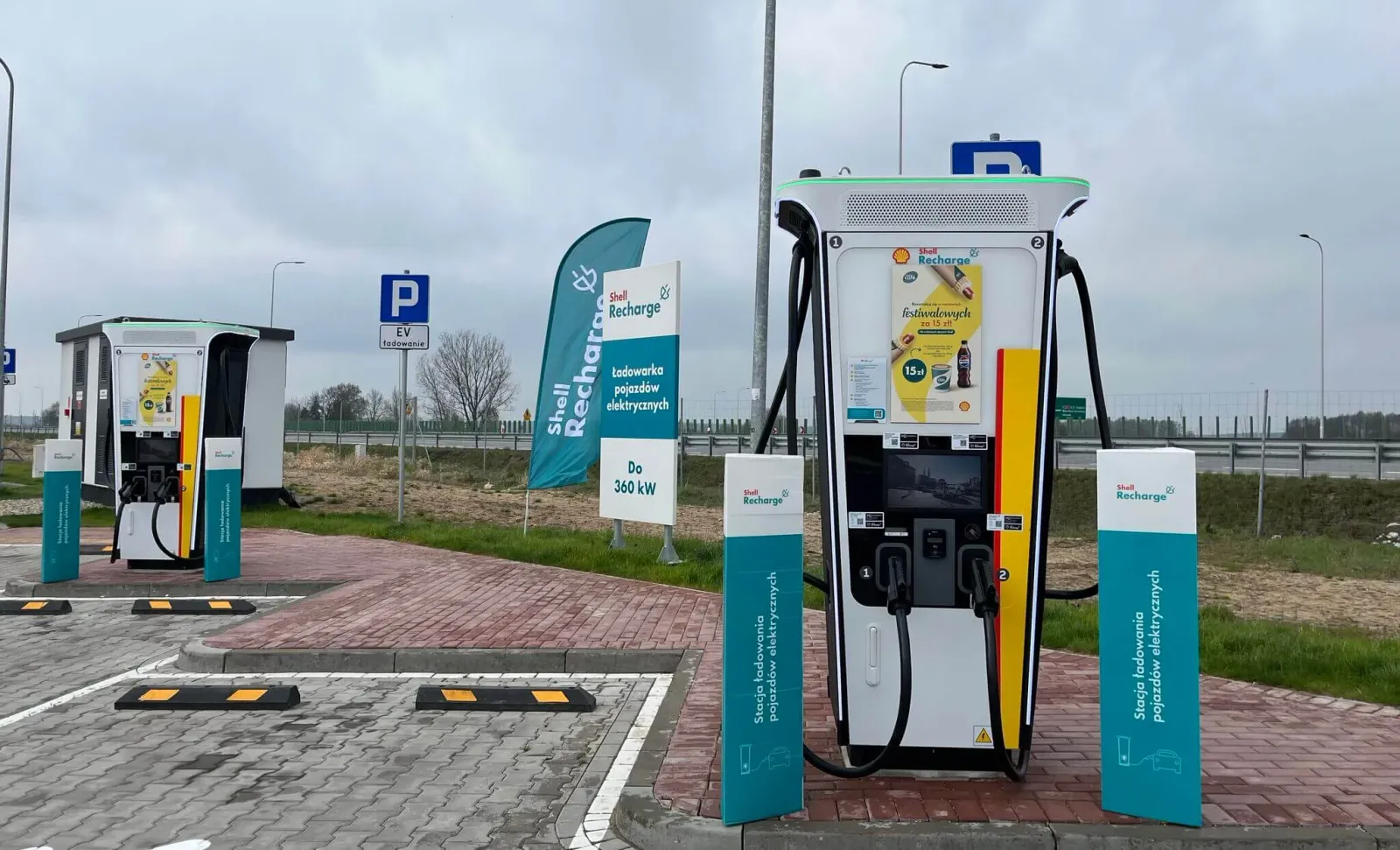
Shell Recharge opened the third station in Poland funded by NFOŚiGW in Marki, and also unveiled plans for further expanding the network. By the end of 2026, 25 locations are set to be operational, rising to 60 locations by the end of 2028, with a total of 120 charging points. For EV drivers, what matters more than just the number of connectors is that these will be entirely new locations on the map.
In Marki, Alpitronic HYC400 chargers with a capacity of up to 400 kW have been installed, and Shell intends to use similar equipment at all new locations. These stations will be located along major routes, at motorway service areas, in large cities, and near exit roads. Each location will have one station with two charging points, so they won’t be large hubs like some Ionity stations, but rather focused on filling in existing gaps.
This is the most interesting part here. 120 charging points nationwide isn’t a game-changer, but 60 new locations can genuinely make traveling easier. A single fast charger on a less convenient section of the route can be more valuable than adding more stations in areas where options are already abundant.
400 kW sounds good on paper, but the car still decides
Shell is focusing on a strong push for 800 V vehicles and future models that can handle 250-350 kW. Most electric cars still won’t utilize this capability today, but there are exceptions. The Exlantix ES and ET tested by the editorial team were supposed to reach 290 kW, with a charge from 9% to 80% taking just 18 minutes. The manufacturer claims around 300 km of range can be regained during a short break.
However, a star must be added right away. The maximum charging power of the charger is one thing, while actual charging is another. What matters are the car model, charging curve, battery temperature, charge level, and the connector. Just having a 400 kW sticker doesn’t guarantee miracles.
Payment without an app, price still very high
For individual customers, charging will start through a payment terminal or by scanning a QR code. An invoice can also be generated via the QR code, while fleet customers will use Shell Cards.
At Markach, the current price is 3.19 PLN/kWh. After the promotional period, the rate may rise to 3.59 PLN/kWh, as this is already Shell’s price for its 360 kW stations. There’s no need to hide it — this is a price level meant for those in a desperate situation or for those who are truly on the road and have no better option available.
Shell is doing something sensible regarding infrastructure, but its pricing still deters customers. Do you think 60 new locations are enough to overlook rates of 3.19–3.59 zł/kWh?
LovEV Newsletter
Want more content like this?
Sign up — we’ll send you a weekly summary once the newsletter starts.