
According to Skoda’s CEO, Spanish factories are competitive with those in Eastern Europe in terms of renewables.
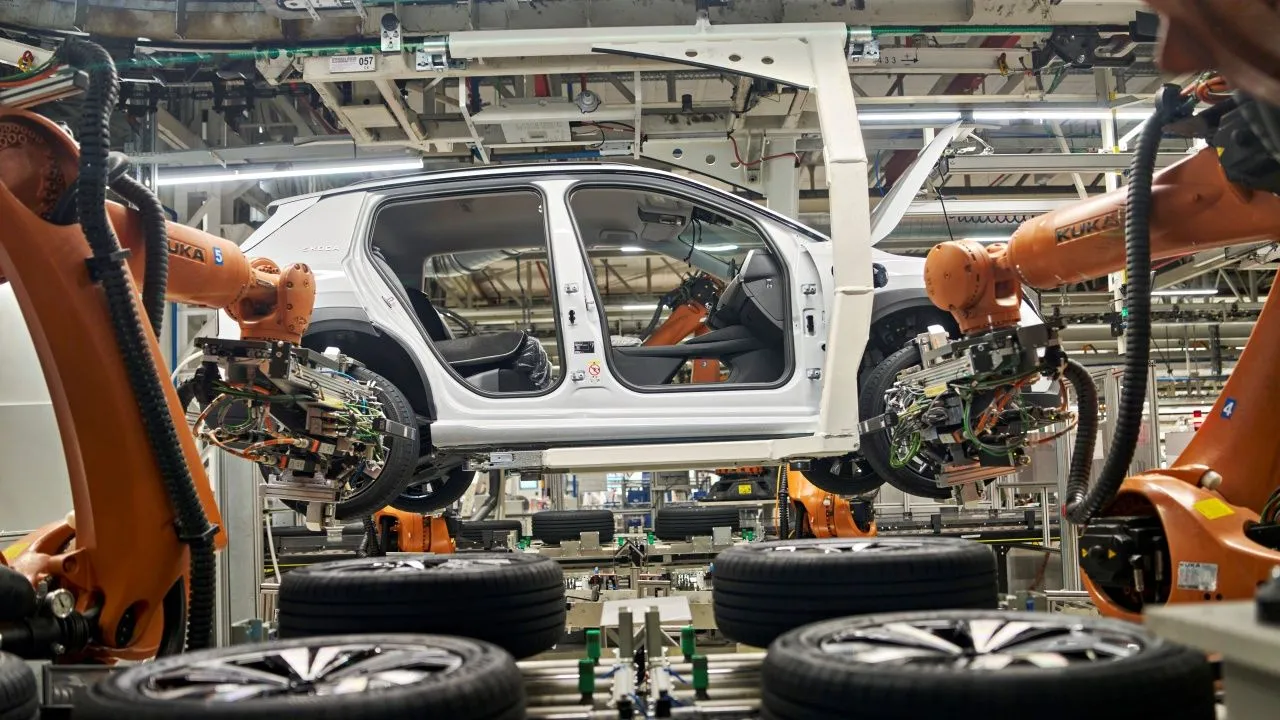
The Skoda Epiq has become the first model from this Czech brand to be manufactured in Spain. The brand’s most affordable electric vehicle is produced at the Landaben plant (Navarra), where it shares the assembly line with the Volkswagen ID. Cross. Assigning this model to the Pamplona facility is part of Volkswagen Group’s new production strategy aimed at optimizing the use of its plants.
Considerations for the various brands in its portfolio will no longer be a priority when managing the group’s factory network: going forward, multi-brand clusters will be established, meaning models that are related to each other will share production facilities. For example, while the SEAT Ibiza, Skoda Fabia, and Volkswagen Polo are produced in three separate facilities, the new CUPRA Raval and Volkswagen ID. Polo are manufactured together at Martorell (Barcelona).
Although Volkswagen plans to close as many as six factories in Germany (Dresden, Emden, Hannover, Neckarsulm, Osnabrück, and Zwickau) due to their high manufacturing costs, the Spanish and Eastern European plants seem safe. Skoda’s CEO, Klaus Zellmer, said in remarks cited by La Tribuna de Automoción that “the cost differences between the Spanish factories and those in Slovakia and the Czech Republic are not significant.”
The executive states that "we didn’t have the capacity in the Czech Republic or in Bratislava," with Spain being the only viable option due to production costs. Although Landaben is slightly more expensive than its factories in Eastern Europe, "it’s hard to compare" because renewable electricity is cheaper in Spain, which also provides a competitive advantage. The other three electric cars in the lineup—the Elroq, Enyaq, and Peaq—are produced in Mladá Boleslav (Czech Republic).
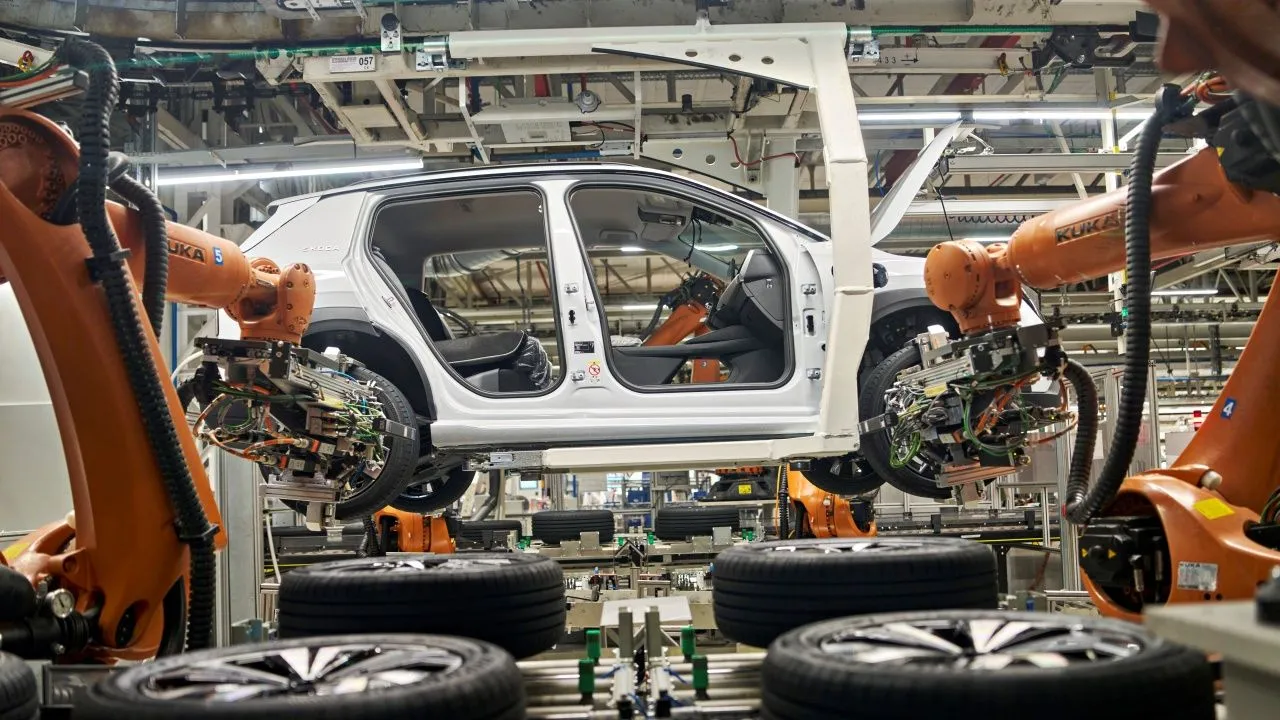
The Skoda Epiq boasts a WLTP range of up to 440 km
The Skoda Epiq measures 4,171 mm in length, 1,798 mm in width, and 1,581 mm in height, with a wheelbase of 2,601 mm. It features a spacious trunk capacity of 475 liters; additionally, it has a front trunk or frunk area of 25 liters. It is built on the MEB+ platform with front-wheel drive, the same platform used for the aforementioned Raval, ID. Polo, and ID. Cross.
It is available in three versions (35, 40, and 55). The first two come equipped with a 37.5 kWh LFP (lithium-iron-phosphate) battery, offering a WLTP range of 315 km, while the third version features a 51.5 kWh NCM (nickel-cobalt-manganese) battery, providing a WLTP range of 440 km. A high-performance RS variant with 226 hp (166 kW) may be added in the future.
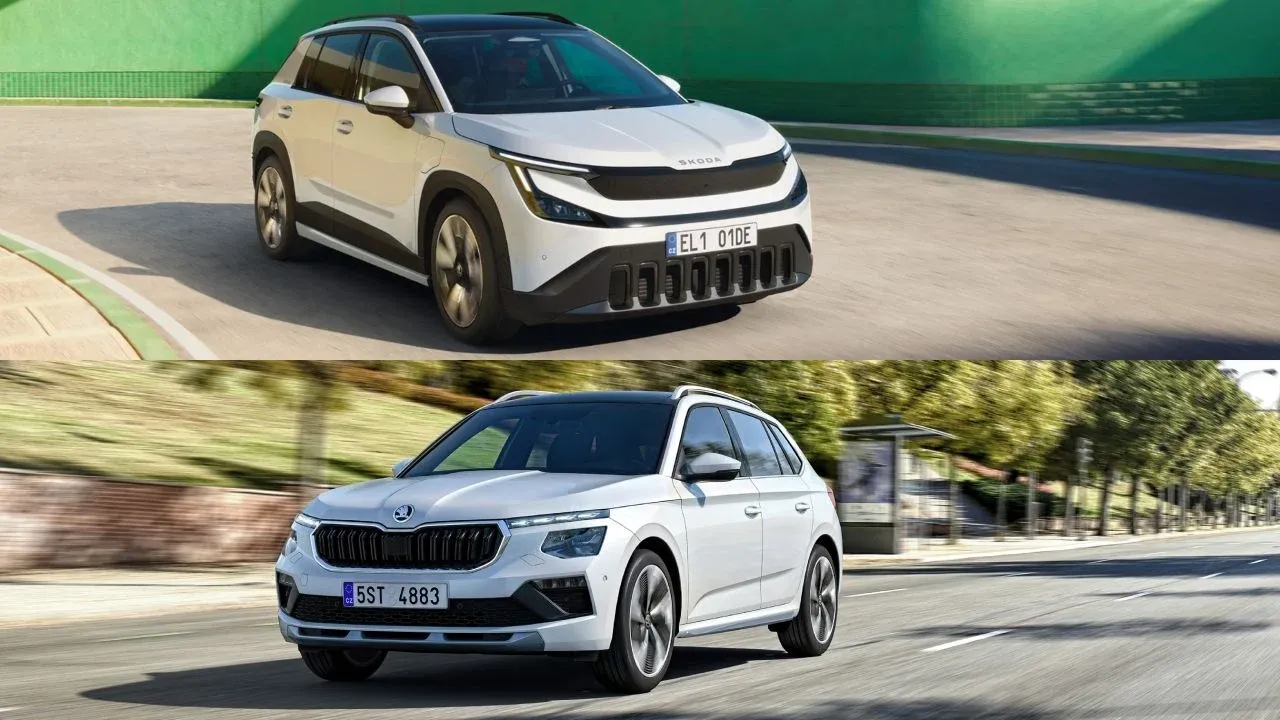
The Epiq 35, 40, and 55 models deliver 116 HP (85 kW), 135 HP (99 kW), and 211 HP (155 kW) of power respectively. In terms of charging, they reach peak continuous current levels of 50 kW (10-80% in 33 minutes), 88 kW (10-80% in 23 minutes), and 105 kW (10-80% in 24 minutes). In some markets, the price of the Epiq is lower than that of its equivalent gasoline-powered Kamiq. In Spain, the Epiq 55 starts at 31,280 euros before any discounts.