
Schwerin continues to develop its public charging network.
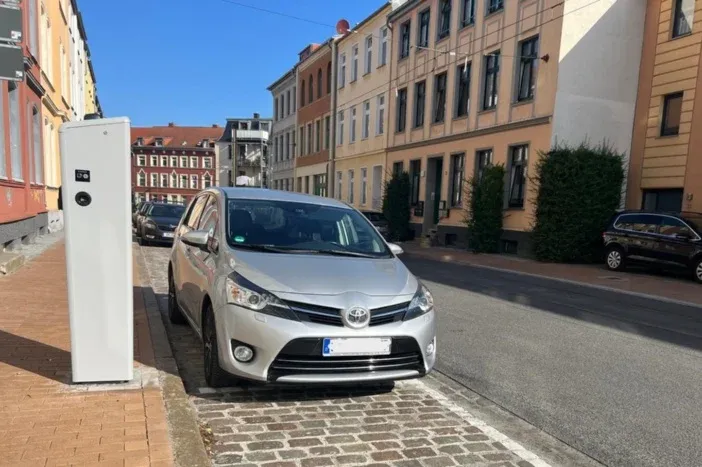
The public charging network in Schwerin is expanding. Since the end of 2024, the number of charging stations has risen from 119 to 181. Another 40 charging stations have already been approved, and the city has received numerous requests for additional charging infrastructure.
According to statistics from the Federal Network Agency, the current 181 publicly accessible charging stations are located at 85 sites within Schwerin’s city limits. For comparison, in December 2024, the charging stations were spread across 53 sites. Thus, within just over a year and a half, the public charging options have increased by more than 50 percent.
According to the city, this trend is set to continue. As of November 1, 2025, the city has received 80 applications for new charging infrastructure, mostly from energy suppliers and charging infrastructure operators. This is due to a change in the city’s special use regulations: since then, companies can apply on their own initiative to locate charging stations on city-owned traffic areas. The administration reviews the proposed locations and sets requirements and limits for expansion. This is intended to create as comprehensive a service network as possible. “This ensures a competitive, customer-friendly, and widespread service offering,” says Bernd-Rolf Smerdka, head of the city’s traffic management department.
The first results of the new process are already visible: 20 public charging stations, each with two charging points, have been approved and are set to be installed in the city center, Weststadt, and Dreesch over the coming weeks and months. Most of them are standard charging stations, but there will also be some fast chargers with capacities of over 22 kW. The city does not provide more detailed information on charging capacity or operators.
It is not expected that all 80 proposed locations will be implemented. The city cites requirements regarding traffic safety, the protection of old trees, and potential impacts on Schwerin’s world heritage as reasons that may rule out certain locations. “Overall, however, we have created the necessary conditions so that the offering can continue to grow steadily in line with the number of approved electric vehicles,” says Transport and Environment Department head Bernd Nottebaum. According to the city, one in ten vehicles in Schwerin is now an electric or hybrid vehicle that can be charged externally, making public charging infrastructure particularly important for residents without their own charging facilities.
The expansion is not limited to publicly accessible charging points for cars: As early as 2022, Schwerin’s public transport system put into use an electric bus depot with over 40 charging points, in addition to private charging options available at supermarkets and shopping centers. Whether and how quickly the remaining 80 applications for public road charging points will be implemented will likely play a key role in determining how quickly Schwerin’s charging infrastructure can keep up with the growing number of electric vehicles.