
End to Sunday calm: BDEW wants to grant free passage for electric trucks
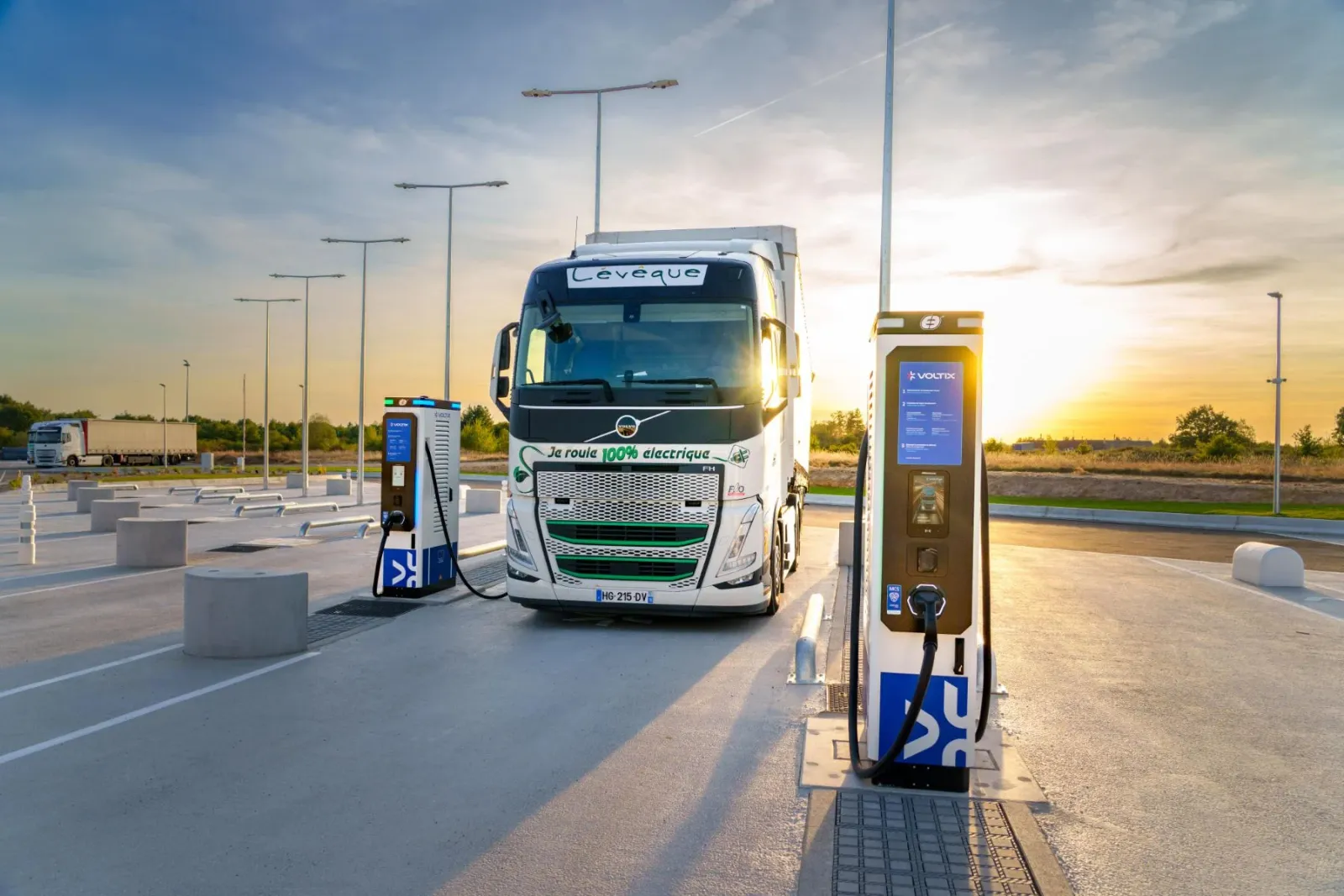
The Federal Association of the Energy and Water Industry is calling for the abolition of the Sunday driving ban on electric trucks. This exception is intended to encourage companies to switch to electric trucks. Additionally, the association criticizes the federal government’s subsidy policies for developing fast-charging infrastructure for trucks.
The Federal Association of the Energy and Water Industry (BDEW) aims to accelerate the shift to emission-free propulsion systems in heavy transport. The market share of electrically rechargeable heavy trucks in Europe was 4.8 percent in the first half of the year, while electric cars already accounted for over 20 percent.
In a position paper, the industry association, which represents around 2,000 energy producers, municipal utilities, and private charging station operators under the leadership of former Green Party politician Kerstin Andreae, calls for an exception to the Sunday driving ban for purely electric trucks.
The general Sunday driving ban for trucks (§ 30 StVO) has been in effect in Germany since 1956, restricting trucks over 7.5 tons from driving on Sundays and holidays from 0:00 to 22:00. The purpose of this rule is to protect the public from noise and emissions, ensure Sunday rest, and ease traffic congestion for private trips. To date, lawmakers have granted exceptions almost exclusively for goods essential to supply chains, such as fresh food. Purely economic or competitive reasons have not been considered so far.
The BDEW now intends to generally exempt electric trucks from driving bans in the future, aiming to provide logistics companies with a concrete economic incentive. “It’s not about lifting all Sunday driving bans, but rather making an exception for electric trucks,” cites “Automobilwoche” Kerstin Andreae, BDEW’s CEO. “Those who switch to electric trucks would gain a real operational advantage.” Additionally, the association calls for, among other things, relaxing noise regulations for quiet electric trucks during night deliveries.
Further demands by the BDEW to promote electric truck fleets
The BDEW also criticizes the approach taken for the state-subsidized initial truck charging network. This process distorts the private market by fully covering construction and operating costs. Instead, areas owned by the Autobahn GmbH should be quickly made available to private operators, construction in outdoor locations should be simplified, and public sites should be made accessible through a land registry. Additionally, expanded risk coverage and KfW loans should be provided for the development of megawatt charging parks (MCS), as commercial banks still consider such projects too risky.
In addition, the association calls for regulations that are practical in application: According to EU guidelines, chargers that can be reserved should also be considered public facilities, and electric truck parks should be exempt from the requirement to have EC or credit card terminals. For purely B2B charging hubs, the BDEW also wants exceptions from calibration laws as well as flexibility regarding damages caused by vandalism. Charging at industrial sites (depot charging) should also be clearly open to third parties and made financially attractive through the THG quota system.