
Scania and Toyota launch a major fleet test. 40 trucks will hit European roads
In short:
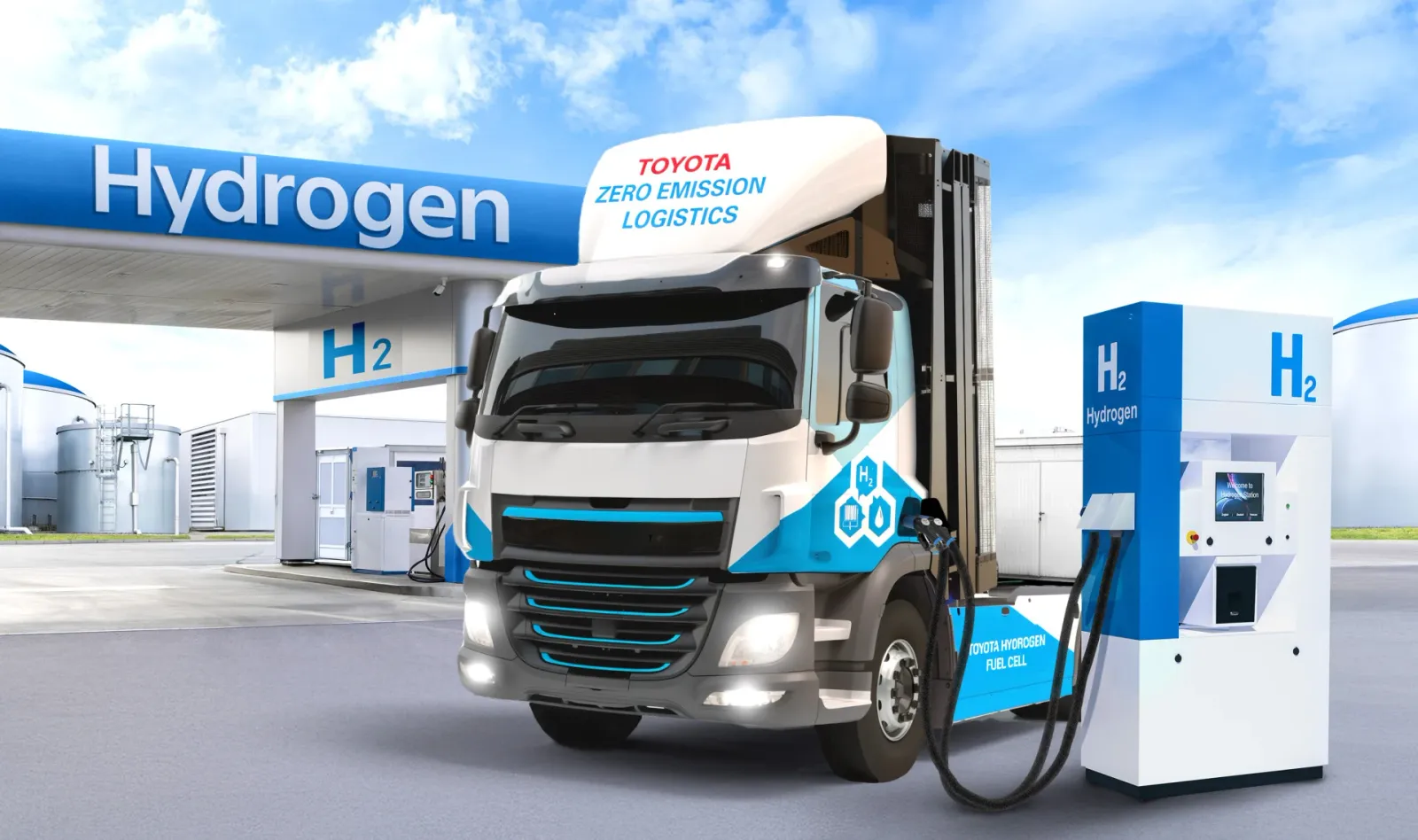
Toyota and Scania are launching one of the largest testing programs for hydrogen trucks in Europe
40 Scania trucks will hit European roads in 2027 to carry out real logistics operations
The goal? To determine whether hydrogen technology can become a practical alternative to diesel and battery-electric trucks
Toyota will supply third-generation fuel cells for the trucks
Toyota remains committed to hydrogen
The debate about the future of road freight transport has focused for several years on two main zero-emission technologies: battery-powered propulsion and hydrogen fuel cells. Although the segment of electric battery trucks is developing rapidly in Europe, Toyota and Scania argue that hydrogen can still play a key role in the most demanding applications.
Both companies announced the start of a partnership that will result in the deployment of 40 trucks equipped with Toyota fuel cells. The vehicles will be integrated into Scania’s Pilot Partner program, under which selected customers of the manufacturer test new transportation technologies in their daily operations. The first trucks are set to begin operating in the first quarter of 2027.
As the partners emphasize, this project is not of a laboratory nature. The vehicles will carry out actual transportation tasks, and the data collected will allow for evaluating the performance of the technologies, operational efficiency, and overall cost of ownership — according to a statement from the company.
Who and what is contributing?
Toyota will supply its third-generation fuel cells for this project. The system generates 300 kW of power and is designed for applications requiring high durability and intense operation. The manufacturer also emphasizes that this solution can be used not only in trucks but also in buses, trains, or industrial applications.
According to the Japanese company, heavy transportation in particular can play a crucial role in developing a hydrogen economy. Large fleets create predictable demand for fuel, which can help support the development of refueling infrastructure.
“We believe heavy transportation is crucial for creating demand for hydrogen and developing infrastructure. We also think hydrogen is the right solution for demanding transportation applications where long range, high vehicle utilization, and operational efficiency are essential,” said Hiroki Nakajima, vice president of Toyota Motor Corporation.
Scania, on the other hand, aims to gain practical insights into how the technology performs outside of test conditions.
“We are pleased to collaborate with Toyota, which will allow us to see how fuel cell technology performs in demanding real-world transportation operations. Through the Pilot Partner program, we can test new solutions together with customers, learn from their experiences, and further develop our products,” said Sara Forsberg, Scania’s director of technology.
The joint program aims to answer whether hydrogen trucks can effectively compete with both conventional diesel vehicles and the increasingly popular battery-electric trucks.
Results related to long-distance transportation will be particularly important, where downtime, vehicle weight, and available range are crucial — according to Toyota’s website.
Not Just Toyota and Scania
In recent years, many companies have focused on battery-based electrification, but the development of hydrogen technology in the truck sector continues, though it can be said to be somewhat neglected.
One of the most active players remains Hyundai. The Korean manufacturer has been operating XCIENT Fuel Cell trucks in Europe for several years, with these vehicles in use, among other places, in Switzerland. The company is consistently developing newer generations of fuel cell vehicles.
Daimler Truck is also working on advanced projects. The German company is developing the Mercedes-Benz GenH2 Truck, which has already undergone a series of road tests and is intended primarily for long-distance transportation — we covered this on Elektromobilni.pl.
According to Markets and Markets, Volvo Group and Paccar are also developing their own solutions. Volvo, along with Daimler Truck, established Cellcentric, which aims to develop and produce fuel cells for heavy commercial vehicles. Meanwhile, DAF, part of the Paccar group, is involved in European demonstration projects related to hydrogen transport.
The American startup Nikola is also present in the market. After facing financial difficulties, it continues to develop trucks that use fuel cells. Iveco and the American company Cummins, which supplies powertrain solutions for the commercial vehicle sector, are also working on hydrogen projects.
Conclusions
In the end, it won’t be just the technology that determines the success of hydrogen, but the development of refueling networks, the availability of green hydrogen, and operating costs will also be equally important. We’ll see what happens.
Oskar Włostowski