
Electric car buyers’ satisfaction: this study highlights Xpeng and Tesla, with Audi performing poorly
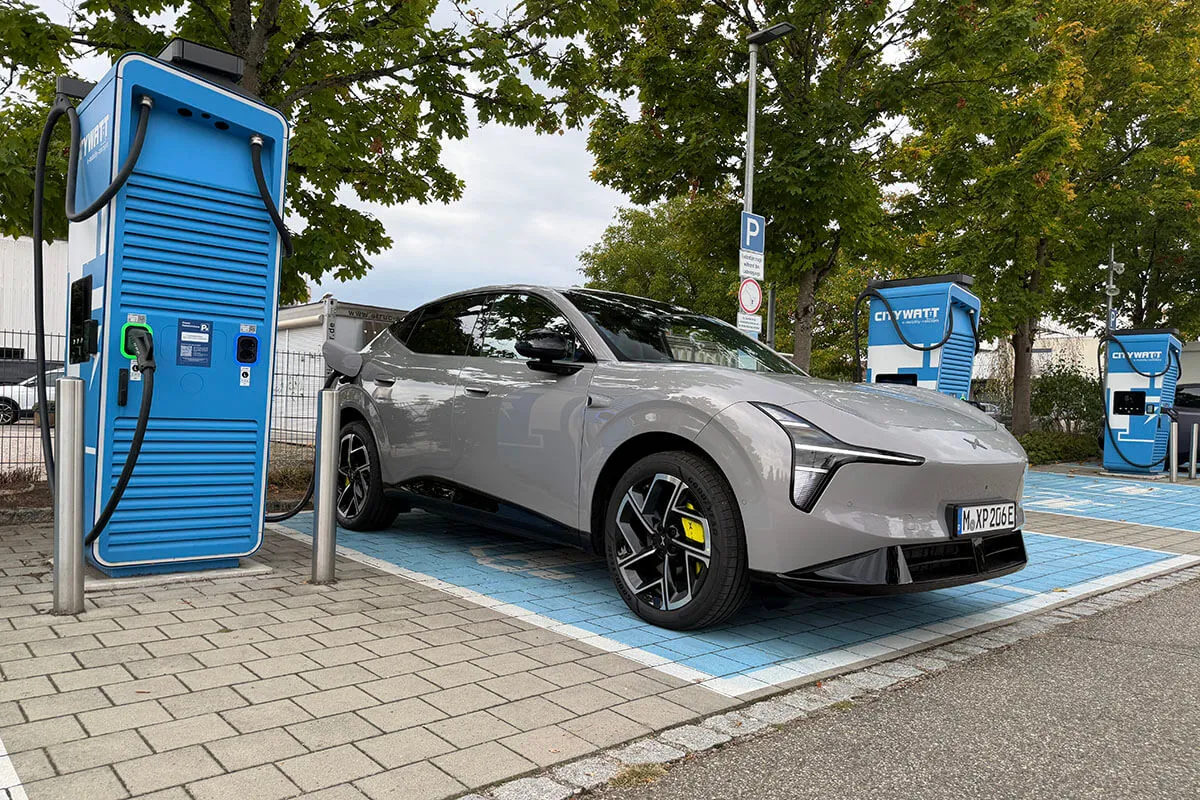
Electric cars are increasingly satisfying their owners. This is according to a new study conducted by USCALE among 4,004 drivers in Germany, Austria, and Switzerland. Yet behind this record level of satisfaction, several problems persist. The biggest issue is charging, which continues to pose difficulties for 71% of those surveyed.
Automobile manufacturers have made significant progress in recent years. Electric cars now go further, charge faster, and offer ever more features. Yet, drivers’ expectations are evolving almost as quickly as the technology itself. This is one of the key findings of the EV Satisfaction Study 2026, published on October 20, 2026.
Electric cars that are increasingly convincing
The first observation is that satisfaction levels have continued to rise for the third consecutive year. The Net Promoter Score (NPS), which measures customers’ willingness to recommend their vehicle, reached 38 points, up from 33 in 2025. In total, 53% of respondents would actively recommend their electric car, while 15% expressed dissatisfaction.
Technical performance is also improving. Now, 59% of respondents have a real-world range of over 400 km in summer, up from 50% the previous year. Additionally, 77% drive vehicles capable of handling at least 150 kW in fast charging. However, they believe these advancements are no longer sufficient. Only 58% of drivers now consider a 150 kW charging capacity to be satisfactory, down from 65% in 2025. Standards are evolving rapidly!
Charging remains a major issue
Despite these improvements, 71% of those surveyed reported encountering difficulties related to charging. The most common problems involve starting charging sessions and lower charging speeds than expected.
Also read
Satisfaction, usage, charging: discover what this study reveals about electric vehicle drivers
The in-car navigation system is not spared either. Only 43% of participants found the built-in charging station finder satisfactory. Car manufacturers still have work to do to simplify long trips. Another interesting finding: software is becoming a key factor in satisfaction. Nearly half of drivers encounter problems with their vehicle’s connected app. And 44% of respondents want improvements to the in-car software.
Xpeng ahead of Tesla, Opel at the bottom
This is perhaps the part that interests us the most. The study also provides a ranking of manufacturers. Xpeng retains first place, ahead of Tesla, which has risen from sixth to second position. Skoda completes the top three, followed by Porsche and Hyundai.
Also read
XPeng L03 review: Is this new electric SUV the discounted XPeng we feared?
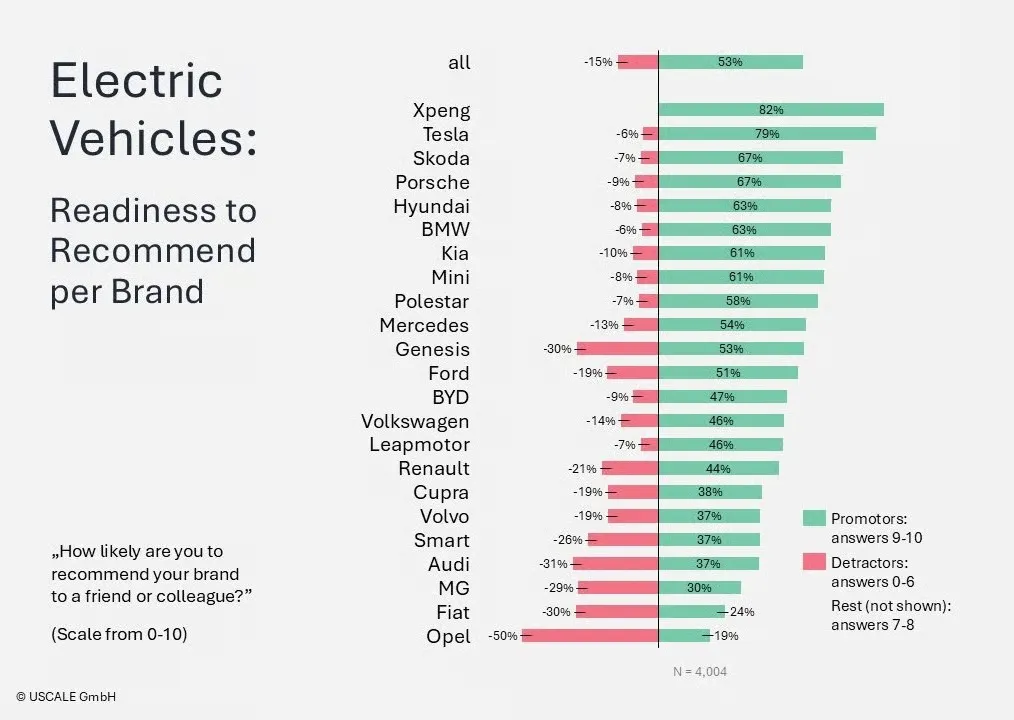
At the other end, MG, Fiat, and Opel lag behind. The German brand, part of the Stellantis group, particularly disappoints due to its mobile app: 92% of surveyed customers reported issues with it. However, care should be taken not to overinterpret these results. The survey focused on vehicles under three years old and participants recruited from social media, lacking statistical representation of all European electric vehicle owners. Still, it provides a good indication.