
Saxony’s Prime Minister outlines a vision for the future of the VW plant in Zwickau
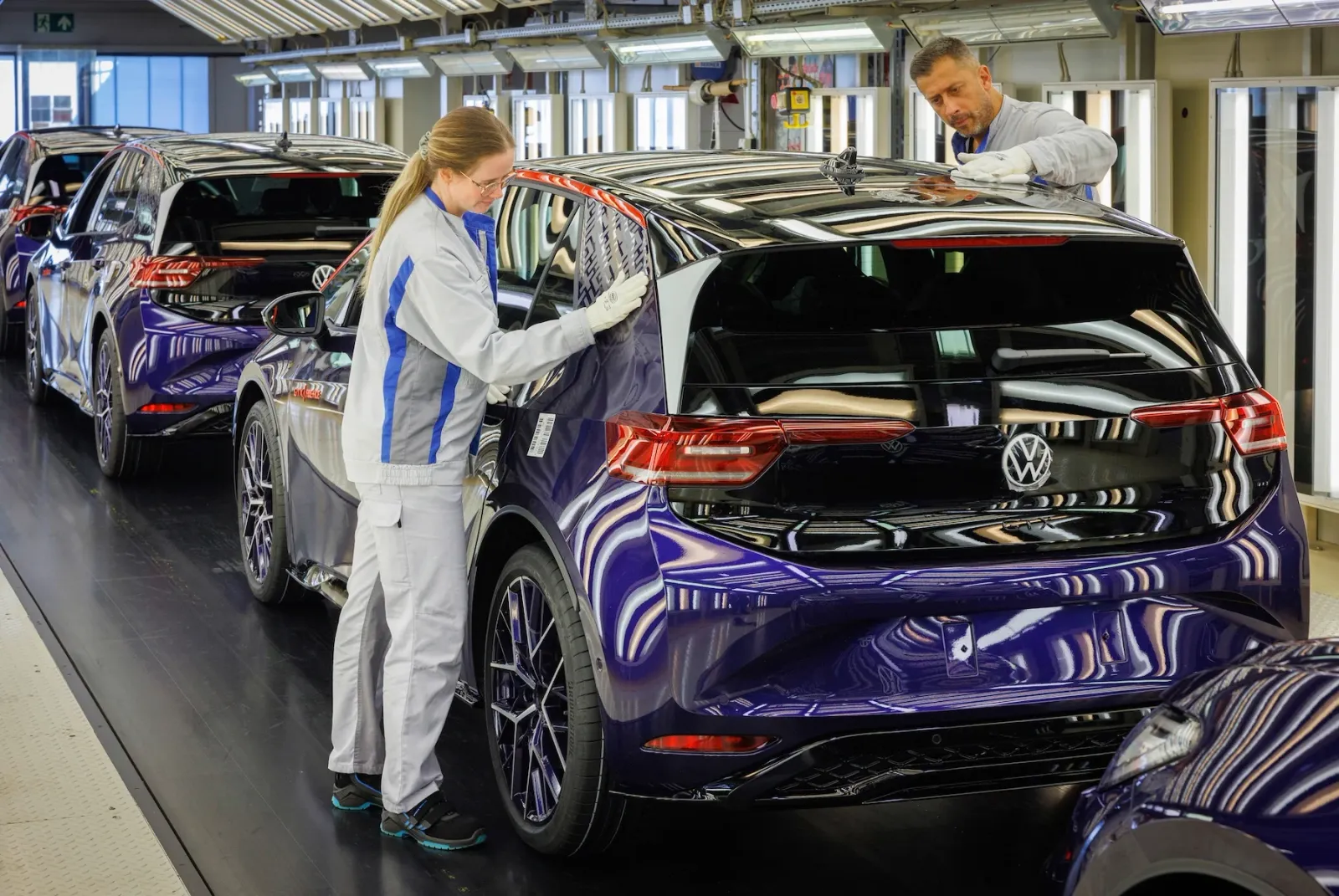
The survival of Volkswagen’s electric vehicle factory in Zwickau is at risk. According to the company’s “Future Plan,” it is unlikely to remain under VW ownership. Saxony’s Prime Minister Michael Kretschmer has now submitted a proposal to the state chancellery, suggesting that the factory be transferred to a new company.
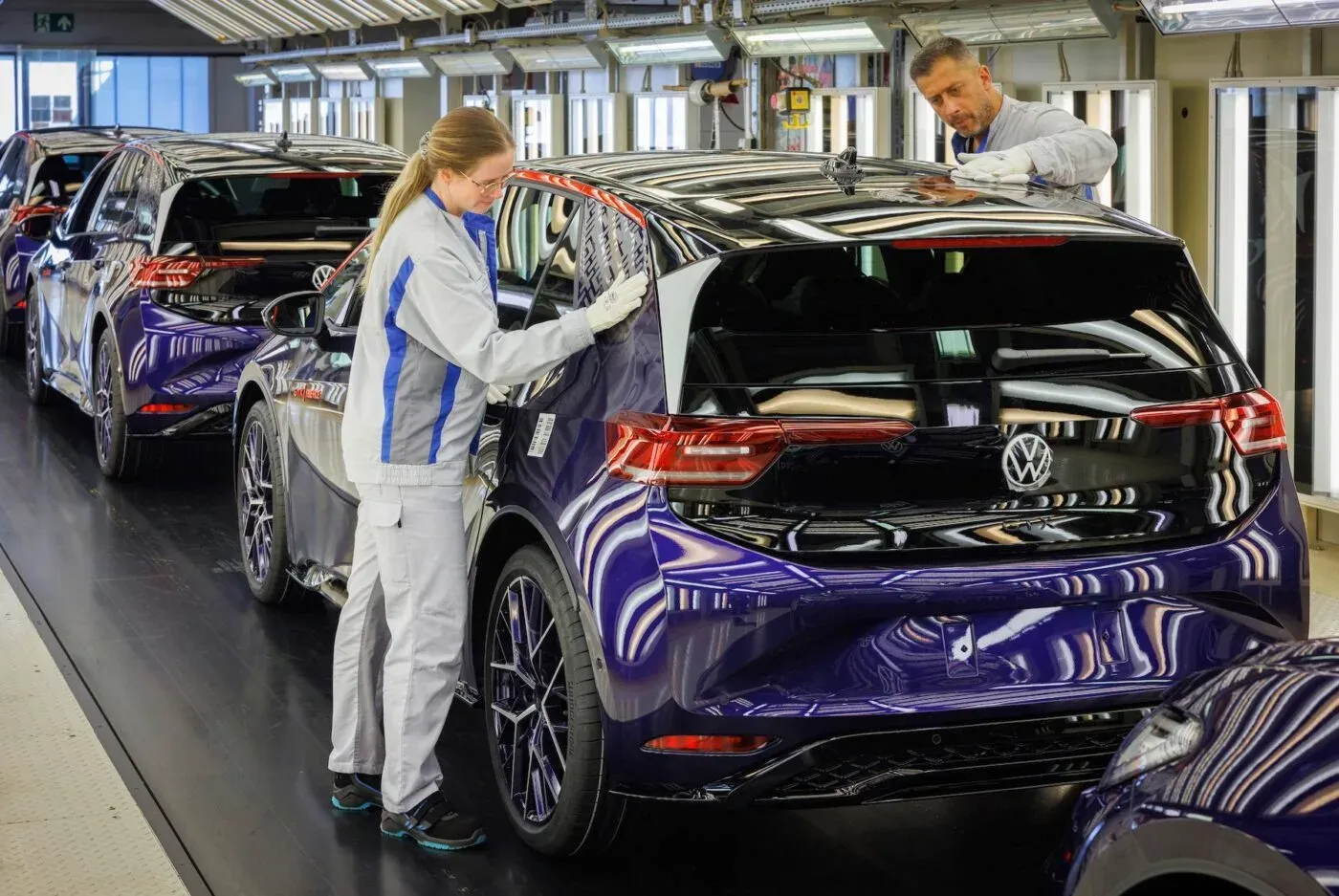
Image: Volkswagen
The Saxon prime minister does not want to remain passive regarding the VW plant in Zwickau, which is at risk with around 8,000 employees currently working there. Therefore, according to FAZ, Michael Kretschmer has submitted a proposal to the chancellery calling for the plant to be taken over by a newly established Auto Union Sachsen GmbH. Under this company’s umbrella, efforts will be made to turn the plant into “one of Europe’s most competitive and innovative automobile manufacturing sites.”
To become internationally competitive, workers at Volkswagen Sachsen would have to make concessions at least in the medium term during the transition to Auto Union Sachsen, according to FAZ. “Competitiveness means we need to reach the same production costs as in Bratislava or Wrocław,” Kretschmer clarified. With his proposal, he aims to spark discussions and encourage action among the trade unions as well.
The background is that Volkswagen’s management is pursuing a major restructuring plan, which is now largely supported by the company’s supervisory board as well. As part of this, around 100,000 jobs are set to be eliminated by 2030. For the plants in Emden, Zwickau, and Hannover, as well as Audi’s plant in Neckarsulm, there is no guaranteed future use planned for the period from 2031 to 2034. Zwickau and Emden currently play an important role in the company’s electric vehicle production. The workforce in Zwickau manufactures the VW ID.3, VW ID.4, and VW ID.5, as well as the Cupra Born and the Audi Q4 e-tron. At the Emden plant, the VW ID.4, VW ID.7, and VW ID.7 Tourer are produced.
At the same time, Volkswagen is not reducing its future investments in principle, but rather organizing them more through partnerships. At the end of September, for example, the company deepened its cooperation with Gotion on three battery projects in Spain, Slovakia, and Morocco. The total investment there amounts to around 3.22 billion euros, which will be allocated across several joint ventures.
Saxony’s Prime Minister Kretschmer is now focusing his initiative on the situation in Zwickau, aiming for it to serve as a basis for discussion: “This is a proposal to get the conversation started,” Kretschmer told FAZ. The five-page document states that his plan deliberately aims to hold employees more accountable. Kretschmer emphasizes that colleagues in Zwickau have long understood that change is necessary. He has also exchanged views with union representatives over the past weeks.
Kretschmer is not seeking for the state of Saxony to take a role in Auto Union Sachsen, pointing instead to the involvement of the state of Lower Saxony in the Volkswagen Group, which he believes has led to poor decisions over the past years. “We don’t want to repeat that with Auto Union Sachsen. It must be the private sector driving things forward,” said Kretschmer.
According to the newspaper, IG Metall generally welcomes the prime minister’s commitment but rejects any political interference in wage-setting autonomy. Volkswagen Sachsen declined to comment when contacted by the newspaper.