
The government is abandoning the tax on old diesel cars specified in the KPO.
Energy Week: Government reached agreement with EC on changes to the KPO; Senate rejected climate referendum; Government considers how to replace old wind turbines; Trump attacks wind turbines in Texas.
Table of Contents
Old diesel as a human rights issue
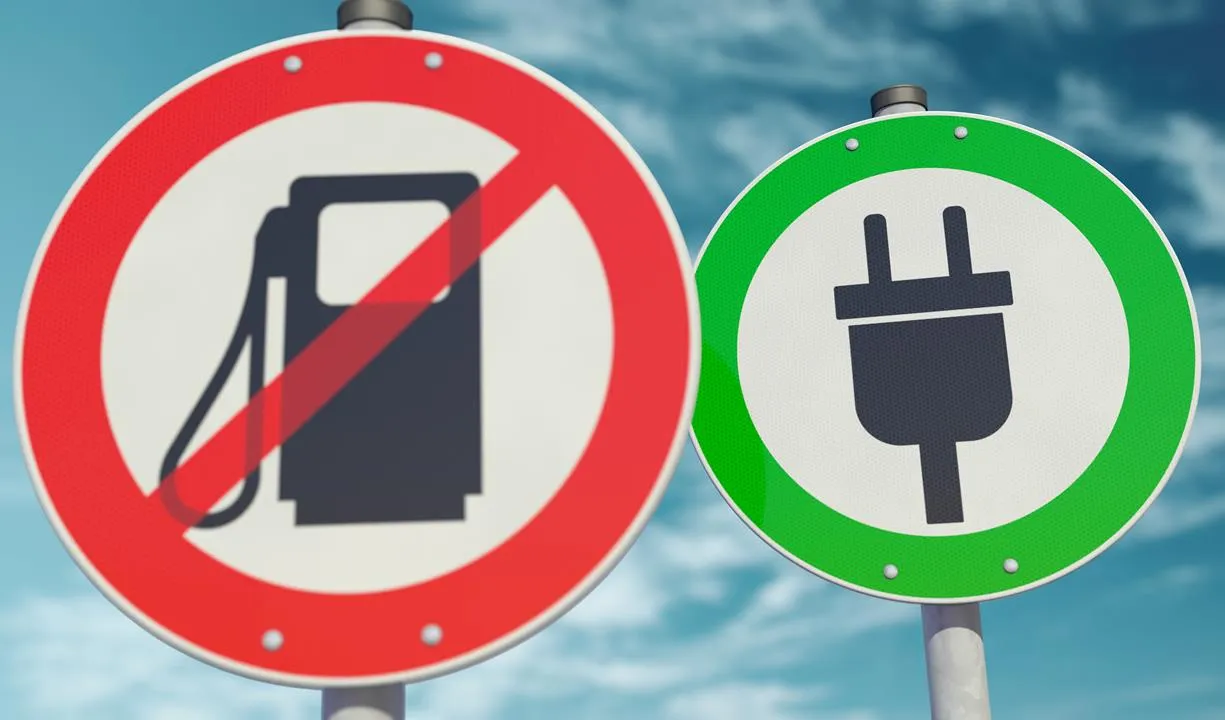
The European Commission approved Poland’s proposal to revise the KPO, abandoning the idea of a “polluter pays” tax on diesel vehicles.
As a sort of countermeasure, according to the plans for the revision by August, a Government Fund for Systemic Heating for the years 2026–2030 is set to be established with a budget of around 3 billion zlotys. Such a fund is certainly needed, and the tax provision had already been dead in the water since no government in Poland has dared to challenge the powerful interests tied to imported used cars.
The original version of Poland’s KPO envisioned two new charges for gasoline-powered vehicles, intended as part of implementing the “polluter pays” principle and transportation reforms:
a tax upon vehicle registration,
and an annual fee for owning a gasoline-powered car.
The mechanism was supposed to be primarily linked to CO₂ emissions, as well as partially to exhaust emission standards and the vehicle’s age. The more polluting and older the car, the higher the fee.
The PiS government delayed implementing these provisions for a long time, and after the change in power, the new government began negotiating their removal or replacement with other solutions. The European Commission has now agreed to revise the KPO and abandon these taxes.
As is known, diesel engines are considered a necessity in Poland, and it will be possible to import large quantities cheaply without any obstacles. There will be no shortage of these, as Western Europe is electrifying private transportation faster than Poland.
The Senate rejected the “climate” referendum
The Senate rejected President Karol Nawrocki’s proposal to hold a referendum on the EU’s climate policy by a vote of 61 to 32. As we have reported, the president suggested a question with a clear proposition: Are you in favor of a policy that “has led to rising costs of living for citizens, energy prices, and business and agricultural operations”?
The Senate majority paid no attention to the organized demonstration in Warsaw on the same day, whose main slogan was “Get rid of ETS,” and rejected the proposals. In response, Nawrocki said he would submit another petition for a referendum with a different question, because — in his view — the issue is too serious, and “the Polish people” have the right to say they do not want European climate policy or the Green Deal. So the circus will continue; we await the new question, as the president has not yet revealed what it will be.
Also read: Why is the president proposing a climate referendum?
What should the replacement of old wind turbines look like
In the final stage of government procedures for the regulation on easier repowering of wind farms, the Ministry of Energy proposed that the capacity increase for a “facility” — meaning a specific wind farm — could be 50%, rather than 30% as suggested by the Ministry of Climate and Environment. The incentive for repowering is that no new environmental approval would be required for the capacity increase specified in the regulation, subject to a number of conditions.
In practice, it would even be possible to install new, more powerful turbines in place of the old ones while maintaining the overall capacity increase target for the farm. However, during consultations, the industry argued that 30% was too low to make the entire initiative worthwhile and called for a rate of 60% or even 70%. Just before sending the draft to the Council of Ministers, the Ministry of Energy requested an increase in the threshold to 50%. Now the government will handle this matter.
Trump Administration’s New Tactic in the Fight Against Wind Turbines
The Pentagon has blocked projects for 165 onshore wind farms, 54 of them in Texas. Under federal law, approval from the Department of War is required for anything taller than 200 feet—meaning confirmation that wind turbines will not interfere with military aviation.
And according to American developers, such approvals have not been issued without issue for some time now. It appears Donald Trump’s administration has drawn inspiration from Polish legal frameworks, as our regulations require approval from the Ministry of National Defense for building wind turbines that allegedly disrupt radars and interfere with low-altitude flights.
This is yet another attempt to combat wind turbines in the U.S. All previous legal attempts have ended up in court, with rulings favoring investors and against the federal administration.
Meanwhile, in Texas, renewable energy production has for the first time since early 2026 matched that of gas and coal.