
Rwanda plans a massive floating solar plant on a lake: it will be 15 times more powerful than the largest currently operational in Africa.
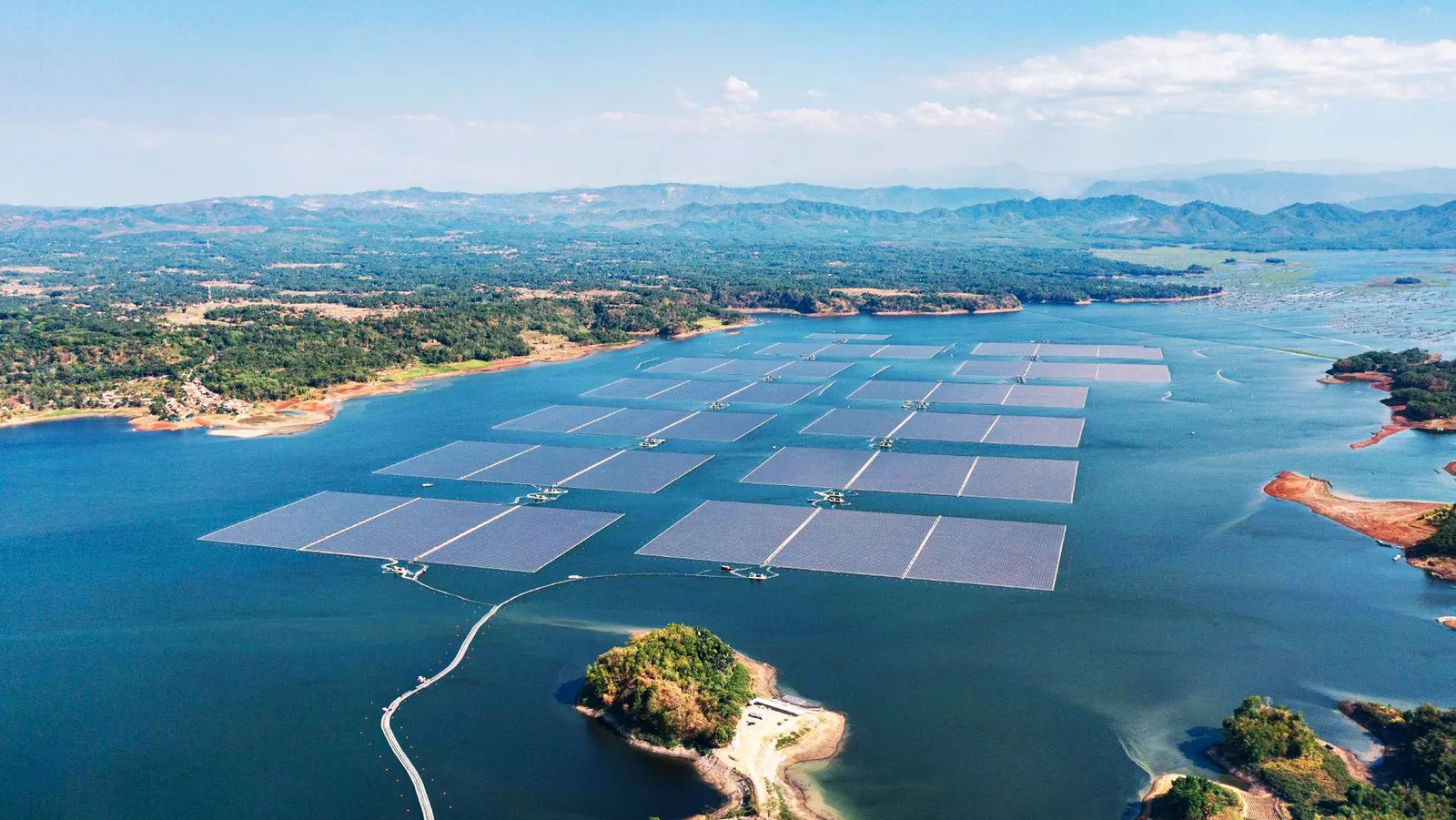
Solar energy is driving some of the most remarkable engineering projects in the world, especially in countries seeking to increase their electricity production without relying solely on fossil fuels. One recent example comes from Africa, where Rwanda has begun developing a massive floating photovoltaic power plant that will utilize the surface of a lake and feature a significant battery storage system.
The scale of the planned installation is particularly impressive. The project includes 200 MW of solar capacity and 800 MWh of storage, figures that would place this infrastructure among the largest floating photovoltaic projects on the continent. To grasp its magnitude, consider this comparison: currently, Rwanda has about 47.5 MW of operational solar capacity, meaning this single facility could exceed its entire existing photovoltaic capacity by more than four times.

A giant solar plant on an African lake
The installation is planned at Lake Sake, located in the Ngoma district east of Rwanda. The initiative is promoted by Energy Development Corporation Limited (EDCL), a public company part of the Rwanda Energy Group, which has launched a prequalification process to select the company responsible for developing the project.
Unlike conventional photovoltaic installations, the panels would not be placed on large areas of land but rather on floating structures anchored in the lake. This system allows for the use of water surfaces to generate electricity and can reduce the need to occupy agricultural land or spaces that could be used for other purposes.
The proposal includes an installed capacity of 200 MW, a figure far exceeding Rwanda’s current operational solar capacity. According to data collected by the Africa Solar Industry Association, the country has approximately 47.5 MW of operational photovoltaic installations.

This means that if it is ultimately realized under the announced conditions, the new plant alone would have a solar capacity equivalent to more than four times what is currently installed across the entire country. However, it is still in the bidding phase, and there is no confirmed date for its commissioning.
The scale is also considerable within the African context. Using as a reference a 13 MW floating facility identified as the largest in operation on the continent, Rwanda’s planned power plant would have a capacity approximately 15.4 times greater. However, this comparison pits a proposed infrastructure against one that is already in use.
800 MWh batteries to supply electricity for four hours
But the most significant aspect of the new facility will not be solely its ability to generate electricity. The project includes a battery storage system with an energy capacity of 800 MWh, designed to store part of the electricity and deliver it to the grid when needed.
According to the technical specifications published for this initiative, the system would have a discharge capacity of 200 MW. This setup would allow it to supply electricity for four consecutive hours at its nominal capacity, without accounting for energy losses, a capability that is particularly useful for managing periods of high demand.
Storage represents one of the major challenges in solar energy. Although panels can generate large amounts of electricity during daylight hours, their output decreases at sunset and stops entirely at night. The use of batteries enables some of this energy to be stored for later in the day, reducing fluctuations in the power grid.
In the case of Rwanda, this technology could help stabilize the national electricity system, facilitate the integration of new renewable installations, and improve electricity availability during peak demand hours. However, this does not mean that batteries can power the entire country for four hours: that duration corresponds to the operation of the storage system at its maximum capacity.

The construction and operation of the plant will be carried out under a public-private partnership model. The selected developer will be responsible for the design, financing, installation, commissioning, and maintenance of the infrastructure, including the equipment needed to transmit the generated electricity to the national grid.
The project also includes a long-term power purchase agreement with an expected duration of 25 years, which would provide a revenue stream for the company that ultimately develops the facility. For now, the initiative is still in its preliminary stage. The public agency has launched the selection process for developers and extended the deadline for submitting prequalification applications to November 26, 2026.
If it manages to overcome the administrative hurdles, secure funding, and complete its construction, the Lake Sake power plant will represent a significant leap forward for solar energy in Rwanda. It would also demonstrate how the combination of floating panels and large battery systems can transform electricity production in countries that still have relatively limited photovoltaic capacity.