
Royal Mail expands electric delivery fleet to 9,000 vehicles
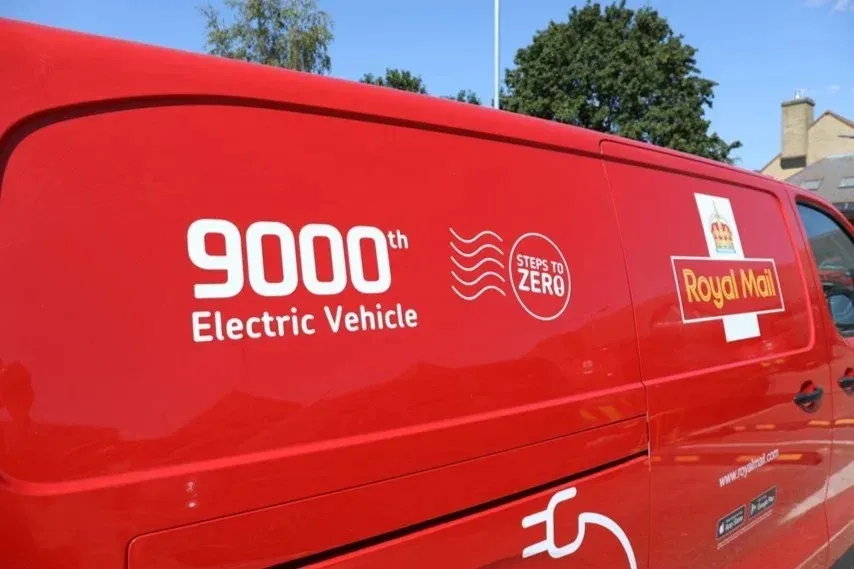
Royal Mail in the UK has put its 9,000th electric delivery vehicle into service — less than eight months after reaching the milestone of 8,000 vehicles. According to the postal service, nearly a third of delivery routes are now covered by zero-emission vehicles.
The 9,000th battery-electric delivery vehicle was deployed at Royal Mail’s distribution center in Colchester, adding to the existing fleet of over 120 electric delivery vehicles there. The company states that 44 distribution centers across the UK are now fully electrified, with nearly a third of all delivery routes served by zero-emission vehicles.
"Reaching the milestone of 9,000 electric vehicles is an important step in transforming our fleet," said Stuart Murphy, head of fleet transformation at Royal Mail. "This shift helps us reduce emissions and deliver better services to our customers—through quieter and cleaner deliveries in communities across the United Kingdom."
This latest milestone comes less than eight months after the 8,000th electric van was put into service. With this, Royal Mail has added another 1,000 fully electric delivery vehicles to its fleet in less than a year.
The electrification of the vehicle fleet is not limited to vehicles for the “last mile” only. In December, Royal Mail introduced its first electric trucks to advance the decarbonization of its national delivery network. The use of smaller electric vehicles for urban logistics is also being expanded.
Currently, over 100 electric micro-vehicles are in use, particularly in London, Bristol, Newcastle-under-Lyme, Solihull, Brighton, and the Scilly Islands. According to Royal Mail, these compact vehicles help improve delivery efficiency while further reducing emissions. The company has also recently introduced a fleet of 20 electric cargo bikes for urban deliveries.
Royal Mail began electrifying its fleet in 2017, starting with an order for 100 electric vans. Since then, the rollout has accelerated as part of the company’s broader strategy to achieve net-zero greenhouse gas emissions by 2040. According to the postal service, battery-electric vans reduce operating, maintenance, and repair costs over their entire lifespan compared to diesel vehicles, while also helping to lower emissions and noise pollution in the communities they serve.
internationaldistributionservices.com
This article by Carla Westerheide originally appeared in our English-language edition, electrive.com.