
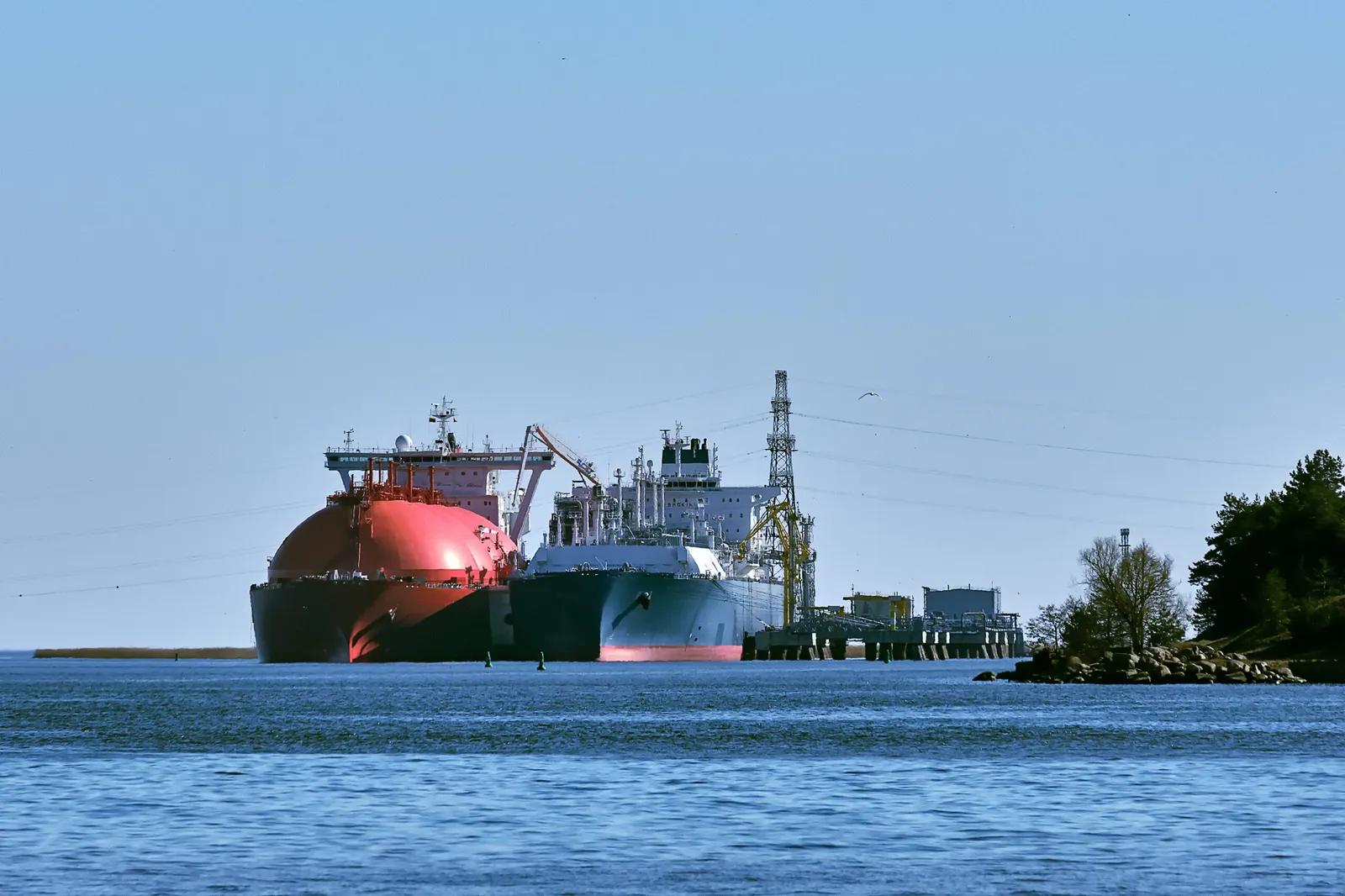
The EU's appetite for Russian LNG is growing.
International energy news: The European Union increases purchases of Russian gas; Brussels eases methane requirements; China as the energy winner in the Middle East war; High oil prices boost electric vehicle sales.
Table of contents
The European Union increases purchases of Russian gas
In response to the war in the Middle East, European Union countries are increasing their purchases of liquefied gas from Russia. In the first quarter of 2026, purchases from the Yamal LNG terminal in Siberia were 17% higher than in the same period last year, according to the Financial Times.
The newspaper cites data from analytics firm Kpler, which calculated that 5 million tons of feedstock from Yamal LNG were imported into the EU in the first quarter. Of this amount, 1.8 million tons came in March, when the situation in the Middle East was already affecting the global gas market.
According to calculations by environmental organization Urgewald, the value of these purchases amounted to nearly 2.9 billion euros. Yamal LNG accounts for the vast majority of Russia’s liquefied gas deliveries to the EU—nearly 97%. A year earlier, this figure was 87%.
The remaining feedstock from this terminal was sent to Asia. However, it is now harder to sell to Asian countries due to restrictions imposed by the EU on Russian fleets regarding LNG loading and docking in EU ports.
The increase in EU countries' purchases of Russian LNG came in response to rising gas prices in Europe following the attack on Iran by the US and Israel. The average gas price at the TTF hub in March reached 53 euros/MWh, compared to 35 euros/MWh in January and February.
At the same time, after a harsh winter, gas storage levels are at their lowest in years, raising concerns about replenishing supplies for the upcoming winter. The Strait of Hormuz has not yet been effectively reopened.
As the Financial Times reminds, imports of Russian LNG into the EU are set to be completely banned starting in 2027. The newspaper adds that there are no signs so far from the European Commission of any plans to change these rules. If the ban remains in place, it will also pose a significant challenge for Yamal LNG in finding new customers.
See also: How much more gas does Poland need?
Brussels eases methane requirements
The European Commission plans to relax rules on methane emissions that will apply to gas importers starting in 2027. This move is driven by the war in the Middle East and high energy prices in the EU, according to the Financial Times.
This relates to a regulation adopted in 2024 aimed at reducing methane emissions from gas imports into the European Union.
The regulation requires monitoring and fixing methane leaks, whose impact on climate warming is over 80 times greater than that of CO2. Such requirements already apply to gas and oil producers in the EU, and starting in January 2027, they will also apply to the import of these commodities.
Ditte Juul Jørgensen, the EU’s energy executive director, announced that regulations will be “flexibilized” in response to the current situation. As a result, importers bringing gas into the EU will no longer be required to provide detailed data for each shipment of gas.
In exchange, consideration will be given to ensuring that a sufficient portion of the total gas production in the country of origin meets the relevant requirements. Jørgensen noted that penalties for non-compliance with regulations will also be eased, as these can reach up to 20% of an importer’s annual turnover in extreme cases.
The “Financial Times” emphasizes that the planned changes to regulations are a result of criticism from some member states, who argue that the proposed requirements are too strict.
The pressure on the Commission was expected to come mainly from Germany, with the Czech Republic, Romania, and Slovenia also supporting its position. Companies in the oil and gas sector, as well as U.S. authorities, also criticized the regulations negatively.
According to a report by research firm Wood Mackenzie, no country outside the EU has been formally recognized as meeting the requirements of the EU’s methane regulation.
See also: LNG terminals: full safety capacity
China as the energy winner in the Middle East war
The Middle East war is a time of triumph for China in the energy sector. This applies both to the transformation of the local energy industry and its leading position in the global clean technology market, writes Bloomberg.
The agency cites, among others, the opinions of analysts at Deutsche Bank and the think tank Bruegel. According to them, the current situation in the global oil and gas market demonstrates the correctness of the energy policy implemented by Beijing.
China remains the world’s largest coal consumer, but it is simultaneously developing renewable energy rapidly to reduce its dependence on fuel imports. The share of renewables in electricity production has already reached 40%, up from 25% a decade ago.
At the same time, the war in the Middle East could boost demand for technologies related to renewable energy, energy storage, and electric mobility. Chinese companies hold a leading position in these sectors.
Analysts cited by Bloomberg suggest that events such as the blockade of the Strait of Hormuz demonstrate how unpredictable fossil fuels can be. Therefore, the greater the dependence on their supply, the more severe the crisis resulting from price increases and supply disruptions can be.
The largest importers of oil and gas from the Middle East include Japan, South Korea, and India, which may be more inclined to accelerate investments in energy transition in response to the current situation. This inevitably leads to reliance on China’s supply chain for clean technologies.
This is good news for local companies, as they have long struggled with overcapacity in manufacturing — especially in the solar panel industry. That’s why Chinese authorities and the largest producers have implemented measures over recent quarters to shut down the least efficient factories.
The shares of Sungrow, one of the world’s largest solar panel manufacturers, have risen by 20% since the outbreak of war in the Middle East. Meanwhile, shares of CATL, the world’s largest battery supplier, have increased by 28%. BYD, which produces batteries and electric vehicles, has gained 8%.
See also: Home Energy Storage Systems: Up to 19,000 zł in subsidies
High oil prices boost the electric vehicle sector
Just as the oil crisis of 1973 prompted drivers to show greater interest in less fuel-consuming cars, the current disruptions in the fuel market could provide another boost to demand for electric vehicles, believes Reuters columnist Katrina Hamlin.
Hamlin notes that there is a clear correlation between fuel prices and sales figures for electric and hybrid vehicles. Data from the International Energy Agency (IEA) and the London Stock Exchange Group show that sales of such vehicles accelerate in years when oil prices are above their multi-year average.
The war in the Middle East pushed oil prices above $100 per barrel, a level last seen in 2022 when Russia attacked Ukraine.
However, since then — as a Reuters columnist notes — electric cars have become much more affordable for consumers. The main factors behind this, aside from competition among manufacturers, are the increasingly cheaper batteries, which account for the largest share of the cost in electric vehicles.
Over the past four years, according to UBS, batteries for electric cars have halved in price, while their capacity and lifespan have improved. Additionally, infrastructure is also developing rapidly — the IEA states that the number of chargers worldwide has doubled since 2022.
Katrina Hamlin points out that consumers can be satisfied with the growing range of electric car models available. Growth in sales is driven primarily by Chinese manufacturers, who are gaining a stronger foothold in foreign markets — especially BYD.
The European, American, and Japanese automakers are in a worse position as they try to compete with their Chinese rivals. Recent factors that have negatively impacted their operations in the electric vehicle sector include the withdrawal of support for electric vehicles by Donald Trump’s administration.
As a result, companies such as Stellantis (26.2 billion dollars), Ford Motor (19.5 billion dollars), Honda (15.7 billion dollars), General Motors (6 billion dollars), and Volkswagen (3.5 billion dollars) were forced to make provisions.
Katrina Hamlin points out that the war in the Middle East also has a negative effect on electric vehicle manufacturers, as it leads to higher costs related to logistics and supply chains. Additionally, high gas prices in some countries can drive up electricity costs, reducing the appeal of electric vehicles.
See also: Chinese electrician: 1 MW battery with lifetime warranty and…