
Rio de Janeiro is acquiring 175 electric buses
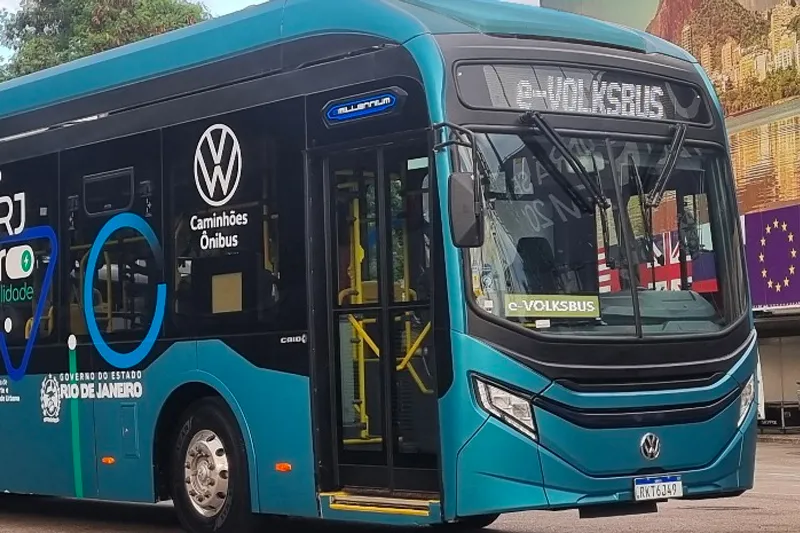
Rio de Janeiro is investing approximately $98 million in 175 electric buses and a new charging facility. These vehicles are set to enter the city’s bus service starting in the second half of 2027, fully electrifying operations at the Gentileza terminal.
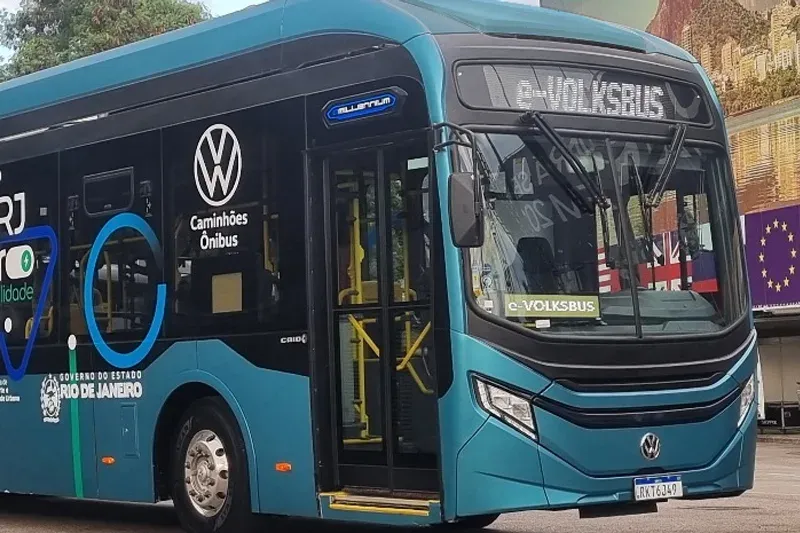
The electric Volkswagon bus is already being produced and delivered in Brazil.
Image: Roberto Marinho
According to media reports, Brazil’s metropolis of Rio de Janeiro has announced a project worth 509 million reals, which is approximately equivalent to 86 million euros. This funding is intended to cover 175 battery-electric buses along with the necessary charging infrastructure. It remains unknown which manufacturer will supply these electric buses, as the bidding process is still ongoing.
As reported by a Brazilian media outlet, six bus models were tested in advance: the OE-12 from SNH/Ankai, the Azure A13BR from TEVX/Higer, the E-Millennium from Eletra in partnership with Mercedes-Benz/Caio, the eO500U from Mercedes-Benz/Caio, the D9W from BYD/Caio Induscar, and the Attivi Integral from Marcopolo. However, the bidding process remains open to other manufacturers as well.
A significant portion of the funding comes from Brazil’s development bank, BNDES. It provides 329 million reals, or approximately 63.5 million dollars, through its climate fund “Fundo Clima.” An additional 141.2 million reals are to be invested by the concessionaire, with the city contributing 38.8 million reals. The BNDES funds are specifically designated for purchasing electric buses.
According to the municipality, this is Brazil’s first public-private partnership focused specifically on electric buses. The contract lasts 16 years: one year for implementation and 15 years for operation. The private partner is responsible for acquiring some of the vehicles, installing charging infrastructure, and building the new depot. Operating and maintaining the facilities also fall under its responsibilities.
All 175 electric buses are scheduled to be stationed at a new public depot in the Maré neighborhood. The site covers approximately 41,000 square meters, of which around 23,000 square meters are designated for electric bus operations. The plan includes parking and maintenance areas, administrative and storage spaces, as well as the necessary charging infrastructure.
Rio builds new charging depot in Maré
The vehicles are intended to be charged mainly at night at the depot. The first electric buses are expected to be integrated into the city’s transportation network, Sistema RIO, starting in the second half of 2027. With these 175 vehicles, the city aims to electrify its entire bus fleet operated from the Gentileza terminal.
The project is named “Elétrico Carioca.” Alongside electrification, Rio de Janeiro aims to rely more heavily on less emissions-intensive biofuels for its remaining buses. The city also has a broader electrification goal: by 2030, zero-emission vehicles are expected to make up 20 percent of the municipal bus fleet, which would be around 1,000 buses.
This expansion comes at a time when Brazil’s electric bus market is growing. According to E-Bus Radar, there are currently 2,216 electric buses in use across the country. This accounts for about 21 percent of Latin America’s total of 10,628 electric buses.
Meanwhile, domestic production is also increasing. Volkswagen Truck & Bus began delivering its electric e-Volksbus, developed in Brazil, at the end of 2025. The first batch consists of 100 vehicles, with 50 units initially going to the Transppass operator in São Paulo. The model is manufactured in Resende, in the state of Rio de Janeiro. BYD also plans to expand its bus production in Brazil.
According to the city, these 175 electric buses could prevent around 199,400 tons of CO2 equivalents over the 16-year contract period. Additionally, the municipality expects lower local emissions of pollutants and noise.