
They exceeded expectations with the 'Tesla Model Y nightmare', but they are already thinking about an electric car priced at 30,000€ and another that is 'even cheaper'.
29/09/2026 12:30
Updated to
29/09/2026 12:30
Rivian began its journey by selling expensive electric cars, but it gradually aims to enter the mass market. The R2 marked the first major step in this direction, with the next model being even more ambitious. RJ Scaringe, the company’s founder and CEO, has just confirmed that the future Rivian R3 will have a price “significantly lower” than its predecessor.
The company has not yet officially announced the price. However, Scaringe previously suggested he expects the R3 to fall in the mid-to-high range of $30,000. The R2 will eventually have an entry-level version priced at $45,000, though that won’t be available until late 2027.
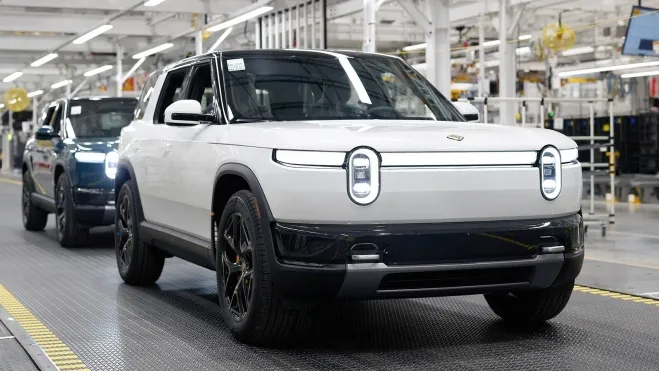
The R3 Will Be Rivian’s Model Aimed at Reaching Many More Customers
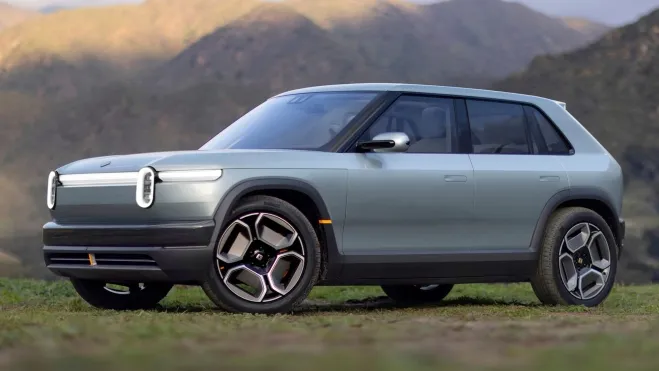
The R3 will be significantly smaller than the R1S and R2 models already sold in the United States. Rivian first introduced it in 2024 as an adventure-oriented compact electric vehicle with a wheelbase of 2,800 mm. Its design retains numerous distinctive features of the company, including vertical rear headlights and a front end with its recognizable oval-shaped light clusters. Additionally, the R3 received much praise for its similarity to acclaimed compact cars from the 1980s, such as the legendary Lancia Delta.
Rivian has not yet released all of its final specifications, though it mentioned during its presentation that it will use the same next-generation platform as the R2 and will be able to accommodate batteries of different sizes. The largest battery should enable it to achieve a range of over 480 km. There will also be configurations with one, two, and even three motors, the latter being primarily intended for the sporty R3X.
Production is scheduled for 2028 and will take place at the new factory that Rivian is building in Georgia. The facility is planned in two phases and will have the capacity to produce up to 400,000 vehicles per year once fully operational. The R3 will be one of the key models to utilize such industrial capacity.
And after the R3, there will be an even cheaper electric vehicle
Scaringe used his recent statements to talk about the next model as well. "The next product, which we creatively call R3, will lower the price," he explained in his interview with The New York Times. Although they haven’t announced its price yet, he claims it will be "significantly lower." Right after that, another model named R4 will come out, further reducing the cost of entering this brand’s market.
There are virtually no details available about the latter. Scaringe had previously explained that the future R4 and R5 models will be sibling vehicles built on a new platform, but development is still in its very early stages. As of now, there is no release date or approximate price for either model.
Being able to produce cheaper cars is also related to how Rivian has changed as a company. Scaringe explains that when developing the R1, some suppliers charged them premiums of 40% to 50% because they considered working with a new manufacturer to be risky. The situation has reversed, and now it is the suppliers who seek contracts with Rivian, giving it bargaining power that it didn’t have before.
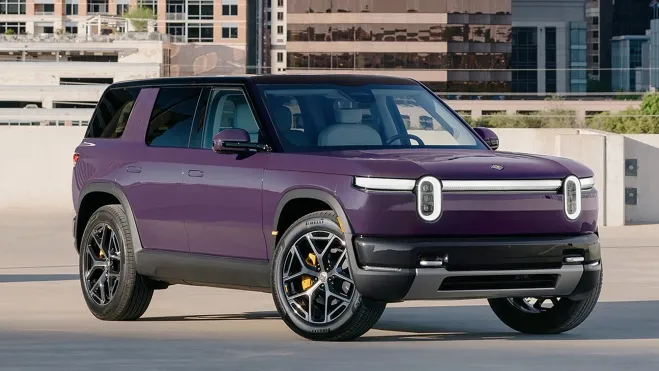
The strategy is thus quite clear. The R2 will start at $45,000, the R3 is expected to drop to the middle or upper range of $30,000, and the future R4 should be even lower. Rivian aims to move beyond being a brand focused solely on relatively expensive electric vehicles, and the compact R3 will be its first major attempt to reach a much broader audience.