
Renault Zoé that won’t charge: how I fixed the problem in 1 hour for less than 80 €
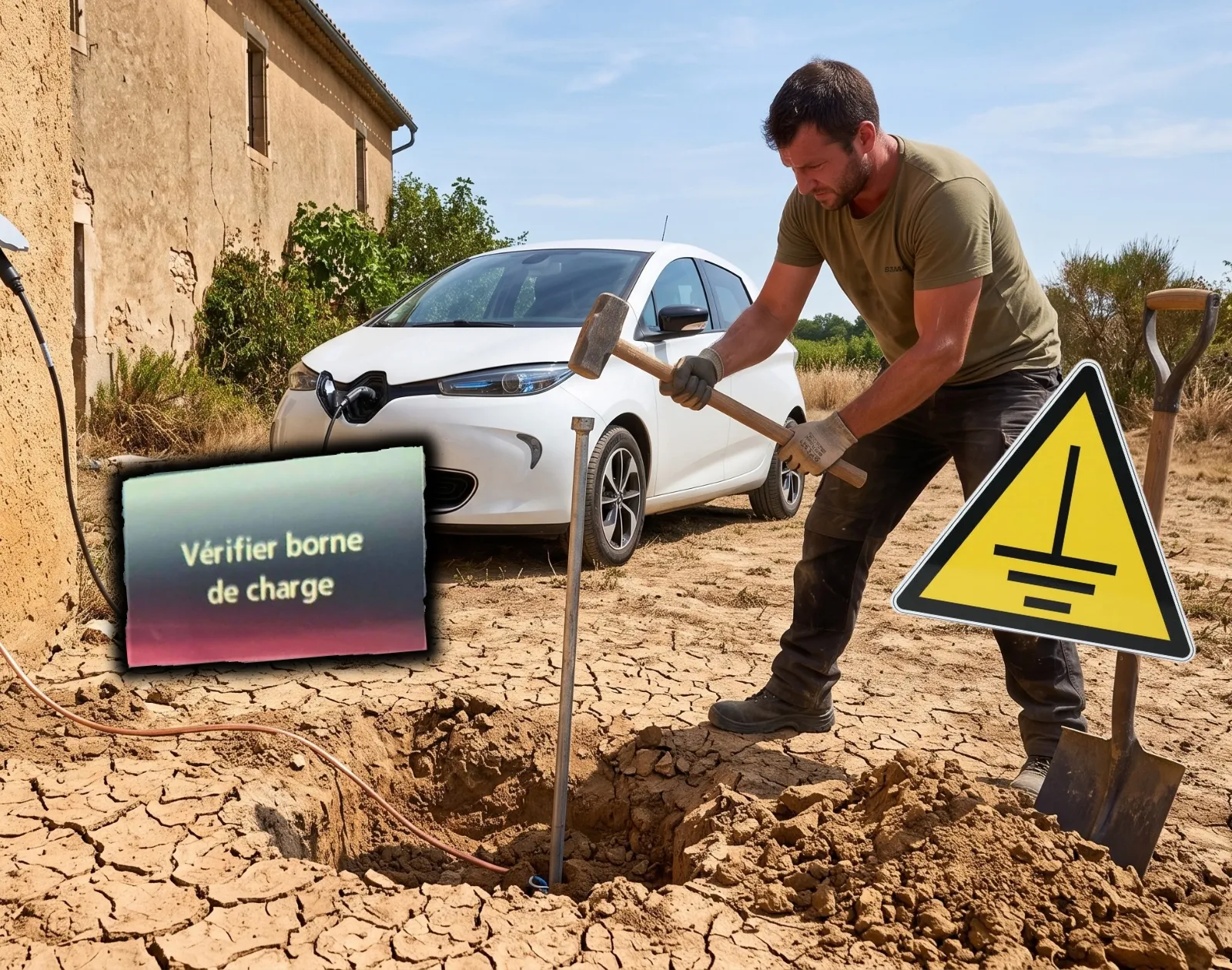
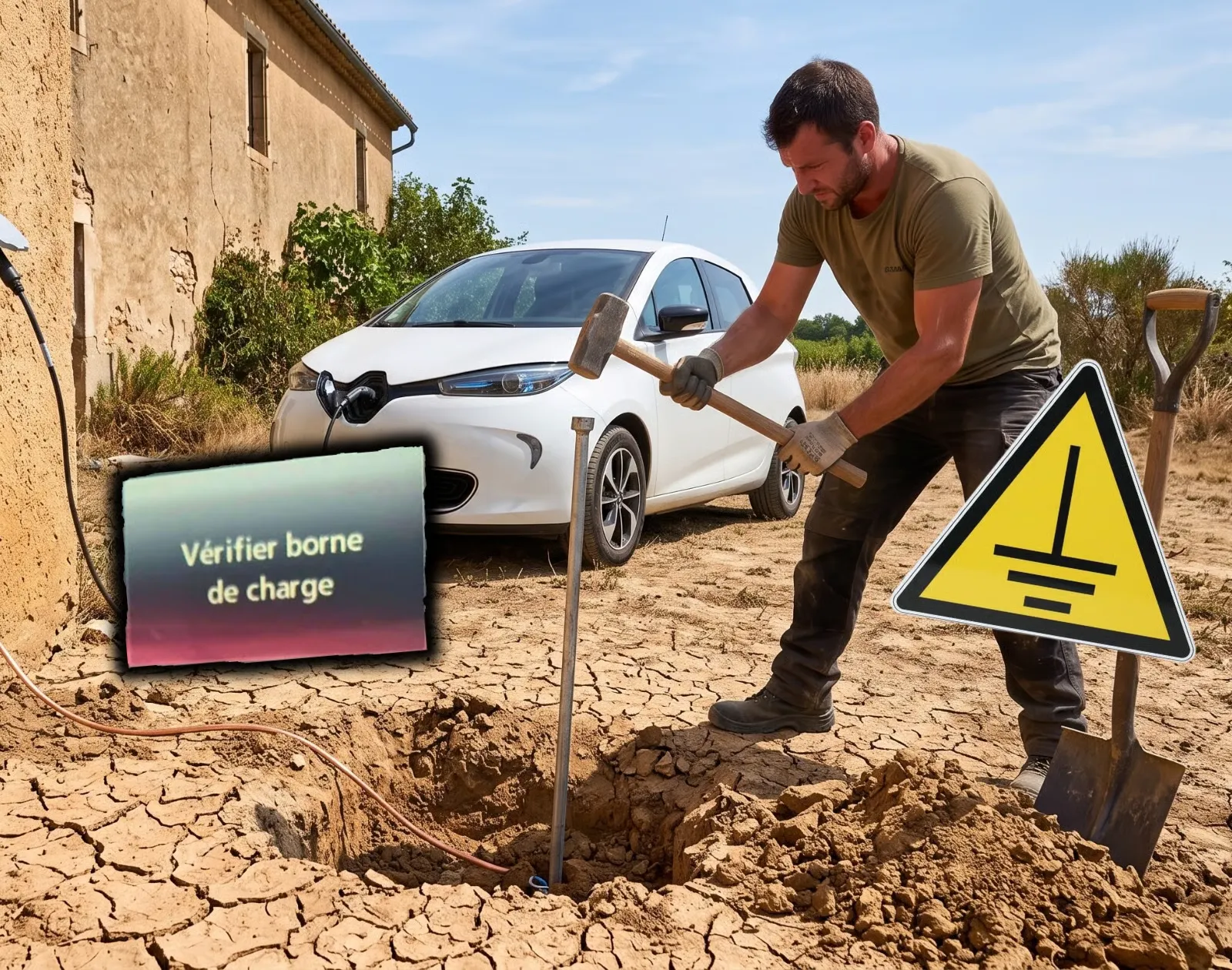
Many Renault Zoé owners sometimes encounter their vehicle absolutely refusing to charge at a home outlet. The issue lies in the design of the onboard charger, which requires an optimal ground voltage to prevent electrical hazards. However, ground resistance varies greatly from one household to another due to poorly installed or aging electrical systems, or dry conditions. This isn’t inevitable. It’s possible to resolve the problem yourself in little time without spending a fortune.
The Renault Zoé is a unique car in the world. Not only for its role as a pioneer in electric mobility, but also for its innovative alternating current charging system. In fact, the built-in charger uses part of the engine to operate and lacks galvanic isolation. Unlike other electric cars, the Zoé must have a high-quality ground connection in order to charge.
This configuration has allowed the diamond-shaped brand to reduce the number of components, and thus the vehicle’s price, but it hinders performance in certain situations. While current standards require a ground resistance of 100 ohms or less, many households fail to meet this requirement—or even exceed it. This is the case in our home, where the ground resistance deteriorated due to severe drought that dried out the soil deeply.
The result: our 2017 Renault Zoé suddenly refused to charge at home, whether at a charging station or a wall outlet. The dashboard displayed the ominous message “check charging station,” which usually indicates a ground-related issue. This is a well-known problem, but it can be resolved in just a few steps.
Verifying That It Is Indeed a Ground Problem
Ideally, you should ensure that the problem indeed stems from an incorrect ground voltage. This step isn’t absolutely necessary, but it will save you from unnecessary work on your home’s wiring if the issue isn’t related to this.
First, try plugging in your vehicle at different locations, both at home and at a public charging station: if it refuses to charge only at the outlets in your home, it’s almost always the ground connection that’s the problem.
Also read
Used Renault Zoé starting at 7,000 €: everything you need to know before buying
Using your Renault Zoé to measure ground resistance
If you still want to measure the ground resistance of your vehicle, there are two methods available. The first involves using the free smartphone app CanZE, along with an OBD reader connected to the vehicle’s corresponding port. This app allows you to view detailed data from Renault group electric vehicles, including the ground resistance. A high-quality OBD reader is necessary; we have the OBDLink LX model, but others may also work. This small port sends the information to your smartphone via Bluetooth.
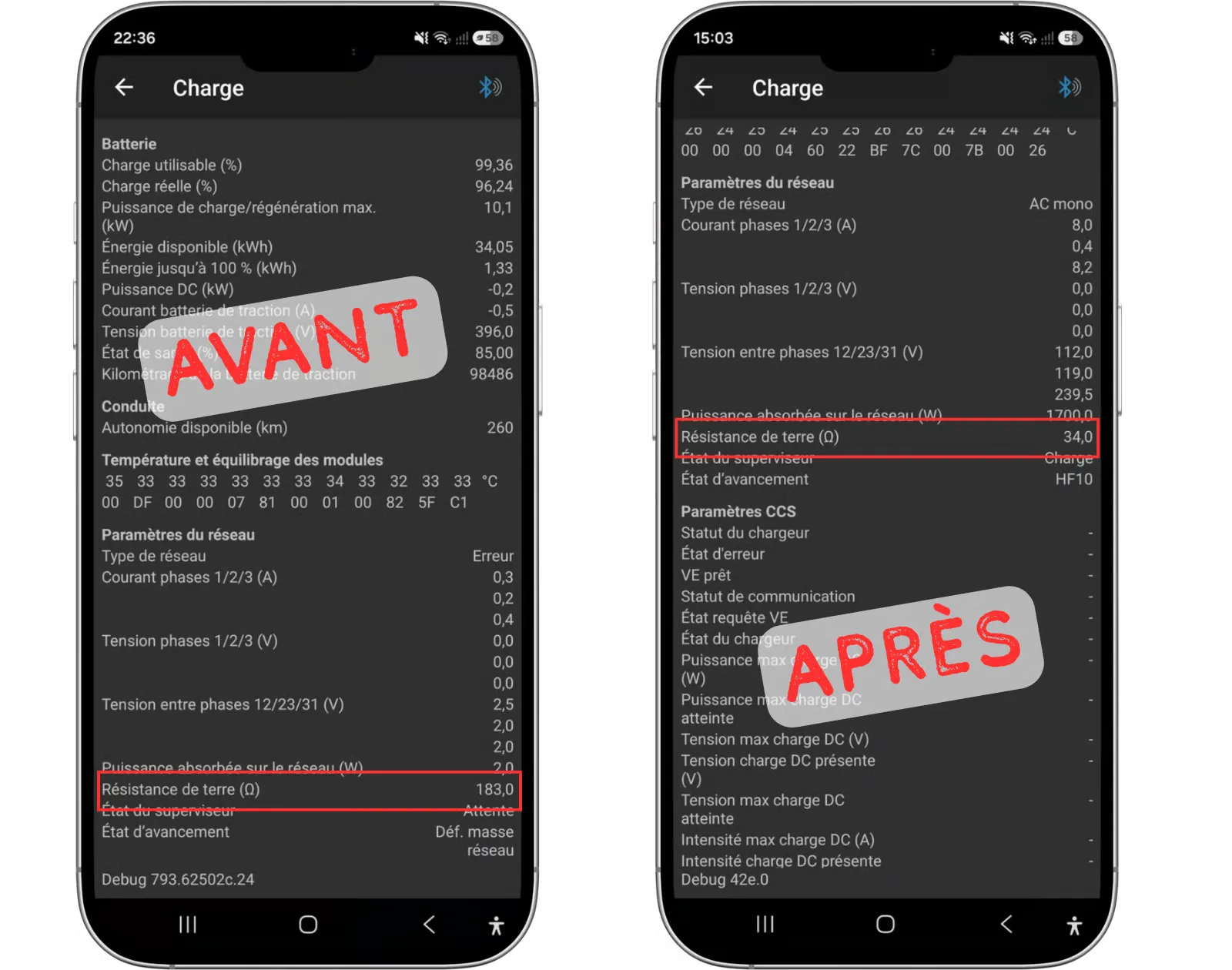
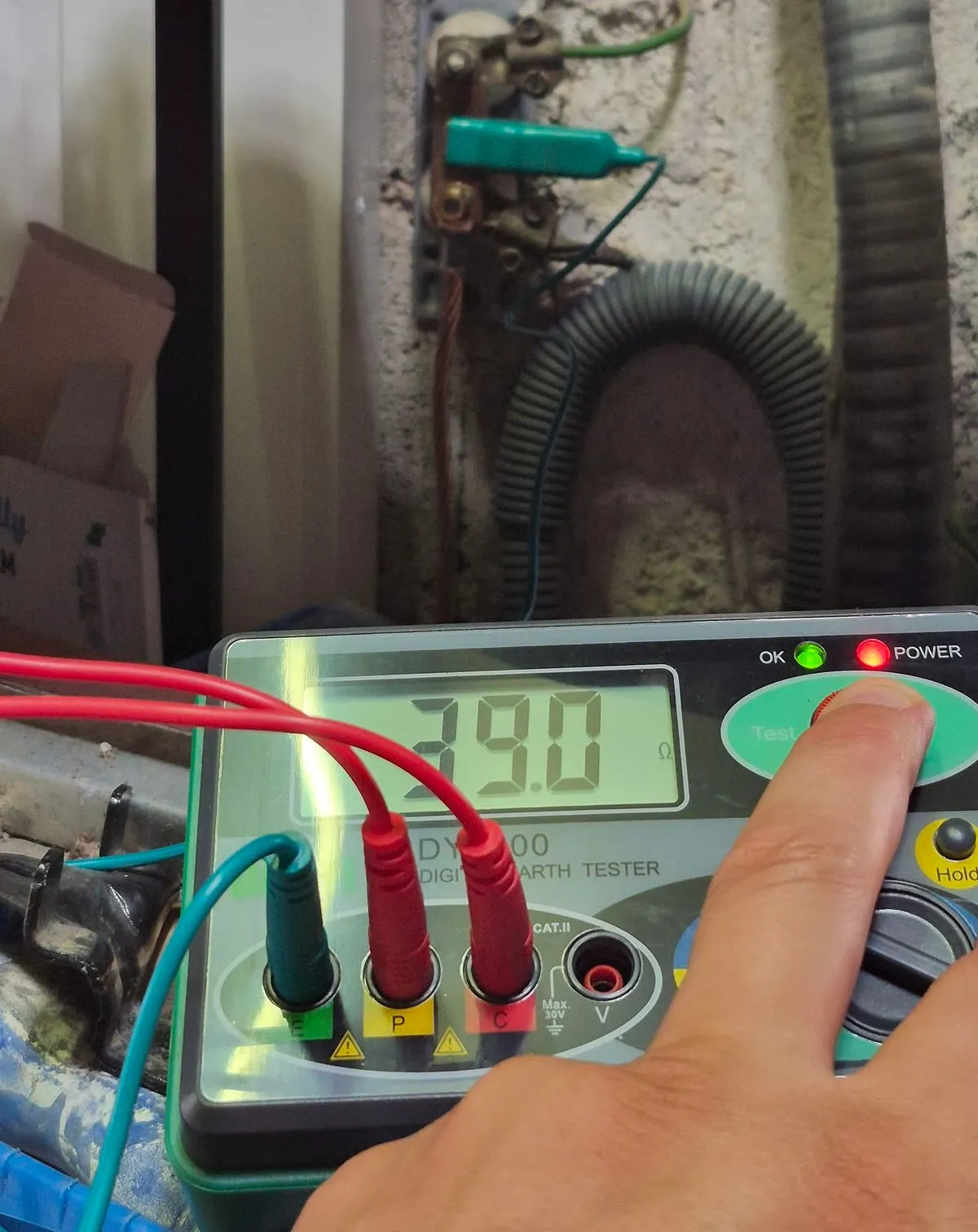
The second method involves using an ohmmeter connected to your electrical system. One wire goes to the ground terminal, another to the neutral terminal, there’s a button to press, and the small screen immediately displays the value.
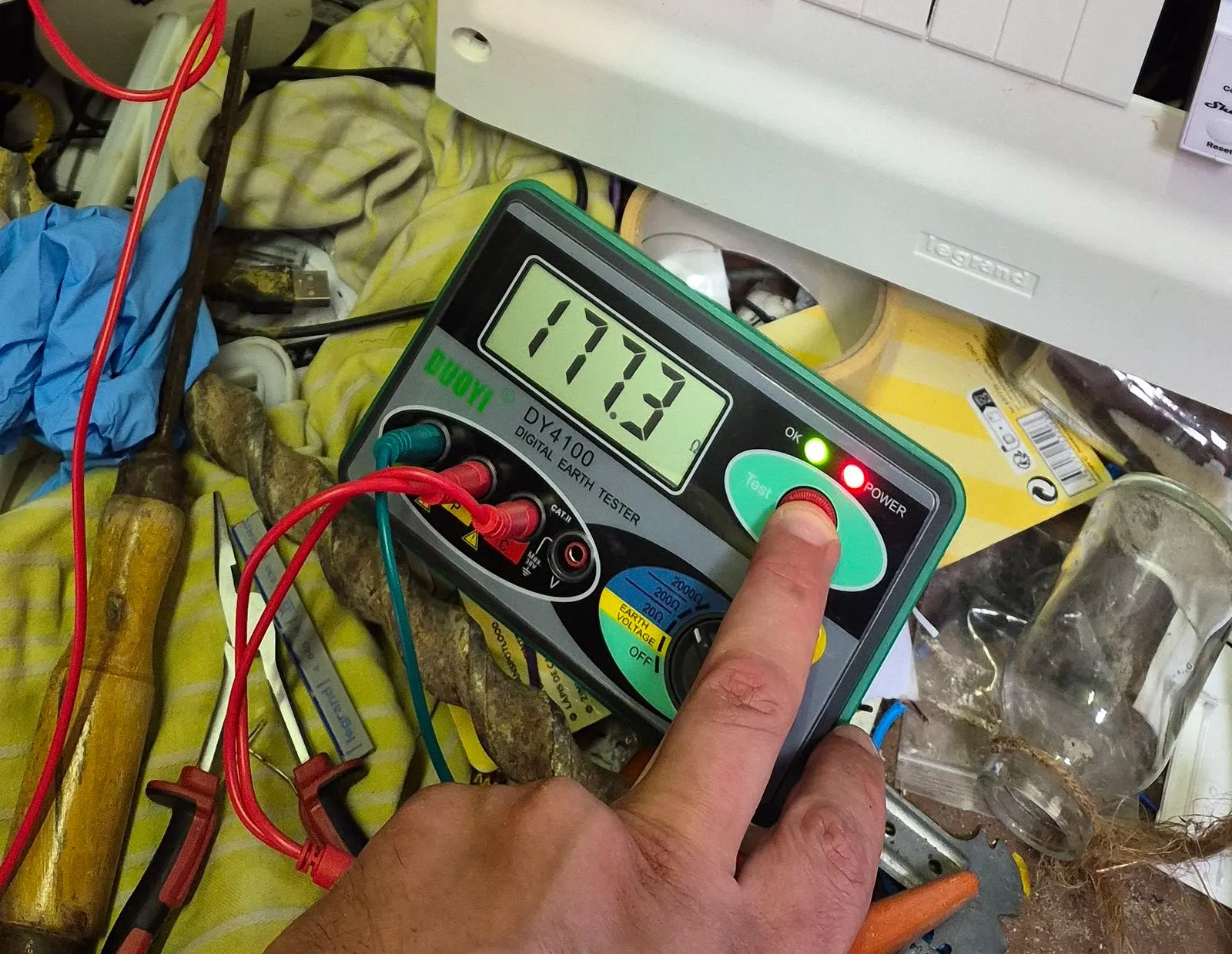
This allowed us to confirm our suspicions: through the CanZE app, the Zoé showed a ground resistance of 183 Ω, which is almost twice the required 100 Ω limit for charging to begin. This measurement was confirmed by our ohmmeter, which read 177 Ω. After two months without significant rainfall, the drought had a devastating effect on the grounding of our electrical system. Action is needed.
A ground stake, some cable, a grounding electrode — and the problem is solved
The only way to charge the Zoé at our home again is to achieve a proper ground resistance value. It’s nothing insurmountable. If you know where the ground stake for your property is located, you can try watering it thoroughly until the resistance decreases sufficiently, as water increases the conductivity of the ground.
In our case, it’s impossible: the stake is located under the slab. So we decide to install a second stake in the garden. For this, we buy a 1.5 meter long galvanized steel ground stake and a 6 meter long 25 mm² bare copper grounding wire. The whole set costs 47 euros at the small hardware store a few kilometers from our home.
Materials
Cost
25 mm² grounding wire, 6 m
33.4 €
1.5 meter galvanized ground stake
13.89 €
25 mm² crimping tool and clamps kit
32 €
TOTAL
79.29 €
Fill the hole with water to improve conductivity
After digging a hole about 50 cm deep in the ground, we drive the stake in using a sledgehammer. The goal is to reach a total depth of 2 meters. Feel free to flood the hole to make it easier to insert the stake and to promote water infiltration deeper down, which will improve conductivity.
We then connect the earth wire to the stake using the built-in screw tightening system. The other end of the wire is secured to our earth terminal using a nut and a bolt (if you don’t have one, a kit containing bolts and nuts of larger diameter can be purchased for less than thirty euros).
After about an hour of light work, the ground resistance has improved significantly. The Zoé now reads 34 Ω, close to the 39 Ω measured by our ohmmeter. This is an excellent value for a home installation. It not only allows us to recharge our battery-powered city car again but also enhances the safety of our entire electrical panel. In fact, the operation of differential fuses is optimized as much as possible when ground resistance is low.
Now you know. If a Renault Zoé or other vehicles using a caméléon charger like the Twingo 3 electric refuse to charge at your home, it’s not necessarily a cause for concern. You can certainly resolve the issue at lower cost without having to call a professional.