
Renault is investing 10 billion euros in France. Affordable electric vehicles will power the factories.
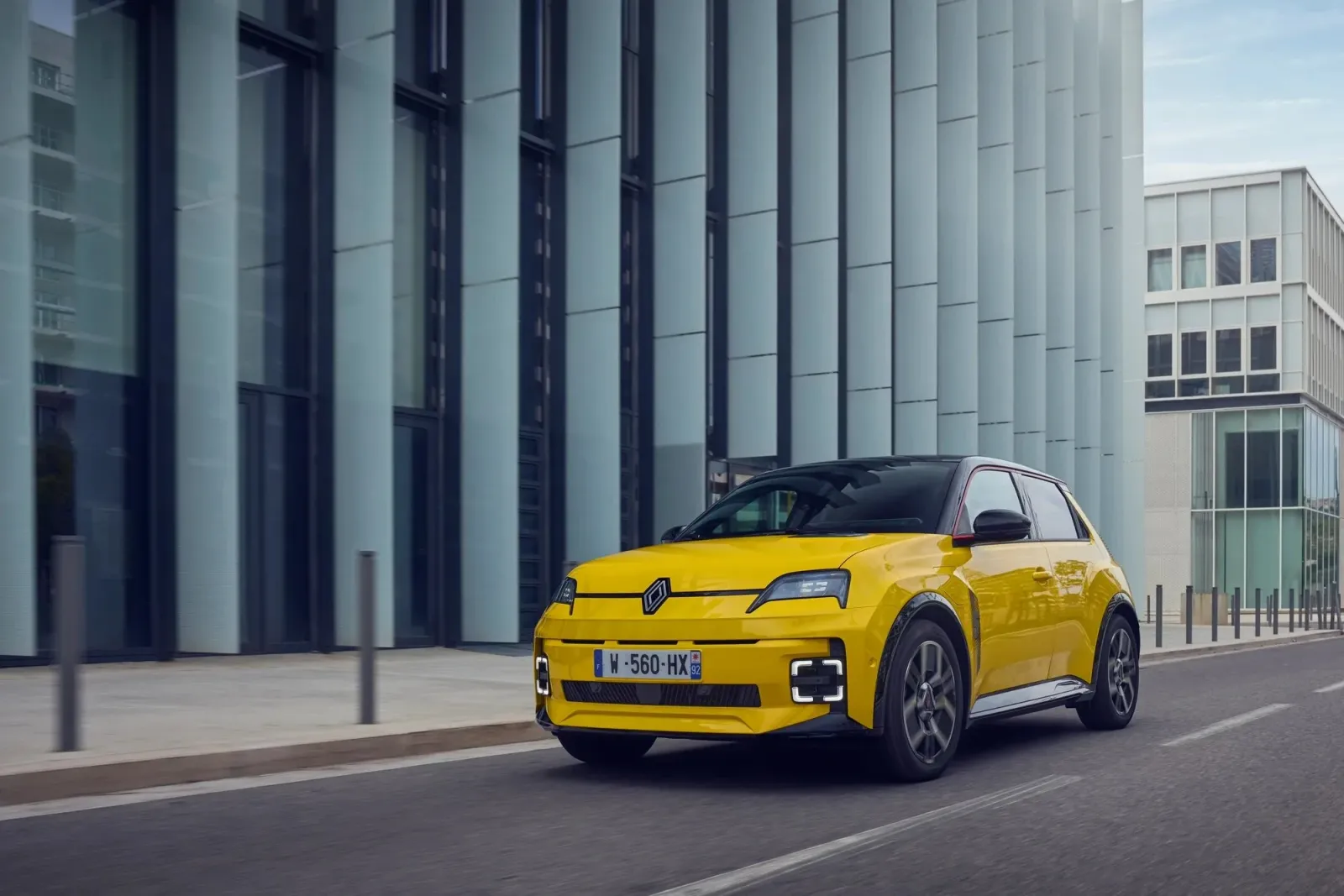
Renault announced on October 5, 2026, that it will invest over 10 billion euros in France within five years. The funds are intended primarily for electric vehicles and reducing the costs of new models, but the company ties the implementation of this plan to political and social conditions.
François Provost, president of Renault Group, did not specify exactly what conditions France must meet. Therefore, the declaration is not an unconditional commitment. It does show, however, where the manufacturer sees room for growth: not in more expensive SUVs, but in electric vehicles accessible to a broader range of customers.
Renault is preparing 16 new electric vehicles
In the past five years, Renault has spent around 13 billion euros in France. These funds were used, among other things, to renovate factories and prepare for domestic production of electric vehicles. An additional 10 billion euros is set to continue this process.
The plan is part of the futuREady strategy presented in spring 2026. By 2030, the group intends to introduce 22 new models in Europe, 16 of which will be all-electric vehicles. Renault is also working on the RGEV Medium 2.0 platform with an 800 V system, new powertrains, and cheaper battery types for mass-produced cars.
France will remain the group’s main hub for electric mobility. The ElectriCity cluster, established in 2021, currently produces the Renault 5 E-Tech, Mégane E-Tech, Scénica E-Tech, and Alpine A290. It is not yet clear which plants and models will receive funding under the new program.
Renault is also investing abroad simultaneously. At the end of September, the manufacturer announced an investment of 600 million euros in factories in Spain’s Valladolid and Palencia. Two electric vehicles using the RGEV Medium 2.0 platform will be produced there, with Valladolid receiving a battery assembly line.
The French market gives Renault a strong advantage
According to media reports, electric vehicles accounted for a record 42 percent of new passenger car registrations in France in September. Rising fuel prices, more affordable model options, and government support are cited as factors driving this growth.
Provost says the change is already evident in the factories. In 2025, Renault produced around 500,000 vehicles in France. The figure is expected to increase by at least 25 percent in 2026, reaching over 625,000 units. This is the manufacturer’s forecast, not the final annual figure.
Social leasing plays a significant role, with the next round starting on July 16, 2026. The program is intended for households that meet income criteria, provided the car is used, among other things, for commuting to work or running a business.
The contract must last at least three years, and it is not mandatory to buy the car back later. The monthly installment should be less than 200 euros, with a mileage limit of at least 15,000 kilometers per year. According to the French public administration, the government subsidy for the car can reach 6,500 euros and, in certain cases, 9,000 euros.
This mechanism offers manufacturers more than just a temporary increase in orders. It creates demand for small cars where price is more important than record range or extremely high charging speeds. The Renault 5 E-Tech already responds to this trend, with upcoming models set to better balance range, charging speed, and production costs.
A commitment of over 10 billion euros thus seems more credible than a plan based solely on distant launches. Renault has operating factories, growing production, and a domestic program to support demand. However, a breakdown of funds among plants, models, and technologies is still missing. It is these details that will show how much of the announced amount will actually go toward affordable electric vehicles.
LovEV Newsletter
Want more content like this?
Sign up — we’ll send you a weekly summary once the newsletter starts.
