
Renault enters the military with battery-powered vehicles. The Forefront ground drone with a 400 km range and no driver required
In the article:
- Renault is developing an electric military vehicle without a driver’s cabin.
- Forefront has a range of 400 km and a payload capacity of up to one ton.
- The French army will test the vehicle in field exercises.
Renault aims to enter a new market segment
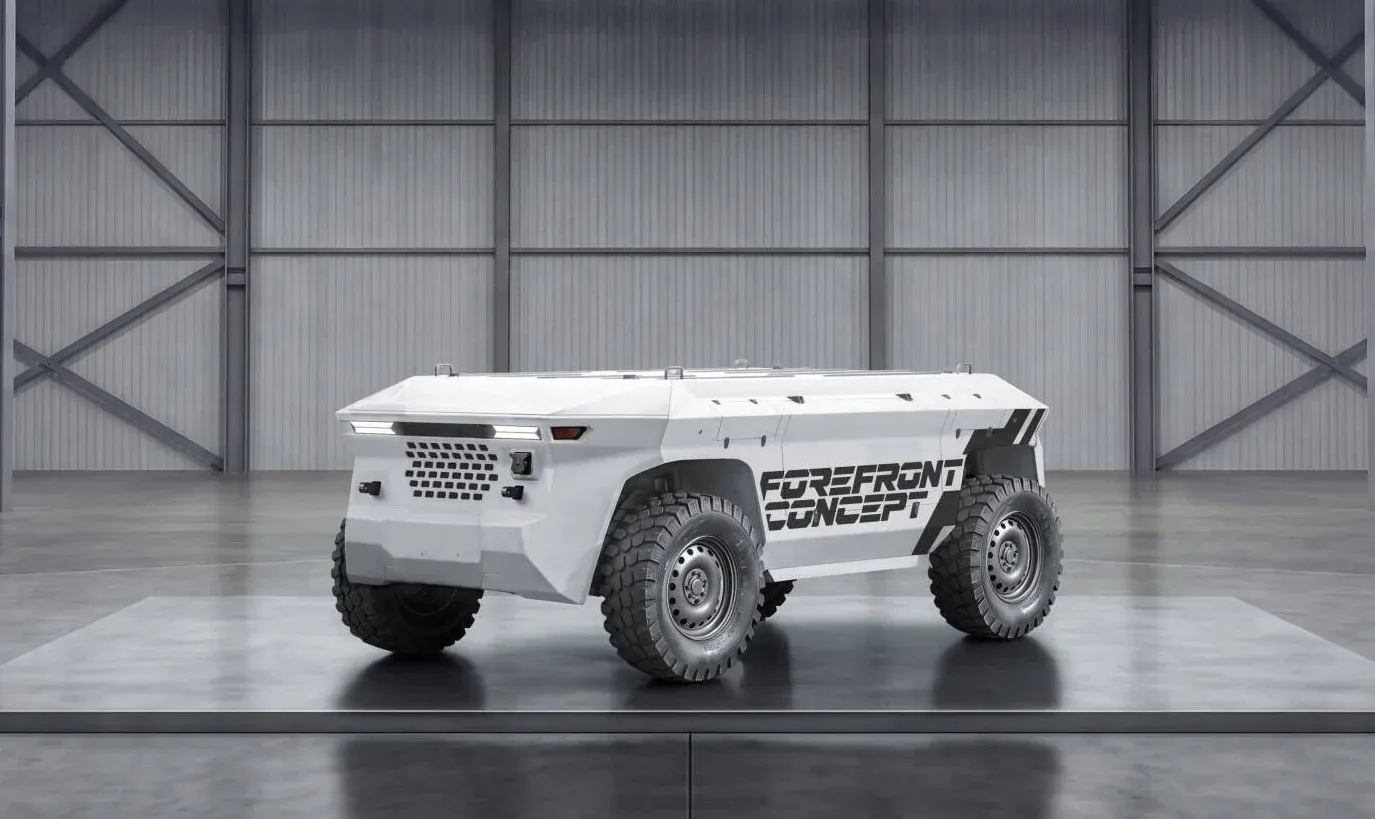
It’s hard to believe that a manufacturer of models like the Clio, Megane, and Scenic would introduce an unmanned vehicle for military use. Yet Renault Group and the Belgian defense company John Cockerill have unveiled the Forefront Concept, a platform described as a new generation of ground drone capable of operating in the most challenging conditions. According to the manufacturers, the vehicle is intended for use in both military operations and civilian tasks in high-risk areas.
The most distinctive feature of its design is the complete absence of a driver’s cabin. Forefront was designed as a remotely controlled vehicle and is expected to be capable of autonomous operation in complex terrains in the future. In practice, this allows such machines to be sent to areas where human presence would carry high risks – according to industry experts.
Two engines and four-wheel drive
The design is based on a relatively simple yet highly functional architecture. The Forefront is equipped with two electric motors, all-wheel drive, and a system for steering all wheels. This setup is intended to ensure high mobility and the ability to overcome obstacles in difficult terrain.
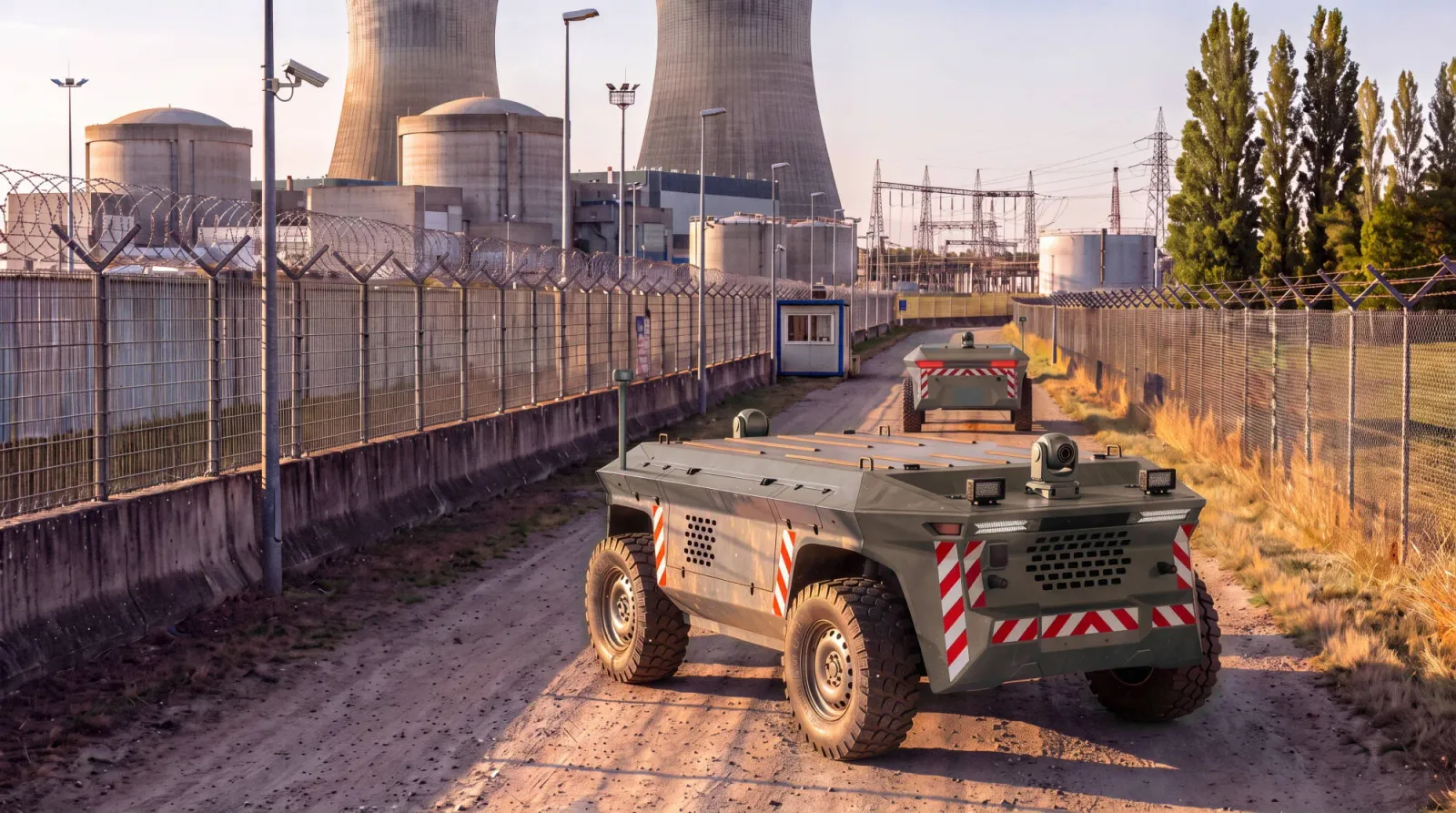
The manufacturer claims a range of about 400 kilometers. Importantly, the vehicle can be equipped with an additional range extender to enhance operational capabilities during long missions. However, Renault has not disclosed the specifications of the traction battery or details about the additional power source. Another significant advantage is the nearly silent operation of the electric drive. In a military environment, reduced noise can improve the effectiveness of reconnaissance and logistics operations, according to the manufacturer.
Not Just for the Military
Forefront was designed for transporting equipment, evacuations, and supporting reconnaissance efforts. Its payload capacity is said to reach one ton. Renault and John Cockerill also mention the possibility of using this platform in anti-drone operations, fire support missions, or logistical tasks.
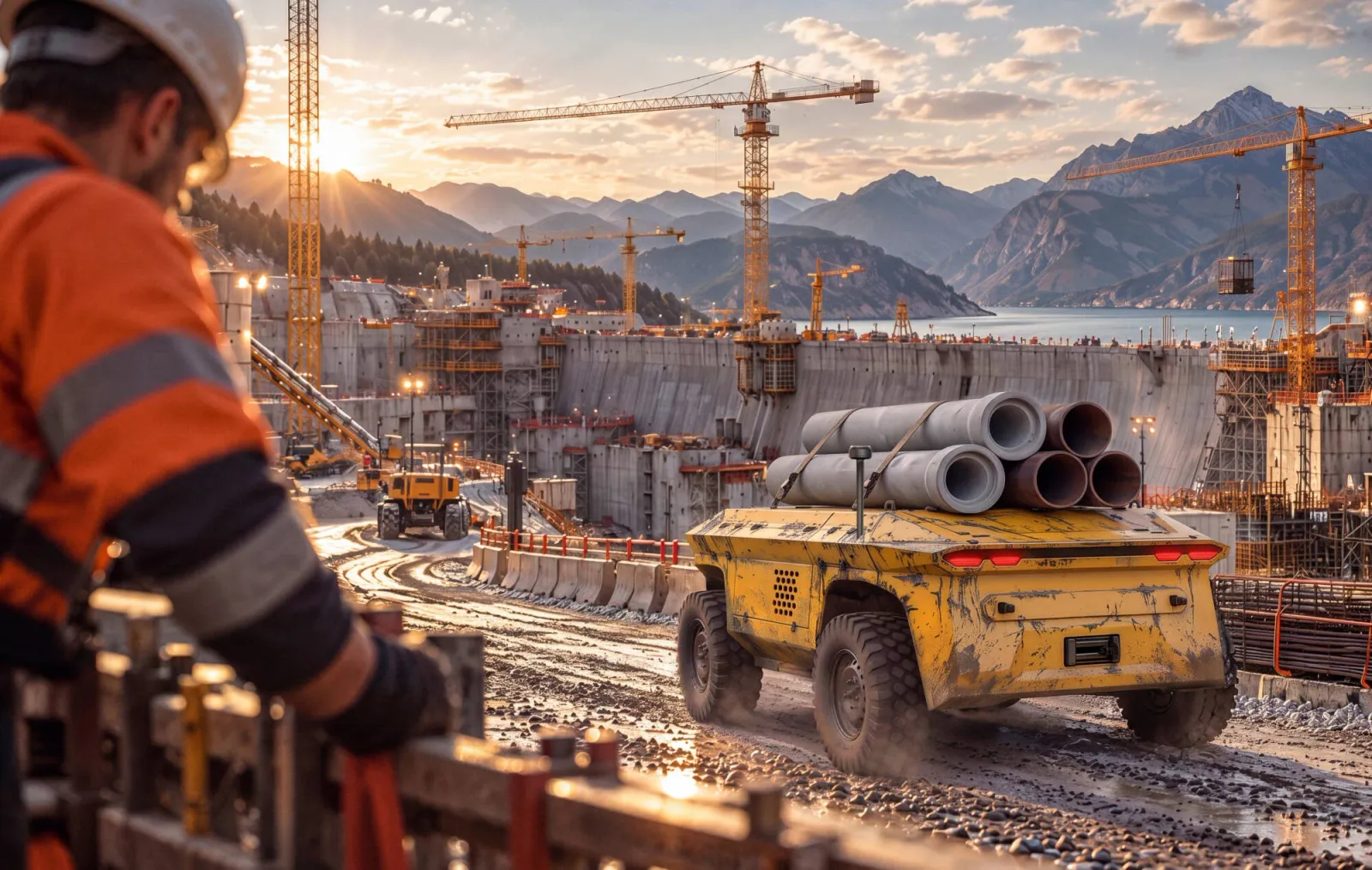
The project creators emphasize, however, that its applications are not limited to the battlefield. This unmanned vehicle could find use in rescue services, civil protection, or the industrial sector. It might transport equipment to disaster areas, assist in evacuating victims, or carry out tasks in locations dangerous for human workers.
Automotive meets robotics
A key element of the project is the use of existing automotive technologies. Renault emphasizes that the platform is built on proven automotive components, which is intended to shorten development time and reduce implementation costs. According to the company, a “design-to-cost” and “design-to-manufacturing” approach was adopted, meaning the design was created from the start with cost-effective and mass production in mind.
“The Forefront Concept combines Renault Group’s expertise in designing and industrializing mobile platforms with John Cockerill’s operational knowledge in the defense sector,” the joint statement from both companies noted. As a result, a vehicle is set to be created that “is capable of autonomous movement in complex terrain, while also allowing for rapid deployment and production at controlled costs.”
Tests with the army ahead
It is currently a conceptual vehicle, but the project has already entered the phase of practical verification. Forefront was developed with the involvement of the French armed forces, which will conduct a series of operational exercises and tests. The results of these tests will determine whether the concept has a chance of evolving into a full-fledged product used by the military.
Oskar Włostowski