
Renault Trafic E-Tech electric wins International Van of the Year 2027
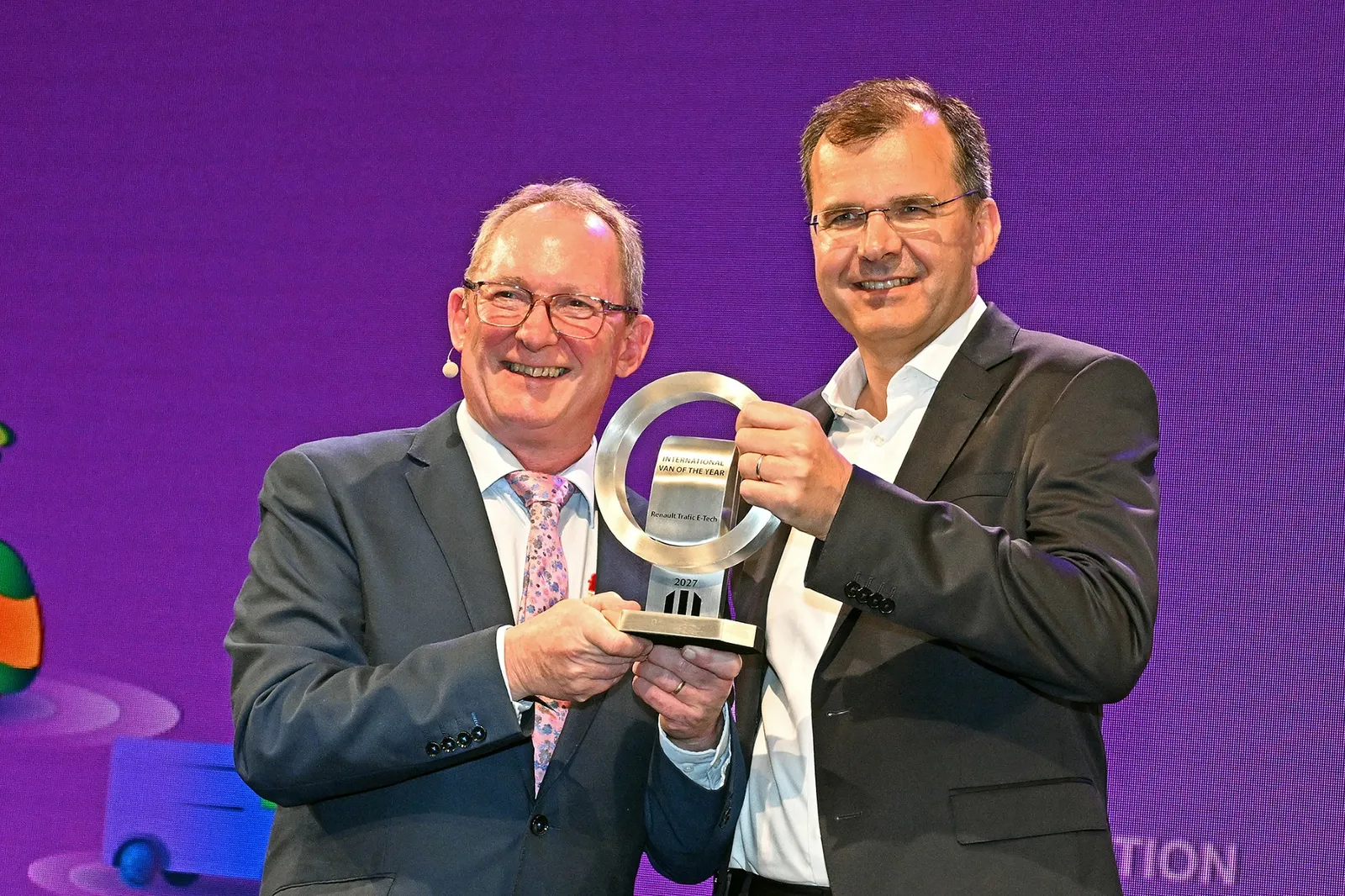
Renault’s fourth-generation Trafic E-Tech electric has won the International Van of the Year (IVOTY) 2027 award, securing the unanimous backing of all 26 judges. The result gives the new electric van an early endorsement as Renault introduces 800V charging and software that can be updated remotely to its medium-sized commercial vehicle range.
The trophy was presented at the Night of the Stars ceremony during IAA Transportation in Hannover, Germany, on Monday 14 September. Every member of the jury gave the Trafic top marks, placing it ahead of the Stellantis ProOne compact van range.
Farizon’s V7E and the Volkswagen Caddy Cargo shared third place. The Hyundai Staria Electric and Maxus Deliver 7 were also shortlisted for the award, now in its 35th year.
For van operators considering a switch to electric, the Trafic’s charging capability is among its most relevant changes. Renault quotes approximately 20 minutes to charge the long-range version from 15% to 80%, using a 240kW DC charger. That figure remains subject to homologation and suitable charging conditions..
The award announcement does not include a UK price or delivery date. It does, however, identify the new van’s 800V electrical architecture and software-defined vehicle platform as central features, with Renault claiming lower daily operating costs and greater flexibility to add functions after purchase.
Jarlath Sweeney, chairman of the International Van of the Year jury, congratulated Renault on the result and said the Trafic met the competition’s requirements for efficient, safe and more sustainable road transport.
“The main criterion for the nomination and the election of any van as International Van of the Year is its contribution to high standards of efficiency, safety, with respect to environment and the sustainability of the transport of light goods by road,” he said.
The judging panel comprises commercial vehicle magazine editors and journalists from across Europe and South Africa. Its unanimous decision concerns the new fourth-generation Trafic E-Tech electric, a distinction that matters when comparing the winner with earlier vans carrying the Trafic name.
Jan Ptacek, Renault’s vice-president and head of light commercial vehicles, accepted the trophy on behalf of the manufacturer. He credited the teams responsible for developing the vehicle and linked the award to Renault’s plans for its commercial vehicle business.
“This prestigious International Van of the Year award is a strong recognition of the outstanding work and commitment of all the teams involved in the Trafic E-Tech electric project,” he said.
Ptacek described the combination of software-defined vehicle features, 800V architecture and rapid DC charging as a “game changer” for the European light commercial vehicle market. He also cited driving enjoyment and manoeuvrability in cities among the benefits Renault expects customers to notice.
Those are manufacturer claims, rather than quantified findings from the award announcement. The release gives no comparative running-cost figures or breakdown of the jury’s assessment of individual features. Buyers will still need to assess the van against their own routes and charging arrangements.
Charging time is particularly relevant where a van needs to return to work during the day. A short stop could make an additional journey practical, although the advertised battery percentage window should not be mistaken for a full recharge. Operators relying on overnight charging will have a different calculation from those regularly using public rapid chargers.
Renault’s UK website currently lists a provisional range of up to 279 miles for the long-range version, pending WLTP approval. The manufacturer’s September award report quotes more than 470km, approximately 292 miles. These published figures differ, so final UK specifications will be needed before making a direct range comparison with competitors.
The UK specifications also list a payload of up to 1.25 tonnes and a height below 1.9 metres. Renault quotes a 10.3-metre turning circle for the L1 version, subject to homologation. Vehicle-to-load capability will allow electrical equipment to draw power from the traction battery.
Load space is quoted at 5.1 cubic metres for the shorter L1 and 5.8 cubic metres for the L2. Renault’s description of its forthcoming electric vans places the Trafic on a dedicated electric platform shared with the new Estafette. Two battery options are intended to cater for longer journeys and predominantly urban work.
Software will account for another part of the ownership proposition. Renault says its planned systems can monitor wear in certain components and use remote diagnostics to anticipate maintenance. Applications could also be tailored to particular trades, including refrigerated transport and logistics. Its UK information cautions that some connected services are not yet available and may involve subscription charges.
The cab will have a 10-inch display and a separate 12-inch screen. Renault describes an operating system connected to the cloud, allowing vehicle data to be analysed and additional functions introduced during ownership. This is the basis of the software-defined approach highlighted by Ptacek when collecting the award.
For an owner-driver, remote diagnosis could help establish whether a workshop visit is necessary. A larger fleet might use the same information to schedule maintenance around vehicle availability. These potential uses will depend on the services offered in the UK and their implementation for individual customers.
The practical question for fleet managers is which functions will be included with the vehicle, which will become available later and what they will cost. The ability to add software is useful only if the services suit the business. It also makes the terms of ongoing support part of the purchasing decision.
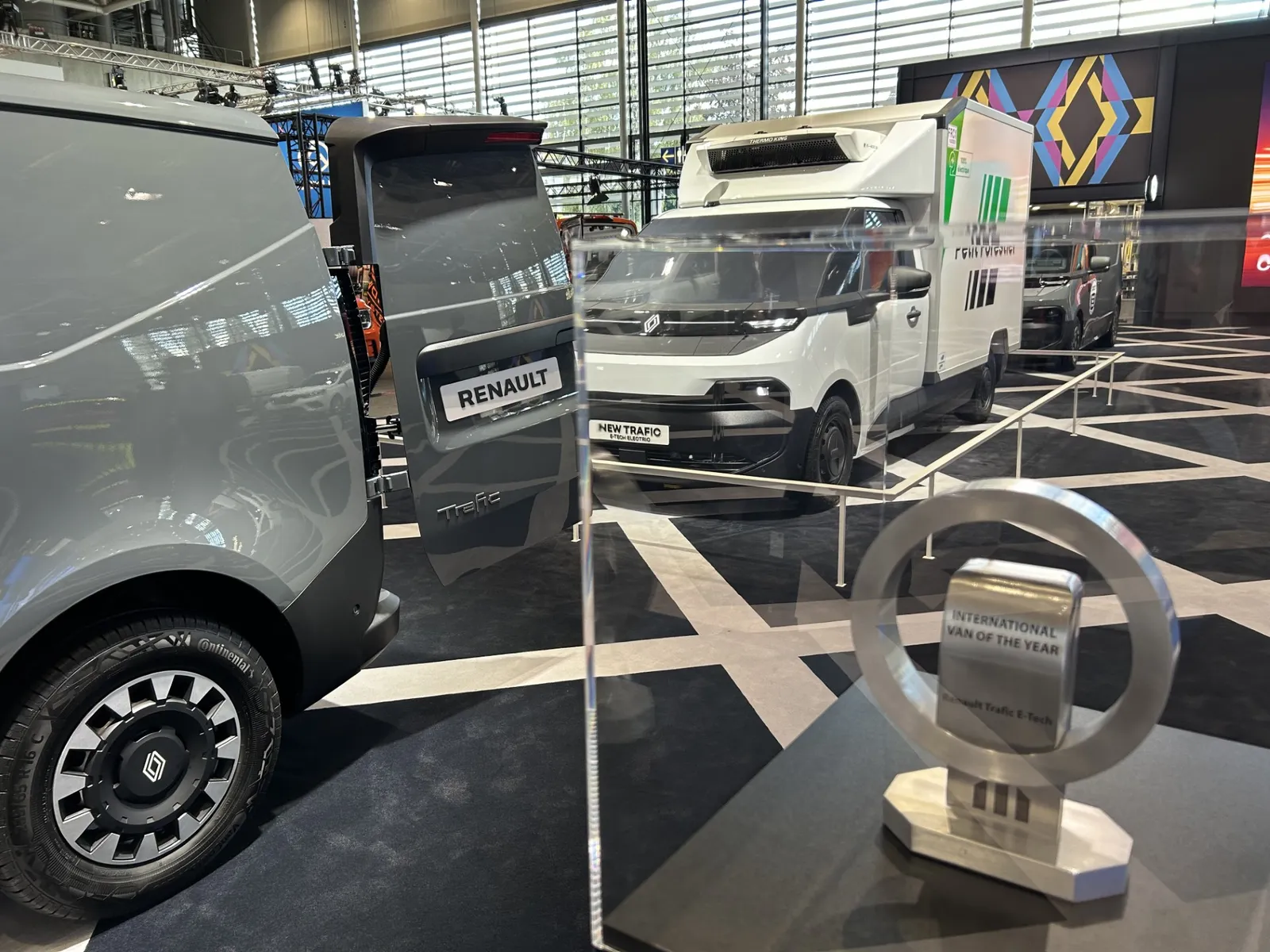
Renault says the new Trafic will be manufactured at Sandouville in France. A panel van will be followed by chassis cab and crew cab versions in 2027. The company is also preparing conversions through its factories, specialist partner Qstomize and a European network of 300 certified bodybuilders.
That breadth matters for businesses whose requirements extend beyond carrying parcels or tools in a standard load bay. A conversion can change both the space available and the weight the vehicle must carry, making the specification of the completed van more useful than the headline figures for the base model.
The Trafic award follows recent Renault victories with the Master in 2025 and Kangoo in 2022 and 2012. The Trafic previously took the title in 2002, giving the nameplate a second win 25 award years later. Renault’s own historical tally also includes the Master’s 1998 victory, making this the brand’s sixth IVOTY success.
This year’s result was announced at Hannover Messe, where the commercial vehicle industry gathered for IAA Transportation. The organisers named the Stellantis ProOne compact van as runner-up and recorded the Farizon and Volkswagen entries as joint third, without publishing individual point totals in the supplied announcement.